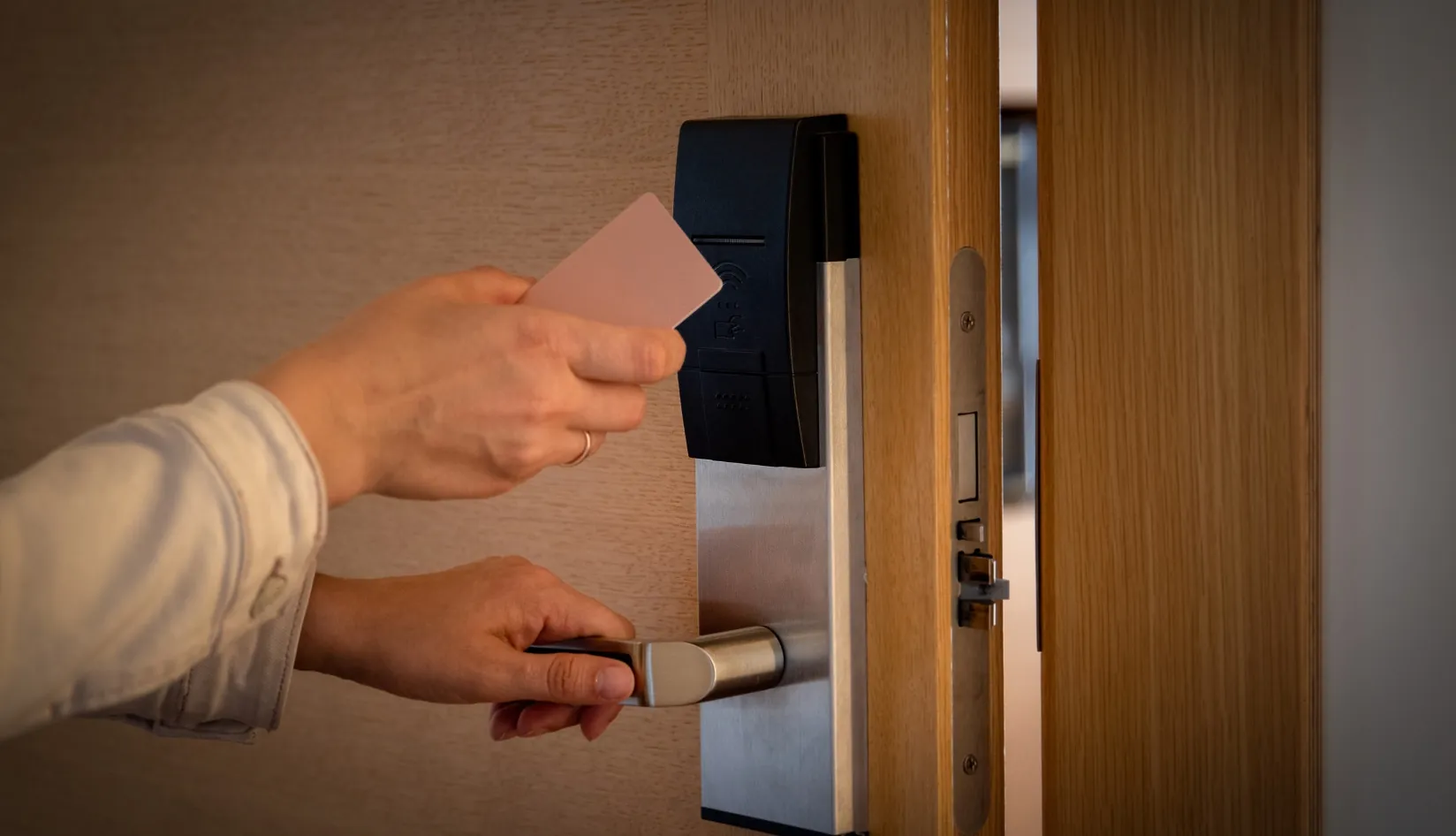
As contactless technology becomes an integral part of modern life, RFID cards are now widely used in access control, transportation, hospitality, and other applications. However, the rapid growth of these solutions has also led to a significant environmental challenge: billions of plastic cards are produced and discarded every year. In response to this issue, we have developed the industry’s first 100% plastic free RFID card built on a paper-based antenna design. The plastic-free RFID card has emerged as a forward-looking alternative, offering the same contactless functionality without relying on conventional plastic materials. By combining proven RFID technology with sustainable materials, plastic-free RFID cards represent a meaningful step toward greener identification and access solutions.
1. What Makes a Card Truly “Plastic-Free”?
As sustainability becomes a priority across industries, many contactless cards are now marketed as “eco-friendly.” However, not all of these solutions are truly plastic-free. In many cases, a critical plastic component remains hidden beneath the surface—the antenna inlay.
RFIDCard has introduced a meaningful innovation in this area. The true breakthrough in sustainable RFID technology lies in replacing the traditional PET-based antenna inlay with a paper-based alternative. This approach uses a specialized environmentally certified ink printed directly onto a coated paper substrate. The resulting paper-based antenna performs the same essential function as its plastic counterpart—enabling reliable data transmission between the chip and the reader—while eliminating the last remaining plastic component from the card’s structure.
The card’s entire structure is fiber-based, making it fully recyclable and biodegradable. This enables a truly 100% plastic-free solution designed with environmental responsibility in mind. The shift is especially important for industries that depend on high-volume, short-lifecycle cards, such as hospitality and event management, where material sustainability has a measurable impact.
2. Performance Without Compromise: The NXP® MIFARE Ultralight® EV1 Advantage
A common concern regarding sustainable materials is whether they can deliver the same performance and security as traditional plastic cards. The answer is a resounding yes, largely due to the integration of industry-leading microchips— NXP® MIFARE Ultralight® EV1.
2.1 Security and Speed
The MIFARE Ultralight® EV1 chip is a cornerstone of modern contactless technology, widely deployed in public transport, loyalty schemes, and event ticketing. Its integration into a paper-based card ensures that the transition to sustainability does not sacrifice functionality. The chip operates at the High Frequency (HF) 13.56 MHz band and is fully compliant with the ISO/IEC 14443-A standard, guaranteeing interoperability with existing RFID infrastructure globally.
For professional applications, the chip’s security features are paramount. It includes a 32-bit password protection mechanism and an ECC-based originality signature, which helps prevent cloning and counterfeiting. Furthermore, the chip boasts a data retention period of 10 years and a write endurance of 100,000 cycles, demonstrating that this sustainable solution is built for long-term, reliable performance, even in high-throughput environments.
2.2 Technical Specifications: NXP® MIFARE Ultralight® EV1 in Paper Card
| Feature | Specification | Benefit in Paper Card Application |
| Material | Coated Paper & Paper-based Antenna | 100% Plastic-Free, Fully Recyclable |
| Chip Type | NXP® MIFARE Ultralight® EV1 | Global Interoperability, Proven Reliability |
| Frequency | HF 13.56 MHz | Standard for Access Control and Ticketing |
| Protocol | ISO/IEC 14443-A | Compatibility with Existing Readers |
| Security | 32-bit Password, ECC Signature | Enhanced Anti-Cloning and Data Protection |
| Write Endurance | 100,000 cycles | Suitable for Re-programmable Applications |
| Thickness | 0.65±0.02 mm | Near-Standard Feel, High Structural Integrity |
3. Paper-Based Antenna Card vs PET-Based Card

4. Key Use Cases: Where the Plastic-Free RFID Card Shines
The demand for sustainable alternatives is not driven by a single sector but by a collective corporate commitment to Environmental, Social, and Governance (ESG) principles. The plastic-free RFID card offers compelling advantages across several key industries.
4.1 Access Control
Plastic-free RFID cards are well suited for access control systems in offices, coworking spaces, and residential buildings. For temporary staff, visitors, or short-term access credentials, paper-based cards provide sufficient durability while reducing environmental impact.
4.2 Events and Ticketing
One of the most common use cases for plastic-free RFID cards is event management. Conferences, exhibitions, concerts, and festivals often issue thousands of badges or tickets that are valid for only a few days. In these scenarios, replacing plastic with a plastic-free RFID card makes both environmental and economic sense.
4.3 Transportation and Transit
In certain transportation applications, especially single-use or limited-use tickets, plastic-free RFID cards can serve as a practical alternative to plastic fare cards. Their compatibility with standard ISO14443 readers ensures smooth system integration.
5. The ROI of Sustainability: Why Businesses are Switching
The decision to adopt a sustainable technology is often viewed through the lens of cost, but for the plastic-free RFID card, the ROI extends far beyond simple unit price.
5.1 Brand Reputation and Consumer Demand
Today’s consumers actively seek out and reward brands that demonstrate genuine environmental responsibility. By visibly adopting a 100% plastic-free solution, businesses can enhance their brand equity, attract a loyal customer base, and differentiate themselves from competitors still relying on outdated plastic media. This positive public relations value often outweighs any marginal increase in production cost.
5.2 Cost-Effectiveness and Lifecycle Analysis
While the initial unit cost of a specialized paper-based card may be comparable to, or slightly higher than, a standard PVC card, the total cost of ownership (TCO) is often lower. The simplicity of recycling the paper card drastically reduces post-consumer waste management complexity and cost. Furthermore, for applications like event ticketing, the paper card’s cost-effectiveness in high volumes makes it a superior choice compared to more expensive, long-life plastic alternatives that are only used once.
6. Conclusion
The transition to a sustainable economy requires innovation that solves real-world problems without creating new ones. The development of the 100% plastic-free RFID paper card is a testament to this principle. It is a market-ready solution that delivers high performance, robust security, and genuine environmental integrity. For any organization committed to reducing its plastic footprint and embracing the future of green technology, the choice is clear. Ready to make the switch to a greener solution? Explore our 100% plastic-free RFID cards today and request a sample to see how sustainability and performance come together.
FAQs
1. How environmentally friendly is a plastic-free RFID card?
The card’s fiber-based composition makes it fully recyclable and biodegradable, removing the last plastic component from the card structure.
2. Can a plastic-free RFID card provide the same security as a plastic card?
Yes. The card integrates the NXP® MIFARE Ultralight® EV1 chip, which includes 32-bit password protection, ECC-based originality signature, and data retention of up to 10 years. This ensures secure, anti-cloning functionality equivalent to traditional plastic cards.
Recommended Product
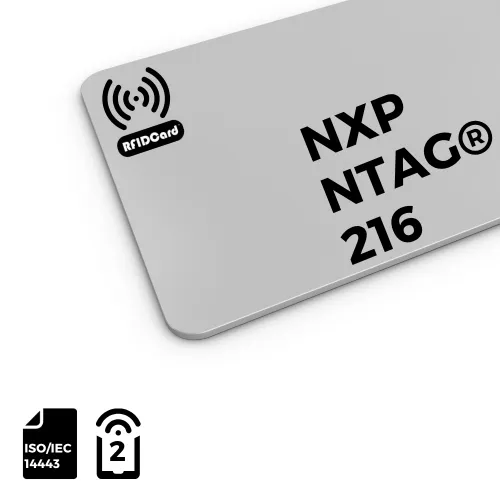
NFC Card NXP NTAG® 216 NFC Type 2

The NTAG® 216 RFID card is made with Photo quality standard PVC sheets into size of CR80, it programmed 7-byte UID with 888 bytes of user memory available (222 pages). The NTAG® 216 NFC ICs fully comply to NFC Forum Type 2 Tag and ISO/IEC14443 Type A specifications.