


RFID (Radio Frequency Identification) technology is an advanced method that employs radio waves to automatically identify and track items. In recent years, its importance has steadily increased across various sectors. By embedding small RFID tags into items, companies can access real-time location information and status updates, greatly enhancing management efficiency and accuracy. Given the global push for automation and smart solutions, the application of RFID technology has become a crucial aspect of modern management practices, particularly in the laundry industry, where its potential continues to grow.
The laundry industry is characterized by complex operational processes and significant item management demands. Traditional manual management methods are not only time-consuming and labor-intensive, but they also leave room for errors. The implementation of RFID technology underscores the value of using laundry tags. By equipping each clothing item with an RFID tag, laundry managers can swiftly and accurately track each piece from the moment it is received, through washing, and up to distribution, streamlining the entire process for improved efficiency and transparency. Furthermore, RFID technology offers robust data analysis capabilities that enable companies to gain insights into their operations and optimize resource allocation.
As the laundry industry continues to focus on enhancing service quality and operational efficiency, the use of RFID laundry tags is expanding. Whether in hotels, hospitals, or industrial laundries, RFID technology is facilitating intelligent transformation, fostering development, and driving progress within the industry.
Learn more about RFID technology in this comprehensive guide.

What Are RFID laundry tags
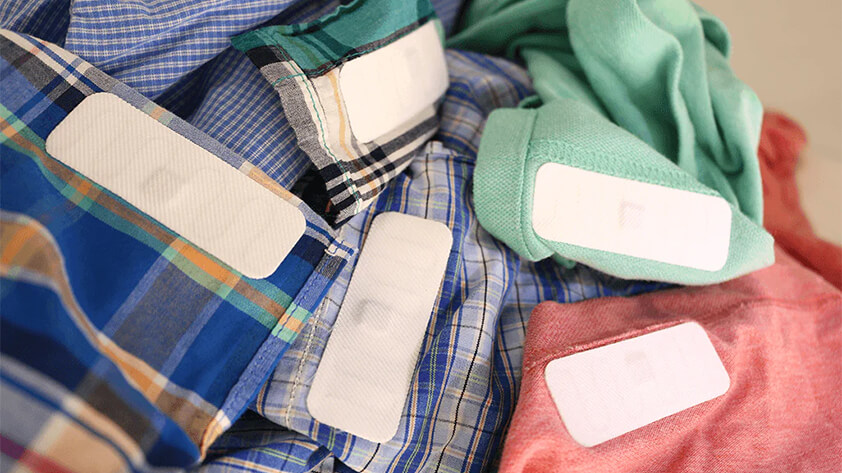
RFID laundry tags are electronic labels that use radio frequency technology for automatic identification and data collection, usually attached to laundry items. These tags consist of microchips and antennas that store information such as item numbers, washing instructions, and processing history. They communicate wirelessly with readers to quickly identify and manage laundry, greatly boosting efficiency in the laundry sector.
Features of RFID Laundry Tags
Due to their specific applications, RFID laundry tags typically have the following features:
Water Resistance
RFID laundry tags are made from waterproof materials like polyester or polyurethane to withstand the damage from water and detergents during laundry. This design keeps the tags functional after multiple washes, saving on costs related to frequent replacements.
Temperature Resistance
The tags can handle high temperatures of up to 90°C or more, suitable for extreme heat during hot washes and drying. High-temperature materials and designs help prevent failures due to heat, ensuring stable performance across all wash cycles.
Soil Resistance
RFID tags are designed to resist dirt, grease, and other contaminants that could impact signal transmission. By choosing easy-to-clean surface materials, the tags maintain good identification performance during cleaning, reducing read errors from dirt accumulation.
Good Read Range
Depending on the application, RFID tags should have an appropriate read range of about 10 centimeters to several meters. Active tags can achieve longer ranges while passive tags work better for shorter distances, depending on the situation and type of reader used.
High Anti-interference Capability
RFID tags are designed to function in complex environments, especially near metals or liquids. Using the right frequencies (like low or high-frequency tags) and materials ensures signal stability under various conditions, which is critical for accurate reads.
Data Storage Capacity
The tags should provide ample storage to log various data, including unique item ID codes, washing instructions, washing histories, and maintenance details. Storage can range from a few bytes to several kilobytes, allowing easy data access and updates for managers.
Long-term Reliability
RFID tags are built to remain effective through many washes and uses, with a lifespan of several years expected. High-quality materials and packaging counteract wear and aging, cutting down operational costs and replacement frequency.
Ease of Attachment
Tag designs ensure easy attachment to various laundry items such as sheets, towels, and uniforms. Options like sewing, sticking, or heat transfer help meet the needs of different fabrics, maintaining attachment throughout use.
Customizability
RFID tag designs and information content should allow flexibility for customization based on the needs of different businesses. This includes shape, size, encoding methods, and types of stored data, letting companies create the best-fit solutions for their requirements.
Benefits of Using RFID Tags
RFID tags enhance workflow efficiency by automatically identifying and collecting data, and they provide various benefits for businesses. Here’s a breakdown of the specific advantages:
Improved Efficiency
RFID tags provide fast scanning, usually reading within milliseconds. Unlike traditional barcodes that require individual scanning, RFID can read multiple tags at once, greatly reducing processing times—especially when dealing with numerous items. This smooths out the processes of receiving, sorting, and distributing laundry, cutting down wait and queue times.
Reduced Error Rate
With RFID systems, the need for manual input is virtually eliminated, significantly reducing the chance of human error. For example, during cleaning and distribution, the system aligns each item with its corresponding tag info, ensuring that the right items go to the right places. Studies show that error rates can drop by as much as 80% after adopting RFID, which is key for precise laundry management.
Real-time Inventory Management
RFID tags enable managers to track the status and location of items in real time—avoiding delays and errors typical with manual recording systems. Managers can access up-to-date inventory information anytime, quickly detecting both shortages and surpluses, which helps with efficient inventory management and mitigates operational risks.
Improved Customer Experience
RFID technology translates to faster service for customers, including self-service pickups and deliveries, which cuts down wait times. The system can send instant notifications about laundry status, keeping customers updated on their items. By enhancing the customer experience, businesses not only increase satisfaction but also foster long-term client relationships.
Optimize Resource Allocation
Data from the RFID system can be analyzed to pinpoint key metrics in the laundry process, like processing times and turnover rates. Managers can then identify bottlenecks and fine-tune resource allocation, optimizing equipment usage and easing peak hour pressures, ultimately boosting overall operational efficiency.
Reduced Operating Costs
Though the initial investment in RFID tags may be steep, they can drastically lower labor and error costs over time. By reducing item loss frequency and tag replacements, companies save significantly. Many businesses report recovering their initial investments within a year of implementing RFID.
Data Tracking and Analysis
RFID tags keep a record of each item’s handling history, including wash times, locations, and usage frequency. This data allows companies to see which items are frequently used or need special attention, optimizing laundry processes and services to improve operational efficiency.
Enhanced Security
RFID technology enhances tracking capabilities, especially for high-value items. Businesses can set alarms that alert managers if items leave designated areas or if any irregular situation arises, enabling prompt responses to mitigate theft and loss risks.
Flexibility and Scalability
The design of the RFID system allows companies to adapt and expand according to their needs. As businesses evolve, they can easily add new tags and readers to support various scenarios—such as new laundry services or market entry—allowing for quick responses to shifting market demands.

Application Areas of RFID Laundry Tags
Due to their many benefits, RFID laundry tags are widely used across various industries.
Hotel Industry
In hotels, RFID laundry tags are essential for managing linens such as bed sheets and towels. By attaching RFID tags to each fabric, hotels can monitor items in real-time, ensuring they are washed and restocked as needed, which boosts efficiency and decreases loss and misdistribution, enhancing customer satisfaction. A prime example is Marriott, which uses an RFID system to keep tabs on bed linens and towels. Each piece is tagged, allowing real-time status monitoring and timely replenishment, especially during busy times, ultimately improving operational efficiency and the customer experience.
Medical Industry
In healthcare, medical facilities utilize RFID laundry tags to track items like bed linens and nurse uniforms to guarantee they are thoroughly cleaned and disinfected before use. This approach is crucial for enhancing patient safety and maintaining high hygiene standards in hospitals, significantly reducing the risk of cross-contamination. For instance, Mayo Clinic employs RFID tags to manage hospital fabrics, ensuring that the cleaning status of each item is updated in real-time, thus upholding stringent hygiene conditions and improving service quality.
Uniform Management
Companies implement RFID tags to manage employee uniforms, ensuring these items are regularly cleaned and maintained. This technology facilitates real-time tracking of uniform distribution and recycling, minimizing loss and misuse while enhancing the overall appearance of employees. For example, Walmart tracks its employee uniforms using RFID tags to monitor their washing and distribution. This system ensures that workers are always in clean, tidy clothes, enhancing brand trust and customer satisfaction.
Laundry Factory
Commercial laundry operations use RFID technology to manage washing processes and monitor item statuses in real-time. By using RFID tags, they can decrease item loss and errors, enhance production efficiency, and streamline operations. CleanLease, for instance, employs RFID systems to optimize its laundry processes. This allows for real-time tracking of items in the wash, reducing losses and improving production efficiency and customer service.
Retail Industry
In retail, RFID tags help manage inventory for recycled clothing by tracking each item’s location. This not only improves inventory accuracy but enhances the efficiency of recycle and reuse processes. Zara is an example of a retailer using RFID tags on its recycled clothes, which allows for real-time inventory updates and agile management, aligning with its commitment to sustainability.
Aviation Industry
Airlines leverage RFID technology to monitor items like tableware and blankets onboard, ensuring cleanliness and proper condition. Real-time tracking helps improve cabin service efficiency and decrease item losses. Singapore Airlines utilizes RFID tags for this purpose, making sure all items are cleaned and inspected before each flight, thus elevating the quality and safety of in-flight service.
Fitness and Sports Facilities
High-end gyms employ RFID tags to manage towels and uniforms, keeping track of usage in real-time to minimize loss. This ensures customers always have access to clean towels and uniforms, enhancing their experience. For example, Planet Fitness uses RFID tags for their towels and uniforms, allowing them to track item usage effectively and ensure that customers have access to clean supplies, reducing waste and improving satisfaction.

How to Use RFID Laundry Tags
Implementing RFID laundry tags involves several key steps to ensure their efficient use in laundry management:
Tag Selection and Design
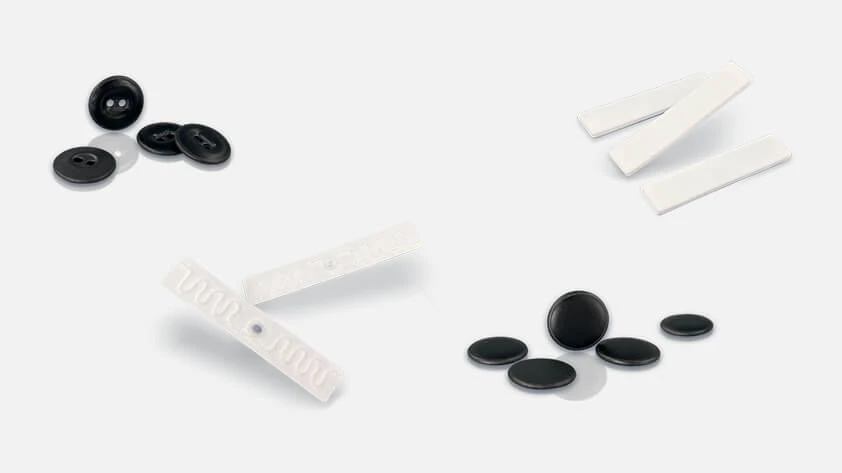
When selecting RFID laundry tags, it’s essential to consider the specific environment and requirements. Generally, the following types of RFID laundry tags are available, and you should choose based on your needs:
Passive RFID Tags
Passive RFID tags are battery-free and obtain energy from the radio frequency signals emitted by the RFID reader. When within the effective range of the reader, the tag’s internal circuit activates and transmits stored information back. Typically, these tags are made from plastic or paper, with ultra-high frequency (UHF) RFID tags being the most common, offering reading ranges of over ten meters. Their low cost and ease of mass production make passive RFID tags suitable for various applications, such as managing bed sheets and towels in hotels, tracking patient clothing in the medical sector, and managing employee uniforms.
Active RFID Tags
Active RFID tags come with built-in batteries, allowing them to transmit signals on their own, making them suitable for long-distance reading. Compared to passive tags, active tags have a reading range that can extend to tens of meters or more. This capability makes them ideal for complex environments, enabling real-time tracking of high-value or mobile items. For example, airlines frequently use active RFID tags to track tableware, blankets, and other onboard items, ensuring thorough inspection and washing before each flight. Active tags tend to be more expensive and are best suited for scenarios that demand robust real-time data tracking.
Semi-active RFID Tags
Semi-active RFID tags combine aspects of both passive and active tags. While they still rely on external RFID readers for power, their internal batteries enable additional functionalities. For instance, these tags can be equipped with sensors to monitor parameters like temperature or humidity. This makes them suitable for items with specific environmental conditions, such as sterilization equipment in hospitals or bedding in luxury hotels. The cost of semi-active tags falls between that of passive and active tags, making them a reasonable choice for applications that require a balance of cost and functionality.
Fabric RFID Tags
Fabric RFID tags are specifically designed for textiles, crafted from materials that resist water, wear, heat, and chemical corrosion. These tags can be attached to laundry items through sewing or thermal transfer methods and are capable of withstanding multiple washes without damage. Common applications include sheets, towels, work uniforms, and medical staff apparel. Fabric RFID tags not only facilitate item tracking but also ensure the integrity of information throughout the washing process.
Temperature-sensitive RFID Tags
Temperature-sensitive RFID tags feature built-in sensors that monitor temperature changes and record data accordingly. These tags are ideal for items needing specific temperature management, such as sterilization equipment in medical settings and certain pharmaceuticals. They help ensure that items remain within safe temperature ranges during washing or storage, thereby minimizing risks of cross-contamination. These tags are typically highly precise, capable of logging temperature data over specific periods and triggering alarms if preset ranges are exceeded.
Additional Considerations
Ensure that all tags—regardless of type—are resistant to water, heat, and stains so they can endure numerous washes and conditions of high temperature for optimal performance. The correct choice of RFID laundry tags tailored to your needs not only enhances operational efficiency but also contributes to better management and tracking of laundry items.
Tag Encoding
Program each RFID tag with a unique identifier (UID), typically a mix of letters and numbers. Using specialized encoding tools, input essential information such as item type, washing instructions, and handling history. It’s important that item classifications—like sheets, towels, or uniforms—and washing requirements—such as temperatures and detergents—are accurately recorded to avoid future reading errors.
Tag Attachment
RFID tags must be securely attached to laundry items to prevent loss or damage during washing. Common methods include:
Sewing: Best for durable fabrics, with tags sewn into the item’s edges.
Heat Transfer: Suitable for lightweight materials, pressing the tag onto the fabric.
Adhesive: Using a strong adhesive to attach tags directly, ideal for temporary items.
Choosing the right method is crucial for maintaining tag stability.
System Integration
Integrate RFID tags with laundry management systems effectively, deploying RFID readers at area entrances and exits for automatic tracking of items. Selecting a suitable software platform for real-time processing and reporting of tag information is vital. Ensuring compatibility with existing management systems—like ERP—is also key for smooth data handling.
Data Entry and Management
Before items are washed, staff should input relevant information into the management system using an RFID reader. Scanning each item lets the system automatically log the data. Information verification is necessary to confirm that recorded details match the actual items, with an alarm mechanism in place to flag discrepancies, ensuring accuracy and operational efficiency.
Washing and Tracking
Utilize RFID technology to monitor item status during washing. Staff should scan items before and after washing to maintain accurate records. The system updates each item’s wash status in real-time, allowing managers oversight of the processing workflow, enhancing efficiency, and facilitating prompt problem resolution.
Pickup and Distribution
After washing, employ the RFID system to facilitate the quick retrieval and distribution of items, improving service efficiency. Staff can scan tags to identify items and generate distribution lists automatically, minimizing manual errors and expediting delivery. Setting priority distributions ensures that urgent items are addressed quickly, enhancing service quality.
Data Analysis and Optimization
Regularly analyze data collected via the RFID system to optimize laundry management. By examining wash cycles, item usage frequency, and inventory levels, managers can pinpoint inefficiencies. This information can lead to better inventory management, adjustments in washing processes, and improved resource allocation. For instance, based on data insights, managers may choose to stock up on in-demand items or schedule washing equipment usage more effectively for optimal resource management.

Future Outlook of RFID Laundry Tags
With advancements in technology, the trend towards smart RFID laundry tags is becoming more evident. In the future, these tags will evolve from mere passive information carriers to sophisticated products equipped with enhanced functionalities. By incorporating sensors, laundry tags will monitor conditions such as temperature, humidity, and detergent usage in real-time. This real-time data can enable laundry management systems to automatically optimize washing processes to ensure each item is treated appropriately. Furthermore, leveraging Internet of Things (IoT) technology will allow laundry tags to connect seamlessly with other devices and systems, facilitating more comprehensive intelligent management. For example, laundry equipment could adjust wash times and temperatures dynamically based on the information from the tags to improve wash effectiveness and efficiency.
Additionally, RFID laundry tags have immense potential in data analytics. As more companies adopt this technology, the volume of accumulated data will grow substantially. With advanced analytics, businesses can gain deep insights into critical metrics like item usage, washing efficiency, and consumer preferences. This knowledge not only aids in refining the washing process but also supports informed decision-making. For instance, analytics may uncover patterns related to high-frequency item usage, bolstering inventory management and ensuring prompt restocking of popular items. Coupled with machine learning and artificial intelligence, businesses can anticipate future demand and create more strategic laundry operations, further enhancing efficiency and customer satisfaction. By harnessing the power of data analytics, RFID laundry tags will increasingly be integral to the management and operational success of the laundry industry.

FAQs
1. What Are RFID Laundry Tags?
RFID laundry tags are smart tags that utilize radio frequency identification (RFID) technology to automatically identify and track laundry items. Typically composed of a small microchip and an antenna, these tags can be embedded in or attached to clothing items. RFID tags can store extensive information, including washing requirements, item types, usage histories, and more. This capability helps organizations streamline management processes, reduce manual intervention, and enhance the accuracy of item tracking.
2. What Is the Difference Between RFID Laundry Tags and Traditional Tags?
The primary distinction between RFID laundry tags and traditional tags, such as barcodes, lies in their operational principles and functionalities. Unlike traditional tags that must be aligned directly with a reader and require a line of sight, RFID tags can be scanned quickly, even when multiple items are present simultaneously. This allows staff in laundry facilities to read numerous tags at once, significantly boosting operational efficiency. Furthermore, RFID tags can store more extensive information beyond just identification codes; they can include detailed data about the items, resulting in more adaptable and efficient management.
3. How Long Is the Service Life of RFID Laundry Tags?
The lifespan of RFID laundry tags largely depends on the type of tag, the materials used, and the environmental conditions in which they are employed. Generally, passive RFID tags can last anywhere from 5 to 10 years, while fabric RFID tags—designed to endure multiple washes, chemicals, and high temperatures—typically last between 3 to 5 years. Active tags, however, usually have shorter service lives of 1 to 3 years due to the limitations of their built-in batteries. Despite this, they offer longer reading distances and additional functionalities.
4. Do RFID Laundry Tags Support Data Encryption?
Yes, many RFID laundry tags come equipped with data encryption capabilities, safeguarding sensitive information stored on the tags. Data security is especially critical in industries such as healthcare, finance, and high-end services. Encryption technologies help prevent unauthorized access and data tampering, ensuring that only authorized devices and personnel can read or modify the information on the tags. This security feature not only protects customer privacy but also ensures compliance with industry regulations.
5. How Much Does an RFID Laundry Tag Cost?
The cost of RFID laundry tags can vary widely based on the type, features, and quantity purchased. Passive RFID tags are generally less expensive, ranging from a few cents to a few dollars each, making them suitable for large-scale applications. On the other hand, active and semi-active RFID tags can cost anywhere from a few dollars to tens of dollars due to their built-in batteries and advanced functionalities. Additionally, bulk purchases often come with price discounts, and custom label needs can also influence the final cost. When selecting the appropriate tag type, it’s essential to consider your budget alongside specific application requirements.
Recommended Products

