In the ever-evolving landscape of hospitality, every detail contributes to the guest experience. From the plushness of the bedding to the aroma in the lobby, hoteliers meticulously craft an environment that speaks volumes about their brand. Among these seemingly minor yet profoundly impactful elements is the hotel card material used for key cards. Far more than just a means to unlock a door, the key card is a tangible touchpoint that guests interact with multiple times a day. It’s a silent ambassador, conveying messages about quality, sustainability, and attention to detail. The choice of material for these cards directly influences their durability, aesthetic appeal, and ultimately, the guest’s perception of their stay.
1.The Importance of Material Choice in Hotel Cards

Hotel key cards are handled countless times each day — swiped, tapped, dropped, and stuffed into wallets or pockets. The material used to make these cards determines how long they last, how they look, and how well they perform over time. While most hotels traditionally use PVC due to its durability and affordability, today’s hospitality market is shifting. Modern travelers care about sustainability, and hotels are seeking materials that not only last but also align with their eco-friendly values.
The right hotel card material can therefore serve both practical and marketing purposes. It should be tough enough to withstand repeated use while also visually complementing your brand’s design language — whether that’s sleek and modern, natural and eco-conscious, or minimalist and tech-driven.
2.Common Types of Hotel Card Materials
Let’s explore the most commonly used materials for hotel key cards and what makes each one unique:
2.1 PVC (Polyvinyl Chloride)
PVC has long been the industry standard for hotel key cards due to its excellent balance of durability and cost-effectiveness. It is highly resistant to wear and tear, water, and general handling, making it a reliable choice for high-traffic environments. PVC cards offer extensive design possibilities, allowing for vibrant colors, intricate graphics, and various finishes. However, its environmental footprint is a significant concern, as PVC is not biodegradable and its production can involve harmful chemicals.
2.2 PET (Polyethylene Terephthalate)
PET is often considered a more environmentally friendly alternative to PVC. It offers good durability, though slightly less flexible than PVC, and is recyclable. PET cards maintain a smooth finish and can accommodate high-quality printing, making them suitable for hotels that prioritize both aesthetics and a moderate level of sustainability. The cost is typically higher than PVC but still within a reasonable range for most establishments.
2.3 Wood
Wooden hotel cards are a rising trend, especially among boutique and eco-friendly hotels. They offer a natural, unique texture and a strong visual appeal. Though not as durable as plastic, their organic appearance and eco-conscious message can enhance a brand’s image.
2.4 Eco PLA (Polylactic Acid)
Eco PLA is a biodegradable plastic derived from renewable resources like corn starch or sugarcane. It offers a promising balance of durability and environmental responsibility, similar to PET but with the added benefit of compostability under industrial conditions. Design flexibility is good, and its cost is becoming more competitive as production scales. PLA is an excellent choice for hotels committed to reducing their plastic waste and enhancing their green credentials.
Here’s a comparative overview of these common hotel card materials:
| Material | Strength | Design Options | Cost | Sustainability |
| PVC | Excellent | High | Low | Low |
| PET | Good | Medium | Moderate | Medium |
| Wood | Moderate | High | High | High |
| Eco PLA | Medium | Good | Moderate | High |
3. Durability: The Foundation of Functionality
Durability is often the first factor hotels consider when selecting key card materials. Cards must endure thousands of uses, exposure to moisture, bending, and even the occasional coffee spill. If a card cracks, warps, or loses its RFID signal easily, it leads to guest frustration and extra replacement costs.
Consider the daily life of a hotel key card: it might be exposed to poolside humidity, the accidental spill of a drink, or the heat of a car dashboard. Materials like PVC excel in these conditions, offering high water resistance, flexibility to prevent snapping, and good heat tolerance. PET also performs admirably.
4. Design: Expressing Brand Identity Through Material

While durability addresses the functional aspects of a key card, its design and tactile qualities are equally crucial in shaping a guest’s perception of the brand. The material of a hotel card is an integral part of its design, influencing everything from its weight and texture to its printing capabilities and overall aesthetic. It’s an opportunity for a hotel to reinforce its brand identity and tell its unique story.
A matte PVC card with gold-foil printing says “modern elegance.” A bamboo or kraft paper card says “eco-luxury.” Even the thickness and texture affect how guests perceive your brand. Modern printing technologies have expanded what’s possible with hotel card materials. Transparent PET cards, soft-touch finishes, embossed logos, metallic inks, and laser engraving are just a few examples of how material and design now blend seamlessly.
5. Finding the Balance: Durability Meets Design
Choosing between durability and design doesn’t have to be an either/or decision. The key is to understand your hotel’s priorities and target audience.
Luxury hotels: prefer premium finishes like metallic PVC or engraved wood cards.
Chain hotels: focus on consistency and cost-efficiency, often using PVC or PET.
Eco-hotels: choose biodegradable or recycled materials.
To aid in the selection process, here’s a short checklist:
Environment of use: Humid or coastal areas may need waterproof materials.
Guest type: Business travelers may prefer sleek designs; leisure guests might value creativity.
Brand positioning: Align materials with your sustainability or luxury message.
Technology compatibility: Ensure your material supports RFID or NFC chips for modern access systems.
Budget considerations: Balance cost with long-term savings from reduced replacements.
6. Emerging Trends in Hotel Card Materials
The hotel industry is evolving quickly, and so are its materials. Sustainability and technology are leading the next wave of innovation.
Biodegradable plastics (PLA) are replacing traditional PVC in eco-conscious properties.
Recycled materials are being integrated into cards to reduce plastic waste.
Smart composites offer antimicrobial or anti-scratch surfaces to extend lifespan.
Digital hybrid cards combine RFID with app-based access, yet still retain a tangible material card for guests who prefer a physical key.
7. Conclusion
Selecting the right hotel card material is not a simple matter of cost or convenience. It’s about creating a guest experience that reflects your brand’s values and meets practical needs. The best choice lies in the balance — a material that delivers both resilience and refined aesthetics. In today’s competitive hospitality world, that balance defines your brand’s attention to detail and quality. Partner with us today to upgrade your hotel’s guest experience with durable, elegant, and sustainable key cards. Let’s make every check-in more memorable — starting with the perfect card.
Recommended Product
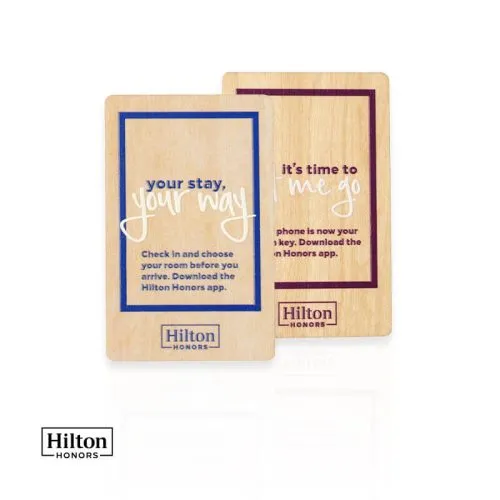
Wooden Hilton Key Card Copy

The wooden RFID key cards we designed for Hilton Hotels are made from sustainable, natural, eco-friendly wood, and their unique texture exudes a luxurious feel. Each card is fully customized to seamlessly integrate with Hilton’s existing RFID locking system, providing guests with secure and convenient access.