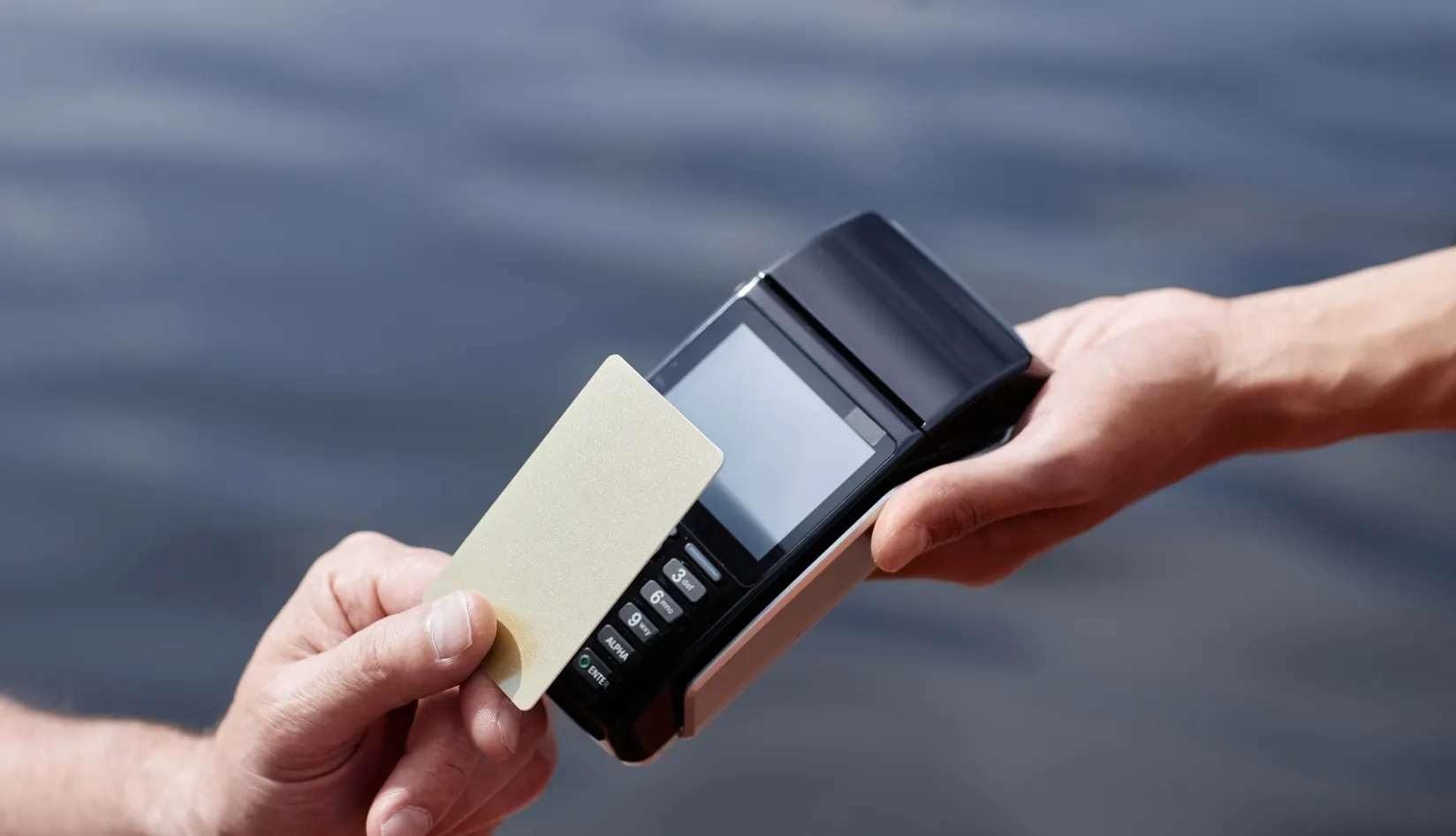
The way we pay has changed more in the past decade than in the previous fifty years. Physical cash has given way to plastic cards, and now even those cards are increasingly replaced by digital wallets. At the center of this transformation lies NFC payment security—a critical but often misunderstood foundation that determines whether “tap and pay” is merely convenient or genuinely trustworthy. This article will provide an in-depth analysis of the evolution of payment security, the cryptographic and hardware-based defenses inherent in NFC technology, and the practical steps necessary to maintain a secure digital wallet environment.
1. The Pre-NFC Era: A Security Retrospective
To appreciate the advancements in modern payment systems, one must first understand the vulnerabilities of their predecessors.

1.1 Magnetic Stripe Cards
Magnetic stripe cards were created at a time when connectivity was limited and fraud patterns were simpler. Their core weakness was structural: card data was static. Every transaction transmitted the same card number, expiration date, and verification data. Once via skimming, compromised terminals, or insider leaks that data could be reused indefinitely.
1.2 EMV Chip Cards
EMV chip cards significantly improved payment security by enabling dynamic cryptograms and transaction-specific authentication. This dynamic authentication process made traditional skimming and cloning virtually impossible, as a stolen cryptogram could not be replayed for a second transaction. While EMV dramatically reduced card-present fraud, it did not eliminate all weaknesses. Remaining vulnerabilities included “shoulder surfing” to compromise the user’s PIN. Furthermore, the chip-and-PIN system did not fully address card-not-present (CNP) fraud, which subsequently saw a rise as fraudsters shifted their focus.
2. How NFC Payments Work: A Security-Focused Breakdown
The security of NFC payments is a layered defense system, far more sophisticated than the simple act of tapping a phone might suggest.

2.1 NFC Communication at Close Range
A common myth is that NFC is secure simply because it works at short distances. In reality, short range alone is insufficient protection. Signal interception, relay attacks, and amplification techniques can extend NFC communication far beyond a few centimeters under certain conditions.
True NFC payment security is achieved not by distance, but by layered cryptographic and system-level controls.
2.2 Secure Elements and Trusted Execution Environments
Modern NFC payments rely on protected execution environments within devices. Sensitive payment credentials are stored either in a hardware-based Secure Element (SE) or within a Trusted Execution Environment (TEE) isolated from the main operating system.
This isolation is critical. Even if the phone’s primary OS is compromised, attackers cannot directly access payment credentials. This is a fundamental improvement over physical cards, where security relies entirely on the integrity of the card itself.
2.3 Tokenization: The Cornerstone of NFC Payments Security
Tokenization is arguably the most critical component of modern NFC payments security. It is a process that replaces the user’s Primary Account Number (PAN)—the actual 16-digit card number—with a unique, randomly generated surrogate value called a payment token. This token is useless outside of the specific payment ecosystem for which it was created. When a user makes an NFC payment, the token is transmitted to the merchant. If this transaction data is intercepted by an attacker, the stolen token is effectively useless because it cannot be used to create a physical card, nor can it be used for online purchases. This mechanism ensures that the integrity of the user’s actual card details is never exposed, making stolen transaction data valueless to criminals.
3. Digital Wallets vs Physical Cards: A Security Comparison
The comparison between digital wallets and traditional NFC-enabled physical cards reveals different security models rather than a simple hierarchy of “secure” versus “insecure.” Digital wallets benefit from the layered security architecture of modern smartphones, while NFC cards offer consistency, simplicity, and controlled deployment—making each suitable for different payment and access environments.

3.1 Why Digital Wallets Can Offer Enhanced Security in Consumer Payments
In consumer-facing payment scenarios, digital wallets often provide enhanced protection by reducing direct exposure of sensitive card data. Key advantages include:
- The real card number is never shared with merchants
- Payment tokens are device- and transaction-specific, making copied data unusable
- Transactions typically require device-level authentication, such as biometrics or passcodes
In this model, the smartphone acts as a secure gateway rather than a passive credential, combining secure hardware, operating system controls, and cloud-based risk management.
3.2 Biometric Authentication
The integration of biometric authentication, such as Face ID, fingerprint scanning, and device-level passcodes is a game changer for digital wallet security. Before a payment token can be used, the device requires the user to authenticate themselves, proving they are the legitimate owner. This multi-factor security approach effectively turns the device into a secure, personalized key.
However, it is important to note that biometric authentication is one approach to NFC payment security, not a universal requirement. In many enterprise, transit, hospitality, and closed-loop payment systems, NFC cards remain a preferred option due to their:
- Predictable behavior and offline reliability
- Easier lifecycle management at scale
- Compatibility with existing infrastructure
- Clear separation between identity verification and transaction execution
In such environments, security is enforced at the system and backend level, rather than relying solely on user-device authentication.
4. The Future of NFC Payment Security
The future of NFC payments security will move beyond simple device-based authentication to incorporate identity and behavioral analysis.

4.1 Beyond Cards: Identity-Centric Payments
Future systems will increasingly move towards binding payments to a verified identity rather than just a device or a token. This involves leveraging behavioral and contextual authentication. For example, a system might analyze a user’s typical spending habits, location, and even the way they hold and interact with their phone. A transaction that deviates significantly from this established behavior could be flagged for additional verification, adding a layer of security that is invisible to the user but highly effective against fraud.
4.2 AI-Driven Fraud Detection in NFC Ecosystems
AI and Machine Learning are becoming indispensable tools for real-time fraud detection. AI models can analyze vast streams of transaction data, identifying subtle patterns and anomalies that human analysts or rule-based systems would miss. This allows for real-time transaction risk scoring, where a transaction is instantly assessed for its likelihood of being fraudulent. AI complements the cryptographic defenses by providing a dynamic, adaptive layer of security that can evolve with new fraud techniques.
4.3 Post-Quantum Cryptography and NFC
While quantum computing is not an immediate threat, payment ecosystems are already exploring quantum-resistant cryptographic algorithms. Long-term NFC payment security depends on forward-looking standards that can evolve without breaking compatibility.
5. Practical Guidance: How Users and Businesses Can Improve NFC Payment Security Today
A robust security posture requires proactive measures from all stakeholders in the payment ecosystem.

5.1 For Consumers
The primary responsibility for consumers lies in maintaining strong device security habits. This includes:
- Enabling Biometrics: Always use Face ID or fingerprint authentication for your mobile wallet.
- Strong Passcodes: Use a complex passcode and enable auto-lock on your device.
- Timely Updates: Install operating system and app updates immediately, as they often contain critical security patches.
- Avoid Rooting: Never modify your device’s operating system, as this bypasses built-in security features.
5.2 For Merchants and Service Providers
Merchants and service providers must focus on secure infrastructure and customer experience. This involves:
- Secure Hardware: Only use certified, tamper-resistant NFC-enabled POS hardware.
- Token Acceptance: Ensure your systems are fully capable of processing tokenized transactions and do not attempt to store or process the raw PAN.
- Balanced UX: Design customer journeys that balance frictionless user experience with necessary security checks, ensuring that authentication is required for high-value or unusual transactions.
6. Conclusion
The evolution from physical cards to digital wallets represents a fundamental shift in how trust is built into payment systems. NFC payment security is not based on a single technology, but on a layered architecture combining secure hardware, tokenization, cryptography, authentication, and ecosystem governance. The future of payments will not be defined by how fast we can tap, but by how invisibly and reliably security protects every transaction.
Recommended Product
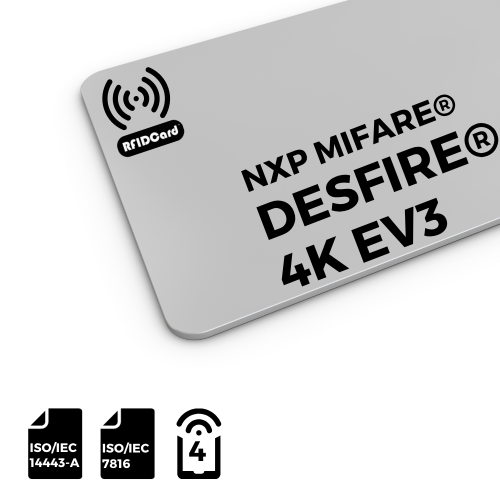
RFID Card NXP MIFARE® DESFire® EV3 4K

Blank or customized printing RFID cards with a choice of dimensions are available. The MIFARE® DESFire® EV3 4K is Common Criteria EAL5+ security certified for smart card IC products. The MIFARE® DESFire® EV3 4K ICs fully comply with NFC Forum Type 4 Tag.