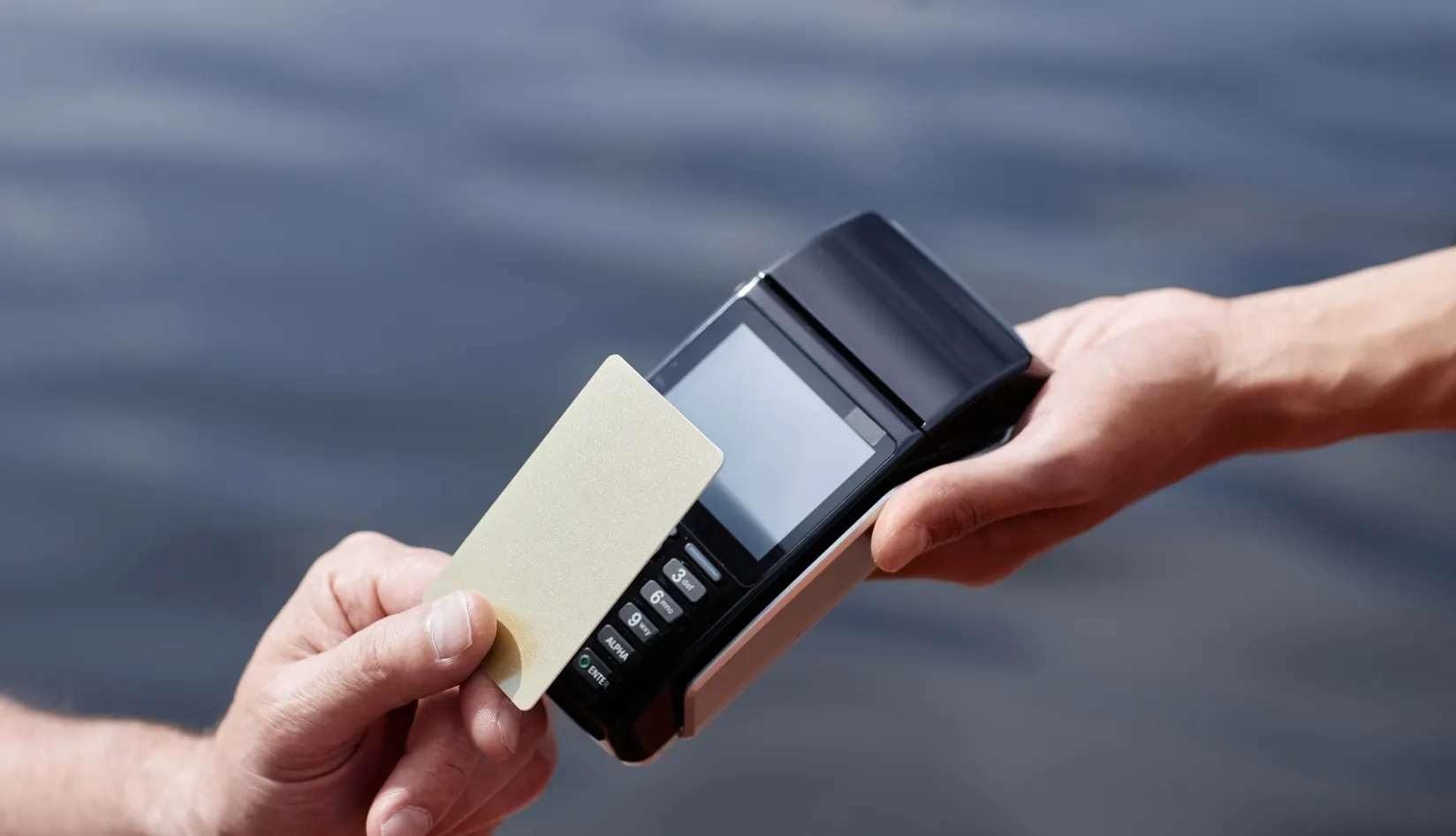
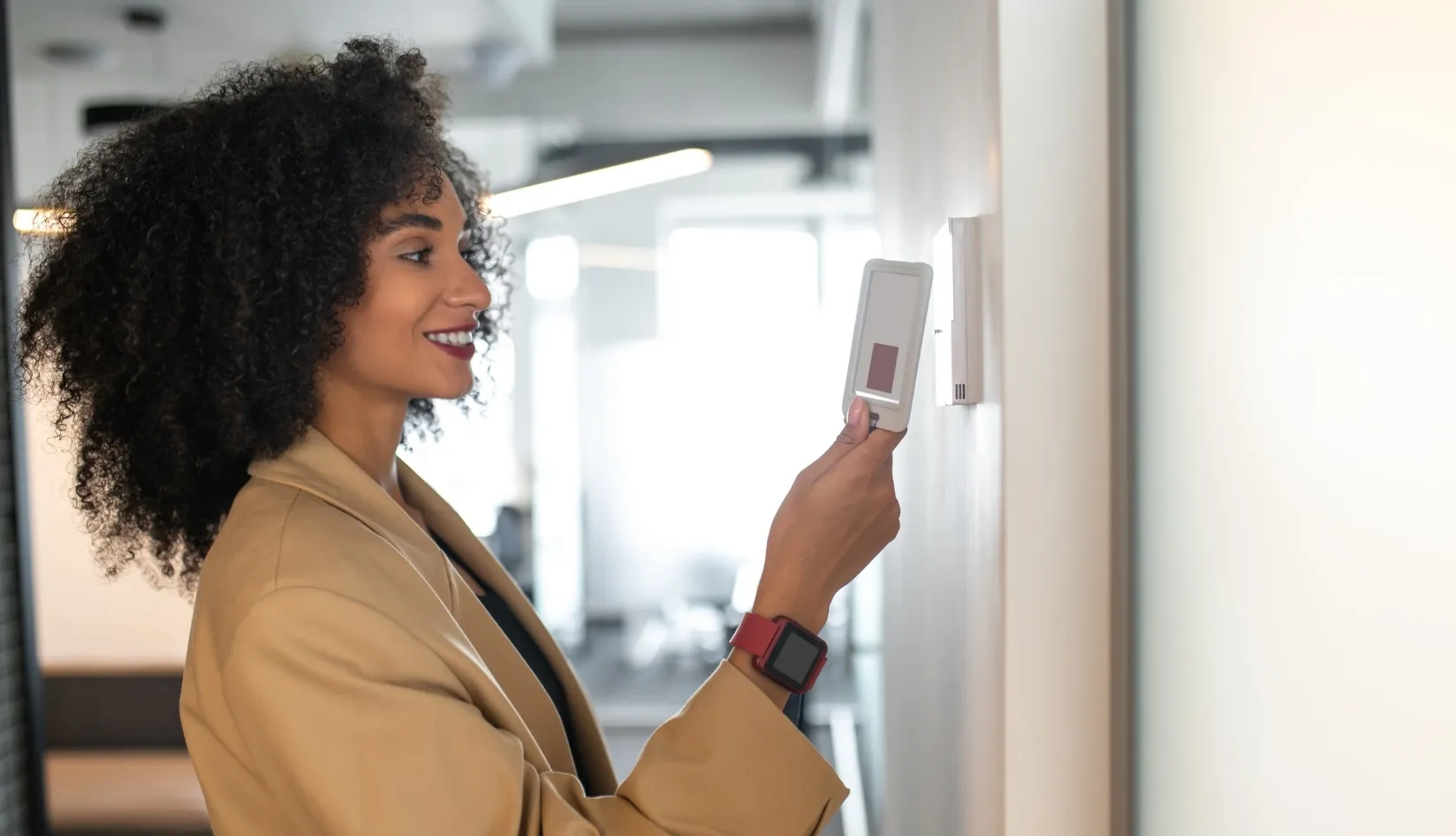
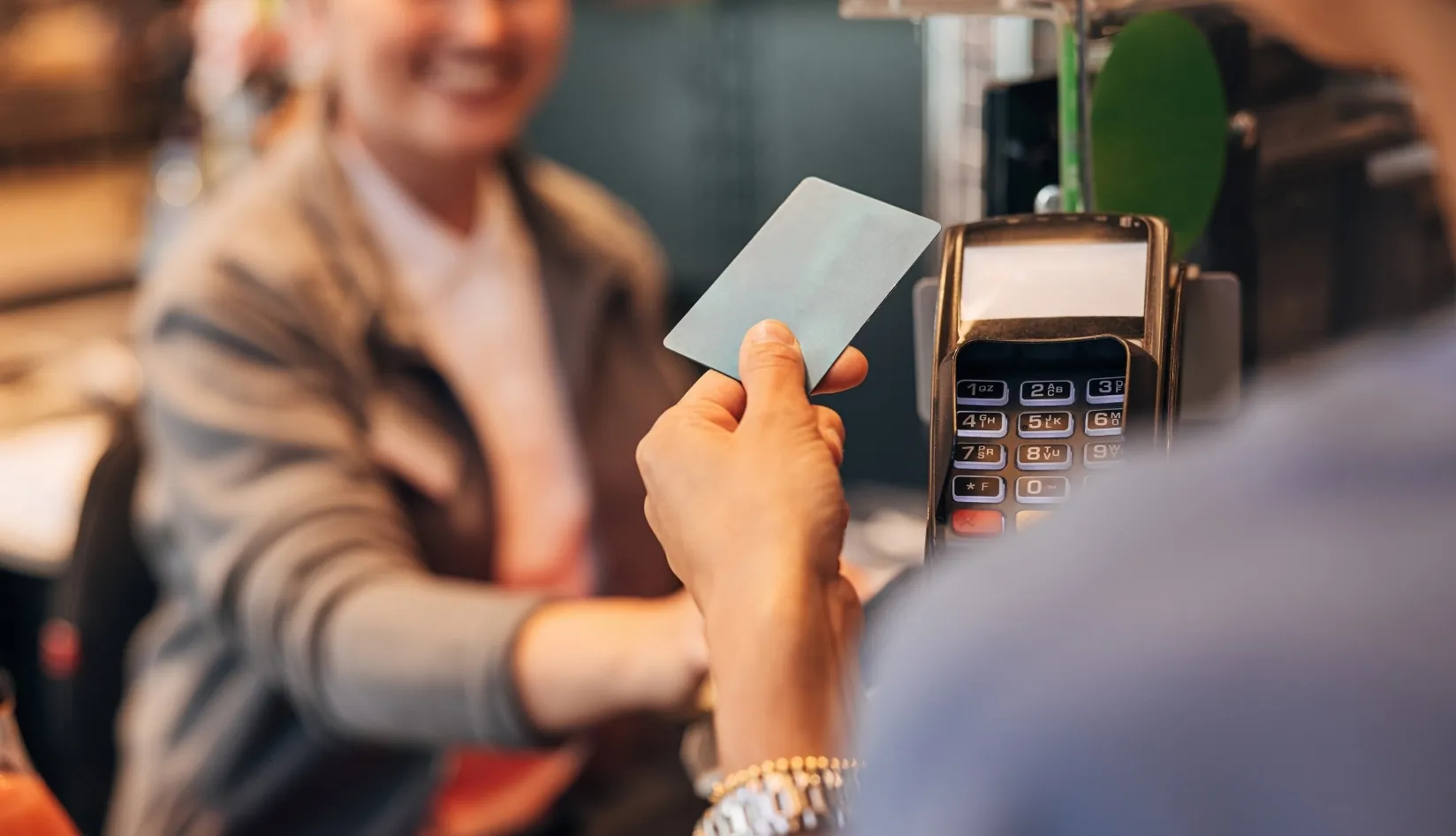
In a world that is rapidly shifting toward contactless interactions, both NFC cards and smartphone-based solutions are experiencing strong growth. Businesses across hospitality, corporate security, transportation, and retail are adopting NFC-enabled systems to deliver faster, more secure, and more convenient user experiences. While many people assume that smartphones will eventually replace physical cards, the reality is more nuanced. Both technologies rely on the same NFC foundation—and both continue to evolve in parallel. Today, Mobile wallet NFC solutions such as Apple Wallet, Google Wallet, and Samsung Wallet are reshaping digital credentials, but NFC cards remain essential across countless industries. Instead of competing, the two are complementary tools in a broader contactless ecosystem.
1. Understanding NFC: The Shared Technology Behind Cards and Smartphones
At the heart of this contactless revolution is Near Field Communication (NFC), a short-range wireless technology that allows two devices to communicate when they are within a few centimeters of each other.

1.1 What Is NFC and How It Works
NFC is a short-range wireless communication technology that allows two devices to exchange data when placed within a few centimeters of each other. The technology operates at 13.56 MHz and supports various modes, including read/write mode, peer-to-peer mode, and card emulation mode. NFC is passive when embedded in a card (powered by the reader’s electromagnetic field) and active when used in smartphones capable of both sending and receiving signals.
1.2 NFC Cards and Smartphones Use the Same Protocols
Crucially, the underlying communication protocols are shared between physical cards and digital wallets, ensuring broad compatibility across the existing infrastructure.
- ISO/IEC 14443: This international standard defines the communication protocols for proximity cards, which includes the contactless payment cards and access cards we use every day. Any modern NFC reader is built to communicate using this standard.
- NFC Forum Standards: The NFC Forum, an industry association, further standardizes the technology, ensuring interoperability between different devices and applications. This standardization is what allows a single NFC reader to process a transaction from a physical card, an Apple Wallet, or a Google Wallet.
This fundamental compatibility is the key to cross-industry adoption. Businesses do not need to rip and replace their existing NFC infrastructure to support mobile wallets; they simply need to enable the processing of the digital credentials that adhere to the same established protocols.
2. The Rise of Mobile Wallets
The proliferation of smartphones has made the mobile wallet an indispensable tool, transforming the device we carry everywhere into a universal credential.

2.1 Convenience and Always-On Connectivity
Mobile wallets, such as Apple Wallet, Google Wallet, and Samsung Wallet, offer unparalleled convenience. They consolidate multiple credentials—payment cards, loyalty programs, and access keys—into a single, easily accessible interface. The “always-on” nature of the smartphone means that a user’s access and payment credentials are, by extension, always available.
2.2 Enhanced Security Features
One of the most compelling arguments for mobile wallets is their robust, multi-layered security architecture, which often surpasses that of a physical card.
- Device Authentication: Transactions and access events require the user to authenticate themselves, typically through a PIN, passcode, or biometric scan (fingerprint or facial recognition).
- Tokenization: This is a cornerstone of mobile wallet security. Instead of transmitting the user’s actual card number, the mobile wallet sends a unique, one-time-use token to the merchant or access point. If intercepted, this token is useless to a fraudster.
- Secure Element (SE) / Host Card Emulation (HCE): The secure storage of the digital credential is managed either by a dedicated, tamper-resistant chip on the device (Secure Element, common in older systems or specific security applications) or through software-based emulation (Host Card Emulation), which allows the credential to be stored securely in the cloud and accessed via the phone’s operating system.
2.3 Ideal Use Cases for Mobile wallet NFC
The intelligence and connectivity of the smartphone unlock a range of non-payment applications that physical cards cannot match. The versatility of Mobile wallet NFC extends far beyond the checkout counter, integrating seamlessly into daily life:
| Use Case | Description | Advantage over Physical Card |
| Hotel Mobile Keys | Digital room keys stored in the mobile wallet, allowing guests to unlock their door with a tap. | Remote check-in, no physical key to lose. |
| Event Ticketing | Digital tickets for concerts, sports, and transit, often featuring dynamic barcodes or NFC credentials. | Fraud reduction via tokenization, real-time updates, easy transfer. |
| Boarding Passes | Airline boarding passes that can be tapped at security checkpoints and gates. | Seamless integration with travel apps, real-time gate changes, no printing required. |
3. Why NFC Cards Still Matter in a Mobile-First Era
Despite the rapid rise of smartphone-based credentials, NFC cards continue to be irreplaceable in many environments.

3.1 Accessibility and Universal Usability
The physical card’s greatest strength is its independence. It is a passive device that requires no power source, network connection, or operating system.
- Battery-Free Functionality: An NFC card will work every time, regardless of the user’s phone battery level. This is a non-negotiable requirement for critical access control systems, such as emergency exits or high-security areas.
- No App or Network Dependency: The card works instantly upon presentation to the reader, eliminating the need to open an app, authenticate the device, or rely on a stable cellular or Wi-Fi connection. This ensures reliability in remote or infrastructure-poor environments.
3.2 Cost-Effectiveness for Businesses
For organizations that require the mass issuance of credentials, the NFC card often presents a more cost-effective solution than relying solely on mobile deployment.
- Lower Deployment Cost: While the initial cost of a card reader is similar, the ongoing cost of managing a physical card system can be lower. Cards can be purchased in bulk at a low unit cost.
- Easy Bulk Issuance: Issuing thousands of physical cards is a straightforward process, often involving simple printing and encoding.
- Long Lifespan and Predictable Maintenance: High-quality NFC cards, particularly those based on robust chips like MIFARE DESFire, are durable and have a predictable lifespan, simplifying maintenance and replacement cycles.
3.3 Environments Where Phones Are Impractical
Certain operational environments are inherently hostile to personal electronic devices, making the physical card the only viable option. In construction sites, factories, or environments with strict electromagnetic interference (EMI) regulations, a simple, ruggedized NFC card is far more practical and compliant than a fragile smartphone. Similarly, for environments like schools or specialized industrial settings where phone usage is restricted or prohibited, the physical card provides necessary access without violating policy.
4. Security Comparison: NFC Cards vs Smartphones
The security debate between cards and mobile wallets is nuanced. Both are highly secure, but they achieve security through different mechanisms tailored to their form factor.

4.1 How Secure Are NFC Cards?
Modern, high-security NFC cards are far from simple pieces of plastic. They contain sophisticated microcontrollers designed to resist physical and digital attacks.
- AES Encryption: Advanced chips, such as the NXP MIFARE DESFire family, utilize military-grade encryption standards like AES-256 (Advanced Encryption Standard) to secure data transmission between the card and the reader.
- Mutual Authentication: Before any data is exchanged, the card and the reader perform a mutual authentication process, ensuring that both parties are legitimate and preventing unauthorized reading or cloning.
- Tamper-Resistant Hardware: The chips themselves are designed to be tamper-resistant, making it extremely difficult for an attacker to physically extract the cryptographic keys.
4.2 Smartphone Security Layers
The security of a Mobile wallet NFC transaction is built upon the security of the smartphone’s operating system and hardware.
- Biometrics: The requirement for a fingerprint or face scan before a transaction is authorized provides a strong layer of user authentication that physical cards lack for small-value transactions.
- Tokenization: Tokenization ensures that even if transaction data is intercepted, the underlying card number is never exposed, rendering the stolen data useless.
- Cloud Credential Management: The ability to remotely disable or wipe a mobile wallet if the phone is lost or stolen provides a level of control and security that is impossible with a physical card.
4.3 Balanced Perspective: Which Is “More Secure”?
It is misleading to declare one universally “more secure” than the other. The choice depends entirely on the use case. Smartphones offer robust, multi-layer security but depend on user behavior, battery life, and device integrity. NFC cards are hardware-based, predictable, and independent of software vulnerabilities.
For high-volume, low-value payments, the mobile wallet’s tokenization and biometrics offer superior protection against data theft. For critical infrastructure access in harsh environments, the card’s hardware-based security and reliability are unmatched.
5. Coexistence, Not Competition: Why Both Will Continue to Grow
The most successful organizations are those that recognize the complementary strengths of both technologies and deploy hybrid systems. The market is not trending toward a single solution but toward flexibility.
5.1 Hybrid Systems Used in Real Industries
Real-world applications demonstrate the power of a dual approach:
- Hotels provide mobile keys but still issue NFC room cards
- Corporate offices support both employee badges and smartphone access
- Events distribute NFC wristbands while offering digital tickets
- Transportation accepts both digital and physical contactless passes
5.2 User Preference Matters
Ultimately, technology adoption is driven by user choice. A significant portion of the population, particularly in certain demographics, still prefers the tangible reliability of a physical card. Conversely, tech-savvy users demand the convenience of their smartphone. Businesses that offer both options maximize user satisfaction and adoption rates. By supporting both NFC cards and mobile credentials, organizations future-proof their infrastructure against shifting user habits.
6. How Businesses Should Choose: Cards, Mobile Wallet, or Both?

The decision for a business is rarely “card or mobile wallet” but rather “which mix is optimal?”
6.1 Key Decision Factors
Organizations must weigh several factors when designing their credential strategy:
| Factor | Consideration | Impact on Choice |
| Budget | Initial cost of cards vs. licensing fees for mobile credential platforms. | Cards are cheaper for high-volume, low-security needs. |
| Infrastructure Compatibility | Existing reader hardware and backend management systems. | Modern readers often support both, simplifying the transition. |
| Operational Environment | Exposure to harsh weather, battery life concerns, or security regulations. | Cards are necessary for extreme or restricted environments. |
6.2 Recommended Strategy for Most Organizations
For the vast majority of modern organizations, the recommended strategy is to deploy a dual system. This approach, often termed a “phased hybrid deployment,” allows the business to immediately leverage the reliability of existing NFC card infrastructure while gradually introducing the advanced features and convenience of Mobile wallet NFC. This flexibility ensures that the organization can cater to all user preferences, maximize system uptime (by having a physical backup), and future-proof its investment by adopting a platform that can manage both physical and digital credentials from a single interface.
7. Conclusion
NFC technology continues to expand across industries, powering both physical cards and digital smartphone solutions. Although Mobile wallet NFC brings intelligent features, cloud connectivity, and strong security, NFC cards remain indispensable for their reliability, accessibility, and cost-effectiveness. These two technologies are not rivals—they are partners in the evolution of contactless access. For businesses preparing for the future, adopting a dual strategy enables the best blend of convenience, security, and operational efficiency.
Recommended Product
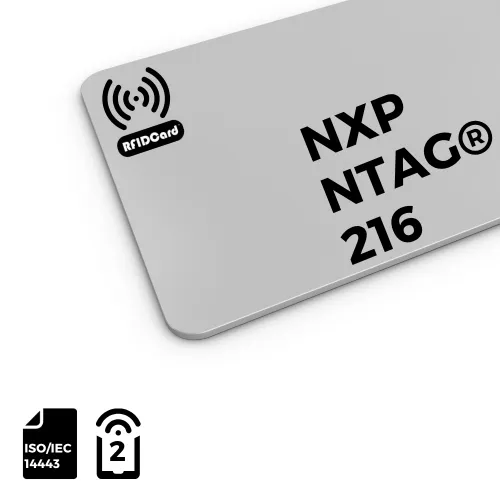
NFC Card NXP NTAG® 216 NFC Type 2

The NTAG® 216 RFID card is made with Photo quality standard PVC sheets into size of CR80, it programmed 7-byte UID with 888 bytes of user memory available (222 pages). The NTAG® 216 NFC ICs fully comply to NFC Forum Type 2 Tag and ISO/IEC14443 Type A specifications.