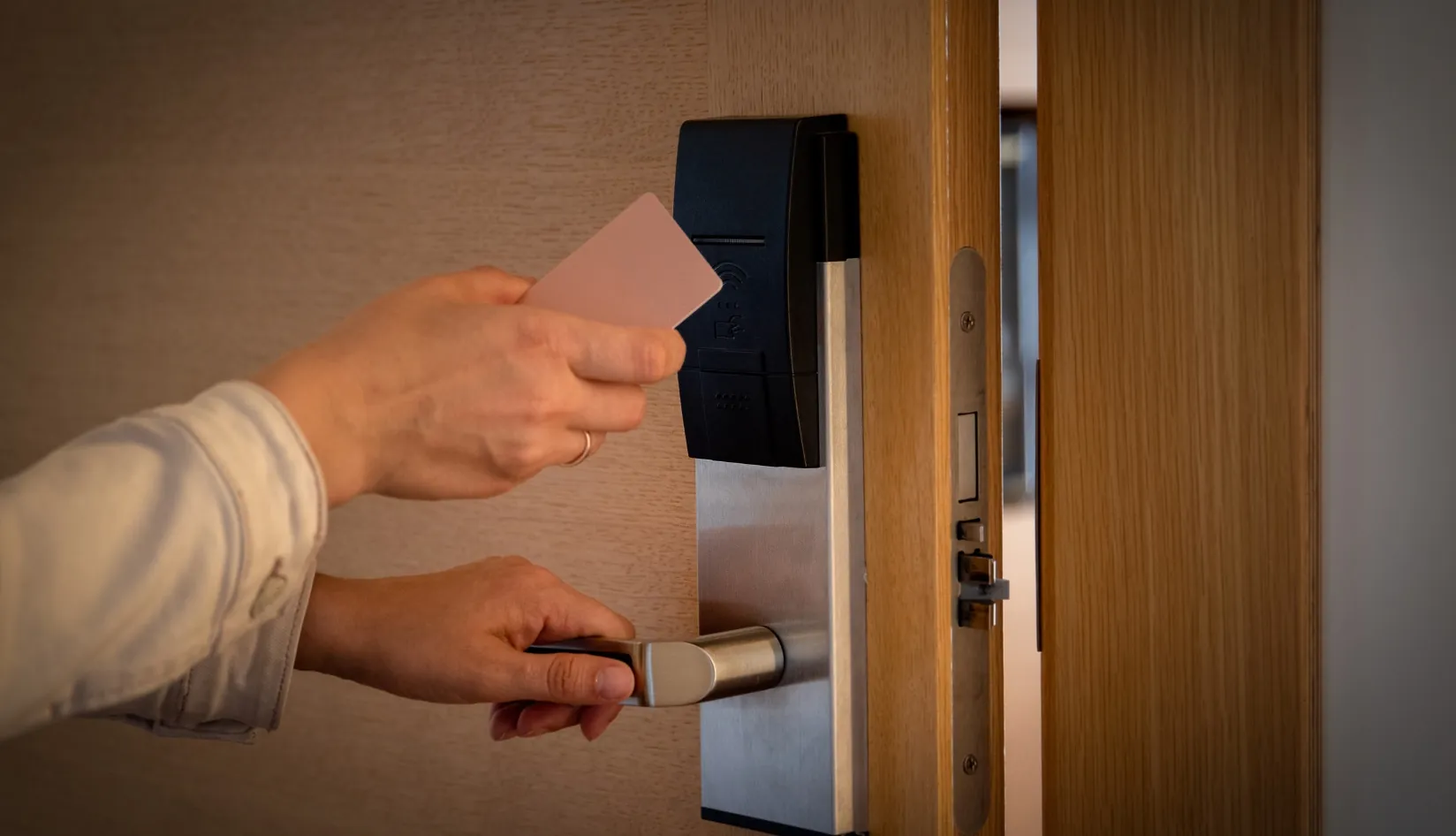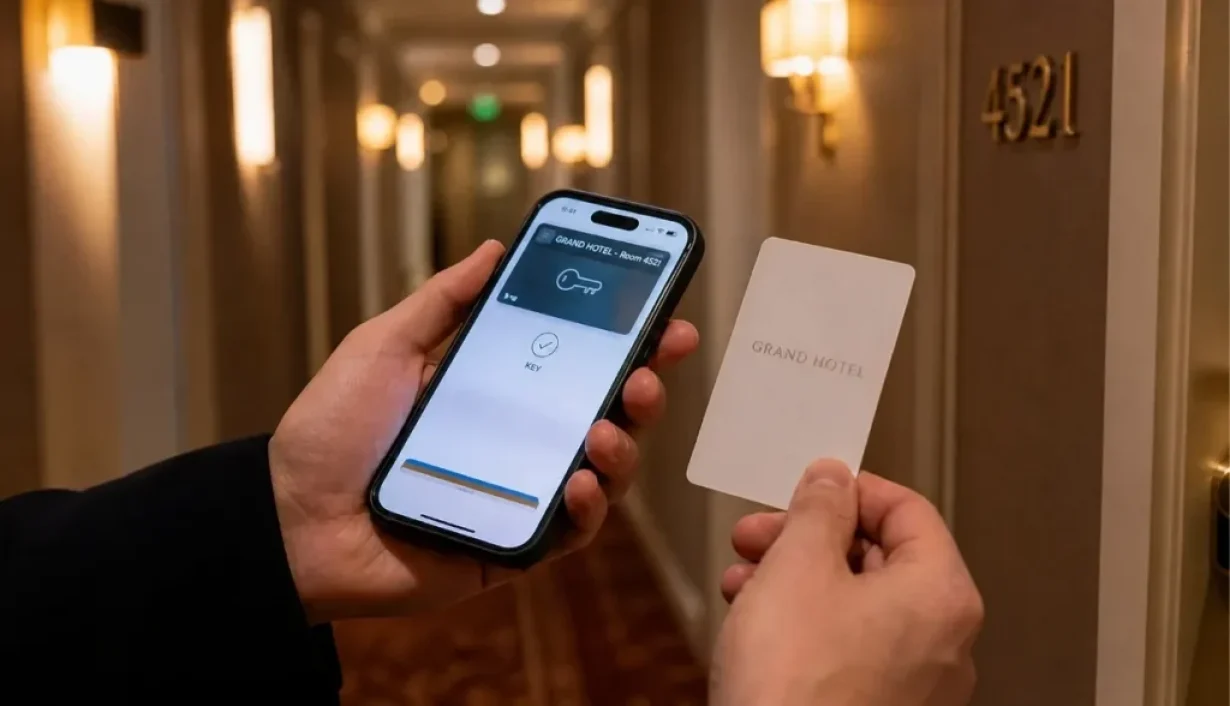

Mobile key systems allow hotel guests to use their smartphones instead of traditional room key cards. As major hotel brands continue investing in digital guest experiences, many hotel operators are asking the same question: Are mobile keys becoming the future of hotel access, and will they eventually replace RFID hotel key cards?
The short answer is no—not entirely.
While mobile keys offer clear advantages in convenience and personalization, most hotels today still rely on RFID-based access systems as the foundation of daily operations.
This guide explores how hotel mobile key systems work, their benefits and limitations, and why many properties are adopting a hybrid access model rather than choosing one technology over the other.
What Is a Mobile Key System in Hotels?
A mobile key system allows hotel guests to use their smartphone as a digital room key instead of a physical card. After check-in, access credentials are sent to the guest’s hotel app, enabling secure and contactless room entry.
Most hotel mobile key systems work through a combination of secure digital credentials and wireless communication technologies.
- Bluetooth Low Energy (BLE): Unlocks doors automatically when the guest approaches the room
- Near Field Communication (NFC): Requires the phone to be tapped on the door reader, similar to contactless payment
- PMS Integration: Access rights are automatically issued, updated, or revoked through the hotel’s Property Management System
- Centralized Control: Hotels can manage guest access in real time without reissuing physical cards
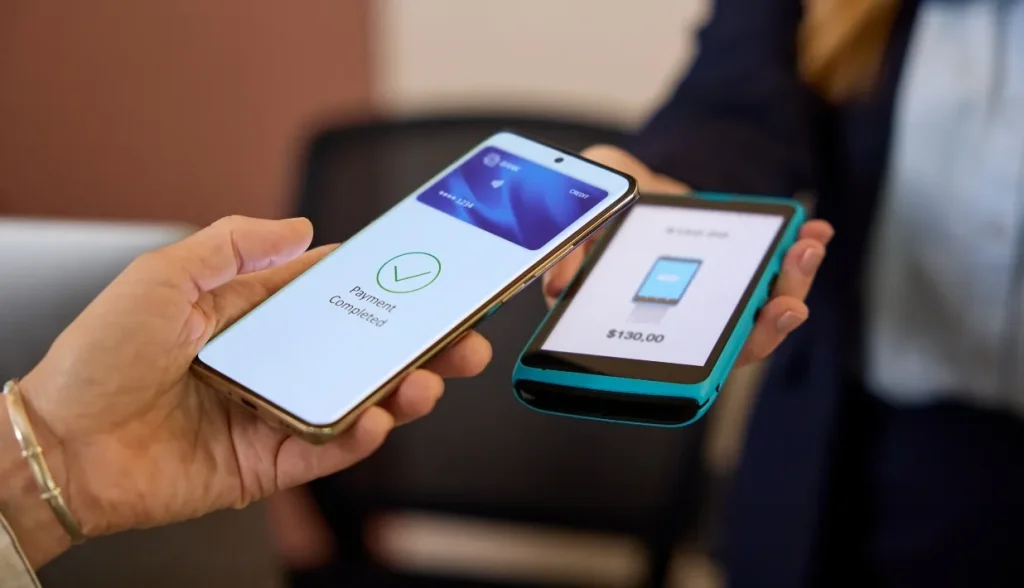
Beyond door access, mobile keys are often part of a wider digital guest experience ecosystem, including mobile check-in, payments, and in-app service requests.

Advantages of Mobile Key Systems
The adoption of mobile key systems is driven by operational changes in hotel access management. These systems impact guest check-in flow, staff workload, and physical key card usage.
Faster Check-In Experience
Mobile key systems allow guests to access their rooms using their smartphones after check-in, reducing the need to visit the front desk. This removes a manual step in the arrival process, especially during peak check-in hours.
Reduced Front Desk Workload
By replacing physical key card issuance and replacement processes, mobile key systems reduce routine tasks handled by front desk staff. Access credentials can be delivered digitally through the hotel system without manual encoding.
Guest Service Integration
Mobile key systems are often connected to hotel applications that also manage check-in, room selection, and service requests. This enables room access and guest services to operate within a single digital platform.
Sustainability Impact
Mobile key systems reduce reliance on plastic key cards used for guest access. This leads to lower production, replacement, and disposal of physical cards, especially in high-volume hotel operations.
What Are the Limitations of Mobile Key Systems?
While mobile key systems offer clear advantages, they also present several practical challenges that prevent many hotels from relying on them as the sole access solution.
Device Dependency
Unlike physical hotel key cards, mobile keys depend entirely on a guest’s smartphone. If the device runs out of battery, is lost, or experiences connectivity issues, guests may be unable to access their room. For this reason, many hotels still provide physical key cards as a backup to ensure uninterrupted access.
Guest Adoption Challenges
Although guest interest in mobile keys is high, actual usage remains relatively low. Industry studies have shown that while many travelers express interest in mobile access, only a small percentage consistently use it during their stay. Some guests prefer the simplicity of a physical key card, while others are reluctant to download another hotel app for a short visit. As a result, hotels must continue supporting multiple access options to accommodate different guest preferences.

Implementation Costs
Deploying a mobile key system often requires more than simply launching an app. Hotels may need to upgrade door locks, improve network infrastructure, and integrate the system with existing property management platforms. In addition to hardware investment, software licensing, maintenance, and staff training can significantly increase implementation costs compared with traditional RFID card systems.
Security and Privacy Concerns
Mobile key systems rely on smartphones, wireless communication, and cloud-based platforms, introducing additional cybersecurity and data privacy considerations. Hotels must protect guest credentials, secure app communications, and comply with data protection regulations. In addition, lost or stolen mobile devices can create security risks if access credentials are not revoked promptly.
Because of these limitations, most hotels do not view mobile keys as a complete replacement for traditional hotel key cards.
Mobile Keys vs RFID Hotel Key Cards
Both mobile key systems and RFID hotel key cards offer secure and convenient access solutions, but they serve different operational priorities. Understanding their differences helps hotels determine which approach best fits their property and guest expectations.
| Factor | Mobile Key | RFID Hotel Key Card |
| Convenience | High | High |
| Security | High | High |
| Guest Adoption | Medium | Very High |
| Infrastructure Cost | High | Medium |
| Reliability | Medium | High |
| ESG Impact | Very High | Medium |
What Most Hotels Are Actually Doing Today
In practice, hotel access decisions are rarely based on technology alone. Most properties choose access systems based on their guest profile, operational requirements, and budget considerations.
Economy Hotels
Many economy and budget hotels continue to rely primarily on RFID hotel key cards. RFID systems offer a cost-effective, reliable, and easy-to-manage solution that meets the needs of high-volume daily operations.
Chain and Business Hotels
Large hotel groups and business-focused properties increasingly adopt a hybrid model that combines RFID key cards with mobile key options. This approach allows hotels to offer digital convenience while maintaining a reliable backup access method for all guests.
Luxury and Lifestyle Hotels
Luxury hotels are often the earliest adopters of mobile key technology as part of a broader digital guest experience strategy. However, even in these properties, RFID key cards typically remain available as a backup option to ensure seamless access under all circumstances.
Overall, the industry trend is not moving toward a single access technology. Instead, most hotels are building flexible access ecosystems that combine the reliability of RFID with the convenience of mobile access.
Conclusion
Mobile key systems are reshaping the hotel guest experience, but they are not replacing traditional hotel key cards. Instead, the industry is moving toward a hybrid access model that combines the convenience of mobile technology with the reliability of RFID infrastructure.
For hotel operators, the goal is not choosing one technology over another, but selecting the right combination based on guest expectations, operational requirements, and long-term investment strategy.
If you are evaluating RFID hotel key cards, mobile key integration, or sustainable hotel access solutions, contact our support team for hotel-specific solution recommendations based on your needs.
Frequently Asked Questions (FAQs)
1. Are mobile key systems replacing hotel key cards?
No. Mobile key systems are not fully replacing hotel key cards. Most hotels use a hybrid model where mobile keys enhance guest experience while RFID key cards remain the operational standard for reliability and backup access.
2. What is a hotel mobile key system?
A hotel mobile key system allows guests to use their smartphone as a digital room key. Access is delivered through a hotel app and works via Bluetooth (BLE) or NFC technology to unlock doors without a physical card.
3. Which is better for hotels: RFID or mobile key systems?
Neither is universally better. RFID hotel key cards offer higher operational reliability and lower infrastructure dependency, while mobile key systems provide a more modern, contactless guest experience. Most hotels combine both in a hybrid access strategy.
4. What are the main advantages of RFID hotel key cards?
RFID hotel key cards are widely used because they are reliable, cost-effective, easy to manage, and do not depend on guest smartphones or network connectivity. They also integrate easily with existing hotel door lock and PMS systems.
5. What are the main limitations of mobile key systems?
Mobile key systems depend on guest smartphones, which introduces challenges such as battery dependency, varying guest adoption rates, higher implementation costs, and additional security and privacy considerations.