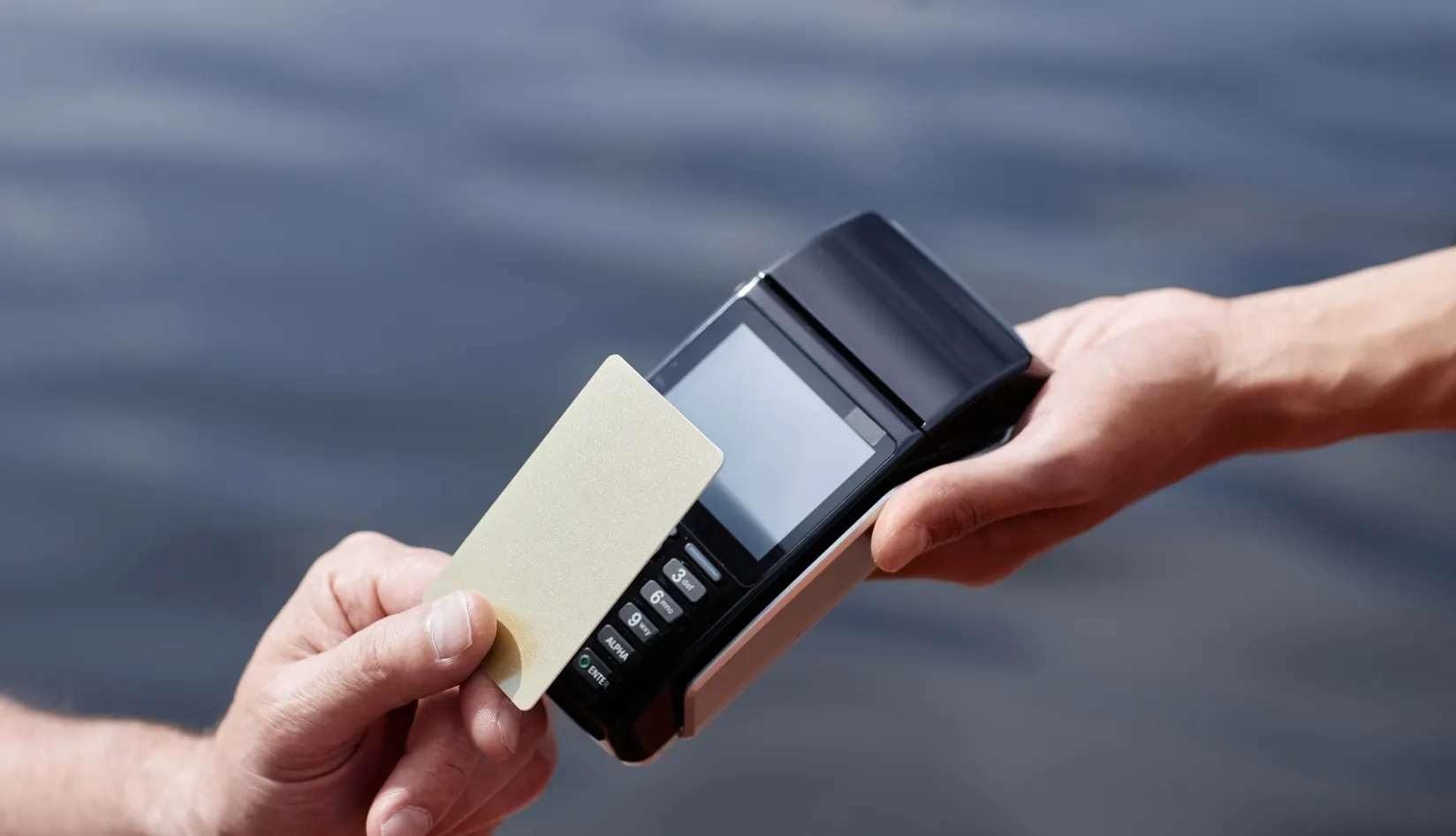
Near Field Communication (NFC) has become a core technology behind mobile payments, access control, smart cards, ticketing, and identity applications. From tapping a phone to unlock an office door to using a contactless card on public transportation, NFC interactions happen seamlessly in everyday life. However, behind this simplicity lies a common and important question: will one NFC card work with all readers? Most people may consider that at the heart of this question is the frequency of NFC, a fundamental technical parameter that directly affects how NFC devices communicate. While NFC is standardized around a single operating frequency, compatibility is influenced by many more factors than frequency alone. Understanding these factors is essential for businesses, system integrators, and buyers choosing NFC cards or readers.
1. What Is the Frequency of NFC?
The frequency of NFC is 13.56 MHz, which places it in the High Frequency (HF) range of the radio spectrum. NFC is actually a subset of HF RFID technology, designed specifically for short-range, secure, and intuitive interactions.
The choice of 13.56 MHz is not arbitrary; it is part of the globally available, unlicensed Industrial, Scientific, and Medical (ISM) radio band. This designation means that devices operating at this frequency can be used without requiring a special license, facilitating its widespread adoption across international borders.
To better understand this, it helps to compare NFC with other common RFID frequencies:
- LF (Low Frequency): Around 125 kHz, typically used for simple access cards and animal identification.
- HF (High Frequency): 13.56 MHz, used by NFC and many contactless smart cards.
- UHF (Ultra-High Frequency): 860–960 MHz, commonly used for long-range inventory tracking and logistics.
Unlike UHF RFID, which prioritizes long read distances, NFC intentionally operates at a very short range—usually less than 10 cm. This design choice makes NFC ideal for secure, intentional interactions such as payments and identity verification. While the frequency of NFC is fixed globally, compatibility issues still arise, which often surprises first-time users.
2. Why All NFC Devices Use the Same Frequency—but Still Aren’t Always Compatible
The universal adoption of the 13.56 MHz frequency of NFC is a testament to the success of global standardization efforts. The NFC Forum, a non-profit industry association, is the driving force behind this interoperability, defining the architecture, protocols, and specifications that ensure devices from different manufacturers can communicate.

However, even with a unified frequency, compatibility issues persist due to the complexity of the communication process, which involves several layers above the physical frequency:
2.1 Modulation and Data Rates
The way data is encoded onto the 13.56 MHz carrier wave—a process called modulation—varies. NFC uses two primary modulation schemes:
- ASK (Amplitude Shift Keying): Used primarily for Type A and Type B cards, where the amplitude of the carrier wave is shifted to represent data bits.
- Load Modulation: Used by the card to send data back to the reader, where the card changes the load on its antenna, which the reader detects as a change in the field.
Furthermore, NFC supports multiple data rates, typically ranging from 106 kbps to 424 kbps. A reader must be capable of detecting and switching between these different modulation types and data rates to successfully communicate with a card.
2.2 Communication Modes
The NFC Forum defines three distinct communication modes, each serving a different purpose:
- Reader/Writer Mode: The most common mode, where an NFC-enabled device (like a smartphone) reads or writes data to a passive NFC tag.
- Card Emulation Mode: This is how a smartphone acts like a traditional contactless card, enabling mobile payments or mobile transit passes.
- Peer-to-Peer (P2P) Mode: Allows two active NFC devices (e.g., two smartphones) to exchange data, such as sharing photos or contact information.
Even though all these modes rely on the same NFC frequency, not all readers or cards support every mode or protocol. As a result, two devices can share the same frequency of NFC and still fail to communicate properly.
3. NFC Standards That Affect Compatibility

Beyond frequency, NFC compatibility is heavily influenced by international standards. The most important ones include:
3.1 ISO/IEC 14443 (Proximity Cards)
This is the most widely used standard for NFC and contactless smart cards. It supports short-range, high-speed communication. It is split into two main types:
- ISO/IEC 14443 Type A: Widely used globally for transit systems (e.g., MIFARE products) and electronic passports. It is known for its robust collision detection mechanism.
- ISO/IEC 14443 Type B: Often used for high-security applications like national ID cards and e-passports in some regions. It uses a different modulation and coding scheme than Type A.
3.2 ISO/IEC 15693 (Vicinity Cards)
This standard defines the protocol for “vicinity cards,” which operate at the same 13.56 MHz frequency of NFC but offer a longer read range, sometimes up to a meter, due to different power and communication requirements. These are often used for library systems, asset tracking, and supply chain management where a longer read distance is beneficial. While NFC devices are generally required to support this standard (often referred to as NFC-V), its use is less common in consumer-facing applications like payments.
3.3 ISO/IEC 18092 (NFCIP-1)
This is the core standard that defines the communication modes and protocols for NFC devices themselves, specifically the Peer-to-Peer mode. It is the foundation upon which the NFC Forum built its specifications. It ensures that two active NFC devices can establish a connection and exchange data reliably.
4. NFC Card Chip Types and Their Impact on Reader Compatibility

NFC cards come in many varieties, and the chip inside the card plays a major role in compatibility. Some of the most common NFC chip families include:
- NTAG series – Widely supported, ideal for marketing, URL sharing, and general-purpose applications.
- MIFARE Ultralight – Cost-effective, commonly used for tickets and disposable cards.
- MIFARE Classic – Older technology, still used in legacy systems but with limited smartphone support.
- MIFARE DESFire – High-security chip used in payment, transportation, and government ID systems.
All of these chips operate at the frequency of NFC, but they use different protocols, memory structures, and security mechanisms. A reader designed only for MIFARE Classic, for example, may not recognize a DESFire card, even though both use 13.56 MHz.
5. Reader-Side Limitations: Why the Reader Matters More Than the Frequency
In many cases, compatibility issues are caused not by the card, but by the reader. NFC readers vary widely in terms of hardware and software capabilities.
A reader’s ability to communicate is heavily dependent on its physical design:
- Antenna design and tuning – Poorly tuned antennas can reduce performance at 13.56 MHz.
- Firmware limitations – Some readers only support specific card types or standards.
- Vendor restrictions – Proprietary systems may intentionally limit compatibility.
Even when the frequency of NFC is identical, these limitations can prevent successful communication. This is why testing cards with real-world readers is always recommended.
6. How to Ensure Your NFC Card Works with Most Readers
For businesses and integrators, maximizing NFC compatibility is a critical step in deployment. While it is impossible to guarantee 100% compatibility with every reader ever made, a strategic approach can cover the vast majority of use cases.
To maximize compatibility, follow these best practices:
Confirm the card operates at the frequency of NFC (13.56 MHz)
Choose ISO/IEC 14443-compliant cards
Select widely supported chip types such as NTAG or DESFire
Avoid outdated or proprietary technologies unless required
Test samples with your actual readers and smartphones
This approach significantly reduces the risk of deployment issues.
7. Conclusion
The frequency of NFC is a crucial foundation for how NFC technology works, but it is only the beginning of the compatibility story. While all NFC devices operate at 13.56 MHz, real-world interoperability depends on standards, chip types, reader capabilities. Understanding these elements helps businesses and system designers make informed decisions.
Recommended Product
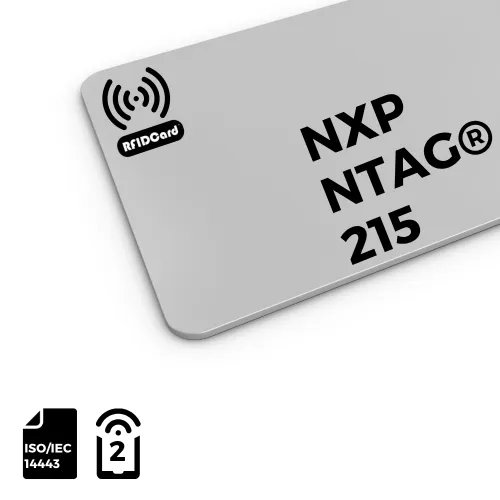
NFC Card NXP NTAG® 215 NFC Type 2

The NTAG® 215 RFID card is made with Photo quality standard PVC sheets into size of CR80, it programmed 7-byte UID with 504 bytes of user memory available (126 pages). The NTAG® 215 NFC ICs fully comply to NFC Forum Type 2 Tag and ISO/IEC14443 Type A specifications.