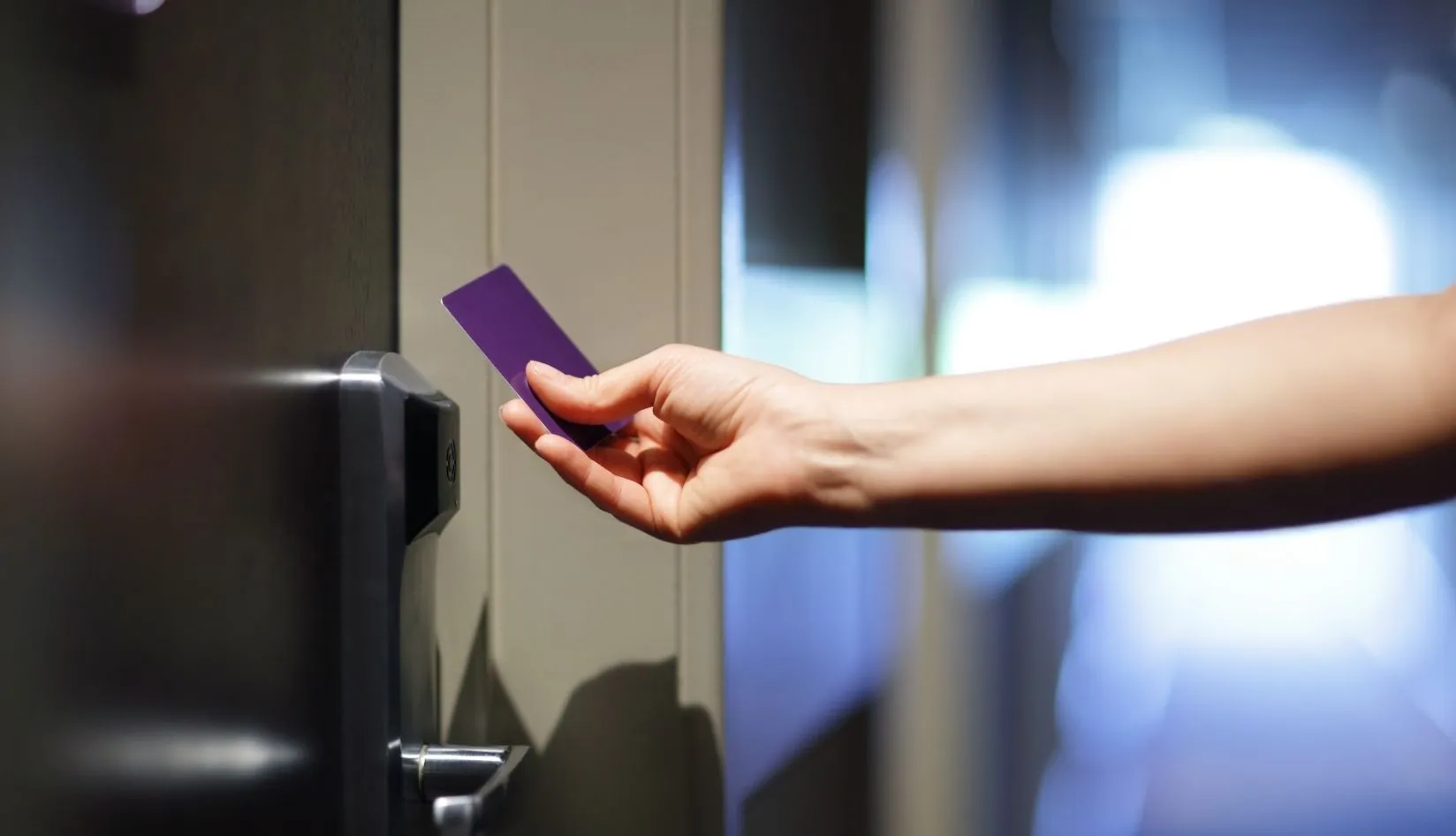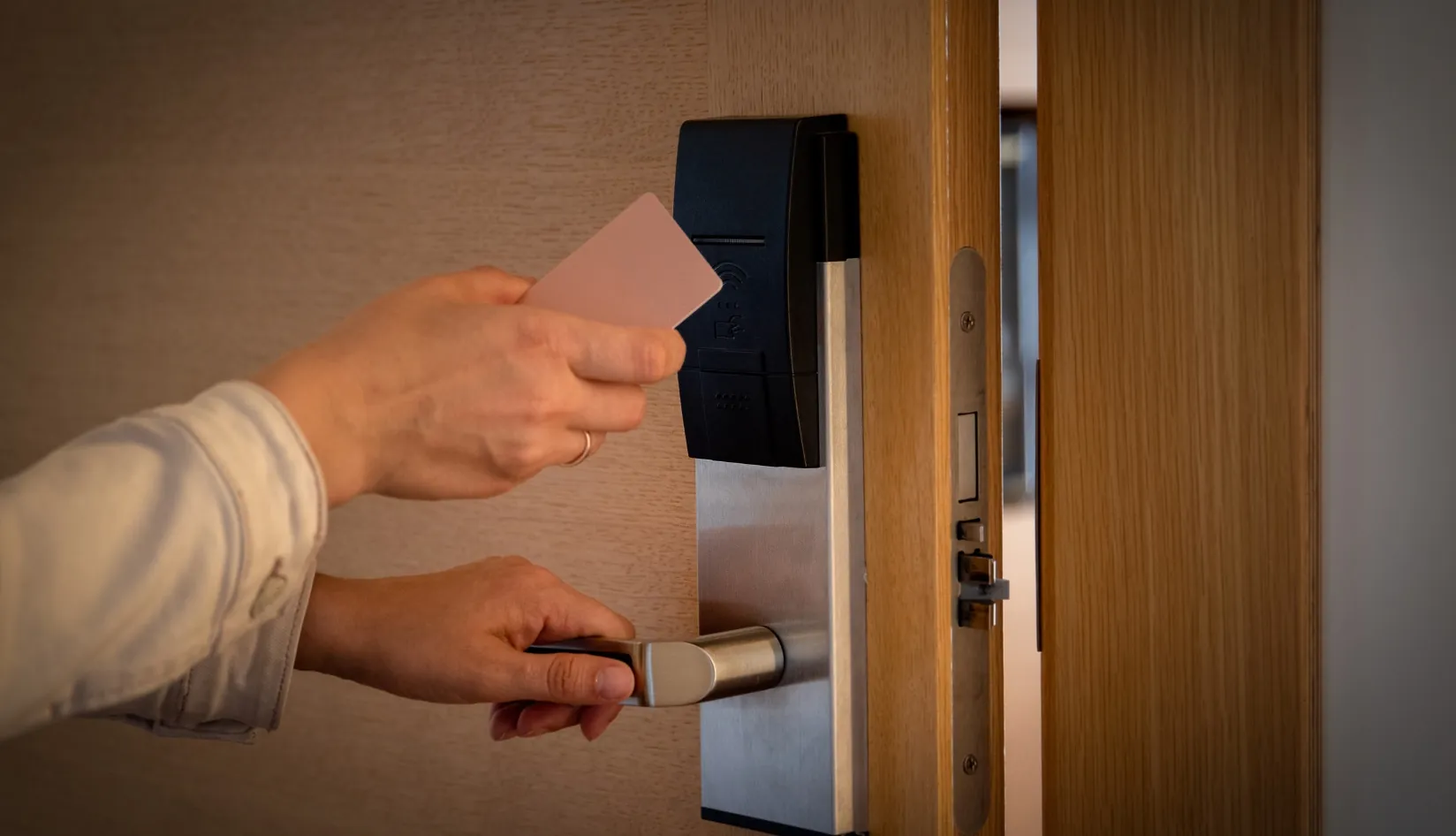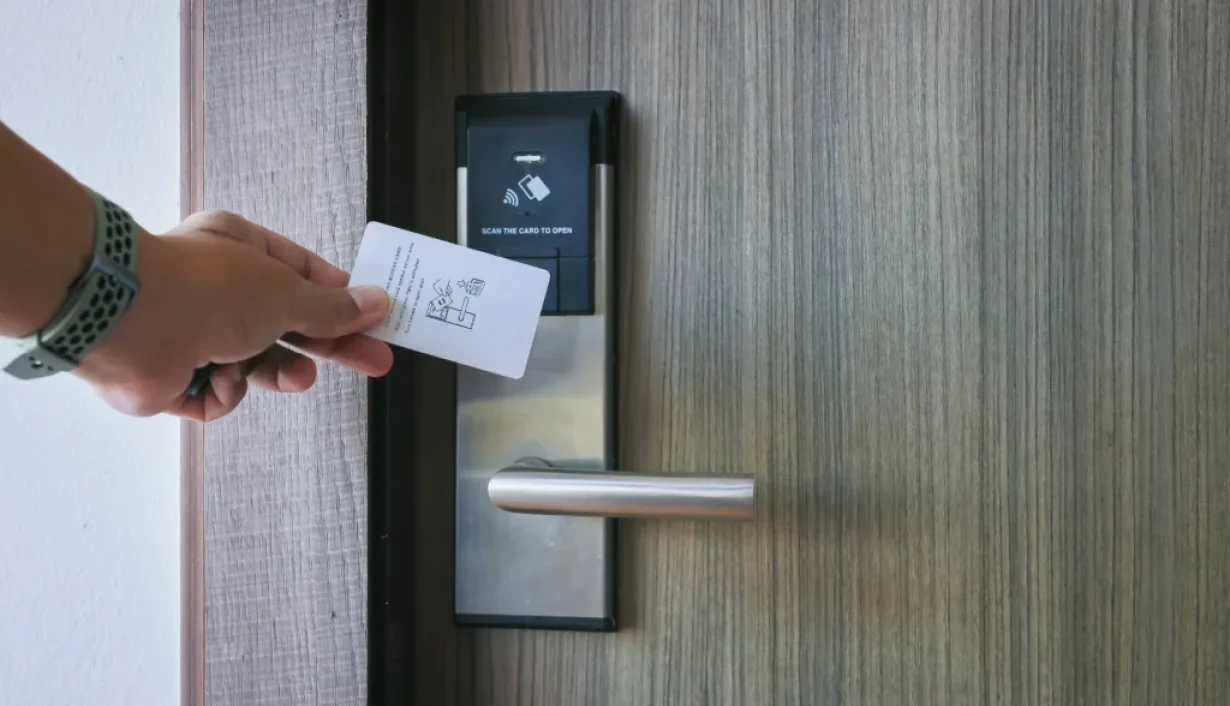

In today’s hotel industry, RFID hotel key cards have become essential tools for boosting guest experience and improving operational efficiency. Unlike traditional magnetic stripe cards, RFID cards are more secure, durable, and allow for contactless unlocking, making them a popular choice in hotels around the globe.
That said, key card dimensions aren’t a one-size-fits-all deal. The right size not only affects how well it works with door lock systems but also impacts how guests experience using it, and it can even play a part in shaping the hotel’s brand image. Opting for standard sizes can guarantee compatibility and keep costs down, while customized sizes can offer a unique, personalized touch.

Standard RFID Hotel Key Card Sizes
In the hotel biz, the size of RFID key cards plays a huge role in how well they work with door lock systems, how guests use them, and how long they last. Setting these standard sizes not only makes sure they match with card readers worldwide, but it also helps cut production costs and simplifies mass manufacturing. Here’s a rundown of the common standard sizes for RFID hotel key cards and their features.
Why is having a standard size so important?
Compatibility: Different hotel brands and property management systems (PMS) typically use similar door lock reader specs, so standard-size RFID cards fit right in, avoiding any reading errors or failure to read issues.
Portability: Standard-sized cards are designed for easy carrying, fitting comfortably in guests’ pockets, wallets, or card holders.
Durability: Consistent thickness and materials mean these cards hold up well with repeated use, cutting down on damage and replacement costs.
Common Standard RFID Hotel Key Card Sizes
CR80 Size (85.6mm × 54mm): The most popular hotel key card size
Features:
- This size is the same as credit cards, IDs, and driver’s licenses, so guests easily recognize and use them.
- It’s compatible with almost all RFID card readers globally, ensuring smooth interoperability.
- Works with a range of materials like PVC, PET, and ABS, allowing for cool custom options like logos and QR codes.
- Typically 0.76mm thick, it’s durable yet not bulky to carry.
- Applicable scenarios: Works for over 90% of hotels, from budget joints to business hotels and high-end spots.
CR50 Size (83.9mm × 52.1mm): A slightly smaller standard size
Features:
- A tad smaller than CR80 but still meets the needs of some hotel management systems.
- More portable, making it a great fit for certain chain hotels or niche markets.
- Can be used with specific brand locking systems, but isn’t quite as compatible as CR80.
- Applicable scenarios: Some hotels, resorts, entertainment venues, etc.
ISO 7810 ID-1 Standard: The global go-to size
Features:
- ISO 7810 ID-1 is exactly the same as CR80 (85.6mm × 54mm), so you know these RFID cards follow international standards.
- It works with most hotel management systems (PMS) around the world and can connect to different brand locks like Onity, Salto, and HID.
- Offers the best space for printing, so hotels can easily customize their branding on it.
- Applicable scenarios: High-end chain hotels, international brands, business-focused hotels, etc.
Thickness Standards for RFID Hotel Key Cards
Typically, RFID hotel key cards are between 0.76mm and 1mm thick, with common thicknesses being:
- 0.76mm (Standard thickness): The most common thickness, just like credit cards – it’s durable and easy to carry.
- 0.84mm – 1mm (Thicker version): Built for extra durability, great for luxury hotels or VIP membership cards.
- 0.5mm (Ultra-thin version): Works for specific markets, ideal for single-use or quick-stay hotels.
When picking the right thickness, keep in mind:
- Cards that are too thin can bend or break easily, impacting their lifespan.
- Cards that are too thick might mess with the card reader’s efficiency, affecting the user experience.
- Going with the standard 0.76mm is your best bet—durable yet doesn’t interfere with card reading.

Custom RFID Hotel Key Card Options
In the cutthroat hotel industry, customized RFID key cards are more than just handy tools—they’re key to brand identity and guest experience. Customization options let hotels go beyond standard card sizes to deliver personalized, functional, and eco-friendly solutions that cater to different markets and clientele.
Why would hotels need custom key card sizes?
Even though standard sizes like CR80 work for most places, there are specific scenarios where custom sizes can give hotels an edge:
Brand Differentiation
- High-end hotels and resorts might want to step up their game with unique key card sizes or
- shapes to boost brand recognition and enhance the overall experience.
- Theme hotels and boutique spots can use customized cards—like wooden key cards or funky shapes—to really nail their brand’s vibe and leave a lasting impression.
Loyalty & VIP Programs
- Regular guests vs. VIPs can be identified with different sizes or colors of key cards, such as thicker ones or cards with metal frames for premium members.
- Ideal for loyalty programs, VIP services, and elite club membership cards, this helps keep customers coming back.
Special Use Cases
- Resorts & water parks: think custom waterproof wristband RFID key cards that guests can easily wear.
- Exhibition and conference hotels: they can offer larger RFID cards to fit more info like schedules and venue maps.
- Child-friendly hotels: mini RFID cards or cartoon-shaped ones can make family stays more fun.
Key Customizable Parameters
Hotels can tweak size, thickness, and shape to meet various needs.
Size Variation
Thin Cards:
- With a thickness of just 0.5mm – 0.7mm, these are ideal for single-use or short-stay hotels (like Airbnb or guesthouses).
- They’re cost-effective, too, and can be given out with room card holders or welcome notes for a better guest experience.
Mini RFID Cards:
- Usually around 60mm × 30mm, they’re perfect for hanging on keychains or wristbands.
- Great for family resorts, children’s hotels, gyms, or entertainment spots.
Large RFID Cards:
- Sizes can be 100mm × 70mm or even bigger, making them fit for conference settings or marketing purposes.
- Extra space means they can print hotel maps, Wi-Fi details, discount coupons, you name it—making them super practical.
Thickness Customization
Standard thickness (0.76mm): balances durability and portability; it’s the most common choice.
Thicker options (0.84mm – 1mm): great for high-end hotels and membership cards, offering extra durability and a touch of luxury.
Ultra-thin options (0.5mm): perfect for short stays or promotional uses, like budget hotels or events.
Custom Shapes
Beyond the usual rectangles, hotels can opt for unique shapes to make their brand stick in guests’ minds.
Rounded or Irregular Cards: These have a modern twist and stand out, especially for younger crowds.
Key Fob Cards: Ideal for resorts, entertainment venues, or gyms, they’re easy to attach to keys or backpacks.
Wristband Cards: Perfect for water parks, hot springs, or luxury resorts, enhancing convenience and cutting down on lost cards.
Material Selection and Eco-Friendly Trends
With growing environmental awareness, more hotels are jumping on the sustainable development bandwagon and opting for eco-friendly RFID card materials to cut down on plastic waste.
Traditional PVC vs. Eco-Friendly Materials
| Material | Features | Best Fit |
| PVC (Polyvinyl Chloride) | Affordable and durable; the most common out there | A good fit for all types of hotels |
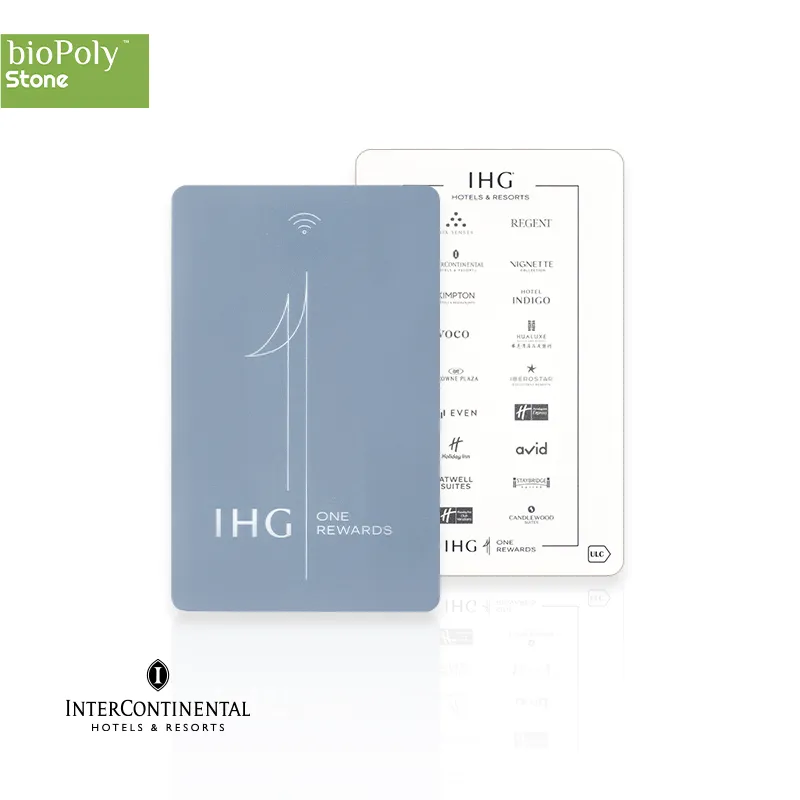
| BioPoly™ Vinyl | Completely biodegradable in about three years, helping to reduce pollution | Perfect for green hotels and high-end resorts |
| BioPoly™ Stone | Primarily made of calcium carbonate; leaves no harmful residues after breaking down | Ideal for sustainable hotels and luxury resorts |
| Wood (Bamboo/Wooden RFID Cards) | Upscale and biodegradable | Great for boutique hotels and eco-themed spots |
How do eco-friendly hotels gain from this?
- They lower carbon emissions and stay in line with sustainable strategies.
- They boost their brand image and attract guests who care about the environment.
- They can use it as a marketing edge to stay competitive.
Custom Printing and Personalized Design
To boost their brand image, hotels often personalize key cards with custom printing, enhancing visual appeal and the overall guest experience.
Customizable Options
- Brand Logo, Hotel Name
- QR Codes (scan to unlock the door, check Wi-Fi info)
- Room Number, Guest Name (great for VIP customization)
- Recommendations for Attractions, Discount Info (perfect for resorts)
Printing Process Choices
| Process | Features | Best Fit |
| UV Printing | Bright colors, durable, and waterproof | Ideal for high-end hotels |
| Silk Screen Printing | Budget-friendly, perfect for bulk production | Great for chain hotels |
| Laser Engraving | Upscale look, resistant to wear | Good for VIP membership cards |
Recommended Options:
- For Budget Hotels: Standard PVC card + Silk Screen Printing.
- For High-End Hotels & Resorts: Wooden RFID card + UV Printing or Laser Engraving.
- For Entertainment Venues & Clubs: Metal-edged RFID card + Glossy UV Printing.

How to Choose the Right RFID Hotel Key Card Size?
When picking the size of RFID hotel key cards, hotel managers need to take into account costs, compatibility, and the guest experience to make sure the cards can meet operational needs while boosting brand image and guest satisfaction. Here are some key factors to consider and tips for choosing suppliers to help hotels find the best key card size and customization options.
Factors in Deciding Between Standard Size and Custom Size
How to Decide Between Standard and Custom Sizes?
Hotels often face the choice of using standard industry sizes (like CR80) or going with custom key cards. Here are some factors to help make a smarter choice:
| Key Factors | Standard Size | Custom Size |
| Budget | Standard sizes are more cost-effective, especially when bought in bulk | Custom options are pricier, but good for brand distinction |
| Compatibility | Ensures they work with most hotel lock systems | Must check compatibility with the hotel’s access control setup before ordering |
| Brand Image | Traditional and reliable but less unique | Helps improve brand recognition and guest experience |
| Durability | Good for short stays or regular guests | Thickness and material can be tailored, perfect for VIP guests |
| Eco-Friendliness | Traditional PVC, with limited eco-options | Can go for biodegradable materials like wood or BioPoly™ |
Best for Standard Size Hotels
- Chain Hotels, Budget Hotels, Business Hotels: Need to buy in bulk to lower costs and ensure they work with common hotel lock systems.
- Short-Term Rentals, Vacation Rentals: No need for custom options, standard sizes are easier.
Best for Custom Size Hotels
- Luxury Resorts, Boutique Hotels, High-End Brands: Need to enhance brand value through unique designs, like high-end wooden cards or special shapes.
- Entertainment Venues & Theme Park Hotels: Might need wristband RFID cards or key fobs for easy guest access.
- Eco-Friendly Hotels: Can choose biodegradable and recyclable materials (like wood or BioPoly™) for custom key cards.
Compatibility Considerations
Make Sure RFID Card Size Matches Existing Lock Systems
When selecting RFID key cards, hotels must ensure that the card size works with their door lock systems; otherwise, they might run into reading failures or unlocking problems. Here are key compatibility checks to keep in mind:
Check Existing Lock Brands & Frequencies:
- Common Brands: Onity, Salto, Saflok, Kaba, Adel, etc.
- Key RFID Frequencies: 125kHz (low), 13.56MHz (high frequency/NFC), some systems support dual-frequency tech.
Confirm Size Requirements for Key Card Slots:
- Most electronic locks are designed to work with CR80 (85.6mm × 54mm), but some older models or unique designs may have different requirements.
- If you’re going for thicker or ultra-thin cards, make sure the lock’s reader can handle varying thicknesses.
Test Compatibility with Different Materials & Thicknesses:
- Metal RFID cards might get messed up by electromagnetic interference from the locks, affecting reading reliability.
- Ultra-thin cards (0.5mm) can lead to weaker signals because the RFID chip is thinner, which could impact the card swiping experience.
Target Customer Experience (Guest Needs & Custom Strategies)
Different hotel guest demographics have distinct wants when it comes to the look, functionality, and convenience of RFID key cards.
Luxury Hotels & Resorts
Here are some recommendations:
- Wooden key cards (they’re eco-friendly and unique, which boosts that upscale vibe).
- Thick premium cards (0.84mm – 1mm) for better durability and that high-quality feel.
- UV printing & laser engraving to showcase brand logos and help prevent counterfeiting.
Budget & Business Hotels
Recommendations include:
- Standard CR80 PVC cards (affordable and low cost when bought in bulk).
- QR code printing (guests can scan to get info on Wi-Fi, breakfast, etc.).
- Silk-screen printing (tough and great for long-term use).
Theme Parks & Water Resorts
For these settings, consider:
- Wristband RFID cards (waterproof and durable, perfect for wearing all day).
- Key fob cards (great for kids and sports fans).
- Eco-friendly materials (to cut down on plastic waste, options like BioPoly™ are available).
Supplier Selection Guide
When hotels are picking an RFID key card supplier, they need to make sure that the product quality, tech support, and delivery capabilities align with what they need. Here are the key factors to consider:
Go for an Experienced RFID Card Manufacturer
- Industry Experience: Pick a manufacturer that has years of experience in the hotel industry to guarantee reliable quality.
- Technical Support: The supplier should offer RFID coding and encryption services to ensure everything works smoothly with the access control system.
- Variety of Material Options: This includes PVC, PET, ABS, wood, etc., to fit different requirements.
For instance, RFIDCard.com is a veteran in the RFID card space, with over ten years of experience under their belt, cranking out 100 million cards a year and serving over 2,000 hotels worldwide. They provide full-scale customization for your hotel key cards, covering everything from chips and looks to materials.
Why Sample Testing is Essential
- To ensure they fit right, so you don’t run into issues swiping because of size discrepancies.
- Test the RFID reading stability—different chips and frequencies might affect how quickly they recognize the cards.
- Make sure to check the print quality so the brand logo colors and QR codes are clear and meet your standards.
Here’s a Recommended Testing Process:
- 1. Request RFID card samples in different thicknesses and materials for an initial review.
- 2. Run actual tests on the hotel locking system to check compatibility and how sensitive the cards are to swiping.
- 3. Think about durability: Make sure to test them with over 500 swipes to ensure they’re tough and won’t get damaged easily.

Conclusion
Choosing the right size for RFID hotel key cards is crucial—not only does it affect how well they work with door lock systems, but it also has a direct impact on the guest experience and the hotel’s brand image. For most hotels, the CR80 standard size is still the way to go, thanks to its wide compatibility, convenience, and cost-effectiveness. It ensures a good fit with mainstream lock systems while keeping procurement and replacement costs down.
However, for upscale hotels, boutique resorts, or themed spots, opting for custom sizes or special materials can really set the brand apart. Think about personalized designs like wooden cards, eco-friendly BioPoly™ materials, unique shapes, or wristband RFID cards. These not only create a one-of-a-kind user experience but also boost brand recognition, catering to modern consumers’ cravings for personalization and sustainability.
When figuring out the best RFID key card size, hotels need to take a good look at their budget, compatibility, guest needs, and brand identity. If they’re focused on getting the best bang for their buck and having broad compatibility, the standard CR80 is still the safest bet. But if they want to elevate their brand image and offer a premium guest experience with those key cards, going for customized options can give them a serious competitive edge. In the end, making the right choice in key card size and design can not only streamline hotel operations but also significantly boost customer satisfaction and loyalty.
FAQs
Does the size of RFID hotel key cards affect how far they can transmit signals?
Absolutely! The size and material of RFID hotel key cards can definitely impact their transmission distance. Thicker cards or those made from denser materials might reduce how efficiently they transmit signals, which could affect the reading range of the door lock system. So, when hotels are picking out key cards, they need to find a good balance between size, material, and signal transmission needs.
Do RFID hotel key cards require any special care to keep their size stable?
Typically, RFID hotel key cards are made of PVC, PET, or other materials that don’t really change size under normal conditions. However, if they’re exposed to extreme heat or humidity for too long, that can cause some slight bending or warping. To keep the cards’ size and functionality in check, it’s best to avoid letting them sit in direct sunlight or in very humid areas for extended periods.
How can you make sure that custom-sized RFID hotel key cards will work with the door lock system?
The best way to ensure that custom-sized RFID hotel key cards are compatible with the door lock system is to talk to the lock supplier about their size requirements and technical specs. Plus, hotels should ask the supplier for samples to test out, making sure that the card’s size and design can work smoothly with the lock system in real-life situations, avoiding any reading issues or compatibility headaches.