
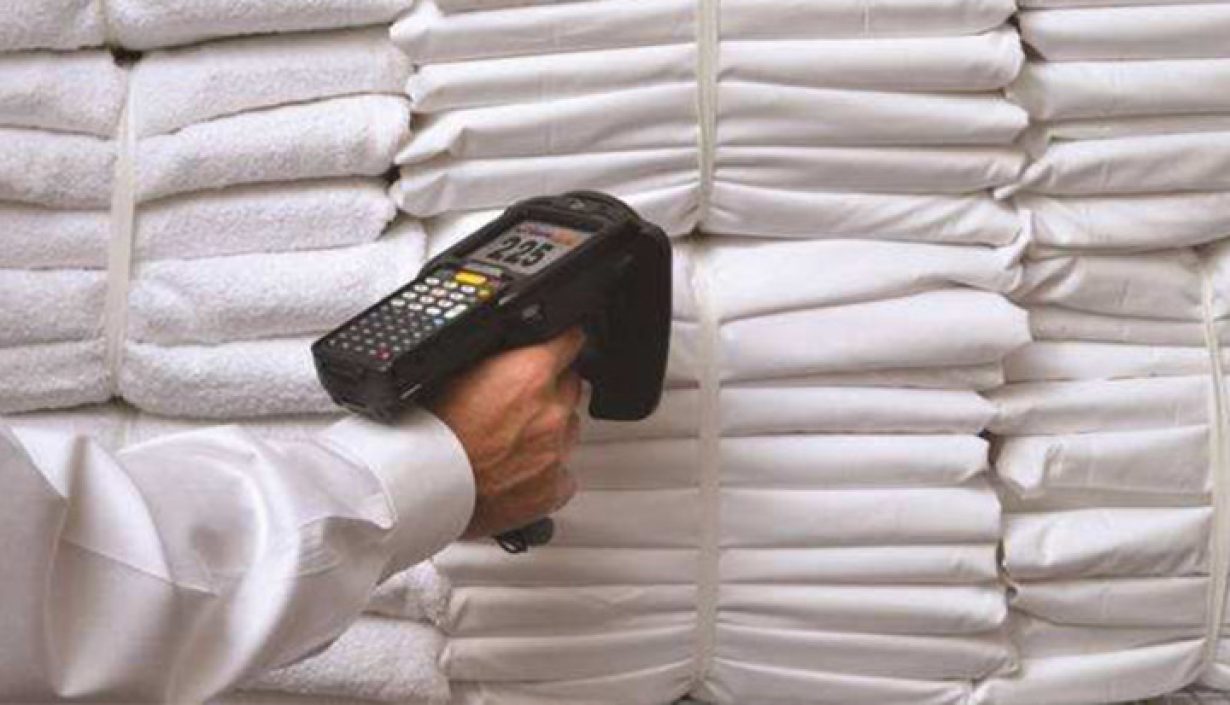

In a modern medical environment, managing and maintaining large quantities of textiles such as sheets, towels, etc. is a complex and time-consuming task. A hospital in Brazil used the successful application of RFID laundry tag in hospital for textile management as a case study to demonstrate how this technology can effectively improve efficiency, reduce costs, and ensure the accuracy of inventory. This successful case provides strong support for us to recommend RFID laundry tag.
Case Overview
Hospital Israelita Albert Einstein in Brazil uses RFID technology to manage 158,000 pieces of textiles, including bed sheets, towels, and pillowcases. By attaching RFID tags to each textile item, hospitals can track usage, cleaning processes, and inventory status in real-time. This approach significantly improves management efficiency and reduces operating costs. The system saved the hospital $300,000 in the past year.
Advantages of RFID Laundry Tags
As an advanced management tool, RFID laundry tags in hospitals have the following obvious advantages:
Efficient management: Assign each item a unique RFID tag, allowing the RFID reader and writer to quickly read and record the item’s status. This greatly shortens the time needed for inventory counting and management.
Accurate tracking: Monitor the use and cleaning process of items. Ensure timely cleaning and reuse of every piece of textile, reducing the risk of item loss and damage.
Cost savings: Reduce the workload of manual inventory and management, and reduce labor costs. Optimize inventory management to reduce unnecessary purchases and waste, further saving operating costs.
Improve service quality: Ensure sufficient inventory and provide patients with clean textiles in a timely manner to improve patient satisfaction and comfort.
Implementation Effect
In practical applications, Hospital Israelita Albert Einstein achieved the following specific effects through RFID technology:
Conduct a comprehensive inventory count every two months, reducing the time from 72 hours to 10 hours and greatly improving efficiency.
Reduction in labor costs: Saving approximately 6000 hours of labor working time every year, equivalent to approximately US$29,000 in labor costs.
Reduced item loss rate: The item loss rate dropped from 4% to 0.8%, and inventory accuracy improved significantly.
Reduce resource consumption by lowering water usage in outsourced washing plants by 12% and power consumption by 139,000 kWh per year.
RFID Laundry Tag Product Recommendation
Based on the above success cases, we recommend rfidcard’s RFID laundry tags. They are the best choice for hospitals and other facilities. These tags are ideal for large-scale textile management. Our RFID laundry tags have the following characteristics:
Durability: The tag material is resistant to high temperatures and washing, and can withstand repeated cleaning and disinfection processes to ensure long-term stability.
Ease of use: The tag is light and soft, easy to attach to various textiles without affecting the comfort of use.
High sensitivity: RFID chips with high sensitivity can be read quickly and accurately even during batch processing.
Customized services: RFID tags with different specifications, styles and functions can be selected according to customer needs to meet diverse management needs.
Conclusion
Using RFID technology for textile management allows hospitals to significantly improve efficiency and accuracy. It also reduces operating costs and enhances service quality. Our RFID laundry tags offer superior performance and broad application prospects, making them ideal for efficient textile management in hospitals and other industries. We invite all companies to contact us. Learn more about our products and solutions, and let’s move towards a new stage of intelligent management together.
Visit rfidtag.com right now to purchase high-quality RFID laundry tags and experience the significant improvements brought by intelligent management.


