In an era defined by increasing environmental consciousness, the hospitality industry is undergoing a profound transformation. Guests are no longer just seeking comfort and luxury; they are actively choosing brands that demonstrate a genuine commitment to sustainability. This shift has placed every aspect of hotel operations under scrutiny, right down to the humble key card. The traditional plastic key card, often made from non-recyclable PVC, represents a significant source of plastic waste, with millions discarded annually. Addressing this challenge is crucial for modern hoteliers, and the solution lies in the adoption of the eco-friendly RFID hotel card.
1. What Makes an RFID Hotel Card Eco-Friendly?
The hospitality industry consumes a tremendous amount of disposable materials every year. Standard hotel key cards are often made from PVC, a plastic that is difficult to recycle and can take decades to decompose. With millions of cards discarded globally, hotels are increasingly searching for greener, more environmentally responsible solutions.
The hotel sector plays an important role in this change. By switching to eco-friendly RFID cards, hotels can significantly lower plastic usage, reduce waste, and support their sustainability goals. More importantly, eco-friendly cards align with the expectations of modern travelers—especially millennials and Gen Z guests—who prefer businesses that adopt green initiatives. Sustainable RFID hotel cards also help hotels strengthen their brand identity. Guests notice when a hotel invests in details that reflect environmental responsibility, and a simple biodegradable key card can contribute to a more positive guest experience.
2. Eco-Friendly Materials Used in RFID Hotel Cards
The market for sustainable key cards has matured rapidly, offering several viable and aesthetically pleasing alternatives to PVC. These materials maintain the necessary durability and functionality while drastically improving their environmental profile.

2.1 Wood RFID Hotel Cards
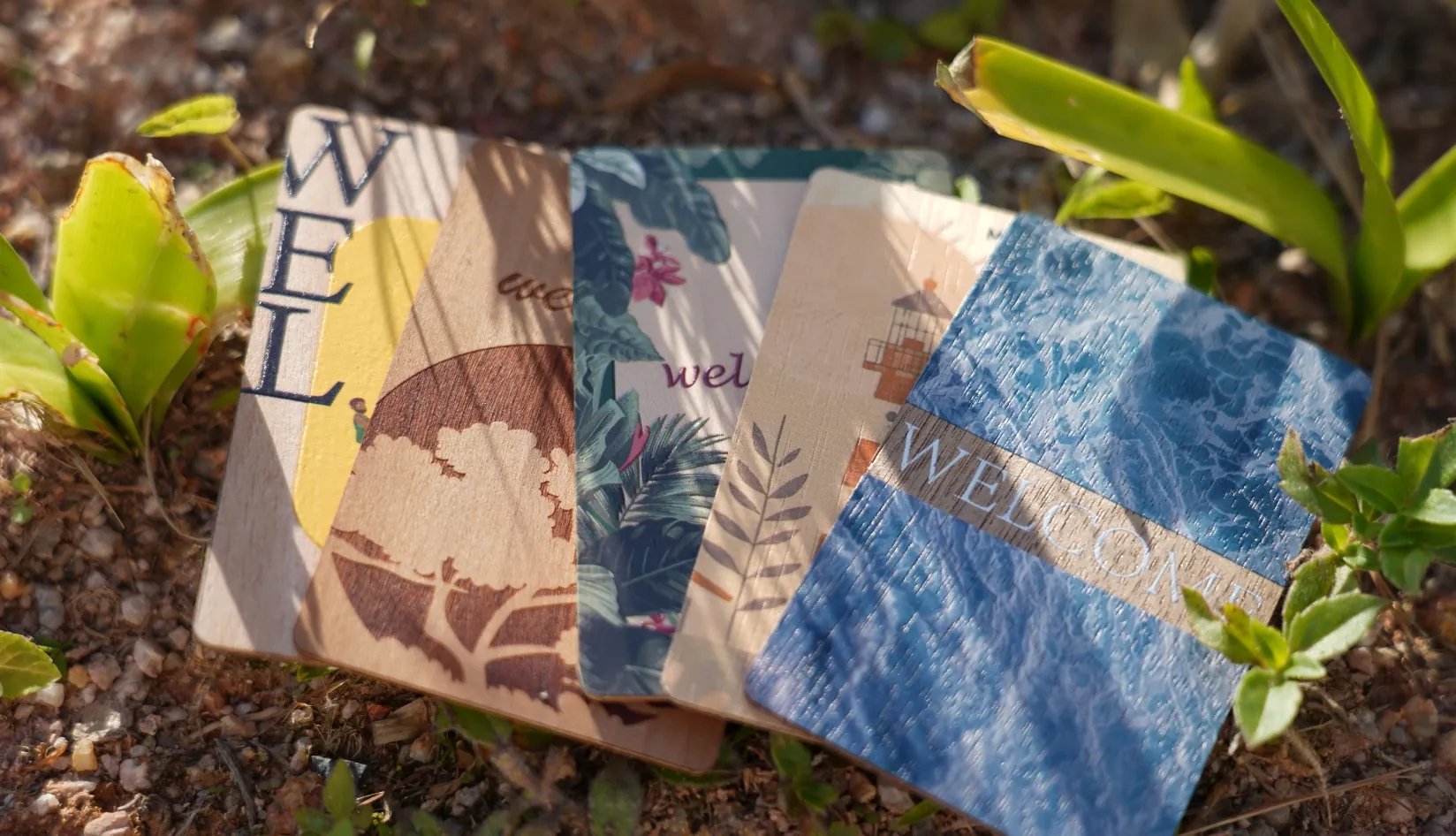
Wood cards are perhaps the most visually striking and premium-feeling eco-friendly option. They are typically made from sustainably harvested wood, often certified by organizations like the Forest Stewardship Council (FSC).
- Sustainability: Sourced from renewable resources, making them inherently more sustainable than plastic.
- Aesthetics: Offer a warm, natural, and premium tactile experience that instantly elevates the guest’s perception of the brand.
- Customization: Wood is highly suitable for laser engraving, which allows for intricate, permanent, and chemical-free branding, logos, and room numbers.
- Functionality: Despite being wood, they are durable and fully compatible with standard RFID locking systems.
2.2 Stone-Plastic composite RFID Hotel Cards
Stone-plastic composite cards, also known as BioPoly™ Stone cards, are an innovative alternative to PVC. They contain a high percentage of natural stone powder blended with a reduced amount of plastic. Key advantages include:
- Reduced Plastic Content: Can contain up to 60-80% less plastic than a standard PVC card.
- Durability: They are highly resistant to water, bending, and wear, ensuring a long service life and reducing the frequency of replacements.
- Printing: They offer excellent surface quality for high-definition printing, allowing hotels to maintain vibrant branding and design elements.
- Eco-Alternative: They serve as a direct, high-performance, and more environmentally responsible alternative to PVC.
2.3 PLA (Corn-Based) Biodegradable RFID Hotel Cards
PLA (Polylactic Acid) is a bioplastic derived from renewable resources like corn starch, sugarcane, or cassava. It is the leading choice for hotels prioritizing end-of-life compostability.
- Compostability: Under commercial composting conditions, PLA cards can fully break down into natural elements, leaving no toxic residue.
- Lightweight and Safe: They are non-toxic and lightweight, making them a safe and environmentally friendly choice.
- Applications: Ideal for hotels with a strong commitment to zero-waste initiatives and those with access to commercial composting facilities.
3. The Strategic Benefits of Adopting Eco-Friendly RFID Hotel Cards
Eco-friendly cards offer more than sustainability—they provide real business advantages for hotels.
3.1 Enhancing Brand Image and Sustainability Commitment
In the competitive hospitality market, sustainability is a powerful differentiator. By adopting an eco-friendly RFID hotel card, a hotel sends a clear, tangible message about its values. This commitment resonates deeply with the growing segment of eco-conscious travelers, who are often willing to pay a premium for sustainable options. The key card, which is handled multiple times a day, becomes a physical touchpoint that reinforces the hotel’s green identity. This proactive approach can lead to positive media coverage and industry recognition, further strengthening the brand’s reputation.
3.2 Reducing Environmental Impact
The most direct benefit is the reduction of the hotel’s environmental footprint. Given the high turnover of key cards—due to loss, damage—the cumulative impact of switching from PVC to biodegradable or highly reduced-plastic alternatives is enormous. This action directly supports global efforts to reduce plastic pollution and aligns with corporate social responsibility (CSR) goals.
3.3 Long-Term Cost Savings Through Durability
While the initial unit cost of some eco-friendly materials might be slightly higher than standard PVC, materials like Stone-Plastic Composite often boast superior durability and water resistance. This longevity translates into a reduced need for frequent replacements, leading to long-term cost savings on procurement and maintenance. Furthermore, the reduced environmental impact can qualify the hotel for certain green certifications or tax incentives, adding another layer of financial benefit.
4. Design and Customization Options for the Modern RFID Hotel
The transition to sustainable materials does not mean sacrificing design or branding. In fact, eco-friendly materials often open up new, sophisticated customization possibilities that enhance the hotel’s aesthetic.
| Material | Customization Options | Branding Advantage |
| Wood | Laser engraving, natural wood grain finish. | Premium, rustic, or minimalist look; high-end tactile feel. |
| Stone-Plastic | High-definition full-color printing, matte or gloss lamination, metallic foil stamping. | Maintains the vibrant, complex branding of traditional cards with a reduced plastic footprint. |
| PLA | Standard printing, die-cutting for unique shapes. | Highlights the hotel’s commitment to compostability and zero-waste initiatives. |
The ability to use laser engraving on wood, for example, creates a permanent, elegant mark that is impossible to replicate on plastic. This level of detail and material integrity helps build a stronger, more memorable brand identity. The modern RFID hotel is leveraging these design choices to turn a functional item into a statement piece.
5. How to Choose the Right Eco-Friendly RFID Hotel Card for Your Property
Selecting the optimal eco-friendly key card requires a careful assessment of the hotel’s specific needs, brand identity, and existing infrastructure.
5.1 Key Selection Factors
- Eco-Focused/Zero-Waste: PLA is the best choice for maximum biodegradability.
- Budget and Lifecycle Cost: While wood and Stone-plastic composite may have a higher initial cost, their durability and the positive impact on brand image must be factored into the long-term ROI.
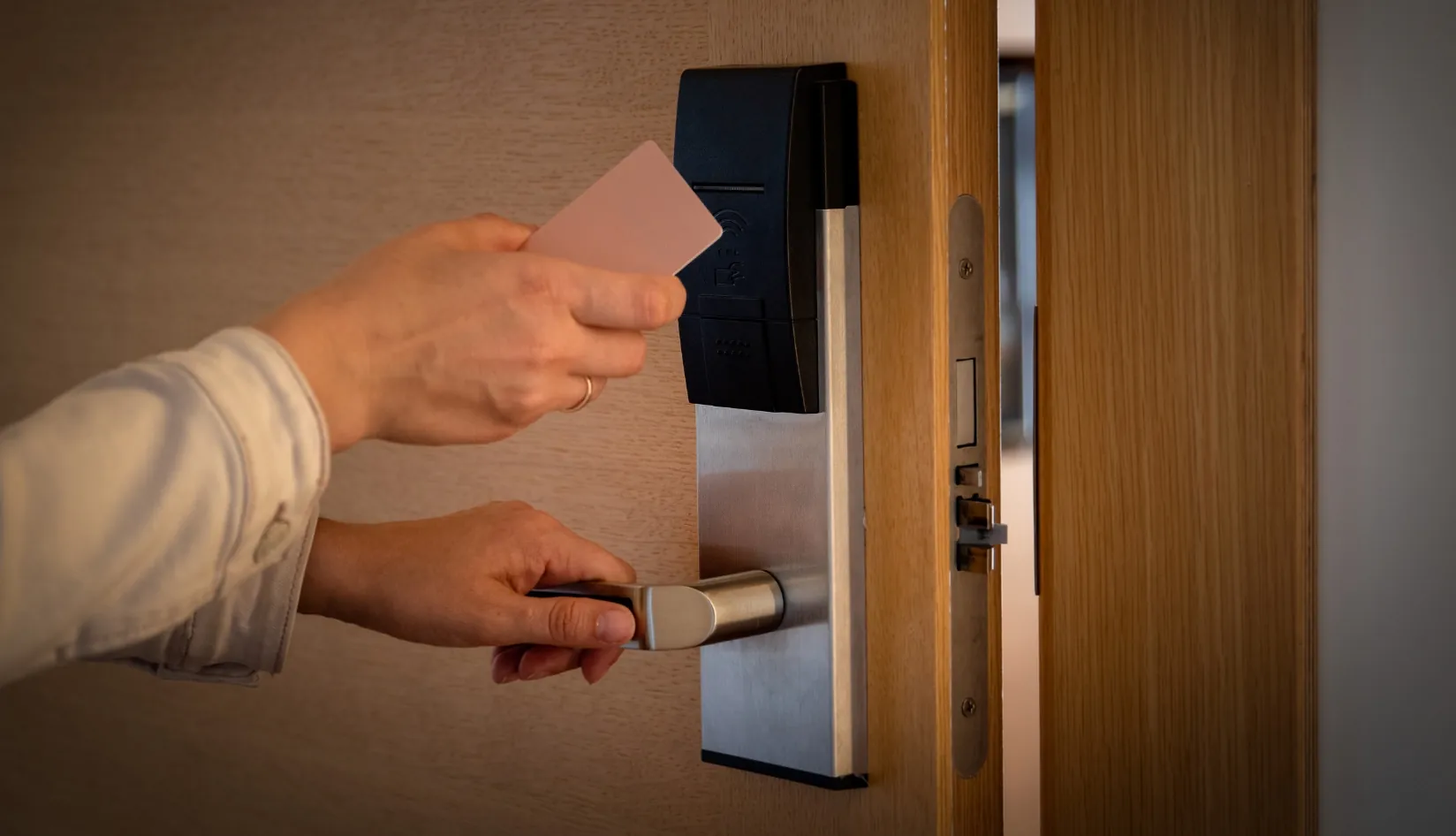
- Locking System Compatibility: The card must be compatible with the hotel’s existing RFID locking system. This involves selecting the correct chip type.
5.2 Chip Selection Guide
The “RFID” in RFID hotel card refers to the embedded chip that communicates with the door lock. The material of the card body is separate from the chip technology. The most common chip types include:
- Mifare Classic: Older, widely used.
- Mifare DESFire: Newer, highly secure, and preferred for modern systems.
- NFC (Near Field Communication): Often used for mobile key integration, but the physical card still requires a compatible chip.
6. Conclusion
Eco-friendly RFID hotel cards represent the future of sustainable hospitality. As hotels continue to adopt greener technologies, switching from traditional PVC cards to new biodegradable or low-plastic alternatives is a simple yet impactful step toward environmental responsibility. These cards enhance guest experience, support hotel branding, and reduce ecological impact—all while maintaining full compatibility with modern RFID hotel systems. Ready to Upgrade to Eco-Friendly RFID Hotel Cards? Contact us today for free samples, expert recommendations, and custom designs that match your hotel’s brand and sustainability goals.
Recommended Product

BioPoly™ Vinyl Generic Hotel Key Card

The NXP MIFARE® DESFire® C RFID Hotel cards fully comply with ISO/IEC 14443-A. The Key cards are made with photo-quality standard BioPoly™ Vinyl in the size of CR80.