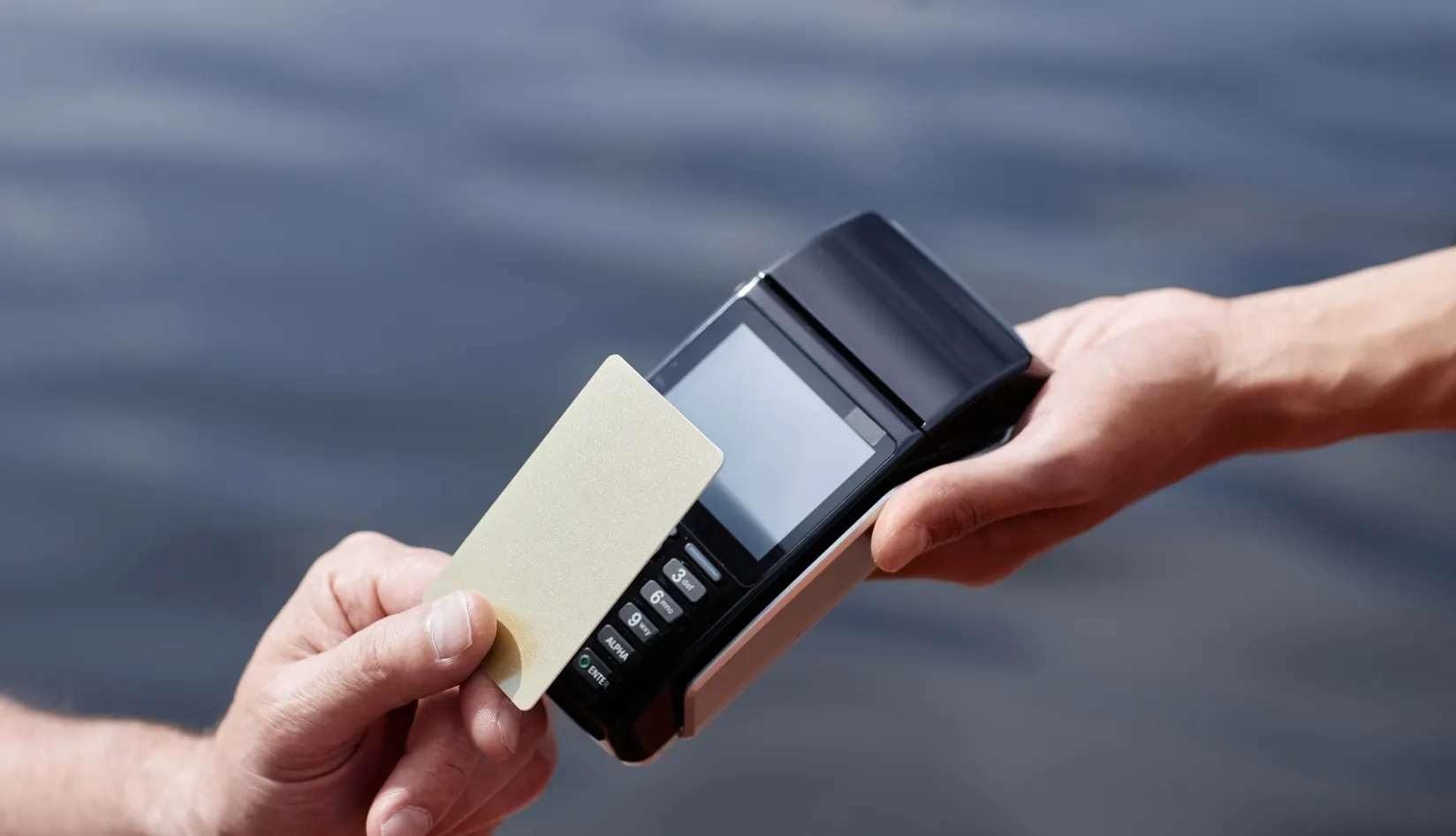

In recent years, contactless technology has become a core operational requirement for many organizations. From access control and asset tracking to retail engagement and identification, companies are under increasing pressure to reduce friction, improve efficiency, and connect physical operations with digital systems. Among the available technologies, NFC has emerged as a practical and scalable solution. This article explores the benefits of NFC for businesses, providing a deep dive into its core advantages and practical applications.
The Problem with Traditional Identification Methods
Before evaluating the benefits of NFC, it is important to understand the real issues companies face with traditional systems.

Operational Inefficiency and Human Dependency
Many organizations still rely on manual processes or legacy technologies such as physical keys, magnetic stripe cards. These methods introduce delays, require constant human involvement, and are prone to errors. In high-frequency environments—such as offices, factories, or events multiply into significant operational costs.
Poor User Experience at Physical Touchpoints
Queues at entrances, slow check-in procedures, repeated identity verification, and unclear processes frustrate users and staff alike. Whether the user is an employee, or customer, friction at physical touchpoints directly impacts satisfaction and productivity.
Limited Data Collection from Offline Interactions
Perhaps the most overlooked problem is that traditional methods generate little to no usable data. When access is granted with a key or a static card, businesses gain no insight into usage patterns, timing, or anomalies. This creates blind spots in auditing, compliance, and process optimization.
Benefit 1: Faster and More Reliable Physical Interactions
One of the most tangible benefits of NFC is speed. This is one of the most compelling things for businesses seeking to optimize their operations.

How NFC Enables Instant Authentication and Data Exchange
NFC works at very short range and does not require line-of-sight alignment. A simple tap is enough to initiate communication. Compared to QR codes or barcodes, NFC interactions are faster and more consistent.
Business Impact
The immediate impact of NFC on business operations is profound. The reduced transaction or access time translates into higher throughput at critical points such as entrances, payment counters, or checkpoints. This not only improves customer satisfaction by minimizing wait times but also enhances operational efficiency by allowing more transactions to occur within a given period. Furthermore, the simplicity of NFC interactions leads to a lower user error rate, reducing the need for manual corrections and associated costs.
Benefit 2: Improved Security
Security is often perceived as a trade-off against convenience, and NFC technology offers robust features that enhance the integrity and safety of interactions.

Built-in Security Features of NFC
NFC’s short communication range significantly reduces the risk of remote interception. In addition, modern NFC cards and tags can support secure elements, encrypted communication, and mutual authentication protocols, which are far beyond simple UID-based identification.
Why NFC Is More Secure Than It Appears
Unlike visible QR codes or printed credentials, NFC data is not easily copied by casual observation. When implemented correctly, NFC systems can support:
- Secure credential storage
- Controlled access rights
- Easy revocation and re-issuance
Benefit 3: Seamless Integration with Existing Systems
One of the practical benefits of NFC for businesses is its ability to integrate smoothly with existing IT infrastructure, minimizing disruption and maximizing return on investment.

As a Bridge Between Physical Objects and Digital Systems
NFC technology acts as an effective bridge, connecting physical objects and locations to digital systems. NFC tags or cards can serve as data carriers or system triggers, enabling physical items to interact with enterprise software. For example, an NFC-enabled access card can log an employee’s entry into a facility management system. The role of middleware and backend software is crucial here, translating NFC interactions into actionable data within existing platforms.
Compatibility with Common Enterprise Systems
- NFC solutions can integrate with:
- Access control and identity management systems
- ERP and WMS platforms
- CRM and loyalty management software
Smartphones can also act as NFC readers, reducing the need for dedicated hardware in some scenarios.
Benefit 4: Lower Total Cost of Ownership Over Time
While initial setup costs are always a consideration, the long-term financial advantages are among the most attractive benefits for businesses.

Cost Comparison: NFC vs Traditional Solutions
When comparing NFC to traditional solutions like physical keys or magnetic stripe cards, the cost savings become apparent over time. Physical keys require locksmith services for duplication and replacement, magnetic cards are prone to wear and demagnetization, all incurring ongoing maintenance and replacement costs. NFC cards, being more durable and less susceptible to common forms of damage, offer a lower total cost of ownership.
Operational Savings
With NFC, businesses benefit from:
- Reduced manual administration
- Faster onboarding and offboarding
- Lower error-related costs
Over time, these operational savings outweigh the initial investment.
Scalability Without Linear Cost Increase
NFC systems offer excellent scalability. Issuing and revoking NFC credentials is a straightforward digital process, eliminating the need for physical reprinting or re-keying. As a business grows, expanding its NFC infrastructure does not incur a linear increase in costs, making it a highly scalable solution for evolving operational needs. This long-term cost-effectiveness is a major draw for businesses looking for sustainable technology investments.
Benefit 5: Turning Physical Interactions into Actionable Data
The ability to transform physical interactions into valuable digital data is a powerful aspect of the NFC technology, empowering businesses to make more informed decisions.

Turning Physical Interactions into Digital Data
Every tap of an NFC card or tag can generate a wealth of data: timestamps, location points, usage frequency, and user-specific information. This allows for unprecedented traceability at an item or user level. For example, in retail, NFC interactions can offer insights into customer behavior at physical touchpoints.
How This Data Improves Business Decisions
This rich dataset is invaluable for process optimization, enabling businesses to identify bottlenecks, streamline workflows, and improve efficiency. It also enhances compliance and auditing capabilities, providing a clear, immutable record of interactions. Furthermore, the data collected through NFC can support predictive maintenance by monitoring asset usage and facilitate more accurate inventory planning by providing real-time stock levels and movement data. The insights gained from NFC-enabled data collection are crucial for strategic planning and operational excellence.
When NFC Cards May Not Be the Best Option
An honest discussion of the benefits of NFC must also acknowledge its limitations.
Limitations of NFC Cards
The primary limitation of NFC cards is their short read distance, typically only a few centimeters. This close-proximity requirement, while a security advantage, can be a drawback in applications where longer-range identification is needed, such as tracking assets across a large warehouse without direct interaction.
NFC Cards vs RFID Cards vs QR Codes
To provide clear guidance, a comparison of NFC cards with RFID cards and QR codes is useful:
| Feature | NFC Cards | RFID Cards (Passive UHF) | QR Codes |
| Interaction | Tap-based, close proximity (cm) | Read from distance (meters), multiple items | Scan-based, line-of-sight |
| Security | High | High | Low |
| Scalability | High (easy issuance, digital management) | High (large-scale asset tracking) | Moderate (requires unique codes for each item) |
| Data Capacity | Small to moderate | Moderate to large | Moderate |
| Use Cases | Payments, access control, loyalty, product info | Supply chain, inventory, asset tracking | Marketing, web links, basic information |
Conclusion
The benefits of NFC extend far beyond mere convenience, offering businesses a powerful tool to enhance efficiency, security, and user experience. From accelerating transactions and securing access to providing invaluable data insights and reducing long-term operational costs, NFC is proving to be a transformative technology. It acts as a critical enabler, allowing physical and digital worlds to converge seamlessly, driving innovation and competitive advantage. If you are looking for reliable NFC cards for your application, RFIDCard provides a wide range of NFC card options tailored to different business needs.
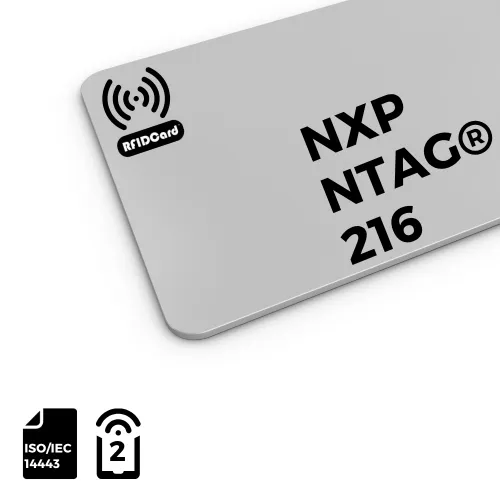
NFC Card NXP NTAG® 216 NFC Type 2

The NTAG® 216 RFID card is made with Photo quality standard PVC sheets into size of CR80, it programmed 7-byte UID with 888 bytes of user memory available (222 pages). The NTAG® 216 NFC ICs fully comply to NFC Forum Type 2 Tag and ISO/IEC14443 Type A specifications.
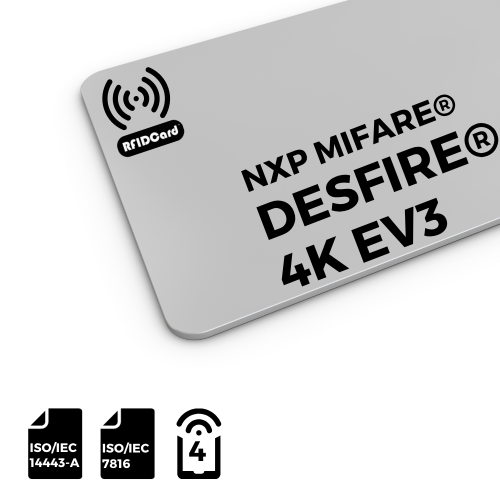
RFID Card NXP MIFARE® DESFire® EV3 4K
Blank or customized printing RFID cards with a choice of dimensions are available. The MIFARE® DESFire® EV3 4K is Common Criteria EAL5+ security certified for smart card IC products. The MIFARE® DESFire® EV3 4K ICs fully comply with NFC Forum Type 4 Tag.