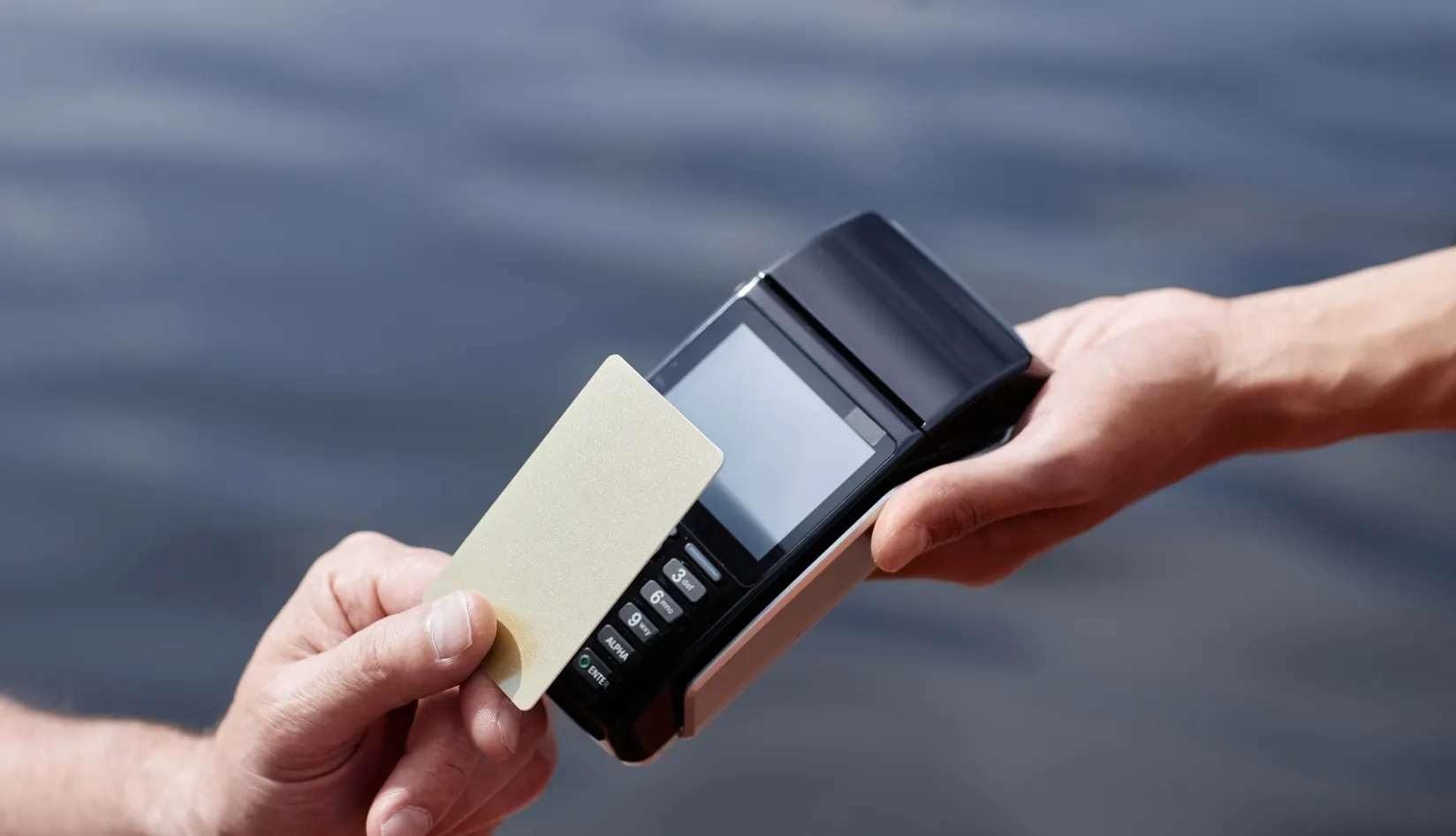

As contactless technology becomes a core part of daily life, security, reliability, and interoperability are no longer optional—they are mandatory. From tapping a bank card at a checkout terminal to passing through metro gates or verifying a secure identity credential, users expect transactions to be fast, seamless, and safe. At the heart of many of these systems is the NXP NFC chip, a technology trusted globally for high-security payment, transit, and identification applications. NXP’s long-standing expertise in secure semiconductor design has positioned its NFC solutions as the industry benchmark for mission-critical contactless systems.
1. The Role of Security in Contactless Systems
Contactless systems, while convenient, introduce unique security challenges that must be addressed at the hardware level:
- Card Cloning: The unauthorized duplication of a card’s unique identifier and data, allowing a fraudulent party to impersonate the legitimate user.
- Eavesdropping (Skimming): The passive interception of communication between the contactless card and the reader, potentially exposing sensitive transaction data or personal information.
The design of an NXP chip is fundamentally centered on mitigating these risks. Unlike simple RFID tags, NXP’s secure NFC solutions integrate sophisticated countermeasures directly into the silicon. These chips are designed to resist physical tampering and employ advanced cryptographic protocols to ensure that all data exchange is both authenticated and encrypted, rendering intercepted data useless to an attacker.
2. Core Security Technologies Inside an NXP NFC Chip
The foundation of NXP’s dominance in high-security applications lies in the advanced, multi-layered security architecture embedded within its chips. These features are not merely software layers but are physically implemented in the silicon to provide maximum protection against both remote and physical attacks.

2.1 Secure Element (SE) Architecture
At the heart of the secure NXP NFC chip is the Secure Element (SE). The SE is a tamper-resistant, dedicated microcontroller that securely stores sensitive data, such as cryptographic keys and application credentials, and executes cryptographic operations in an isolated environment. This architecture ensures that keys are never exposed to the outside world or even to the main operating system of a host device (like a smartphone), thereby protecting them from malware and unauthorized access.
2.2 Hardware-Based Cryptographic Engines
NXP NFC chips support industry-standard cryptography, including:
- AES and DES/3DES: Support for industry-standard symmetric encryption algorithms ensures data confidentiality during transmission.
- Public Key Support (where applicable): Many NXP secure chips support asymmetric cryptography (e.g., RSA, ECC) for digital signatures and key exchange, which is essential for secure identity documents and advanced authentication protocols.
2.3 True Random Number Generation (TRNG)
Cryptographic security relies heavily on the quality of the random numbers used to generate keys and session tokens. NXP chips include a True Random Number Generator (TRNG), which generates unpredictable, non-deterministic random numbers based on physical processes within the chip. This is a critical feature, as pseudo-random number generators (PRNGs) can be predictable and thus exploitable. The TRNG ensures the integrity and strength of all generated cryptographic material.
3. Mutual Authentication and Encrypted Communication
Security in a contactless transaction is not just about protecting the data on the chip; it is also about ensuring that the chip is communicating with a legitimate reader and vice versa. This is achieved through a process known as mutual authentication.

3.1 How Mutual Authentication Works in NXP Chips
Mutual authentication is a two-way verification process. The card proves its identity to the reader, and the reader simultaneously proves its identity to the card. This prevents both card cloning and the use of malicious readers (skimmers).
- Challenge-Response: The reader sends a random challenge to the chip.
- Cryptographic Proof: The NXP NFC chip uses a shared secret key (stored securely in the SE) to compute a cryptographic response to the challenge.
- Verification: The reader verifies the response.
- Reverse Challenge: The chip then issues a challenge to the reader, which the reader must answer using its own secure key.
- Full Trust: Only when both parties have successfully authenticated each other is a secure communication channel established.
3.2 Secure Messaging and Encrypted Data Exchange
After authentication, communication occurs through a Secure Channel, where data is encrypted and integrity-protected. Even if communication is intercepted, the data remains unreadable and tamper-proof.
This mechanism is especially critical in payment and ID applications, where sensitive personal or financial information may be exchanged.
4. Trusted Certifications and Global Standards Compliance
The widespread adoption of NXP’s technology is underpinned by its rigorous adherence to global standards and its attainment of the most demanding industry certifications:
- ISO/IEC 14443: The international standard defining the physical characteristics and communication protocol for proximity cards, which is the foundation for most modern contactless payment and transit systems.
- NFC Forum Specifications: Compliance ensures that the chips work seamlessly with all NFC-enabled devices, including smartphones and tablets, facilitating mobile payment and identity applications.
5. Why Payment Systems Rely on NXP NFC Chips
In payment environments, speed and security must coexist. Transactions need to complete in milliseconds while maintaining strict security controls.
5.1 Contactless Bank Cards and Mobile Wallets
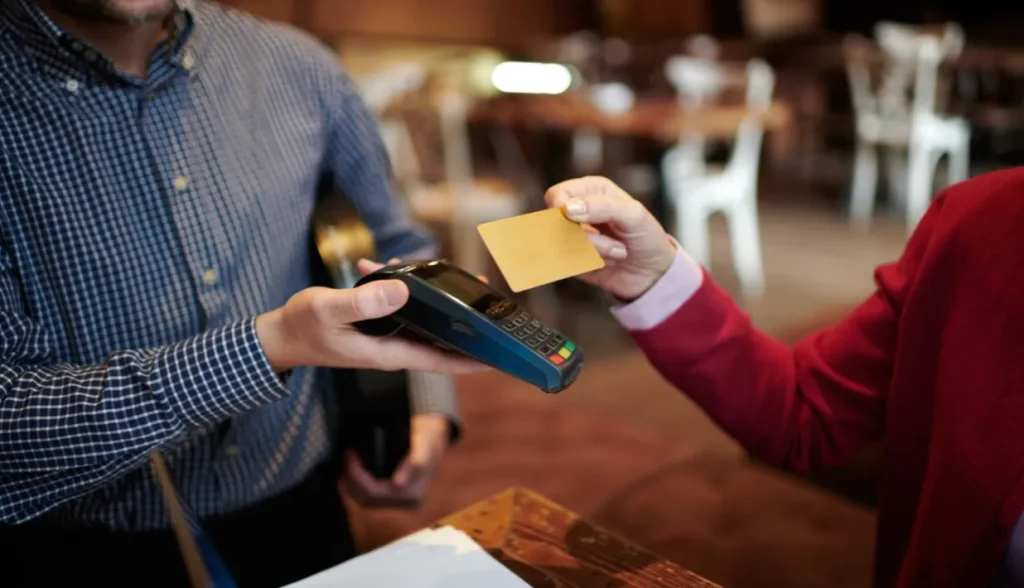
NXP chips are embedded in billions of contactless bank cards worldwide. Furthermore, they are integrated into the Secure Elements of many smartphones, powering mobile wallets like Apple Pay and Google Pay. In both physical cards and mobile devices, the chip performs the same critical function: securely storing the payment credential and executing the cryptographic transaction protocol.
5.2 Offline Transaction Support
A key advantage, particularly in environments with unreliable connectivity, is the chip’s ability to support offline transactions. The chip can securely verify the transaction and generate a unique cryptogram without needing immediate online authorization from the bank. This capability is vital for ensuring high transaction speed and reliability, especially in high-volume retail environments where network latency can be a bottleneck. The high-speed processing capability of the chip ensures that the “tap-and-go” experience is virtually instantaneous, a crucial factor in consumer adoption.
6. Why Transit Authorities Choose NXP NFC Chips
Transit systems represent one of the most challenging environments for contactless technology. They require extreme speed, high reliability, and the ability to handle millions of transactions daily.
Modern transit cards often serve multiple purposes, such as a transit pass, a small-value payment card, and an access control badge for corporate or campus use. NXP chips are designed with multi-application capabilities, allowing multiple, logically separated applications to reside securely on a single chip. This consolidation enhances user convenience and reduces the cost and complexity for transit authorities.
7. Why NXP NFC Chips Are Used in ID and Credential Systems
Identity and credential systems, including ePassports, national ID cards, and corporate access badges, require the highest level of security and anti-tampering features, as they represent a person’s verified identity.
7.1 Secure Storage of Personal and Credential Data
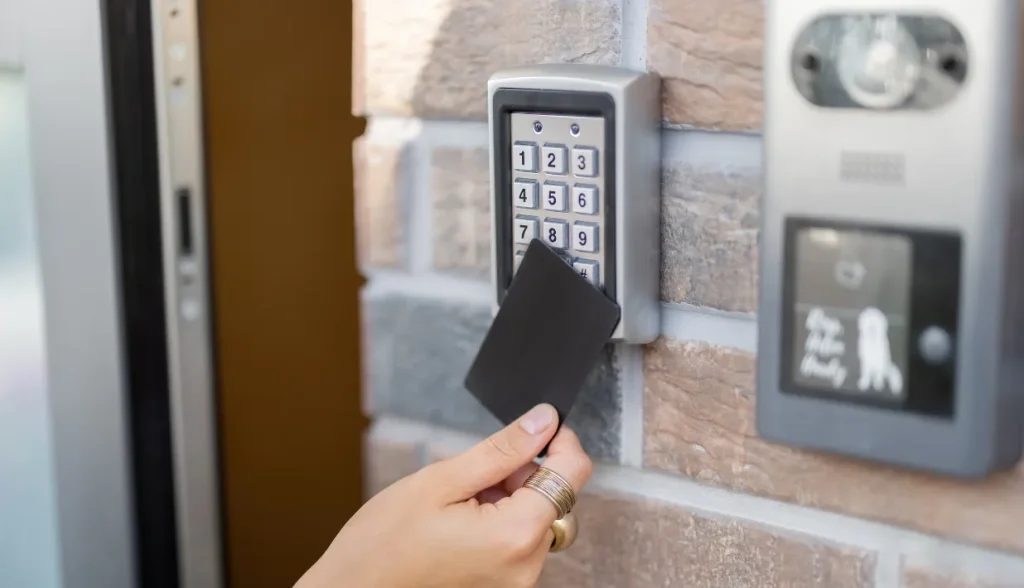
The Secure Element within the chip stores biometric data, digital certificates, and personal identification information (PII) in an encrypted format. The chip’s internal architecture ensures that only authorized readers can access this data after successful mutual authentication, often requiring the user’s explicit consent, such as entering a PIN.
7.2 Anti-Cloning and Anti-Tampering Features
The physical security features of the chip are paramount in ID applications. These features include active and passive shields. Sensors are built in to detect any attempt to physically breach the chip. If tampering is detected, cryptographic keys are instantly destroyed. As a result, the chip is virtually impossible to clone or reverse-engineer without rendering it useless. This provides a strong defense against identity fraud.
7.3 Privacy Protection and Controlled Data Access
Privacy is a critical concern for ID systems. NXP chips support sophisticated access control mechanisms. These mechanisms allow different applications or authorities to access only the data they are authorized to see. For example, a transit authority may read only transit application data. A border control agent, by contrast, can access ePassport data. This granular and controlled access ensures that personal data is protected. It also ensures the data is used solely for its intended purpose, reinforcing public trust in digital identity solutions.
8. Conclusion
From everyday contactless payments to complex transit networks and secure identity systems, the NXP NFC chip has proven itself as a trusted foundation for modern contactless technology. Its combination of hardware-based security, mutual authentication, global certifications, and high performance makes it uniquely suited for high-stress, high-volume environments.
Recommended Product

NXP NTAG® 424 DNA NFC Type 4 Card | ISO14443-A CR80

Unlock advanced security with our NTAG® 424 DNA CR80 RFID Card. Compliant with ISO/IEC14443 Type-A and NFC Forum Type 4, it features AES-128 encryption and SUN authentication for secure NFC messaging. Compatible with Android and iOS11+, and ideal for secure NFC and IoT applications like cryptocurrency wallets and NFTs. Made from photo-quality PVC or other materials in CR80 size.
Note: Cards are supplied in factory-default condition, with no data pre-encoded. For pre-encoding to enable immediate verification, please contact us for pricing.