13.56 MHz RFID cards are widely used for access control, hotel key cards, public transportation, event ticketing, and contactless identification. They offer fast, convenient communication without requiring the card to touch a reader.
However, not every 13.56 MHz card works with every RFID system. A card’s frequency is only the starting point. The chip type, communication protocol, security features, memory capacity, reader compatibility, and intended application all affect whether it is suitable for your project.
This guide explains how 13.56 MHz RFID cards work, how they relate to HF RFID and NFC, which chip families are commonly used, and what to check before placing an order.
What Is a 13.56 MHz RFID Card?
A 13.56 MHz RFID card is a contactless identification card that communicates with an RFID reader at 13.56 MHz. This frequency belongs to the high-frequency RFID range, commonly known as HF RFID.
A typical card contains two main components:
•An integrated circuit, or IC, that stores an identifier, access credential, or application data
•An antenna that receives energy from the reader and enables wireless communication
Most cards used in access control and identification are passive. They do not contain a battery. Instead, the reader creates a radio-frequency field, and the card draws enough energy from that field to power its chip and exchange data.
The card itself does not decide whether a door opens or a transaction is approved. The reader sends its data to the connected system, which verifies the information and performs the required action.
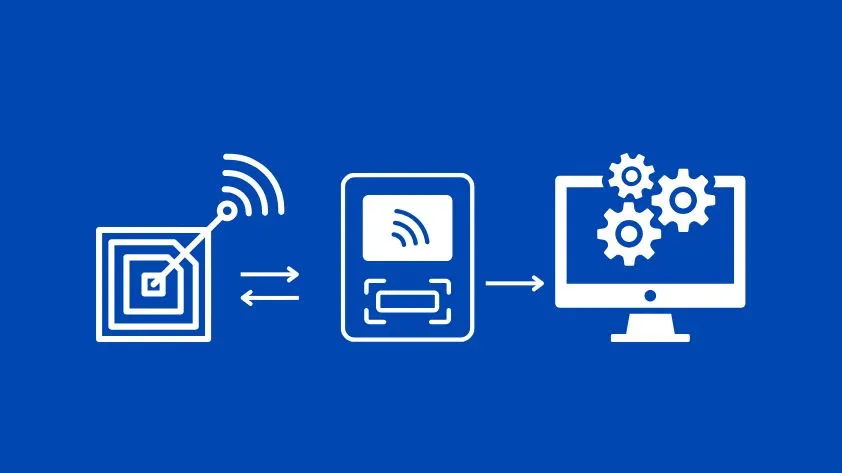
How Does a 13.56 MHz RFID Card Work?
The communication process usually follows four steps.
1. The reader generates an RF field
A compatible reader emits a 13.56 MHz electromagnetic field. The reader must support the card’s communication protocol and chip technology. A card cannot be selected by frequency alone.
2. The card receives energy
When the card is brought close enough to the reader, its antenna captures energy from the RF field. This powers the card’s IC without physical contact or an internal battery.
3. The card and reader exchange data
The reader identifies the card and may request additional information from its memory. Depending on the chip, the exchange can include a unique identifier, stored application data, authentication messages, or encrypted information.
4. The connected system takes action
The reader sends the result to the relevant software system. The system may unlock a door, record attendance, validate a ticket, register a visitor, or connect the card to a customer account.
Performance depends on the complete system, including the card, reader, antenna design, installation environment, software, and security configuration.
13.56 MHz RFID, HF RFID, and NFC: What Is the Difference?
These terms are related, but they do not mean the same thing.
13.56 MHz is a frequency
13.56 MHz describes the radio frequency used for communication. It does not identify a specific chip, security level, or application.
HF RFID is a technology category
HF RFID is a category of RFID systems that operate at 13.56 MHz. It is used for contactless cards, labels, tickets, library identification, asset identification, and other applications.
NFC is a short-range communication technology
NFC, or Near Field Communication, also operates at 13.56 MHz. It is designed for short-range interactions between devices, such as smartphones, contactless cards, readers, and NFC tags. NFC use cases include mobile payments, digital business cards, smart packaging, product authentication, and tap-to-open web links.
The NFC Forum describes NFC as a short-range technology with a typical range of up to about 2 cm for certified NFC Forum connections. Actual performance depends on the reader, antenna, card design, and environment.
NFC is therefore related to 13.56 MHz RFID, but the terms should not be used as exact substitutes. Compatibility depends on the supported protocol, commands, data format, security functions, and reader capability.

Which Protocols Do 13.56 MHz RFID Cards Use?
The protocol determines how a card and reader communicate. Common protocols include the following.
ISO/IEC 14443 Type A and Type B
ISO/IEC 14443 is commonly used for proximity cards and contactless smart-card applications. It is found in many access-control, transportation, payment-related, hotel, and identification systems.
Many MIFARE products are based on ISO/IEC 14443 Type A. NTAG 21x products are also designed to comply with ISO/IEC 14443 Type A and NFC Forum Type 2 Tag requirements.
ISO/IEC 15693
ISO/IEC 15693 is used for vicinity cards and tags. It may support a longer practical reading distance than many proximity-card applications, depending on the reader and antenna design. Common use cases include libraries, item identification, document tracking, and selected asset-management applications.
ISO/IEC 15693 is not automatically better than ISO/IEC 14443. The right option depends on the reader infrastructure, required distance, data structure, security requirements, and software system. Want a deeper dive into the differences between ISO/IEC 14443 and ISO/IEC 15693? Check out our full guide here.
Why the protocol matters
Two cards can both operate at 13.56 MHz and still be incompatible. Before ordering, confirm:
•The exact protocol supported by the reader
•The card’s chip model and product family
•Required authentication and encryption functions
•Memory size and read/write requirements
•Whether the system expects a UID, stored data, or secure application credentials
A protocol name alone does not determine the card’s security level. Security depends on the specific IC, authentication method, encryption, key management, reader configuration, and backend system.
Common 13.56 MHz RFID Chip Families
MIFARE cards
MIFARE is a well-known NXP product family used in ticketing, access control, transportation, parking, and identification systems. Different products provide different memory capacities and security capabilities.
Basic products may be suitable for established systems with limited requirements. More advanced products, such as MIFARE DESFire, support stronger cryptographic functions and are often considered for applications that require secure authentication or multiple applications on one card.
“MIFARE” is not one single card specification. Confirm the exact product, such as MIFARE Classic, MIFARE Ultralight, MIFARE Plus, or MIFARE DESFire, before checking compatibility.
NTAG cards
NTAG is an NXP family of NFC tag ICs commonly used for smart marketing, product authentication, electronic shelf labels, mobile companion tags, business cards, and Bluetooth or Wi-Fi pairing.
NTAG products are useful when users need to interact with a product using an NFC-enabled smartphone. Depending on the model, they may support different memory capacities, password protection, locking functions, and originality features.
NTAG products are not automatically suitable for every door-access or payment system. The application must support the relevant NFC and ISO/IEC 14443 functions.
ICODE and other HF products
ICODE and other HF RFID product families are used in selected identification, library, logistics, and asset-management applications. Their suitability depends on the required protocol, operating distance, memory, environmental conditions, and reader configuration.
When specifying a card, it is more useful to name the required chip and protocol than to request a generic “13.56 MHz RFID card.”
Where Are 13.56 MHz RFID Cards Used?
Access control
Organizations use 13.56 MHz cards for office entry, hotel rooms, campuses, elevators, turnstiles, and restricted areas. The card can store or represent an access credential, while the access-control system determines which doors the user can open.
Hotel key cards
Hotels commonly use contactless cards because guests can present them quickly and the cards do not require a magnetic stripe or physical insertion. The selected chip must match the hotel lock system and encoding process.
Public transportation and event ticketing
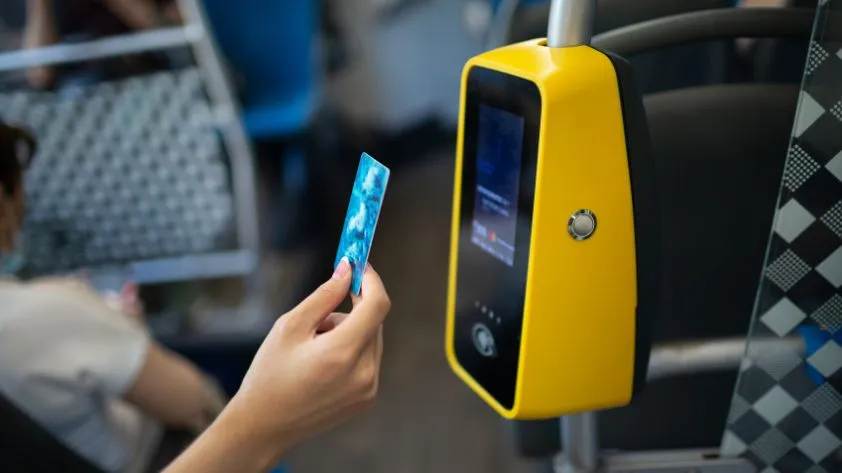
Contactless cards can support transit tickets, season passes, event admission, and access to specific areas. The required chip and security level depend on whether the card is single-use, reloadable, anonymous, or linked to a registered account.
NFC marketing and product authentication
NFC-enabled cards, labels, and tags can open a website, display product information, connect a device, or support authentication through a smartphone. These applications often use NDEF data formats.
Libraries and asset identification
HF RFID cards and tags can help identify books, documents, equipment, and other assets. The system may record each read event in software for check-in, check-out, inventory, or location-related workflows.
Benefits and Limitations of 13.56 MHz RFID Cards
13.56 MHz RFID cards offer several practical benefits:
•Contactless operation reduces dependence on physical card insertion or swiping
•Reading is fast and convenient for users
•Cards have no exposed magnetic stripe or electrical contact points
•Many chip families support authentication, encryption, or protected memory
•Card designs can be customized with printing, numbering, encoding, and different materials
•NFC-compatible products can interact with smartphones in supported applications
There are also important limitations. A 13.56 MHz card is generally intended for close-range communication, not reliable reading over several meters. Some warehouse, vehicle, or supply-chain deployments may need UHF RFID instead.
Security is also not guaranteed by the frequency. A low-security chip and a high-security chip may both operate at 13.56 MHz. For sensitive applications, evaluate the chip’s authentication, encryption, key management, anti-cloning features, and complete system architecture.

How to Choose the Right 13.56 MHz RFID Card?
When selecting a 13.56 MHz RFID card, it’s crucial to consider the specific application scenario and requirements, as different applications have varied needs. Evaluating factors such as security, data storage, and the usage environment is key to ensuring you choose the right card. Here are some essential criteria for selection:
Security Requirements
For applications requiring authentication, encryption, or stronger data protection, choose an RFID card based on the security features of the specific IC rather than the RFID frequency alone. MIFARE DESFire® series cards support advanced security features such as cryptographic authentication and are commonly used for applications with higher security requirements. ICODE® SLIX family products are widely used for identification and tracking applications where reliable data access and system compatibility are important. Always confirm the chip features, reader compatibility, and required authentication workflow before deployment.
Data Storage Requirements:
Large Storage Needs: Applications such as loyalty programs and customer management may require cards with larger storage capacities to hold extensive information (e.g., customer purchase records, loyalty points). These cards generally support a broader range of data storage and enhanced read/write capabilities.
Recommended Cards: MIFARE DESFire® EV2, offering high-capacity storage options suitable for asset management and smart logistics scenarios.
Small Capacity Needs: For regular applications—including payments, ticketing, or access control—cards with smaller storage capacities are often sufficient. Such cards mainly hold authentication information and basic transaction records.
Recommended Cards: MIFARE Classic® and MIFARE Ultralight®, best for scenarios requiring minimal data storage, like daily payments and identity verification.

Use Environment:
Extreme Environment Requirements: If the RFID card is used in harsh settings—outdoors, cold storage, or industrial sites—it must have high durability and resistance to water, temperature variations, and pollutants. The card should withstand corrosion from extreme temperatures, moisture, or chemicals.
Recommended Cards: BioPoly™ Stone RFID cards, which offer robust physical protection ideal for challenging environments.
Standard Environment Requirements: For typical office settings, shops, and restaurants, RFID cards need only basic durability features against drops and wear. Most standard PVC cards suffice for these conditions.
Compatibility and Scalability:
Compatibility Requirements: It’s important to select RFID cards that are compatible with existing systems, including readers and software platforms. Ensuring full compatibility with current devices is crucial for smooth integration.
Cost-effectiveness:
Budget Constraints: For tightly budgeted scenarios, choose stable and affordable cards that meet basic functional needs.
Recommended Cards: MIFARE Classic series, known for high cost-effectiveness in terms of price and performance.
High Budget Requirements: For applications requiring larger memory capacity, advanced security features, or higher durability, investing in RFID cards with suitable specifications can provide better long-term value.
Recommended Cards: MIFARE DESFire® EV2/EV3 cards are suitable for applications requiring advanced security capabilities, while ICODE® SLIX family products can be considered for reliable identification, library, and asset tracking applications. The final selection should depend on the required functions, system compatibility, and expected performance.

How Secure Are 13.56 MHz RFID Cards?
13.56 MHz RFID cards are widely used across industries for payment, access control, and asset management. However, their security level depends on the specific card type, chip features, configuration, and application requirements. Some 13.56 MHz RFID cards support advanced security functions, while others are designed mainly for identification or data storage.
To improve security in RFID applications:
- Encrypted Communication: Some 13.56 MHz RFID cards support encrypted communication using security algorithms such as AES or DES. The available protection depends on the specific chip, configuration, and how the system manages keys and protected data.
- Authentication Protocols: Advanced RFID systems may use authentication mechanisms to verify cards, readers, or applications before allowing protected operations.
- Anti-Cloning Measures: Certain secure RFID cards, such as MIFARE® DESFire® and MIFARE Plus®, use cryptographic features to make unauthorized duplication more difficult. The actual protection level depends on the chip configuration and system implementation.
- System-Level Protections: RFID security also depends on reader settings, backend systems, access control policies, and proper key management.
With the right combination of card technology and system design, 13.56 MHz RFID cards can provide reliable contactless identification and secure access for many applications.
Conclusion
13.56 MHz RFID cards are not a single standardized product. They are a broad group of contactless cards and tags that use the same operating frequency but may differ significantly in protocol, chip family, memory, security, reading distance, and application support.
The safest way to choose a card is to start with the reader and system requirements, then select the appropriate protocol, chip, security level, memory, and card construction. This approach helps prevent compatibility problems and unnecessary replacement costs.
Need compatible 13.56 MHz RFID cards for your project? Contact RFIDCard.com for customizable, pre-encoded, and ready-to-use cards for access control, hotels, events, NFC applications, and business identification systems.
FAQs
Are all 13.56 MHz RFID cards interchangeable?
No. Cards operating at the same frequency may use different protocols, chip families, commands, memory structures, or security functions. Always confirm compatibility with the reader and software system.
Can a smartphone read every 13.56 MHz RFID card?
No. A smartphone with NFC can read some compatible NFC tags and cards, but supported functions depend on the phone, operating system, application, protocol, data format, and card security settings. Detecting a card does not mean that the phone can read protected data or replace a dedicated access-control reader.
Is 13.56 MHz RFID suitable for long-distance tracking?
Usually, it is intended for close-range communication. Some HF systems can achieve a longer practical range with suitable readers and antennas, but applications requiring several meters of reliable reading should also be evaluated for UHF RFID.
Can one RFID card support multiple applications?
Some advanced contactless chips can support multiple applications, but the reader infrastructure, application software, security keys, memory layout, and card operating system must all support that design. Multi-application capability should be confirmed during system planning.
Can RFID cards be pre-encoded and customized?
Yes. Depending on the supplier and chip, cards can often be customized with artwork, logos, serial numbers, UID data, encoded application data, packaging, and other variable information. Request samples and encoding verification before full production.