


When 65% of supply chain executives report visibility gaps as their biggest challenge, the right RFID reader writer isn’t just a technology upgrade—it’s a competitive necessity. But with hundreds of options on the market, how do you select a system that delivers ROI instead of headaches? The difference between successful implementation and costly missteps often comes down to five critical factors that many buyers overlook.
Understanding RFID Reader Writer Technology Fundamentals
An RFID reader writer is a device that uses radio frequency electromagnetic fields to wirelessly communicate with RFID tags. Unlike passive readers that can only collect data, reader writers can both read information from tags and write new data to them, making them essential for dynamic supply chain environments.
RFID systems generally fall into two categories: active (with their own power source) and passive (drawing power from the reader). Active systems offer longer read ranges but at higher costs, while passive systems are more economical and maintenance-free, ideal for most inventory applications.
A complete RFID reader writer system consists of the reader device, antennas, RFID tags, middleware for data processing, and integration layers connecting to enterprise systems. The shift from barcode scanning to RFID represents a fundamental advancement in supply chain visibility, enabling simultaneous reading of multiple tags without visual contact and reducing count times by up to 95%.
Factor #1: Frequency and Read Range Requirements
Selecting the appropriate frequency is perhaps the most fundamental decision when choosing an RFID reader writer system:

Low Frequency (125-134 kHz) offers read ranges under 10cm with excellent performance around metals and liquids, ideal for access control and applications requiring close proximity to challenging materials.
High Frequency (13.56 MHz) provides read ranges of 10-70cm with good balance between performance and cost, commonly used in library book tracking and pharmaceutical authentication.
Ultra-High Frequency (865-960 MHz) delivers read distances from 1-15 meters with faster data transfer speeds and lower tag costs, making it dominant for supply chain applications despite being more susceptible to interference from metals and liquids.
Your environment significantly impacts performance—metal surfaces reflect radio waves while liquids absorb them. For high-volume operations processing hundreds of items simultaneously, UHF reader writers offer clear advantages, while applications tracking individual high-value assets might be better served by LF or HF solutions.
Factor #2: Integration Capabilities with Existing Systems
Integrating RFID reader writers with existing enterprise systems presents several common challenges, including data format compatibility, real-time vs. batch processing requirements, and network reliability concerns.
Modern RFID middleware addresses these challenges by providing data filtering, business rule application, protocol translation, and exception management. When evaluating reader writers, assess whether they offer built-in middleware capabilities or require separate solutions.
For ERP integration, clearly define data flows, leverage standard interfaces, and consider middleware to pre-process data. Leading RFID vendors offer pre-built connectors for major ERP systems like SAP, Oracle, and Microsoft Dynamics, significantly reducing integration complexity.
WMS integration typically focuses on inventory movements and shipping verification, while TMS integration centers on shipment verification and chain of custody tracking. The most successful implementations treat data synchronization as a business process challenge rather than merely a technical integration issue.
Factor #3: Durability and Environmental Adaptability
Industrial environments demand RFID hardware that can withstand challenging conditions. The Ingress Protection (IP) rating system provides a standardized evaluation of protection against solid objects, dust, and moisture.
For most warehouse applications, a minimum rating of IP54 is recommended, while manufacturing environments may require IP65 or higher. Temperature tolerance is equally important—standard commercial readers typically operate from 0°C to 40°C, while industrial-grade readers may support -20°C to 60°C.
Special environments require specialized solutions:
•Cold chain logistics needs freezer-grade components and sealed enclosures
•High-temperature manufacturing requires active cooling systems or remote antenna configurations
•Outdoor deployments face UV radiation, precipitation, and temperature fluctuations, demanding full weatherproof enclosures
Factor #4: Scalability and Future-Proofing
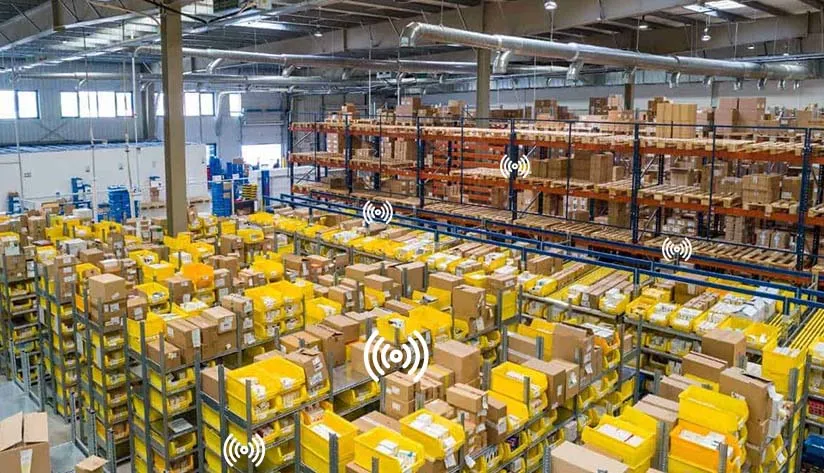
As RFID deployments grow, reader density becomes critical—too many readers in close proximity cause interference, while insufficient readers create coverage gaps. Best practices include implementing anti-collision protocols, optimizing reader placement, and ensuring network infrastructure can handle increased data flow.
For global supply chains, standards compliance is essential:
•GS1 EPC standards ensure consistent tag data structures
•ISO/IEC standards govern reader and tag protocols
•Regional frequency regulations impact global deployments
The RFID landscape continues to evolve with emerging standards like RAIN RFID, EPC Gen2v2, and GS1 Digital Link. Forward-thinking organizations select reader writer platforms with firmware upgrade paths to support these emerging standards and protect their investment.
Factor #5: Total Cost of Ownership and ROI Analysis
The initial purchase price of RFID reader writers typically represents only 15-30% of total implementation costs. A comprehensive assessment includes hardware, software, integration services, maintenance contracts, and training expenses projected over a 3-5 year horizon.
ROI typically comes from three main areas:
•Inventory accuracy improvements (10-30% reduction in safety stock, 20-50% decrease in write-offs)
•Labor efficiency gains (40-60% time reduction in receiving, 80-95% in inventory counting)
•Loss prevention and shrinkage reduction (20-30% reduction in internal theft, 30-50% in shipping errors)
Real-world case studies show payback periods ranging from 11-18 months, with precision equipment manufacturers achieving 99.9% inventory accuracy and consumer goods distributors reducing receiving processing time by 65%.
Implementation Roadmap for RFID Reader Writer Success
Before selecting specific hardware, conduct a thorough site assessment including RF noise analysis, material assessment, and network infrastructure review. RFID implementation offers an ideal opportunity to optimize existing processes—organizations that do so typically achieve 30-40% higher ROI.
A structured pilot approach reduces risk and builds organizational confidence:
1. Define clear objectives and metrics
2. Select a representative environment
3. Test multiple reader configurations
4. Document lessons learned for full deployment
User adoption directly impacts implementation success—invest in role-based training, hands-on experience, and continuous education to achieve full productivity 40-50% faster.
Conclusion: Making the Right RFID Reader Writer Decision
Choosing the right RFID reader writer is more than a technology decision—it’s an investment in your company’s future. The right system can revolutionize your visibility, streamline your operations, and safeguard your bottom line.
Don’t let uncertainty or outdated processes hold you back. Partner with a proven RFID solutions provider today to:
✅ Boost inventory accuracy and reduce shrinkage
✅ Accelerate operational workflows and cut costs
✅ Stay competitive in a rapidly evolving supply chain landscape
Schedule a personalized consultation with our RFID experts at RFIDcard.com to discuss your unique needs and discover how the right RFID solution can drive measurable results.
Or contact us directly to start your RFID journey today.
The future belongs to businesses that can see, adapt, and respond faster. Let’s make sure yours is one of them.
Frequently Asked Questions About RFID Reader Writers
Q1: How do I determine if UHF or HF RFID is better for my application?
A: The decision depends primarily on read range requirements, environmental conditions, and global deployment needs. UHF offers longer read ranges (up to 12 meters) ideal for warehouse applications, while HF provides shorter ranges but performs better around metals and liquids. For global deployments, HF offers more consistent regulations worldwide.
Q2: What’s the difference between fixed and handheld RFID reader writers?
A: Fixed reader writers are permanently installed at specific locations providing continuous monitoring with higher power output and reliability. Handheld devices offer flexibility for inventory counts and exception processing. Many successful implementations use both types complementarily.
Q3: How can we protect our RFID investment as technology evolves?
A: Future-proof your investment by selecting reader writers with software-upgradeable firmware, choosing vendors with strong R&D investment, implementing middleware that abstracts hardware details, adopting industry standards, and designing flexible physical infrastructure.
Q4: What security concerns should we address with RFID reader writer systems?
A: Key security considerations include data encryption for sensitive information, authentication mechanisms to prevent unauthorized access, network security for connectivity, physical security for installations, and privacy compliance for consumer-facing applications.
Q5: How do we calculate the true ROI of an RFID reader writer implementation?
A: Comprehensive ROI calculation should include direct cost savings from labor efficiency and inventory reduction, revenue improvements from reduced stockouts, compliance benefits from improved traceability, total implementation costs, and ongoing operational expenses. Most organizations achieve positive ROI within 12-24 months.


