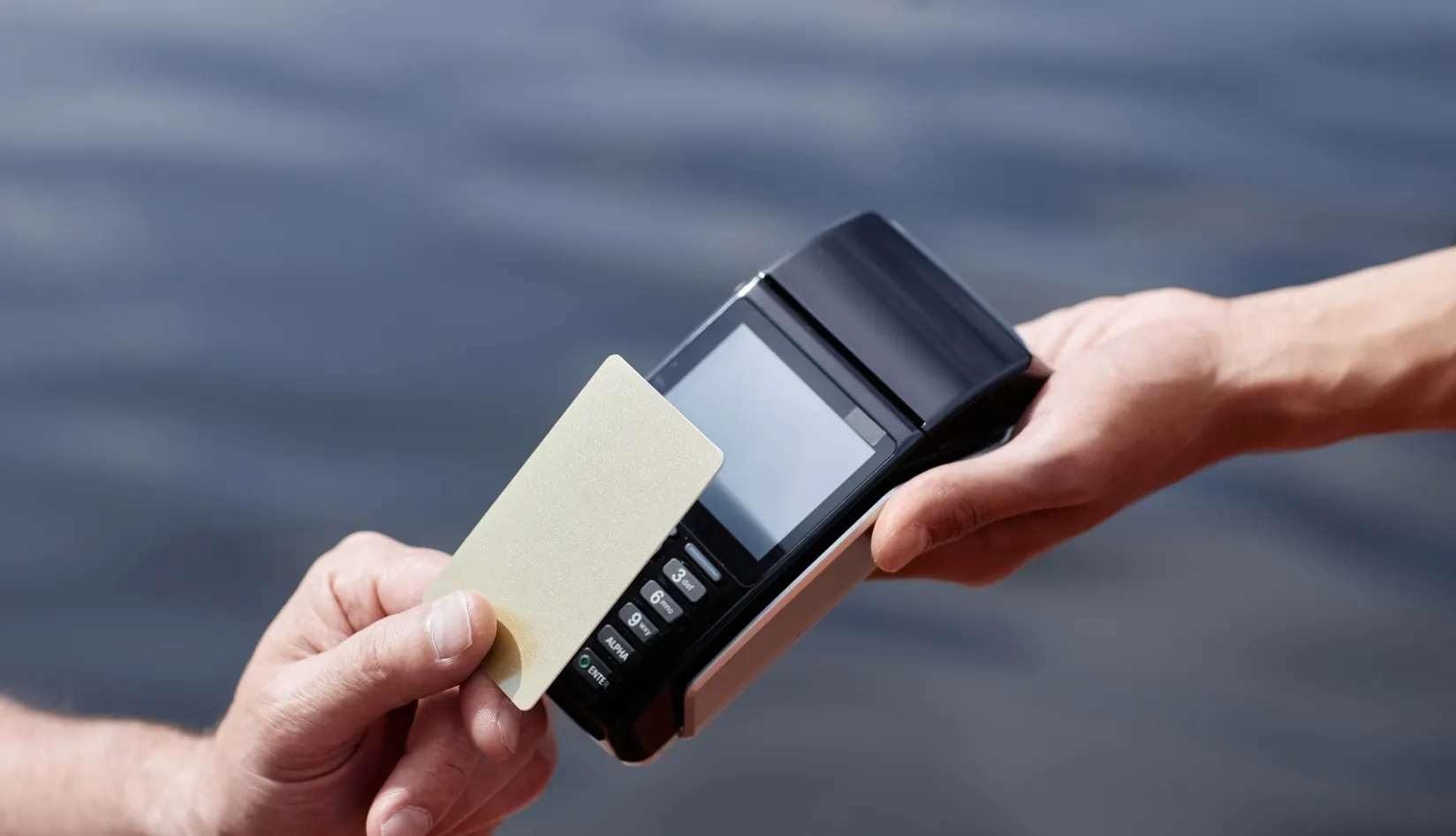
As security demands continue to rise, traditional access control systems are gradually being replaced by smarter, more user-friendly solutions. Among these, NFC technology has emerged as a core innovation, thanks to its powerful “contactless” advantage. Compared to conventional swipe or insert methods, NFC offers a smoother user experience while significantly enhancing security and management efficiency. At the heart of this transformation lies the NFC card printer—a crucial yet often overlooked component that bridges identity customization, secure encryption, and access authorization, providing strong support for modern access control systems.
What is an NFC Card and How Does It Work?
What is an NFC Card?
An NFC (Near Field Communication) card is a smart card embedded with an NFC chip that can wirelessly exchange data with devices over short distances. The NFC card is based on high-frequency RFID technology operating at 13.56 MHz. It contains an integrated antenna and microchip, which are used for identity authentication, data encryption, and communication.
How NFC Works in Access Control Systems
In access control systems, NFC cards are primarily used for identity authentication. When a cardholder brings the card close to the access control reader, the card’s antenna detects the high-frequency electromagnetic waves emitted by the reader. The card is activated, and the unique identifier (UID) and encrypted data stored in the chip are sent to the reader. This entire process takes only about 0.1 seconds, happening quickly and almost imperceptibly to the user.
The basic interaction process is as follows:
- The reader sends a signal to activate the NFC card.
- The NFC card transmits data (such as ID, access permissions, etc.).
- The system verifies the information and decides whether to grant access.
- Access logs are recorded in real-time for backend management.

NFC vs RFID: What’s the Difference?
Although NFC technology evolved from RFID, there are several key differences between the two:
| Comparison | High-Frequency RFID (13.56 MHz) | NFC (13.56 MHz) |
| Frequency | 13.56 MHz | 13.56 MHz |
| Communication Range | Typically ranges from a few centimeters to one meter | Usually less than 10 centimeters |
| Data Exchange | One-way communication | Two-way communication |
| Security | Simpler encryption (e.g., static data) | Advanced encryption and dynamic authentication mechanisms |
| Use Cases | Widely used in library management, document tracking, etc. | Primarily used in access control, payments, and identity verification in high-security environments |
Why is NFC More Popular in Access Control Systems?
Higher Security: NFC supports dynamic encryption and two-way authentication mechanisms, making it more secure compared to high-frequency RFID’s static data exchange.
Short-Range Communication: The short-range communication of NFC reduces the risk of unauthorized reading, making it more suitable for high-security access control systems.
Compatibility and Flexibility: NFC is compatible with smartphones and smart devices, supporting more flexible access control management, such as integrating mobile apps with smart access control systems.
Due to these advantages, NFC technology has become increasingly popular in modern access control systems, emerging as the preferred solution for enhanced security and efficiency.
Why You Need an NFC Card Printer for Access Control
What is an NFC Card Printer?
An NFC card printer is a specialized device designed for creating smart cards with built-in NFC chips. It not only offers traditional printing functions but also encodes, encrypts, and prints on the cards. By integrating high-frequency RFID technology, an NFC card printer helps create access cards that feature unique identifiers, encrypted data, and custom designs.
Functions:
- Encoding: Binds the NFC chip in the card with specific data, such as employee IDs or access permissions.
- Printing: Prints customized designs, text, or company logos on the surface of the card, enhancing brand image.
- Encryption: Encrypts the data on the card to ensure security and prevent unauthorized reading or tampering of data.
Difference from Regular ID Printers: Unlike regular ID printers, an NFC card printer supports not only standard printing functions but also encoding and encryption of the NFC chip. This enables NFC cards to carry more advanced security features, such as identity verification and access control management.
Key Benefits in Access Control Applications
Enhanced Security (Uniqueness + Traceability): NFC cards contain unique identifiers and encrypted data, significantly improving the card’s security and anti-counterfeit capabilities. Each card has a unique identity, and access records can be traced, effectively preventing fraud and unauthorized access.
Real-Time Customization (Quick Card Issuance): NFC card printers support fast customization, allowing for the immediate issuance of cards tailored to specific needs. For example, administrators can quickly create and distribute temporary visitor or employee cards with specific access permissions.
Brand Consistency (Customizable Appearance): In addition to functional benefits, NFC card printers allow users to design the card’s appearance. Custom printing ensures that access cards match the company’s brand identity, enhancing the professional image of the organization.
Real-World Use Cases
Corporate Offices (Visitor and Employee Access): In a corporate setting, employees use NFC cards to verify their identity and access the building, while staff customize and issue temporary visitor cards to ensure flexible and secure access.
Campus (Student ID + Access Control Integration): On campuses, NFC cards serve not only as student identification but also integrate with access control systems to manage students’ access to classrooms, dorms, and other campus facilities.
Healthcare Institutions (Permission Management + Emergency Response): Healthcare institutions use NFC cards to control staff access to restricted areas, allowing only authorized personnel to enter specific zones. They also use NFC cards to support emergency response systems, boosting hospital efficiency and response times.
Hotels (Room Keys + Identity Verification): In hotels, NFC cards serve as both room keys and identity verification tools. Guests can use NFC room keys to access their rooms while also verifying their identity using NFC technology, enhancing the security and guest experience.
Choosing the Right NFC Card Printer: What to Look For
Selecting the right NFC card printer is a crucial step to ensuring the efficient and secure operation of your access control system. When making a purchase, here are some key factors to consider:
Print Speed vs. Resolution
Print Speed: Print speed directly impacts the efficiency of card production. For high-volume card issuance in places like offices, schools, or hospitals, choosing a printer with fast print speeds can help improve workflow and reduce wait times.
Resolution: Resolution determines the clarity of printed images and text. A high-resolution printer ensures fine detail in graphics and clear text, which is crucial for professional and polished card designs. If you need to print company logos or employee photos on the cards, opting for a high-resolution printer is advisable.
Does It Support Dual-Sided Printing and Encryption Modules?
Dual-Sided Printing: If you need to print information on both the front and back of the card, dual-sided printing functionality is essential. This allows you to maximize space and display more information (such as employee photos, names, positions, barcodes, etc.).
Encryption Modules: Encryption modules provide additional security for NFC cards. In applications where sensitive data is involved (such as in healthcare or finance), a printer with an embedded encryption module ensures that data is protected during transmission, preventing tampering or leaks and securing the access control system.
Compatibility with Access Control Systems
The NFC card printer you choose should be compatible with your existing access control system. Make sure the printer supports the technical requirements of your current access control system to ensure that the printed cards work seamlessly with the readers. There may be compatibility differences between printers and access devices from different brands and models, so it’s important to verify compatibility before purchasing to avoid unnecessary issues or additional costs.
Choosing the right NFC card printer can improve access control efficiency and enhance security. By considering factors like print speed, resolution, dual-sided printing, encryption modules, and compatibility with access control systems, you can select the printer that best suits your needs.
Conclusion: Secure Your Access Control with the Right Technology
By combining NFC cards with NFC card printers, you can significantly enhance the security and efficiency of your access control system. NFC cards offer a reliable solution for access management with their high security and instant communication capabilities. Meanwhile, NFC card printers enable customization of cards, ensure uniqueness, and support encryption, strengthening overall security.
For many businesses and organizations, upgrading from traditional access control systems to NFC technology can not only improve operational efficiency but also greatly enhance system security. As technology continues to advance, the costs of NFC cards and printers are gradually decreasing, prompting more industries to adopt this solution to meet the growing demand for security.
Looking to implement an NFC access control system? Click on RFIDCard® to learn how to start your upgrade and improve your security standards today!
FAQs
What makes NFC card printers a game changer for modern access control systems?
NFC card printers bring significant improvements to modern access control by offering customization, enhanced security, and real-time data encryption. NFC printers encode unique data into each card, ensuring up-to-date and secure credentials protect every access point. Their ability to print and personalize cards quickly allows businesses to adapt to changing security needs with ease, while the encryption technology ensures that data transferred from cards to readers is safe from tampering or unauthorized access.
How Do NFC Card Printers Integrate with Existing Access Control Systems?
NFC card printers are compatible with most modern access control systems, especially those that support 13.56 MHz frequency RFID readers. By selecting printers that support NFC card encoding and encryption, businesses can ensure that the printed cards meet access control system requirements, streamlining card management and enhancing overall system security.
Are NFC Access Control Systems Expensive to Maintain?
NFC access control systems are relatively low-maintenance. NFC cards typically have a long lifespan, reducing the need for frequent replacements. Additionally, NFC card printers are designed for durability and are compatible with many existing systems, making maintenance and system updates relatively simple and cost-effective.