
Selecting the appropriate RFID ID card is paramount for establishing a reliable and secure access control system. A misstep in this crucial decision can lead to significant compatibility issues, heightened security vulnerabilities, and ultimately, system failure. This comprehensive guide will delve into the essential factors to consider, including frequency, chip type, security level, material, printing, encoding, and durability, ensuring you make an informed choice for your access control needs.
Step 1 – Understand Your Access Control System Requirements
Before delving into the specifics of RFID ID card technology, it is imperative to thoroughly understand the requirements of your existing or planned access control system. This foundational step will guide all subsequent decisions.
Verify Frequency Compatibility
One of the most common pitfalls in purchasing an RFID ID card is a frequency mismatch. RFID systems operate on different frequencies, and your chosen card must align with your reader technology.
- LF (125 kHz) – Common in legacy systems
- HF (13.56 MHz) – Widely used for modern secure access
- UHF (860–960 MHz) – Used for long-range identification such as parking gates

Understanding your system’s frequency is non-negotiable. Attempting to use a card with an incompatible frequency will render it useless, leading to wasted resources and deployment delays.
Determine Required Read Range
The necessary read range for your access control points will significantly influence your choice of RFID technology and, consequently, the RFID ID card.
- Close-range door readers: For standard door access, a short read range (LF or HF) is typically sufficient, requiring the user to present the card close to the reader.
- Turnstiles and elevator control: Similar to door readers, these applications usually require a close-proximity read, often with HF cards for added security.
- Parking gates and vehicle access systems: These scenarios demand a longer read range, making UHF systems the preferred choice, allowing vehicles to pass without stopping.
Consider System Protocol and Reader Brand
Beyond frequency, the underlying protocol and brand of your access control readers are critical for compatibility.
- Proprietary vs. Open Protocol Systems: Some systems use proprietary protocols, limiting your card choices to specific manufacturers. Open protocol systems offer greater flexibility. Always verify your system’s specifications.
- Compatibility with Existing Infrastructure: If you are integrating new cards into an existing system, ensure they are compatible with your current readers and software.
Step 2 – Choose the Right RFID Chip
The RFID chip embedded within the RFID ID card is its brain, determining its functionality, security features, and memory capacity.

Common Chips Used in Access Control RFID ID Cards
Several chip types are prevalent in access control:
- EM4200 / TK4100 (LF systems): These are simple, read-only chips commonly used in 125 kHz systems for basic identification. They offer minimal security.
- MIFARE Classic: A widely adopted HF chip (13.56 MHz) offering more advanced features than LF chips, including memory sectors that can be read from and written to. However, its security has been compromised in some instances.
- MIFARE DESFire (higher security): This HF chip provides significantly enhanced security features, including advanced encryption and mutual authentication, making it suitable for high-security applications.
Security Level and Encryption
The security level of the chip is paramount, especially for sensitive environments.
- UID-only cards vs. Encrypted Sector Storage: UID-only cards transmit a unique identifier, which can be easily cloned. Cards with encrypted sector storage offer much greater security by protecting data with cryptographic keys.
- Risks of Low-Security Chips: Using low-security chips can expose your system to unauthorized access, data breaches, and other security threats. The cost savings often do not outweigh the potential risks.
- Anti-cloning Features for High-Security Facilities: For environments requiring stringent security, opt for chips with robust anti-cloning features, such as secure messaging, digital signatures, and hardware-based security modules.
Memory Capacity Considerations
Consider the amount of data you need to store on the RFID ID card.
- Basic Identification Number Storage: For simple access control, a small memory capacity to store a unique ID is sufficient.
- Multi-Application Data Storage: If you plan to use the card for multiple applications (e.g., access control, time attendance, cashless vending), you will need a chip with greater memory capacity.
- Future System Expansion Considerations: Choose a chip with some overhead memory to accommodate future system expansions or additional applications without needing to replace all cards.
Step 3 – Select the Appropriate Card Material
The physical material of the RFID ID card impacts its durability, appearance, and suitability for different environments.
Standard PVC Cards
- Cost-Effective Option: PVC cards are the industry standard due to their affordability, ease of printing, and general durability.
- Suitable for Indoor Corporate Environments: Ideal for office environments where cards are not subjected to extreme conditions.
Specialty Materials
For specific needs, specialty materials offer enhanced properties:
- Wooden RFID ID cards: These cards offer a unique aesthetic and are often chosen by organizations looking to convey a premium or eco-friendly image.
- Eco-friendly Materials (such as BioPoly™ Vinyl, BioPoly™ Stone): For companies committed to environmental responsibility, these materials provide a sustainable alternative to traditional PVC.
- On-metal cards: Designed to function reliably when placed directly on metal surfaces, which can interfere with standard RFID signals. These are crucial for industrial settings or asset tracking.

Step 4 – Printing and Personalization Options
Personalization enhances security and usability, making the RFID ID card a more effective tool.

Pre-Printed vs. Blank RFID ID Cards
- Factory Pre-Printing Advantages: Pre-printed cards can include high-quality graphics, logos, and intricate designs, often at a lower cost for large volumes. This reduces the burden of on-site printing.
- On-Site Personalization Flexibility: Blank cards allow for on-demand printing of variable data such as employee photos, names, and ID numbers, offering flexibility for new hires or replacements.
- Hybrid Printing Approach (Background Pre-Print + Variable Data Printing): This combines the best of both worlds: a professional pre-printed background with the flexibility to personalize variable data on-site.
Visual and Functional Customization
- Logo and Brand Colors
- Employee Photo and ID Number
- Barcode or QR Code Integration
- Holographic or Security Overlays
Step 5 – Encoding and Data Programming Requirements
Proper encoding ensures the RFID ID card communicates effectively with your access control system.

UID Encoding vs. Sector Encoding
- Simple ID-Based Systems: These systems typically rely on the card’s unique identifier (UID) for access. Encoding is straightforward.
- Encrypted Sector-Based Systems: For higher security, data is stored in encrypted sectors on the chip, requiring more complex encoding processes and cryptographic keys.
Pre-Encoding by Manufacturer vs. On-Site Encoding
- Benefits of Factory Pre-Programming: Manufacturers can pre-encode cards with specific data formats, reducing deployment time and minimizing human error during setup.
- Reducing Deployment Time and Human Error: Pre-encoded cards arrive ready for use, streamlining the integration process.
Ensuring System Integration
- Matching Data Format to Access Control Software: The encoded data must match the format expected by your access control software. Incompatible data formats will lead to system malfunctions.
- Testing Sample Cards Before Mass Production: As with frequency compatibility, always test encoded sample cards to ensure seamless integration with your system before a full production run.
Step 6 – Evaluate Durability and Lifespan
The durability of your RFID ID card directly impacts its lifespan and replacement costs.

Card Thickness and Lamination Options
- Standard CR80 Thickness: The most common card thickness, similar to a credit card. Suitable for everyday use.
- Extra Lamination for Extended Life: For cards subjected to harsh conditions or frequent use, additional lamination layers can significantly increase durability and resistance to wear and tear.
Expected Lifespan in Daily Use
- Typical Usage Cycles: Consider how frequently the card will be used and the environment it will be exposed to. Cards used daily in rugged environments will have a shorter lifespan than those used occasionally in an office.
- Factors That Reduce Card Lifespan: Exposure to extreme temperatures, bending, scratching, chemical exposure, and prolonged sunlight can all degrade the card’s performance and appearance.
Conclusion
Choosing the correct RFID ID card is a critical decision that directly impacts the stability and security of your access control system.
RFIDCard provides high-quality custom RFID ID cards with professional printing, chip selection, and pre-encoding services to ensure seamless integration with your access control system. Request sample cards to test compatibility before your full deployment.
Recommended Product

RFID Card Low Frequency 125 kHz IC EM4200

The EM4200 RFID cards are made with High-quality PVC sheets in the size of CR80. EM4200 is designed to replace EM4100/4102 and EM4005/4105, which the chip provides higher reading range performances Compared to EM4100/4102 and EM4005/4105. EM4200 is a CMOS integrated circuit intended for use in electronic Read Only RF transponders.
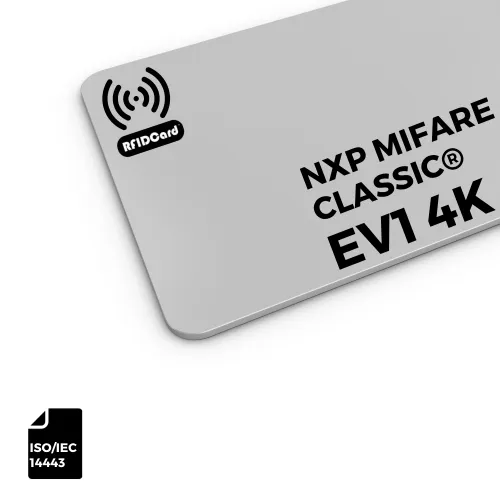
RFID Card NXP MIFARE Classic® EV1 4K (S70) CR80
The MIFARE Classic® EV1 4K RFID card is made with Photo-quality standard PVC sheets into the size of CR80, that are suitable for use with most direct thermal or thermal transfer card printers. MF1S70 series to be used in a contactless smart card according to ISO/IEC 14443 Type A.