
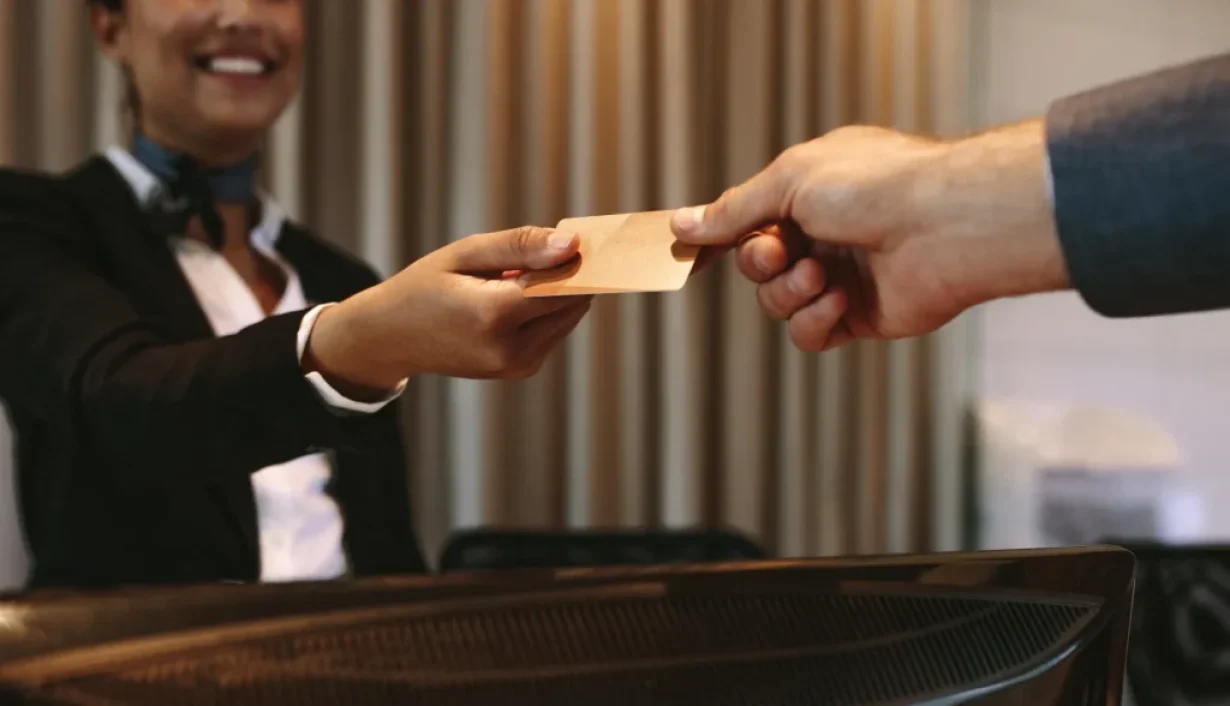

Physical hotel card Keys in hand.
This is not really about resisting technology. In most cases, it is about ease. A physical card often feels faster, clearer, and more dependable in the moment. After a long journey, most guests do not want to troubleshoot access. They just want to open the door and get into the room.
That is why the physical hotel card keys has not disappeared. In many hotels, it still works alongside mobile access and continues to play a real role in the guest experience.
And if guests still want it, hotels still need to think carefully about what kind of card they are offering.
Not every guest defines convenience in the same way
Some hotels treat mobile key as the obvious next step for everyone.
In reality, guest preference is more mixed than that.
Some guests like phone-based access. Some do not. Some are happy with both, but still feel better when there is a hotel card key as a backup.
That is where physical hotel card keys still make sense.

Which guests still prefer a physical Hotel Card Key?
1. Guests who want the fastest way into the room
Some guests do not want another app, another login, or another step.
A Hotel card key removes extra steps at exactly the moment guests want the stay to feel easy.
This is especially true when guests:
- arrive late at night
- have just finished a long flight
- are tired, rushed, or carrying a lot of luggage
- do not want to stop and set up digital access
In those moments, simple often wins.
2. Older travelers who prefer something familiar
The physical hotel card keys are easy to understand at a glance.
There is nothing to install. Nothing to connect. Nothing to explain beyond where to tap or insert the card, depending on the lock system.
For many older travelers, that matters. It makes the arrival process feel more comfortable from the start.
3. Families and guests sharing one room
This is one of the most practical reasons physical cards still matter.
A mobile key can work well for a solo traveler. It gets more complicated when several people need access to the same room.
Think about:
- parents and children
- couples moving on different schedules
- friends sharing a room
- group travelers coming and going separately
A physical hotel card key is simply easier to pass, split, or duplicate.

4. Business travelers who do not want room access tied to phone battery
Business travelers already rely heavily on their phones for:
- meetings
- maps
- ride-hailing
- boarding passes
- two-factor authentication
By the end of the day, battery life may already be low.
That is one reason some guests still prefer a hotel card key. They do not want room access tied to the same device that is already handling everything else.
5. Guests tired of app-based travel
Some travelers are not against digital access. They are simply tired of downloading an app for every small task.
A physical hotel card key feels lighter. It asks less from the guest. No permissions, no setup, no notifications, no account recovery.
That kind of directness still matters.
6. International travelers dealing with device or connectivity issues
A mobile key may sound easy in theory, but travel often creates small complications:
- weak data access on arrival
- older phones
- company-managed devices
- low battery after a long journey
- language friction inside an app
In these situations, a physical hotel card key often feels more reliable from the first minute of check-in.
Quick view: who still prefers a physical Hotel Card Key?
Not every guest asks for a Hotel card key for the same reason, but the preference is still common in real hotel stays.
| Guest type | Why a physical card still works well |
| Late-arrival guests | Fast room access with no setup |
| Older travelers | More familiar and easier to use |
| Families and shared-room guests | Easier to issue and share |
| Business travelers | Not tied to phone battery |
| App-fatigued travelers | Fewer steps and less friction |
| International guests | Fewer device and connectivity issues |
Why this still matters for hotels
This is the part many hotels underestimate.
If a meaningful share of your guests still prefers the physical hotel card keys, then the issue is no longer whether cards still matter.
The real question becomes:
What kind of hotel card key should your property be using now?
Because not all cards perform the same way. If the card is still part of the guest experience, it should not be treated as an afterthought.

A Hotel Card Key is not just a backup
In many hotels, it still handles real daily work.
It helps with:
- faster front-desk handoff
- smoother access for shared stays
- backup entry when phones fail
- easier reissue during busy check-in periods
- a more complete branded guest experience
So even in the mobile key era, the physical hotel card keys are not just something left over from the past. In many properties, it is still part of what keeps the stay running smoothly.
That is why many hotels continue to order RFID-based hotel card solutions, and in some projects NFC card options as well, depending on the lock system and access setup.
What makes a good Hotel Card Key for modern hotels?
If a hotel still offers physical access, then the next step is not just whether to buy cards. It is whether the hotel is choosing the right hotel card key for daily use.
That is where purchasing decisions start to matter.
1. Lock system compatibility
This comes first.
The hotel card key must match the actual hotel lock system, including chip requirements, protocol, and encoding needs. If compatibility is wrong, nothing else matters.
2. Durability in everyday circulation
Hotel cards are used constantly.
They go in wallets, bags, pockets, and card holders. They are dropped, bent, reused, and reissued. A card that looks fine in a sample pack may not perform well in real hotel circulation.
3. Material choice
Different hotels need different materials.
Some want standard PVC because it is practical. Some want recycled materials. Some choose wood or premium finishes because the hotel card key is also part of the hotel’s visual identity.
Material affects more than appearance. It also affects wear, feel, and positioning.

4. Print quality
Guests notice details, even when they do not say so directly.
If the card scratches easily, fades quickly, or feels cheap, it changes how the hotel is perceived. A better-made hotel card key helps create a more polished impression.
5. RFID or NFC option
For many hotel projects, RFID remains the more common choice because it is widely used in hotel lock systems.
In some cases, NFC may also be worth considering, especially when the property wants extra smartphone interaction or broader guest-facing functions.
The point is not to choose based on trend. It is to choose based on how the hotel actually operates.
Simple comparison: what hotels should evaluate before buying
| What to check | Why it matters |
| Lock compatibility | Prevents access issues and rework |
| Chip type | Must fit the actual system |
| Card durability | Reduces replacement frequency |
| Material | Affects cost, feel, and brand fit |
| Print finish | Influences guest impression |
| Encoding support | Helps avoid problems later |
Mobile key is growing, but physical cards are not finished
This is where many articles oversimplify the topic.
Mobile access is growing, yes. But growth does not automatically mean replacement in every hotel, for every guest, in every situation.
Hotels that move too quickly toward mobile-only access can create new friction:
- guests still asking for cards at check-in
- shared-room access problems
- phone battery issues
- front-desk support questions about apps
- extra stress during arrival
That is why many hotels still keep a mixed approach.
Not card only.
Not mobile only.
Just a more practical balance.
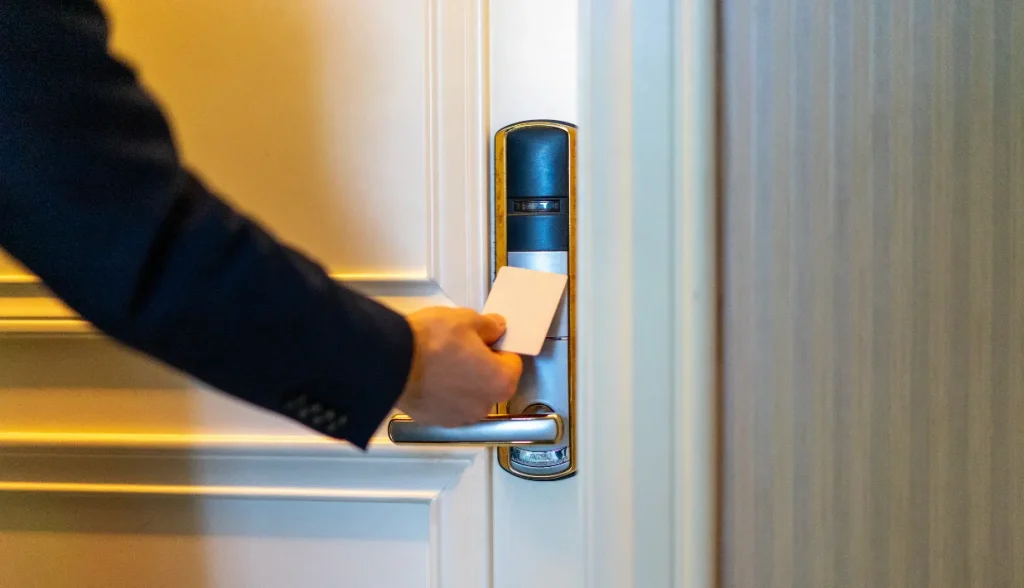
In many hotels, the better answer is both
Some guests want mobile access. Others still want a hotel card key. Many simply want the option that works best in the moment.
So the better question is not:
Should hotels stop using physical hotel card keys?
It is:
What balance of mobile and physical access works best for the actual guest mix?
And once a hotel asks that question honestly, physical cards usually remain part of the answer.
If physical access still matters, card quality matters too
This is where procurement becomes important.
If your hotel is still issuing cards, then the hotel card key itself affects:
- guest convenience
- front-desk efficiency
- replacement rate
- overall brand presentation
- long-term operational smoothness
So the real purchasing decision is not just whether to keep buying hotel cards.
It is whether you are buying the right hotel card key for your property.
For many hotels, that means looking more carefully at:
- RFID hotel card compatibility
- card material and finish
- print quality
- durability
- supplier support for encoding or customization
A physical card may look simple, but the wrong one causes problems quickly.

Conclusion
Physical hotel card keys still matter because many guests still want them.
Not every guest wants room access tied to a phone. Not every stay is a solo stay. Not every arrival is smooth enough for app-first access to feel convenient.
That is why the physical hotel card key still has a place in modern hospitality.
And if it still has a place, hotels should not treat it like a basic commodity.
The right RFID card or NFC card solution can support smoother room access, better guest comfort, and a more polished hotel experience overall.
If your property is reviewing its next hotel card key order, now is a good time to look beyond price alone and think about compatibility, durability, material, and everyday usability.
At RFIDCard, we provide custom hotel card solutions for hotels that need dependable quality, flexible materials, and practical support for real hospitality use. Visit rfidcard.com to explore RFID card and NFC card options for your next project.e. Visit rfidcard.com to explore RFID card and NFC card options for your next project.
1. Can one hotel card key design work for every property?
Not always. Different hotels may need different materials, finishes, chip options, or branding styles depending on their guest profile, positioning, and lock system. A card that works for one property may not be the best fit for another.
2. What should hotels check before ordering hotel card keys?
Hotels should first confirm lock compatibility, chip type, card material, print requirements, durability, and whether encoding support is needed. A card may look simple, but these details affect whether it works smoothly in daily hotel use.
Recommended Product
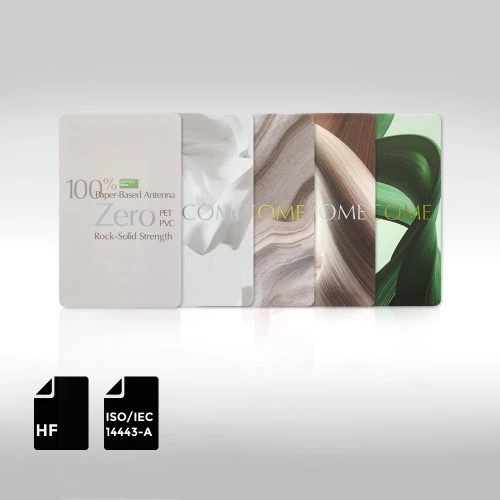
BioPoly™ Stone RFID Card Made with 100% Paper-Based Antenna NXP® MIFARE Ultralight® EV1

The RFID BioPoly™ Stone Card Made with 100% Paper-Based Antenna is designed for brands seeking high performance with a lower environmental footprint. Featuring a Zero PET, Zero PVC paper-based antenna combined with durable BioPoly™ Stone, it delivers rock-solid strength and reliable RFID performance. As the industry’s first developer of paper-antenna RFID cards, we continue to advance eco-friendly RFID solutions through sustainable innovation. Powered by NXP® MIFARE Ultralight® EV1 and compliant with ISO/IEC 14443-A, it is ideal for access control and identification applications.



