RFID credit card has convenient our life. By simply tapping a card on a payment terminal, customers can finish a purchase in seconds. While this convenience is widely appreciated, many consumers still wonder whether using an RFID credit card is truly secure. Understanding how an RFID credit card works—and what security mechanisms protect it—can help address these concerns.
1. How RFID Credit Cards Work

When a customer taps an RFID credit card on a payment terminal, a secure communication process takes place in several steps:
- Signal activation – The payment terminal emits a radio frequency field that activates the RFID chip inside the card.
- Data exchange – The chip communicates with the terminal, transmitting encrypted payment credentials.
- Authentication – The payment network verifies the transaction through banking systems.
- Authorization – The bank approves or declines the payment based on account status and security checks.
- Transaction completion – The payment is finalized, usually within a second or two.
This quick interaction is what makes contactless payments so convenient. The short communication time and limited range also play an important role in the overall security of the system.
2. Common Security Concerns About RFID Credit Cards
Although RFID payment systems are designed to be secure, some concerns continue to circulate among consumers. It is helpful to address these concerns by looking at the practical realities of how these attacks would have to be executed.

2.1 RFID Skimming: Fact vs. Fiction
RFID skimming refers to the theoretical possibility of someone using a portable scanner to read data from a nearby RFID card without the owner’s knowledge. While this idea often appears in media discussions about contactless payments, real-world incidents are extremely rare. The short operating range of an RFID credit card makes skimming difficult. A scanner would need to be very close to the card, typically within a few centimeters.
In addition, encrypted communication and dynamic transaction codes further limit the usefulness of any captured information.
2.2 Unauthorized Scanning in Crowds
Some people worry that their card could be charged without their permission if a payment terminal is placed near them in public. In practice, payment systems require the terminal to be properly connected to banking networks and authorized by payment providers. Fraudulent terminals would be quickly identified and shut down by financial institutions.
2.3 Data Interception Risks
Theoretical risks of wireless interception exist for any radio-based technology. However, the range of an RFID credit card is intentionally limited to less than 4 centimeters. For an interceptor to capture the data, they would need to place a receiver almost directly between your card and the terminal at the exact moment of the tap. Even then, they would only capture the encrypted token and the dynamic cryptogram, neither of which provides a pathway to the user’s main account.
3. How Financial Institutions Protect RFID Credit Card Users
Banks and payment networks invest heavily in security systems to ensure that contactless payments remain safe. These protections extend far beyond the card itself.

3.1 Advanced Encryption Protocols
Every contactless transaction is protected by high-level encryption standards, typically Triple DES or AES. When the card and terminal communicate, they generate a unique “digital signature” for that specific transaction. This signature includes a dynamic cryptogram that changes every time the card is used. If a fraudster tried to “replay” a captured transaction, the bank’s servers would immediately recognize that the cryptogram has already been used and reject the payment.
3.2 EMV Chip Security Standards
Most modern contactless payment cards follow EMV (Europay, Mastercard, and Visa) security standards. EMV chips are designed to generate unique authentication data for each transaction, significantly reducing the risk of card cloning.
3.3 Fraud Detection Systems
Financial institutions use advanced algorithms and artificial intelligence to monitor transaction patterns. If unusual activity is detected—such as purchases in different locations within a short time—banks can automatically flag the transaction and notify the cardholder. These real-time monitoring systems are one of the most effective ways to prevent financial fraud.
3.4 Consumer Protection and Zero-Liability Policies
Another important safeguard is the consumer protection policies offered by banks and payment networks. Many credit card providers offer zero-liability protection, meaning customers are not responsible for unauthorized transactions if fraud occurs. This policy ensures that consumers are financially protected while using contactless payment technology.
4. Practical Tips to Enhance RFID Credit Card Security
While the system is robust, proactive habits can further reduce your risk profile. Security is always a partnership between the provider and the user.

4.1 Use RFID-Blocking Wallets
For those who want an extra layer of peace of mind, RFID-blocking wallets and sleeves are a popular choice. these products are lined with a thin layer of metallic material (like carbon fiber or aluminum) that acts as a Faraday cage. This cage blocks electromagnetic fields, making it physically impossible for any radio signal to reach your card while it is inside the wallet. While not strictly necessary for most people, they are an inexpensive way to eliminate the theoretical risk of skimming entirely.
4.2 Monitor Bank Statements Regularly
Technology can fail, but a vigilant eye rarely does. Make it a habit to review your transaction history at least once a week. Mobile banking apps make this easier than ever. By scanning your recent activity, you can catch small “test charges” that fraudsters often use to see if a card is active before attempting a larger purchase.
4.3 Enable Real-Time Transaction Alerts
One of the most effective tools at your disposal is the push notification. Most banks allow you to set up alerts for every transaction made with your card. If you receive a notification for a purchase you didn’t make, you can “freeze” your card instantly through the app. This immediate response capability is the ultimate defense, rendering any stolen data useless before the thief can even leave the store.
5. Conclusion
Although no payment technology is completely immune to fraud, the risks associated with RFID-based transactions are relatively low compared with older payment methods such as magnetic stripe cards. With proper security standards and responsible usage, RFID credit cards offer a highly secure and convenient way to complete everyday purchases.
RFIDCard is a professional RFID card manufactuter. We provides high-quality card to meet business needs.
Recommended Product
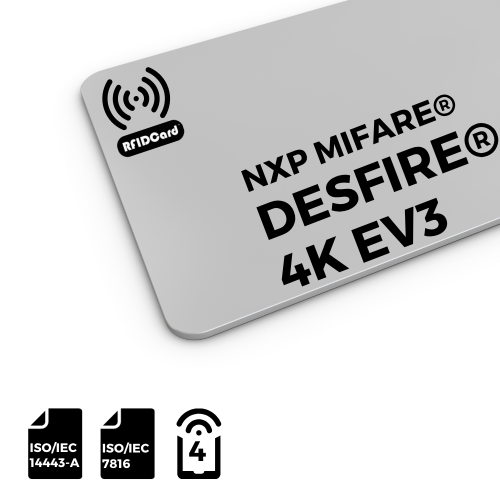
RFID Card NXP MIFARE® DESFire® EV3 4K

Blank or customized printing RFID cards with a choice of dimensions are available. The MIFARE® DESFire® EV3 4K is Common Criteria EAL5+ security certified for smart card IC products. The MIFARE® DESFire® EV3 4K ICs fully comply with NFC Forum Type 4 Tag.