The crisp mountain air, the exhilarating rush of a downhill run, and the stunning panoramic views define the quintessential ski experience. However, behind the scenes, ski resort operations have historically been a complex, logistical challenge, often marred by long lift lines, cumbersome paper tickets, and inefficient manual processes. Today, a technological revolution is sweeping across the slopes, transforming these traditional resorts into seamless, high-tech destinations. This transformation is spearheaded by the implementation of Radio-Frequency Identification (RFID) technology, giving rise to the RFID smart ski resort.
1. The Rise of the Smart Ski Resort
Ski resorts are no longer just about snow, slopes, and lifts—they are becoming integrated smart ecosystems. In an RFID smart ski resort, everything is seamlessly connected — from ticketing and equipment rental to restaurant payments and security checks. Skiers no longer rely on printed passes or manual processes. They carry a single RFID smart card that works as an all-in-one key, wallet, and ID.
This shift isn’t just about convenience. It reflects a broader industry trend toward automation, data integration, and personalized services. As more ski resorts adopt Internet of Things (IoT) technologies, RFID systems become the backbone of their operations. They connect the physical and digital aspects of the resort. RFID tracks skier movement, monitors lift queues, and automates access to restricted areas. It enables smooth and intelligent functioning across the entire resort environment.
2. The Role of RFID Smart Cards in Modern Ski Resorts
At its core, an RFID smart card is a contactless credential. It communicates wirelessly with RFID readers installed throughout the resort. The chip inside the card stores unique identification data. This allows the system to verify access permissions, record usage, and process payments in real time.

RFID smart cards are especially suited to ski resort environments for several reasons:
- Durability: Unlike magnetic stripe cards or paper passes, RFID cards function reliably even in snow, moisture, or sub-zero temperatures.
- Contactless convenience: Skiers don’t need to remove gloves or fumble with phones—RFID readers can detect cards through clothing or jackets.
- Integration capabilities: RFID cards can be linked to multiple resort services—entry gates, lockers, rentals, food courts, and even shuttle systems.
These advantages make RFID not just a tool but the operational core of a RFID smart ski resort, ensuring that every visitor’s journey—from parking lot to mountaintop—is smooth and secure.
3. Simplifying Operations Through RFID Integration
The integration of RFID technology permeates every facet of a ski resort’s operation, leading to dramatic improvements in efficiency and guest satisfaction.

3.1 Access Control & Lift Gate Automation
The most visible benefit of RFID is the automation of lift access. Automated gate systems equipped with RFID readers instantly verify the validity of a skier’s pass. This process is nearly instantaneous, allowing skiers to simply glide through the turnstile.
| Feature | Traditional System | RFID Smart System |
| Verification | Manual check by staff or slow magnetic swipe. | Automatic, contactless read in milliseconds. |
| Throughput | Slow, prone to human error and bottlenecks. | High-speed, smooth flow, significantly reducing wait times. |
| Fraud | High risk of pass sharing or fraudulent use. | Passes are often linked to a photo ID, reducing fraud. |
By eliminating the need for manual ticket checks, resorts can reallocate staff to more value-added roles, such as guest assistance or safety patrol. The resulting reduction in lift line congestion is a primary driver for the adoption of the RFID smart ski resort model, directly translating to more time spent skiing and a happier customer base.
3.2 Equipment Rental & Locker Management
RFID streamlines the often-chaotic process of equipment rental. When a guest rents skis, boots, and poles, each item can be tagged with an RFID label. The guest’s smart card is linked to this inventory.
- Quick Pickup: Staff can instantly scan the guest’s card to pull up their pre-booked order, ensuring the correct size and type of equipment is issued.
- Automated Return: Upon return, a quick scan of the equipment tags against the guest’s card confirms all items are accounted for, preventing loss and speeding up the check-in process.
- Locker Access: The same RFID card can be programmed to act as a key for automated lockers, providing secure and convenient storage for personal belongings without the need for physical keys or codes.
This integration minimizes paperwork, reduces errors, and significantly cuts down on the time guests spend in the rental shop, allowing them to hit the slopes faster.
3.3 Cashless Payments & Loyalty Programs
The RFID smart card transforms into a digital wallet, enabling cashless payments across the resort. Guests can link their credit card to their RFID profile and make purchases at on-mountain restaurants, cafés, and retail shops with a simple tap of their card.
This system offers several advantages:
- Convenience: No need to carry cash or credit cards on the mountain.
- Speed: Transaction times are dramatically reduced, speeding up service during peak lunch hours.
- Data Capture: Every transaction is recorded, providing valuable insight into guest spending habits and popular resort amenities.
Furthermore, the system is a powerful engine for loyalty programs. Purchases and can automatically accrue reward points or unlock membership benefits, encouraging repeat visits and fostering a stronger connection between the guest and the resort brand.
4. Data-Driven Decision Making
Perhaps the most transformative aspect of the RFID smart ski resort is its capacity for comprehensive data collection. Every scan at a lift gate, every purchase, and every equipment rental generates a data point that is centralized and analyzed.
This wealth of data provides unprecedented visibility into the resort’s operations:
- Traffic Flow Analysis: Management can precisely identify peak usage hours for individual lifts and slopes, allowing them to adjust lift speeds, open additional lanes, or deploy extra staff to mitigate congestion.
- Guest Behavior & Demographics: By analyzing the sequence of lift usage, resorts can map out popular routes and identify underutilized areas. This data informs future infrastructure investments and marketing strategies.
- Rental and Retail Trends: Detailed transaction data helps optimize inventory, predict demand for specific equipment sizes, and tailor retail offerings to guest preferences.
The use of advanced analytics on this data moves the resort from reactive management to proactive, data-driven decision making. This leads to better capacity planning, enhanced safety protocols, and a continuously improving guest experience.
5. Implementation Insights: Building an RFID Smart Ski Resort
The transition to an RFID-based system is a significant undertaking that requires careful planning and execution.
Key steps in building an RFID smart ski resort include:
- Choosing the Right Technology: Selecting the appropriate RFID frequency (typically UHF or HF) and form factor (cards, wristbands, or stickers) that balances read range, speed, and cost.
- Backend System Integration: The new RFID system must seamlessly integrate with existing point-of-sale (POS), lift control, and customer relationship management (CRM) software. This often requires custom API development and robust middleware.
- Infrastructure Deployment: Installing and calibrating RFID readers at every access point, including lift gates, rental counters, and payment terminals. This infrastructure must be ruggedized to withstand mountain conditions.
6. Conclusion
The integration of RFID smart cards marks a turning point for the ski industry. Beyond just simplifying lift access, RFID technology is reshaping how resorts operate, manage data, and serve their guests. In a fully realized RFID smart ski resort, every interaction—from scanning into a lift to buying lunch—is frictionless, secure, and data-informed. Resorts gain efficiency, staff productivity improves, and guests enjoy a smoother, more connected experience. Contact our team today to start building your RFID smart ski resort.
Recommended Product
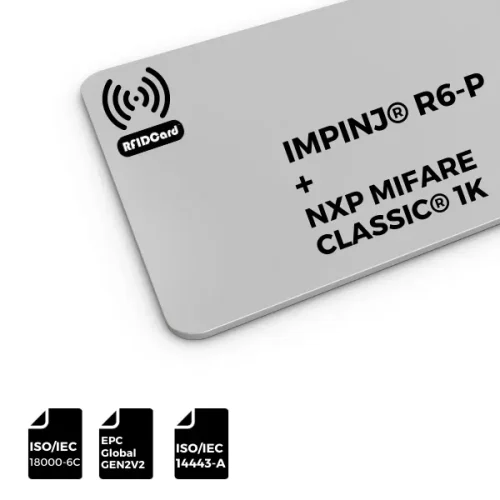
RFID Dual-Band HF+UHF Combo Card NXP MIFARE Classic® EV1 1K (S50) & Impinj® Monza® R6-P

This RFID Dual Frequency Card seamlessly combines the features of both chips, ensuring compatibility across various RFID systems. This hybrid card enhances flexibility and convenience, bridging gaps between different systems. It finds versatile applications in access management, smart city solutions, and event ticketing.