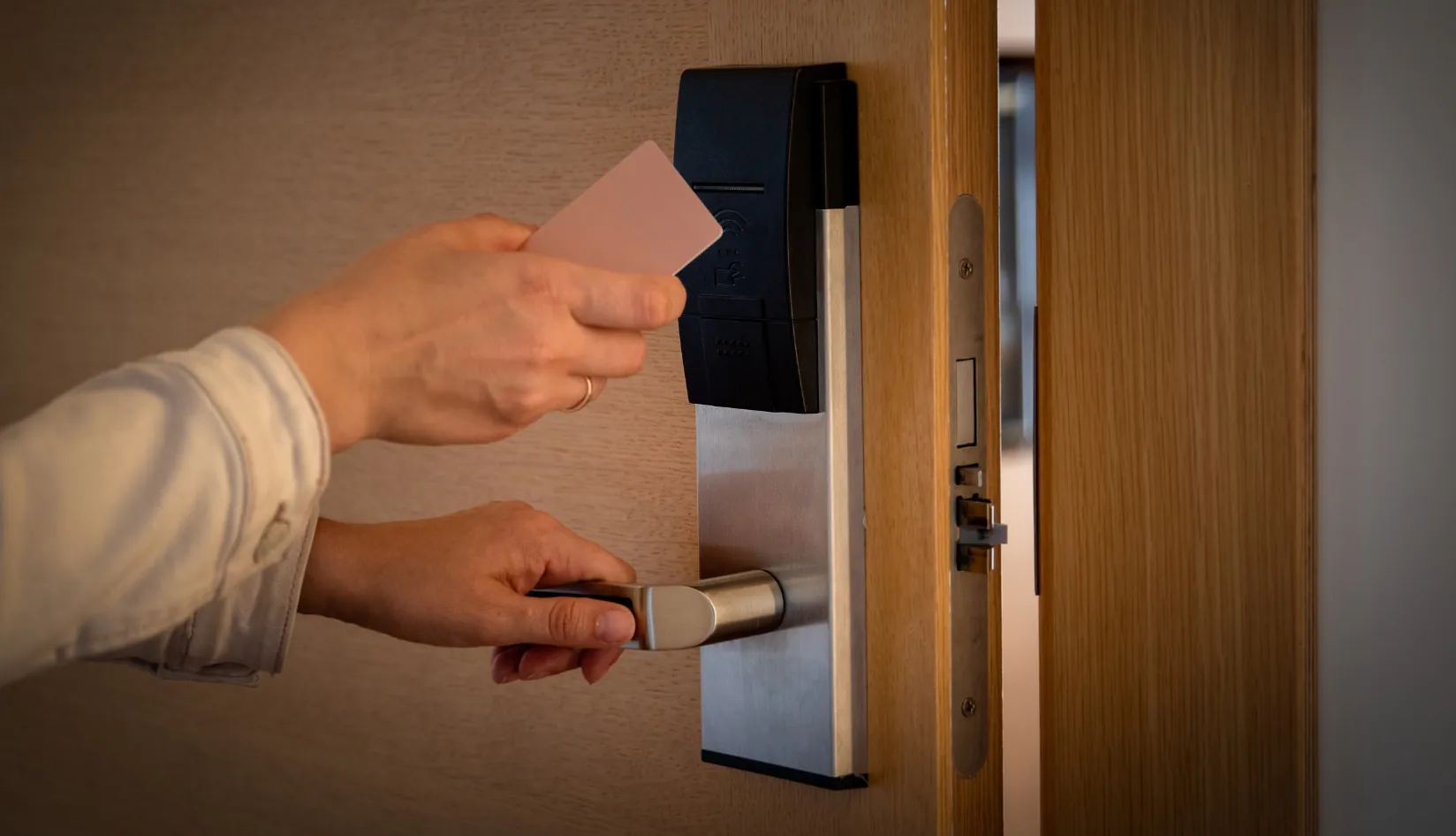

When businesses plan an RFID card project, one of the first questions is: “How much does an RFID card cost?”
The answer is not as simple as a fixed price. RFID cards can cost from a few cents to several dollars per piece depending on multiple factors, including the RFID chip type, card material, printing method, security features, and order quantity.
Whether you need RFID cards for hotel key cards, access control systems, membership programs, NFC business cards, or other identification applications, understanding the factors behind RFID card pricing can help you choose the right solution and better estimate your project budget.
This guide explains the main factors affecting RFID card prices, compares typical RFID card cost ranges, and provides practical tips to help you make a more informed purchasing decision.
How Much Does an RFID Card Cost?
The cost of an RFID card can range from a few cents to several dollars per piece, depending on the card type, RFID chip, material, customization level, and order quantity.
For basic RFID cards used for simple identification purposes, the cost may be relatively low. In contrast, RFID cards with premium materials, advanced printing, enhanced security features, or encrypted chips typically have a higher price.
The following table provides approximate RFID card price ranges based on bulk orders. Actual pricing may vary depending on specific project requirements, production volume, and customization options.
| RFID Card Type | Approximate Price Range* |
| Standard RFID PVC Card | $0.10 – $0.50/piece |
| Custom Printed RFID Card | $0.20 – $1.00/piece |
| NFC Business Card | $0.50 – $5.00+/piece |
| Wooden RFID Card | $1.00 – $5.00+/piece |
| Metal RFID Card | $2.00 – $10.00+/piece |
| Secure RFID Card with Encryption | $1.00 – $5.00+/piece |
*Prices are approximate estimates based on bulk orders.
Choosing a higher-performance chip, premium material, or advanced customization option can increase the cost, while selecting the right configuration for your application can help optimize your budget.
What Factors Affect RFID Card Cost?
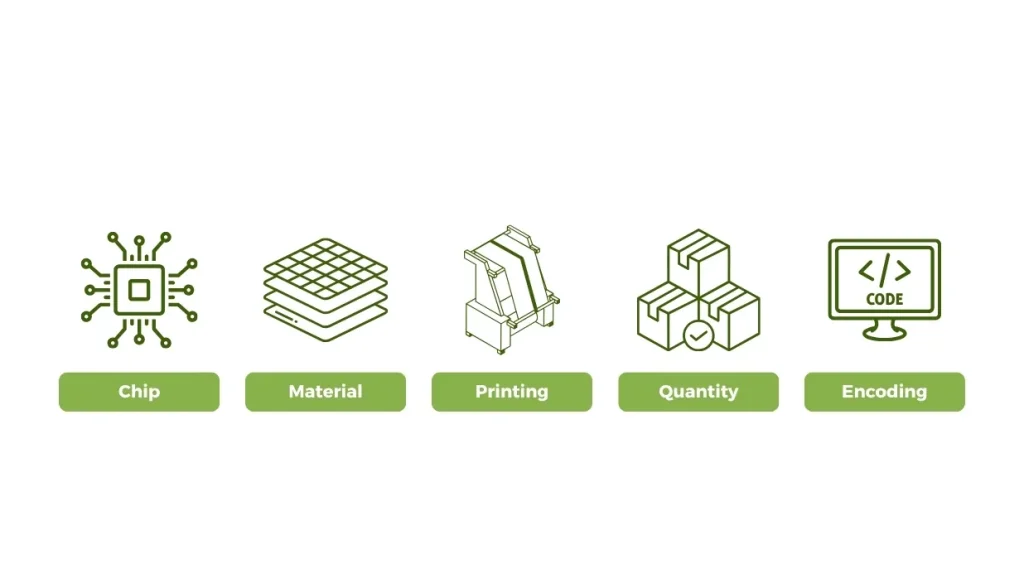
The main factors affecting RFID card cost include the RFID chip type, card material, customization options, order quantity, and additional services.
RFID Chip Type
The RFID chip is one of the key factors affecting RFID card pricing. Basic RFID chips are designed for simple identification, while advanced chips provide higher memory capacity, encryption, and security functions, resulting in a higher cost.
When selecting an RFID chip, businesses should consider the required level of security, data storage, compatibility, and application environment rather than simply choosing the most expensive option.
Low-Cost RFID Chips
For applications that only require basic identification and simple access functions, low-frequency RFID chips are often the most cost-effective choice.
Common low-cost RFID chips include:
- EM4100 / EM4200
- TK4100
EM4100 is a widely used 125 kHz RFID chip for basic identification applications. EM4200, as an upgraded version of EM4100, provides improved performance and lower power consumption while maintaining compatibility with many existing systems.
TK4100 is a cost-effective alternative compatible with EM4100 and is commonly used for projects where low card cost is a priority.
These chips are typically used for:
- Basic access control cards
- Employee identification cards
- Time attendance systems
- Simple RFID identification applications
Since these chips provide limited memory and do not include advanced encryption features, RFID cards using them are generally among the most affordable options.
Mid-Range RFID Chips
For applications requiring better flexibility, higher memory capacity, and read/write functions, mid-range RFID chips are commonly selected.
Popular options include:
- MIFARE Classic®
- MIFARE Ultralight®
- NXP NTAG®213
- NXP NTAG®215
- NXP NTAG®216
These chips are widely used in:
- Hotel key cards
- Membership cards
- NFC business cards
- Event tickets
- Smart identification applications
Compared with basic RFID chips, these options provide additional memory and data management capabilities.
For NFC applications, the NTAG series is a popular choice because different models offer different memory capacities:
- NXP NTAG®213 → suitable for basic NFC applications such as digital links and simple data storage
- NXP NTAG®215 → provides more memory for applications requiring additional data capacity
- NXP NTAG®216 → offers the largest memory capacity among the three for more data-intensive applications
The higher memory capacity and wider application possibilities usually result in a higher RFID card cost.
High-Security RFID Chips
For applications requiring stronger protection against cloning, unauthorized access, or data manipulation, businesses may choose advanced RFID chips with encryption and authentication functions.
Common high-security RFID chips include:
- MIFARE® DESFire®
- NXP NTAG®424 DNA
These chips are commonly used for:
- Secure access control
- Smart ticketing systems
- Product authentication
- Brand protection applications
- High-security identification systems
For example, an NXP NTAG®424 DNA card costs more than a standard NFC card because it provides AES-128 encryption, authentication functions, and advanced security features designed to prevent unauthorized copying.
The additional security technology and advanced functionality increase the chip cost, which directly affects the final RFID card price.
Card Material
The card material also plays an important role in determining RFID card cost. Different materials affect not only the price but also the card’s durability, appearance, sustainability, and application suitability.
Common RFID card materials include:
| Material | Cost Level | Features |
| PVC | Low | Most common, cost-effective, widely used |
| PET | Medium | Durable, heat-resistant, suitable for demanding environments |
| Paper | Low | Lightweight and eco-friendly option |
| Wooden Material | High | Premium appearance and natural texture |
| Bio-based Materials | Medium-High | Sustainable alternative with reduced plastic usage |
PVC RFID cards remain the most widely used option because they offer a good balance between cost, durability, and customization flexibility.
For businesses looking for more sustainable solutions, RFIDCard.com also provides several eco-friendly RFID card options, including:
- BioPoly™ Vinyl – an environmentally friendly alternative to traditional PVC cards while maintaining similar durability and printing performance.
- BioPoly™ Stone – made primarily from calcium carbonate, FDA-certified, BPA-free, and designed to combine plastic-like durability with a more sustainable material approach.
- Wood RFID Cards – featuring a five-layer structure that provides a premium natural appearance while maintaining reliable RFID performance.
- 100% Paper-Based RFID Cards – using a paper-based antenna structure to reduce plastic materials while maintaining reliable RFID functionality.
Choosing a premium or sustainable material may increase the initial card cost, but it can provide additional value through improved branding, durability, or environmental benefits.
Printing and Customization
Printing and customization options can also influence RFID card pricing. A standard RFID card with simple printing will generally cost less than a fully customized card with premium finishing effects.
Common RFID card printing and finishing options include:
Standard customization:
- Offset printing
- Full-color printing
Premium customization:
- UV printing
- Gold foil stamping
- Embossing
- Laser engraving
- Hologram effects
Customization increases production complexity and may add to the cost, but it also helps businesses create stronger brand recognition and improve user experience.
RFIDCard.com offers full-color printing and various finishing options to help businesses create RFID cards that are durable, visually appealing, and aligned with their brand identity. Through ColorEdge™ customization, customers can personalize card edges and core colors to match brand colors or design elements.
Selecting the right printing and finishing options based on the application can help avoid unnecessary costs while achieving the desired appearance.
Order Quantity (MOQ)
Order quantity is another important factor affecting RFID card cost. In most cases, larger orders result in a lower unit price because production becomes more efficient.
For example:
- 100 RFID cards: Higher unit cost due to setup and production preparation costs
- 10,000 RFID cards: Lower unit cost because materials, production processes, and machine operations are optimized
The main reasons include:
- Bulk material purchasing
- Machine setup efficiency
- Production workflow optimization
As an RFID card manufacturer, RFIDCard.com supports flexible order quantities and customized production solutions to help customers balance project requirements and budget considerations.
Encoding and Programming Services
Beyond the physical card itself, additional services such as encoding and programming can also affect RFID card pricing.
Optional services may include:
- UID printing
- Chip encoding
- Data writing
- Database matching
For example, hotel key cards may require pre-encoding according to the hotel lock system before delivery, ensuring that cards can be used immediately after installation.
While encoding services add additional production steps, they can save customers time during deployment and ensure better compatibility with their existing RFID systems.
After understanding these factors, you can better evaluate why two RFID cards that look similar may have significantly different prices and make a more informed purchasing decision.
How to Reduce RFID Card Costs
Reducing RFID card costs does not always mean choosing the cheapest option. The best approach is to select the right combination of chip, material, customization, and order quantity based on your actual application requirements.
Here are some practical ways to optimize your RFID card budget:
Buy in Bulk
Order quantity has a direct impact on RFID card pricing. Larger orders usually achieve a lower unit cost because production, material preparation, and machine setup become more efficient.
For example, ordering 10,000 RFID cards typically results in a lower per-card price compared with ordering only 100 cards.
If you have a long-term RFID card requirement, planning your purchase volume in advance can help reduce overall costs.
Choose the Right RFID Chip
Selecting the right RFID chip is one of the most effective ways to control costs. A more advanced chip does not always mean a better choice if your application does not require its additional features.
For example:
- Basic identification applications may only require a standard RFID chip.
- Hotel key cards usually do not need high-security NFC chips such as NTAG424 DNA unless additional authentication features are required.
- Applications involving secure access, authentication, or anti-counterfeiting may justify the use of advanced encrypted chips.
Choosing a chip that matches your actual requirements helps avoid paying for unnecessary features.
Use Standard Card Sizes
Using standard RFID card dimensions can help reduce production complexity and cost.
The most common RFID card size is:
85.6 × 54 mm (CR80 standard card size)
This size is widely used for:
- Hotel key cards
- Access control cards
- Membership cards
- Employee ID cards
- NFC business cards
Standard sizes allow manufacturers to use established production processes, which can help improve efficiency and reduce additional tooling costs.

Reduce Unnecessary Customization
Customization can make RFID cards more attractive and better aligned with your brand, but excessive customization may increase production costs.
Options such as:
- Special materials
- Complex finishing effects
- Premium packaging
- Additional printing processes
can increase the final price.
A practical approach is to prioritize the customization features that create real value for your users. For example, businesses may focus on high-quality printing and essential branding elements instead of adding unnecessary design features that do not improve functionality.
By selecting the right chip, ordering suitable quantities, using standard formats, and focusing on meaningful customization, businesses can achieve a better balance between RFID card cost, performance, and user experience.
How to Get an Accurate RFID Card Quote?
Getting an accurate RFID card quote depends on several project details, such as the card type, quantity, material, customization requirements, and application.
To recommend the most suitable RFID card solution, suppliers typically consider:
- Application – such as hotel key cards, access control, membership cards, or NFC business cards
- Quantity – order volume affects the unit price and production efficiency
- RFID Chip – the right chip depends on required functions, security level, and compatibility
- Material and Design – different materials and customization options affect the final cost
- Additional Services – such as encoding, UID printing, or data writing requirements
If you are not sure which RFID card configuration is right for your project, an experienced RFID card supplier can help you select the appropriate chip, material, and customization options based on your requirements.
RFIDCard.com is an RFID card manufacturer and custom RFID card supplier, provides customized RFID card solutions for different applications, materials, and security requirements. We help businesses balance cost, performance, and design to find the right RFID card solution.
Contact us for a free quotation and professional recommendation.
Related Articles
FAQs
What is the cheapest RFID card?
Basic RFID PVC cards with low-frequency chips, such as EM4100-compatible cards, are usually among the most affordable RFID card options. They are suitable for simple identification applications where advanced security features and large memory capacity are not required.
Are RFID cards expensive?
The cost of RFID cards depends on the application, chip type, material, customization requirements, and order quantity. Basic RFID cards can cost only a few cents per piece, while premium cards with encrypted chips, special materials, or advanced customization may cost several dollars per piece.
How much does a custom RFID card cost?
The cost of a custom RFID card depends on the level of customization, including the RFID chip, card material, printing method, finishing options, and quantity. Standard custom PVC RFID cards are generally more affordable, while premium materials and advanced security features may increase the cost.
Does RFID card quantity affect price?
Yes. Order quantity directly affects RFID card pricing. Larger orders usually have a lower unit cost because production, material purchasing, and setup processes become more efficient. Bulk orders are often the most cost-effective option for businesses with ongoing RFID card needs.
Can RFID cards be customized with my logo?
Yes. RFID cards can be customized with logos, brand colors, images, and various finishing options. Businesses can choose from different printing methods, materials, and designs to create RFID cards that match their brand identity and application requirements.
Recommended Products

RFID Card Low Frequency 125 kHz IC EM4200

The EM4200 RFID cards are made with High-quality PVC sheets in the size of CR80. EM4200 is designed to replace EM4100/4102 and EM4005/4105, which the chip provides higher reading range performances Compared to EM4100/4102 and EM4005/4105. EM4200 is a CMOS integrated circuit intended for use in electronic Read Only RF transponders.

RFID Card Low Frequency IC EM4205/4305
Blank or customized printing RFID card with choice of dimensions available. EM4205/4305 contains a factory programmed 32 bit UID (unique identifier number). The communication protocol of EM4205/4305 is compatible with EM4469/4569 family.

RFID Card NXP MIFARE Ultralight® EV1 ISO14443-A CR80
The NXP MIFARE Ultralight® EV1 blank RFID Cards fully comply with ISO/IEC 14443-A. The RFID cards are made with Photo-quality standard PVC/PET in the size of CR80, which are suitable for use with most direct thermal or thermal transfer card printers.

RFID Card CR80 MIFARE® DESFire® EV2 2K
The MIFARE® DESFire® EV2 2K RFID card is a secure, high-capacity contactless smart card ideal for various applications like access control, transportation, and payment systems. It features 2KB of integrated memory, advanced encryption standards for security, and is compatible with existing MIFARE® systems. The EV2 version enhances data protection and transaction speed, making it a reliable and efficient choice for modern RFID solutions.