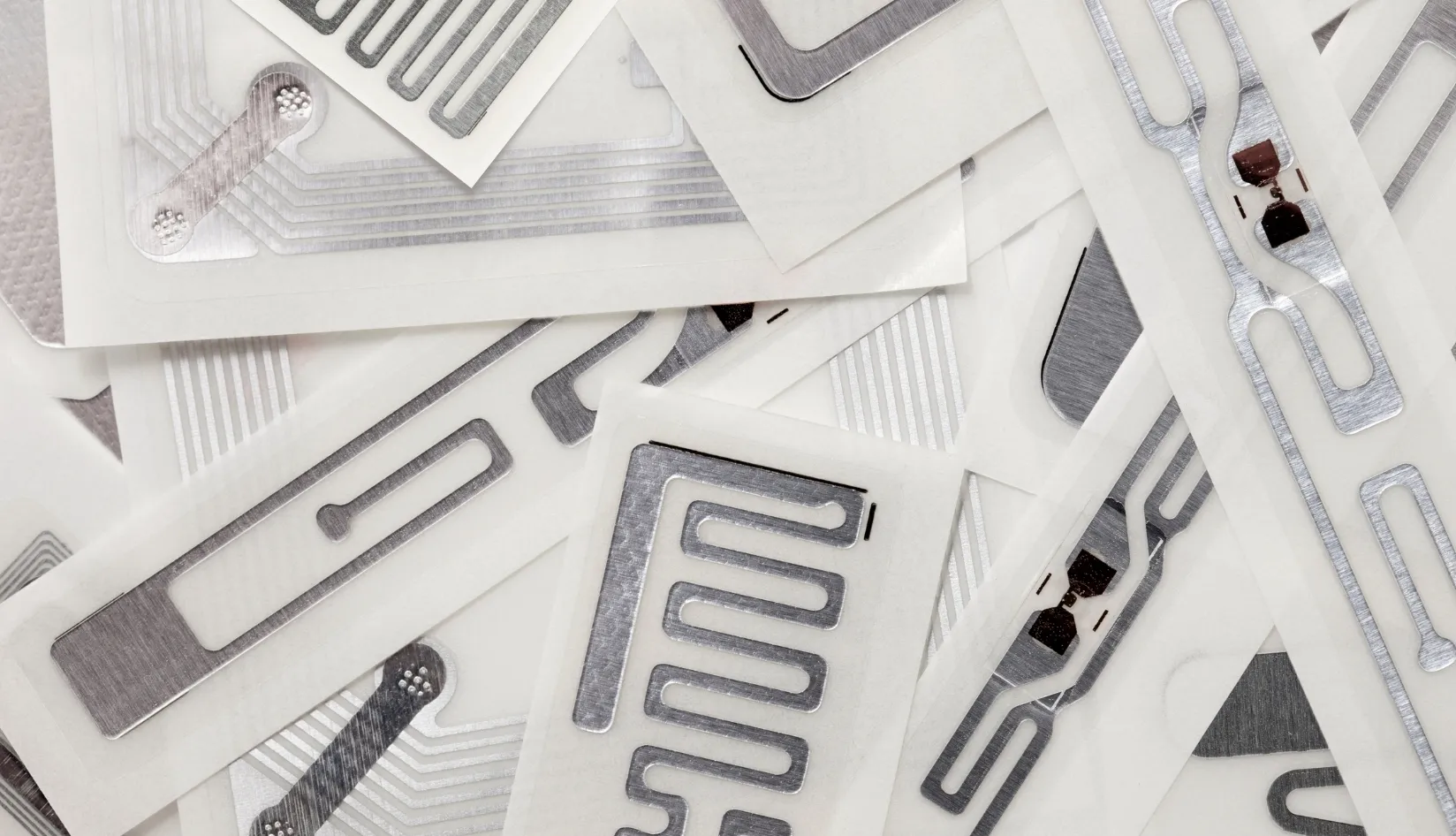
RFID tags (radio frequency identification tags) are a technology that uses radio waves to transmit data. According to the working frequency, RFID tags can be divided into three types: low frequency (LF), high frequency (HF) and ultra-high frequency (UHF). UHF RFID tags are gaining popularity in more industries due to their long reading distance and fast data transmission speed.
What is UHF RFID tag and its characteristics
UHF RFID tags operate in the frequency range of 860 to 960 MHz and have many unique characteristics, which make them show significant advantages in many application scenarios. First, the reading distance is far, which can reach several meters to tens of meters. Therefore, it is particularly suitable for asset tracking and management. Secondly, the system reads a large number of tags in a short time due to the fast data transmission speed, greatly improving work efficiency. In addition, They typically have a low cost, significantly reducing overall operating expenses in large-scale applications.
Another thing worth noting is that UHF RFID tags have strong adaptability to the environment. For example, in metal and liquid environments, they can produce anti-metal RFID tags and anti-liquid RFID tags that can achieve stable reading effects in these complex environments by selecting appropriate tag designs and materials.
Use of UHF RFID Tags
UHF RFID tags have a wide range of uses and are diverse. Here are a few specific application cases:
Supply Chain and Inventory Management
Its long-distance reading capability and fast data transmission characteristics enable warehouse managers to obtain inventory information in real time, reduce human errors, and improve the accuracy of inventory management. For example, large retailers such as Walmart and Amazon widely use them in their logistics centers to optimize inventory management.
Retail Industry
By attaching them to goods, stores can achieve efficient automated checkout, thereby reducing customer queue time and improving user shopping experience. For example, many well-known brands such as Zara have introduced UHF RFID tag technology in stores.
Logistics and Transportation
By attaching them to goods or vehicles, logistics companies can monitor the transportation status of goods in real time, optimize transportation routes, and reduce transportation delays. For example, by using UHF RFID tag technology, international logistics companies such as DHL have achieved accurate management of global goods.
Medical industry
The ability to read quickly and read from a long distance enables hospitals to obtain patient information in real time, prevent information errors, and ensure medical safety. Some international hospitals now use them on patient wristbands to quickly read patient information and reduce errors in the diagnosis and treatment process.
FAQs about UHF RFID tags
- Can UHF RFID tags work properly in metal and liquid environments?
They may be affected in metal and liquid environments, but by using specially designed anti-metal tags and anti-liquid tags or adjusting the tag position, normal operation can be achieved in these environments. For example, Heat Resistant Alien Higgs® 4 Heat Resistant Material UHF On-Metal Tag, which is made of special heat-resistant materials, can be read on metal surfaces up to 6.8m.
- Is the reading distance of UHF RFID tags far?
The reading distance is usually several meters, but it can exceed 10 meters under certain conditions.
- What industries are UHF RFID tags suitable for?
Businesses primarily use them for asset tracking and management in supply chain management, retail, logistics, medical care, transportation, and other industries.