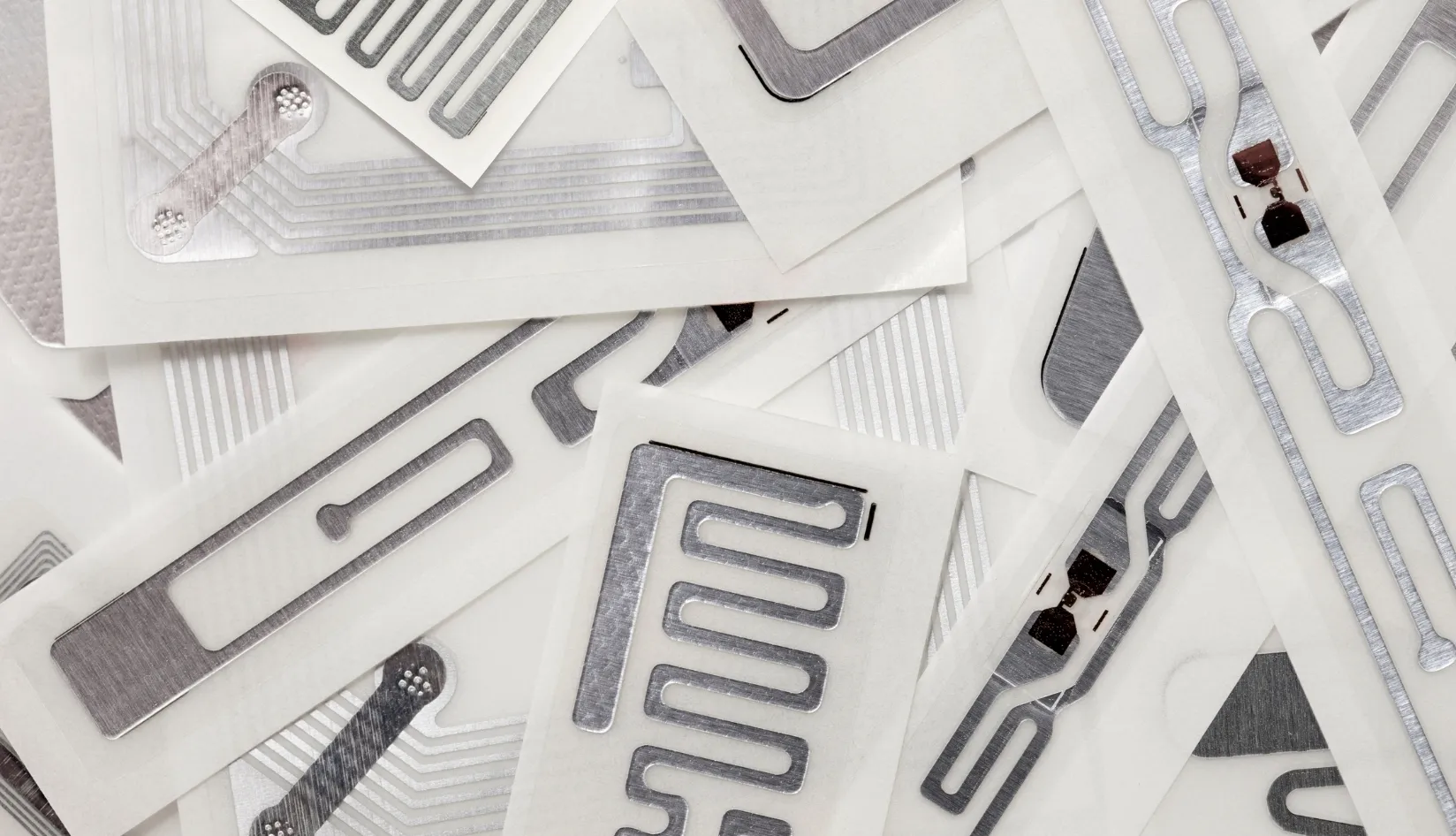
The Internet of Things is taking off, and UHF (Ultra-High Frequency) RFID (Radio Frequency Identification) tech is stepping up to the plate as a major player in pursuing sleek and automated identification management solutions worldwide. With longer read distances, faster data transfer rates, and greater resistance to interference, UHF RFID is finding its way into logistics, retail, manufacturing, healthcare—you name it.
The market potential is becoming pretty clear. A report titled “Global Markets & Applications for RAIN Solutions” from VDC Research Group for the RAIN Alliance reveals that the annual shipment of RAIN RFID chips, a key application of UHF RFID technology, is blasting upwards at 20.4% a year, predicted to hit 115 billion units by 2028. This isn’t just about the rise of RAIN RFID; it’s also an indication of the growing global demand and development potential for UHF RFID tech.
So, how does UHF RFID work its magic? And where does it really shine? This article will break down its operating principles and key application value for you.
What is UHF RFID?
UHF RFID is an automated system for item identification and data transmission based on radio frequency technology, and it is a significant branch of RFID technology. Compared to low-frequency (LF) and high-frequency (HF) RFID systems, UHF RFID offers longer read distances (over 10 meters) and higher transmission speeds, making it widely used in logistics, inventory management, asset tracking, and more.
UHF RFID systems typically operate in the frequency range of 860 MHz to 960 MHz, with different frequency allocations in various countries and regions. For example:
Europe: uses the 865 MHz to 868 MHz band, regulated by ETSI.
United States and Canada: uses 902 MHz to 928 MHz band, governed by the FCC.
China: uses 920 MHz to 925 MHz band.
Japan: uses 916 MHz to 921 MHz band.
These regional frequency differences require businesses employing RFID technology internationally to ensure their devices comply with local radio spectrum regulations.
Industry Standards
To ensure global compatibility and security, UHF RFID complies with:
EPC Gen2 (ISO/IEC 18000-6C): The most widely adopted UHF RFID protocol for passive tags
ISO/IEC 18000-63: Defines air interface and communication parameters
RAIN RFID Alliance: Promotes interoperability and standardization across industries
UHF RFID systems utilize the EPC Gen2 standard, ensuring capabilities for multiple tag recognition and resistance to interference. The EPC Gen2 standard employs advanced anti-collision technologies, such as the ALOHA protocol and Slotted ALOHA, which effectively handle data collision issues when multiple tags respond simultaneously. Frequency hopping (FHSS) technology is also widely employed, reducing the impact of interference and ensuring system stability and reliability.
Components of UHF RFID
The functioning of UHF RFID systems relies on three core components: Tags, Readers, and Backend Systems. These three parts work together to ensure the efficiency and reliability of the entire RFID system.
Tags
Tags are the “information carriers” of the UHF RFID system, responsible for storing the identification information of items. They consist of two parts: chips and antennas, which handle the reception, storage, and transmission of information.
Chips: The chips are the core components of RFID tags, responsible for storing unique identification information. Depending on the application, the chips can be either Read-only or Writable.
Antenna: The antenna serves as the communication channel between the tags and readers, capable of receiving wireless signals from the readers while reflecting the information contained in the tags back to the readers. The design of antennas directly affects the read range, speed, and signal stability of the RFID system.
Readers
Readers are the control units in an RFID system responsible for wireless communication with tags, transmitting signals, and receiving data returned from the tags. They typically consist of the following parts:
Transmit and receive antenna: The antennas of readers send wireless signals to tags and receive the returned information.
Signal processor: This unit decodes the data sent back from the tags and converts it into usable information.
Data interface: This connects the reader to computer systems, databases, or backend systems, transferring the collected information for further processing.
Readers usually support various functions according to application needs, including multi-tag recognition as well as short- and long-range reading.
Backend Systems
Backend systems are an indispensable part of UHF RFID systems, responsible for processing, storing, and managing data collected from readers. They typically include:
Database: A data storage and management center that holds all information collected from tags, integrating with other business systems such as inventory management and asset tracking systems.
Data analysis and processing module: The backend system analyzes and processes the collected RFID data to generate reports, alerts, or statistics to aid in real-time decision-making for businesses.
System integration and management dashboard: The backend system typically offers a graphical management interface for users to view, manage, and analyze RFID data.
Backend systems seamlessly connect the entire RFID system with the company’s other information management platforms (like ERP, WMS, etc.), facilitating data sharing and efficient processing.
UHF RFID Identification Working Process
The identification process of UHF RFID is simple and efficient, mainly involving the following steps:
Energy Activation: When a UHF RFID tag receives radio waves from the reader, it absorbs energy through electromagnetic induction or backscatter to activate its chip.
Data Transmission: The activated tag reflects data stored in its chip back to the reader through its antenna. This process employs backscatter modulation technology, transmitting information by altering the amplitude or frequency of the reflected signal.
Data Decoding and Processing: Upon receiving the reflected signal, the reader decodes the tag information and transmits it to the backend system through the data interface for storage and processing.

Advantages and Disadvantages of UHF RFID
UHF RFID technology, known for its efficiency, long-range capabilities, and adaptability, is widely used in various fields; however, it also has certain limitations.
Advantages
Long Reading Range: UHF RFID can typically read at distances of several meters to over ten meters, far exceeding the capabilities of HF (High Frequency) and LF (Low Frequency) RFID technologies. This makes UHF RFID particularly suitable for scenarios requiring long-distance read capabilities, such as warehouse management and logistics tracking.
Concurrent Reading: UHF RFID can read multiple tags simultaneously, significantly improving work efficiency. This capability is a key advantage in environments where bulk processing of tags is required, such as during goods outbound or retail management.
High-Speed Processing: UHF RFID systems offer high processing speeds, enabling quick data transmission. This makes them ideal for high-efficiency and high-speed operational scenarios like automated warehouses and production line monitoring.
Suitable for Large-Scale Deployment: Given the relatively low cost of UHF RFID tags and their ability to facilitate long-range reading and efficient data processing, UHF RFID is well-suited for large-scale applications, especially in areas like item tracking and inventory management that demand high-density deployment.
Disadvantages
Sensitive to Metal and Water: UHF RFID signals can be easily disrupted by metal and water. In metal environments, UHF signals may be reflected or shielded, causing tags to malfunction. Therefore, when using UHF RFID on metal objects or high moisture-content items, extra protective measures (such as specialized tag designs or protective casings) may be needed.
Relatively High Deployment Costs: Compared to HF and LF RFID, the initial deployment costs for UHF RFID can be higher. While the price of UHF tags has been declining over the years, investing in higher quality readers, antennas, and optimizing the installation environment may be necessary to ensure performance.
UHF RFID vs. Barcodes: A Quick Comparison Table
| Feature | UHF RFID | Barcode |
| Read Range | Up to 1 meters | Up to 30 cm |
| Line-of-Sight Required? | ❌ No | ✅ Yes |
| Bulk Reading | ✅ Yes (hundreds/sec) | ❌ No |
| Durability | ✅ High | ❌ Prone to damage |
| Data Storage Capacity | ✅ Moderate to high | ❌ Very limited |
| Reusability | ✅ Yes | ❌ No |
With these features, it’s no surprise that UHF RFID is becoming the backbone of modern inventory management, industrial automation, and data-driven logistics.
Typical Applications of UHF RFID
UHF RFID technology is widely used across industries that require fast identification, real-time visibility, and automated tracking. From supply chain management to healthcare and manufacturing, businesses use UHF RFID to improve operational efficiency, reduce manual work, and gain better control over their assets and inventory.
Logistics & Supply Chain Management
In modern logistics and supply chain operations, manual scanning and limited inventory visibility can lead to delays, errors, and inefficient workflows.
UHF RFID helps businesses improve supply chain visibility through:
- Real-time pallet and container tracking throughout warehouses, distribution centers, and transportation processes
- Automated RFID gate systems that capture item movements during inbound and outbound operations
- Warehouse inventory management by quickly identifying large numbers of items without manual barcode scanning
- Cold chain and special environment tracking with durable RFID tags designed for demanding conditions
- Cross-docking automation to improve shipment speed and accuracy
By providing real-time location and movement data, UHF RFID helps companies reduce labor costs, minimize errors, and optimize overall supply chain performance.
Retail & Apparel
Retailers often face challenges such as inaccurate inventory records, out-of-stock products, and inefficient stock counting processes.
UHF RFID enables smarter retail operations through:
- Item-level tagging for real-time product visibility
- Automated inventory audits that allow thousands of products to be counted quickly
- Shelf availability monitoring to reduce stockouts and improve customer experience
- Fitting room analytics to understand product interactions and customer preferences
- RFID-enabled anti-theft (EAS) systems for improved loss prevention
- Omnichannel fulfillment by providing accurate inventory information across stores and online channels
With improved inventory accuracy and product visibility, retailers can optimize stock management and deliver a better shopping experience.
Manufacturing
Manufacturers need accurate tracking of work-in-progress (WIP), tools, components, and production assets throughout the manufacturing process.
UHF RFID supports manufacturing automation by enabling:
- Work-in-process tracking across production lines
- Component and material traceability from storage to final assembly
- Tool and equipment management to monitor usage and maintenance status
- Quality control tracking by recording product information at different production stages
- Returnable asset tracking for containers, bins, racks, and other reusable equipment
By improving production visibility, UHF RFID helps manufacturers reduce delays, increase efficiency, and build more flexible production systems.
Healthcare
Healthcare organizations manage large amounts of valuable equipment, medical supplies, and patient information, making accurate tracking essential.
UHF RFID applications in healthcare include:
- Medical equipment tracking to quickly locate and manage critical assets
- Surgical instrument tracking for better sterilization management and compliance
- Pharmaceutical inventory management in hospitals, pharmacies, and laboratories
- Patient identification using RFID wristbands to improve safety and reduce errors
UHF RFID helps healthcare providers improve operational efficiency, enhance patient safety, and maintain better asset control.
Aviation & Transportation
The aviation and transportation industries rely on accurate identification and tracking to improve safety, efficiency, and service reliability.
Common UHF RFID applications include:
- Baggage tracking from check-in to final delivery
- Aircraft component tracking for maintenance records and compliance management
- Vehicle identification and access control in transportation facilities
- Tool tracking for maintenance teams and ground operations
By enabling automated identification and real-time data collection, UHF RFID improves visibility and efficiency across transportation networks.

Business Benefits of UHF RFID
Beyond improving identification and tracking efficiency, UHF RFID helps businesses reduce operational costs, improve accuracy, and build more connected workflows. By automating data collection and providing real-time information, UHF RFID enables smarter decision-making across different industries.
Reduce Labor Costs Through Automation
UHF RFID reduces the need for manual scanning and repetitive inventory checks. Businesses can automate processes such as inventory counting, warehouse receiving, and asset tracking, allowing employees to focus on higher-value tasks.
Improve Inventory Accuracy
With real-time item-level tracking, UHF RFID helps businesses maintain more accurate inventory records, reduce stock discrepancies, and minimize issues such as stockouts, overstocking, and misplaced assets.
Enable Real-Time Visibility
UHF RFID provides real-time information about the location and movement of products, equipment, and assets. This improved visibility helps companies optimize workflows, enhance traceability, and respond faster to operational changes.
Integrate with Enterprise Systems
UHF RFID data can be integrated with business systems such as ERP, WMS, and MES platforms. This enables automated data sharing, better process control, and more efficient management across supply chains and production environments.
Support IoT and Data Analytics
By generating reliable real-time data, UHF RFID can support IoT applications, predictive maintenance, and data-driven optimization. Businesses can use RFID insights to improve operational efficiency and develop smarter solutions.
Conclusion
UHF RFID technology has played a significant role across various industries due to its outstanding performance in enhancing efficiency, ensuring safety, and driving automation. From smart warehousing and retail management to medical equipment tracking, each application scenario demonstrates its value in precise tracking, real-time monitoring, and reducing labor costs.
As UHF RFID technology continues to evolve, the potential for future applications is even broader. If your business is looking to improve operational efficiency, streamline management processes, and enhance customer experience, exploring UHF RFID technology is a worthy consideration. Assess whether this technology aligns with the specific needs and challenges of your industry, as it holds the potential to bring considerable value and a competitive edge to your operations.
UHF RFID is not just an inevitable trend in today’s intelligent era; it is also a critical driver of future digital transformation.
FAQs
Can UHF RFID tags work on metal or liquid?
Standard UHF RFID tags may experience reduced performance when attached directly to metal or used near liquids because these materials can interfere with radio frequency signals. However, specialized RFID tags, such as on-metal UHF RFID tags or tags with optimized antenna designs, are available to provide reliable performance in these challenging environments.
How is UHF RFID different from NFC or HF RFID?
UHF RFID operates at 860–960 MHz and is designed for long-range identification, fast data transfer, and reading multiple tags simultaneously. In comparison, NFC and HF RFID typically operate at 13.56 MHz and are designed for shorter-range applications such as contactless payments, access control, and smart cards.
UHF RFID is commonly used for inventory management, logistics, and asset tracking, while NFC and HF RFID are better suited for close-range interactions and secure data exchange.
How long do UHF RFID tags last?
The lifespan of UHF RFID tags depends on the tag type, materials, and operating environment. Passive UHF RFID tags do not contain batteries, so they can typically last for many years when properly installed and protected.
Active UHF RFID tags use built-in batteries, which usually have a limited lifespan of several years and require replacement when the battery is depleted. For demanding applications, choosing the right tag design and material can help ensure long-term reliability.
How is data encryption handled in a UHF RFID system?
UHF RFID systems can secure data during transmission with various encryption methods. Some common techniques involve using encryption features within the EPC Gen2 protocol or secure tags based on AES (Advanced Encryption Standard) to keep your data safe from prying eyes or alterations. To amp up security even further, you can add authentication measures during the data transfer process.