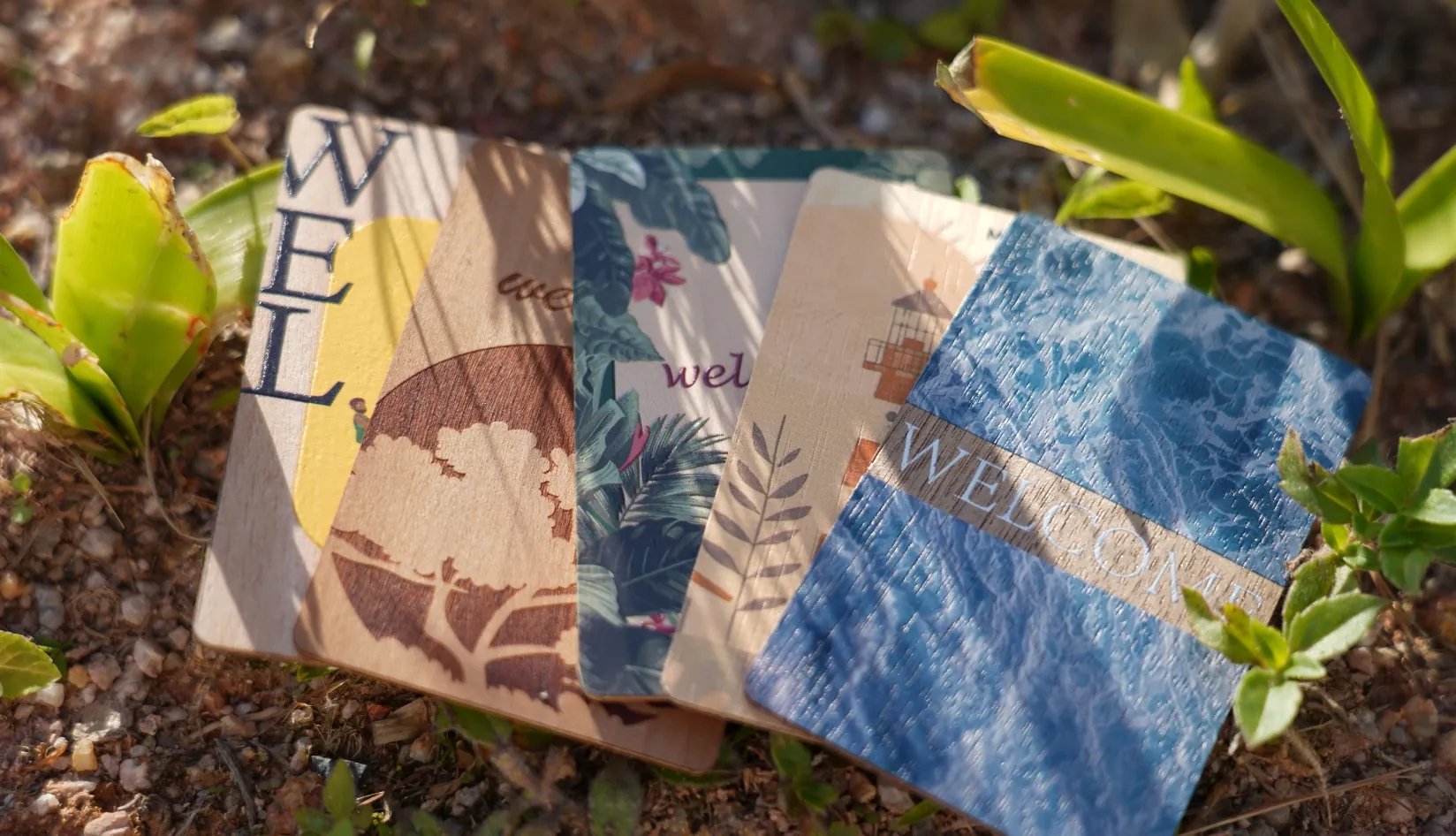
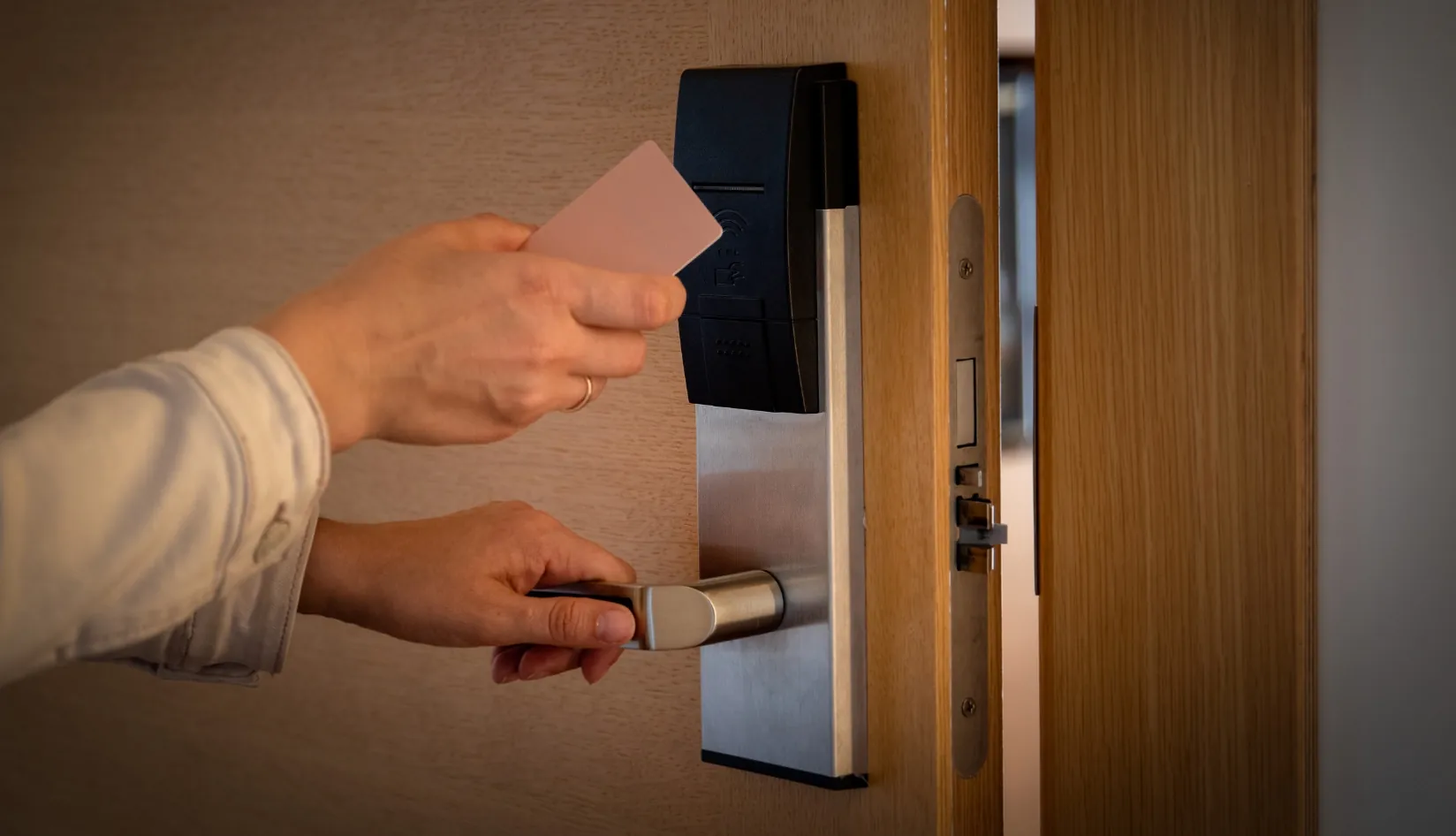
As environmental awareness continues to grow, hotels and businesses must consider not only the functionality and security of RFID cards but also the sustainability of the materials used. Today, we will focus on two innovative eco-friendly RFID cards—BioPoly™ Vinyl and BioPoly™ Stone. These materials not only lessen the environmental burden but also provide a modern brand image for your business. In this article, we will compare these two eco-friendly cards across four key aspects to help you better understand their differences and choose the RFID card that best meets your needs.
1. Material Comparison
When selecting RFID cards for hotels, the material not only directly affects the card’s functionality and lifespan but also relates closely to environmental considerations, brand image, and user experience. What are the differences between BioPoly™ Vinyl and BioPoly™ Stone in terms of material?
BioPoly™ Vinyl: Biodegradable PVC
BioPoly™ Vinyl is an innovative eco-friendly material composed of 97% PVC and 3% bio-based additives. It combines the strength and durability of traditional PVC while maintaining similar resilience to standard PVC cards. However, thanks to the inclusion of bio-based additives, cards produced from this material significantly reduce their harmful environmental impact. Under typical landfill conditions, this card can completely degrade in about three years.
Overall, this material not only ensures the stability and functionality of the RFID card but also contributes positively to environmental protection. Due to its excellent degradability characteristics, BioPoly™ Vinyl is an ideal choice for reducing plastic pollution.

BioPoly™ Stone: Composed Mainly of Calcium Carbonate
BioPoly™ Stone is an eco-friendly material made from natural calcium carbonate, which is completely free from BPA and has been certified by the FDA, ensuring it is harmless to humans. RFID cards made from this material offer a unique paper-like feel and are naturally eco-friendly. We have created a comparison video demonstrating the material changes after light degradation for this material. The light-degraded BioPoly™ Stone can be torn like paper, and the residue after burning consists solely of calcium carbonate. This test conclusively shows that BioPoly™ Stone is environmentally safe and non-toxic.
Compared to BioPoly™ Vinyl, BioPoly™ Stone boasts even better eco-friendliness, as it contains no plastic components whatsoever and fully aligns with modern society’s demands for sustainable development. We are the first company in the RFID industry to produce cards using this material.
2. Printing Crafts Comparison
When choosing RFID cards, the printing process is equally crucial. Different materials not only affect the durability and eco-friendliness of the cards but also determine their design flexibility. Whether featuring intricate brand patterns or simple upscale logos, the printing process can impart unique visual effects to RFID cards. Here, we will compare the printing processes of the two eco-friendly RFID cards—BioPoly™ Vinyl and BioPoly™ Stone.
BioPoly™ Vinyl: Highly Customizable Printing Process
Due to its composition, with 97% of BioPoly™ Vinyl being PVC, its printing process is similar to that of traditional PVC, allowing for a wide range of customization options. Essentially, any printing technique that PVC RFID cards can support, BioPoly™ Vinyl RFID cards can as well. This material can accommodate various complex design requirements, and you can choose from multiple printing methods including full-color printing, thermal transfer, and silk screen printing. Whether you need vibrant patterns or intricate company logos, BioPoly™ Vinyl can beautifully present them.
Additionally, BioPoly™ Vinyl supports special effect printing processes such as spot gloss, gold or silver foil stamping, making it an ideal choice for projects that demand high precision and quality design. This flexibility makes it especially suitable for industries with unique design needs, particularly those hotels and upscale brands aiming to enhance their brand image through exquisite printing.

BioPoly™ Stone: Minimalist and Upscale Printing Process
The printing options for BioPoly™ Stone are somewhat limited, focusing primarily on a minimalist and upscale aesthetic. While this material’s RFID cards do not support extensive custom designs, they still offer high-quality craftsmanship such as laser engraving, UV numbering, and gold or silver foil printing. Its paper-like feel and natural texture lend a unique charm to the cards, making them suitable for brands that pursue a clean and high-end style.
The printing results for BioPoly™ Stone emphasize simplicity and refinement, ideal for creating a luxurious, modern brand image. Although the printing options are fewer, the perfect combination with the material ensures that each card displays distinctive natural beauty, particularly fitting for high-end hotels, resorts, and similar venues that wish to convey a premium positioning and eco-friendly message to their customers.
3. Durability Comparison
Durability is another critical consideration when choosing RFID cards, especially for use in hotels and other high-traffic environments. Pursuing eco-friendliness does not mean sacrificing durability. In this section, we will compare the durability of BioPoly™ Vinyl and BioPoly™ Stone to ensure that the cards can maintain excellent performance in practical use over time.
BioPoly™ Vinyl: Strength and Longevity of Traditional PVC
BioPoly™ Vinyl, as a biodegradable PVC material, boasts excellent durability. Similar to traditional PVC, it is very sturdy, capable of withstanding prolonged friction and frequent use without significant wear or deformation. Its water and stain resistance are also quite strong, effectively resisting moisture and stains commonly found in day-to-day environments.
However, the performance of BioPoly™ Vinyl may be slightly diminished in high-temperature or extreme conditions. Prolonged exposure to intense sunlight or high humidity may cause some fading in color or surface wear. Overall, BioPoly™ Vinyl remains a highly durable and cost-effective eco-friendly choice for everyday use.

BioPoly™ Stone: Superior Abrasion Resistance and Tear Strength
In comparison to BioPoly™ Vinyl, BioPoly™ Stone exhibits superior durability. Made primarily from natural calcium carbonate, this material has enhanced tear and abrasion resistance, allowing it to retain a longer lifespan even under frequent friction and high-intensity use. Its surface is less prone to scratching, making it suitable for environments where high usage is expected, such as upscale hotels and resorts.
Additionally, BioPoly™ Stone performs better in low-temperature conditions, maintaining stability even in cold weather. This makes it an ideal choice for use in harsh environments. For instance, locations in colder regions or ski resorts may prefer this material to handle winter’s low temperatures effectively.
4. Card Thickness Comparison
The thickness of a card not only affects its feel and appearance but also conveys the brand’s positioning and modernity. For eco-friendly RFID cards, the choice of thickness directly influences comfort, durability, and the overall user experience. What are the differences in card thickness between BioPoly™ Vinyl and BioPoly™ Stone?
BioPoly™ Vinyl: Various Thickness Options to Meet Different Needs
BioPoly™ Vinyl offers thickness customization options ranging from 0.35mm to 1mm. This diversity in thickness allows it to cater to various commercial needs effectively. Thinner cards are more lightweight and suited for large-scale distribution, while thicker cards provide enhanced durability and a more premium, robust feel. With these customization options, you can select the card thickness that best aligns with your brand positioning and usage requirements. Thinner cards (like 0.35mm) are ideal for scenarios requiring high-volume use, whereas thicker cards are more upscale, and suitable for mid-tier hotels or resorts, providing customers with a more comfortable and refined experience.

BioPoly™ Stone: Fixed Thickness Exuding High-End Appeal
In contrast to the flexibility of BioPoly™ Vinyl, the thickness of BioPoly™ Stone cards is fixed at 0.65mm. While there are fewer options, this fixed thickness offers unique advantages. The 0.65mm thickness provides the cards with an appropriate level of rigidity and sturdiness while conveying a high-end, minimalist visual effect. This thickness is particularly suitable for brands seeking a modern aesthetic and upscale image, especially in high-end hotels and resorts where it helps shape a distinct high-quality identity.
Furthermore, the 0.65mm design of BioPoly™ Stone ensures that the cards remain comfortable to hold even after prolonged use, and they are resistant to deformation. This balanced thickness not only aligns with contemporary aesthetics but also meets the needs of most premium venues.
5. Choosing the Right Eco-Friendly RFID Card for Your Hotel
Selecting the appropriate eco-friendly RFID card is not only a reflection of your hotel’s commitment to environmental sustainability but also enhances your brand image and customer experience. Whether you lean towards the flexibility and large-scale applicability of BioPoly™ Vinyl or the high-end feel and durability of BioPoly™ Stone, each material offers its unique advantages.
BioPoly™ Vinyl provides greater customization options suitable for diverse design needs and comes at a lower cost, making it ideal for large-scale hotel projects. On the other hand, BioPoly™ Stone is a more upscale eco-friendly choice that offers excellent durability and brings your clients a unique paper-like feel along with a minimalist, modern appearance, making it perfect for hotels aiming for a high-end image.
Whichever card you choose, you are supporting sustainable development while providing your customers with higher-quality service and a better experience. If you are unsure which RFID card is best for your hotel, feel free to reach out to our expert team. We offer free sample cards and testing services to help you make the best decision.

FAQs: Frequently Asked Questions
1 Are BioPoly™ Stone cards suitable for use in humid environments?
Yes, BioPoly™ Stone cards have enhanced water resistance and durability, making them particularly suitable for use in humid or extreme environmental conditions. If your hotel is located in a damp area or faces severe weather, BioPoly™ Stone is an excellent choice.
2 How can I test the compatibility of these two cards?
We provide free professional testing services. You can send your existing locking system and RFID cards to us, and we will test the compatibility and provide you with the samples best suited to your needs. This way, you can ensure that your chosen eco-friendly RFID card integrates seamlessly with your hotel’s locking system, avoiding any technical issues down the line.
3 What are the differences in environmental sustainability between BioPoly™ Vinyl and BioPoly™ Stone?
BioPoly™ Vinyl is made from biodegradable PVC material, which fully degrades within three years and is suitable for reducing plastic pollution. BioPoly™ Stone uses natural, FDA-certified calcium carbonate material that is BPA-free, completely harmless to the environment, and free of chemical residues. Both options effectively support environmental goals, but they differ in material composition and degradation time.