In today’s rapidly evolving workplace environment, enterprise access control has become a mission-critical foundation for corporate security. Modern companies must manage employees, contractors, and visitors across multiple offices while protecting physical assets, digital data, and operational continuity. As organizations move toward cloud computing, smart buildings, and automated security workflows, choosing the right enterprise access control system is more important—and more complex—than ever before. Whether you operate a growing startup, a large enterprise, or a multi-site global corporation, it is essential to understand how enterprise access control works, the technologies behind it, and how to select the best solution for both current and future needs.
1. What Makes an Access Control System “Enterprise-Grade”?

Not all access control systems are created equal. A small office might need basic card entry, but large organizations require a more sophisticated framework. An enterprise access control solution typically includes the following characteristics:
| Feature | Description | Enterprise Requirement |
| Reliability & Scalability | The system’s ability to perform consistently and grow seamlessly. | Must support tens of thousands of users and hundreds of doors without performance degradation. Requires high-availability architecture. |
| Multi-Site Management | Centralized control over geographically dispersed locations. | Single pane of glass management for all global offices, factories, and data centers. Essential for a unified security policy. |
| Strong Security Protocols | Protection of data transmission and storage. | End-to-end encryption (AES-256) for all communications between readers, controllers, and servers. Compliance with industry standards (e.g., SOC 2, ISO 27001). |
| Integration Capability | Seamless communication with other business systems. | Open APIs and native connectors for HR, time and attendance, visitor management, and video surveillance systems. |
| Credential Flexibility | Support for a diverse range of authentication methods. | Must support legacy credentials while embracing modern options like mobile, biometrics, and high-security anti-clone RFID cards. |
2. Key Components of an Enterprise Access Control System
A complete access control system includes both hardware and software components. Understanding each part helps you evaluate compatibility and long-term performance.

2.1 Access Control Readers
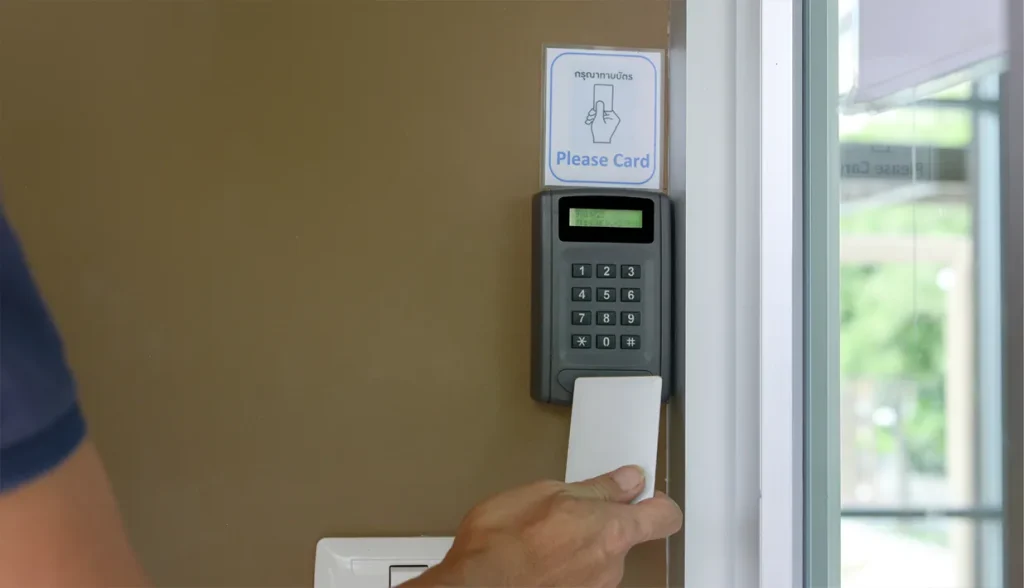
The reader is the physical interface where the user presents their credential. Modern enterprise readers are highly sophisticated devices that go far beyond simply reading a card number. They must support various frequencies, including High Frequency (HF), Low Frequency (LF), and sometimes Ultra High Frequency (UHF) for long-range applications like vehicle access. Crucially, enterprise readers must support advanced encryption protocols to prevent credential cloning and “man-in-the-middle” attacks. The shift is towards readers that can handle multiple credential types simultaneously, ensuring a smooth transition as organizations upgrade from older, less secure credentials to modern, encrypted ones.
2.2 Credentials
Credentials are the keys to the system. Biometrics offer high security but can be costly and slow for high-throughput areas, and mobile credentials, while convenient, rely on employee-owned devices and battery life. RFID cards, particularly those utilizing advanced chips like DESFire EV3, offer a balance of security, speed, and durability. They are easily issued, managed, and replaced, making them the workhorse credential for daily operations in a large-scale environment.
2.3 Management Software
The management software is the brain of the entire system. It is a centralized platform that allows administrators to define access rules, monitor activity, and manage credentials remotely. Key features include real-time logging and auditing capabilities, which are essential for compliance and forensic investigations. Most importantly, the software must support granular, role-based access permissions (RBAC), ensuring that access rights are automatically updated based on an employee’s role, department, or status in the HR system. Cloud-based software is increasingly preferred for its ease of deployment, automatic updates, and inherent disaster recovery capabilities.
3. Key Factors to Consider When Choosing an Enterprise Access Control System
Selecting the right system requires a strategic evaluation of several key factors that will determine the long-term success and security of the deployment.

3.1 Security Requirements
Security is paramount. The system must employ robust data encryption for all stored and transmitted data. For physical credentials, this means using anti-clone RFID cards such as DESFire EV3, which use secure, mutual authentication protocols. Furthermore, the system should natively support multi-factor access (MFA) for critical infrastructure areas, requiring a combination of a card, a PIN, or a biometric scan. A truly secure enterprise access control solution treats the physical security layer with the same rigor as IT network security.
3.2 Scalability
A successful enterprise is a growing enterprise, and the access control system must be able to grow with it. Scalability involves two main dimensions: adding new employees and managing new locations. The system should allow for the rapid provisioning and de-provisioning of thousands of users through automated integration with the HR system. For multi-location management, the architecture must be flexible enough to incorporate new sites seamlessly, often across different regulatory environments, without requiring a complete overhaul of the existing infrastructure. Cloud-native solutions often excel in this area due to their inherent elasticity.
3.3 Integration Capability
The value of an access control system is exponentially increased when it is integrated with other business systems. Seamless integration with HR software, time and attendance systems, and visitor management systems transforms the system from a mere security tool into a powerful operational platform. Advanced integration with building management systems, such as elevator control and lighting, can also lead to significant energy savings and enhanced operational efficiency.
4. Choosing the Right RFID Card for Your Enterprise
Given the continued reliance on RFID cards as the primary credential in large organizations, selecting the right card is a critical decision.
4.1 Overview of Popular Card Chips
The choice of chip dictates the card’s security and functionality.
- MIFARE Classic: Older, widely deployed.
- DESFire EV3: The current gold standard for high-security applications. Offers AES encryption, mutual authentication, and is highly resistant to cloning. Ideal for enterprise environments.
- NTAG: Primarily used for NFC applications, often for mobile-to-card interactions or low-security applications.
4.2 Recommended Card Materials and Customization
The physical card must be durable enough to withstand years of daily use.
- PVC: Standard, cost-effective.
- PET: A more durable option, offering better resistance to heat and bending, making it the preferred choice for high-volume, long-term use.
- Custom Printing and Branding: Professional enterprises require high-quality custom printing for branding, employee identification, and visual security features. RFIDCard provides high-resolution printing and holographic overlays.
4.3 Security Add-ons and Supplier Choice
Beyond the chip, security can be enhanced with physical and digital add-ons. Digital security features include encryption keys programmed directly onto the card and UID locking to prevent unauthorized reprogramming.
Choosing a professional RFID card supplier, such as RFIDCard, is as important as choosing the system itself. A reputable supplier can provide certified, anti-clone cards, ensure proper key management, and offer the necessary customization and quality control required for enterprises.
5. Conclusion
As businesses grow more interconnected, enterprise access control plays an increasingly central role in protecting people, assets, and data. Choosing the right platform requires careful evaluation of security capabilities, integration potential, scalability, and credential strategy. And while new technologies like mobile access continue to evolve, RFID cards remain an essential, reliable, and cost-effective foundation for most enterprise access control systems worldwide. If your organization is looking to upgrade, contact us today for expert guidance or a customized quotation.
Recommended Product
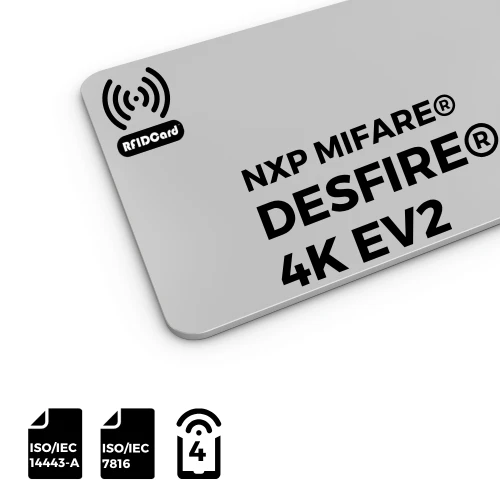
RFID Card CR80 MIFARE® DESFire® EV2 4K

The MIFARE® DESFire® EV2 4K RFID card is a secure, high-capacity contactless smart card ideal for various applications like access control, transportation, and payment systems. It features 4KB of integrated memory, advanced encryption standards for security, and is compatible with existing MIFARE® systems. The EV2 version enhances data protection and transaction speed, making it a reliable and efficient choice for modern RFID solutions.