


In today’s fast-evolving electric vehicle (EV) landscape, convenience is everything. Drivers expect charging to be as seamless as refueling — quick, simple, and reliable. However, many still find themselves juggling multiple apps, logins, or QR codes just to start a charging session. This is where the EV charge card comes in. Designed to simplify the entire process, these small but powerful tools let users access chargers with a simple tap, without worrying about app errors, network delays, or inconsistent interfaces. Among the various types available, RFID-based EV charge cards stand out as one of the most efficient and secure options, bridging the gap between digital access and physical reliability. They embody the “tap-and-go” future of EV charging — one that’s fast, accessible, and dependable, no matter where you plug in.
1. What Is an EV Charge Card and How Does It Work?
An EV charge card is typically an RFID-enabled smart card that allows EV drivers to initiate and end charging sessions through contactless communication. Using the same underlying technology that powers modern access cards and public transport passes, RFID (Radio Frequency Identification) operates through electromagnetic fields to transfer data wirelessly.
Most EV charge cards work on the 13.56 MHz High-Frequency (HF) RFID standard, which ensures compatibility with the majority of public and private EV charging stations worldwide. Each card is linked to an individual user’s account within the charging network or service provider’s platform. When the card is tapped against the reader on a charging station, it instantly verifies the user’s identity, authorizes access, and starts the charging session — all within seconds. The process is entirely automated. There’s no need to open an app, scan a QR code, or rely on a mobile data connection. Once authenticated, the system logs the session, tracks energy usage, and bills the account accordingly.
2. Why RFID EV Charge Cards Still Matter

Despite the rise of app-based payment and Plug-and-Charge systems, RFID EV charge cards continue to play a crucial role:
2.1 Instant Access and Unmatched Convenience
One of the most compelling reasons for the continued importance of RFID cards is the unparalleled speed and simplicity they offer. A single tap is all it takes to initiate a charging session. This tap-and-go experience eliminates the need to unlock a phone, launch an app, and wait for it to communicate with the charger, a process that can be surprisingly time-consuming and prone to delays. In a world where convenience is paramount, the immediacy of an RFID card is a significant benefit.
2.2 Offline Usability and Reliability
A critical advantage of RFID technology is its ability to function independently of cellular or Wi-Fi connectivity. Many charging stations are located in areas with poor or non-existent mobile signals, such as underground parking garages, remote rural areas, or even dense urban environments where network congestion can be an issue. In these scenarios, app-based charging solutions become unreliable or completely unusable. An RFID EV charge card, however, relies on a direct, localized interaction with the charging station, ensuring that drivers can access power regardless of network availability. This offline capability makes RFID cards a more dependable and resilient solution.
2.3 Ideal for Shared or Fleet Charging
RFID cards are exceptionally well-suited for environments where charging stations are shared among multiple users, such as in workplaces, apartment complexes, or commercial fleets. Assigning each driver or vehicle a unique RFID card simplifies access management and billing. Fleet managers can easily track the charging activities of individual vehicles, monitor energy consumption, and streamline expense reporting. Similarly, building managers can provide residents or employees with dedicated cards, ensuring that only authorized users can access the charging infrastructure.
2.4 Enhance Security
Security is a growing concern in the digital age, and EV charging is no exception. RFID cards offer a robust and secure method of authentication. Each card contains a unique, encrypted identifier that is difficult to clone or tamper with. In the event that a card is lost or stolen, it can be quickly and easily disabled from the network’s backend system, preventing unauthorized use.
3. When an EV Charge Card Becomes Essential

While some drivers might rely on mobile apps most of the time, there are several real-world scenarios where having an RFID EV charge card isn’t just convenient — it’s essential.
Underground or Enclosed Parking Areas: Many public and corporate parking garages are located underground, where mobile networks don’t reach. Without a data connection, most apps can’t communicate with the charger or authenticate a session. In contrast, RFID cards operate offline, allowing drivers to tap and start charging instantly, no matter the signal conditions.
Workplace and Fleet Environments: In corporate or fleet settings, multiple users often share a limited number of charging stations. Assigning RFID cards to individual drivers helps track who’s using which charger and when. It also enables precise accounting for energy usage, making cost management far more transparent for businesses.
4. How to Use an EV RFID Charge Card
Using an RFID EV charge card is straightforward and intuitive. Here’s a step-by-step guide for both new EV drivers and experienced users:
Activate or Link Your Card: Before using the card, you’ll need to link it to your charging network account. This is usually done through the provider’s website or app. Once registered, your card becomes a secure access token tied to your account for billing and session tracking.
Start a Charging Session: When you arrive at a charging station, simply tap the card on the RFID reader located near the charger’s display. The system will verify your credentials, unlock the connector, and begin charging your vehicle. There’s no need for additional confirmation steps.
Stop Charging: When you’re done, tap the card again to end the session. The system automatically calculates the total energy delivered and deducts the corresponding amount from your account.
5.Conclusion
As electric vehicles become mainstream, ensuring a consistent and hassle-free charging experience is paramount. Among all available methods, RFID EV charge cards stand out for their reliability, simplicity, and universal compatibility. They offer instant, secure access without depending on internet connections, app servers, or smartphone batteries. Whether used in underground parking lots, company fleets, or public stations, they guarantee that EV drivers can always power up with confidence. For charging network operators, fleet managers, and EV enthusiasts alike, RFID-based EV charge cards represent the perfect blend of convenience, control, and dependability. They bridge today’s technology with tomorrow’s ecosystem — keeping the power of mobility quite literally at your fingertips.
Recommended Product
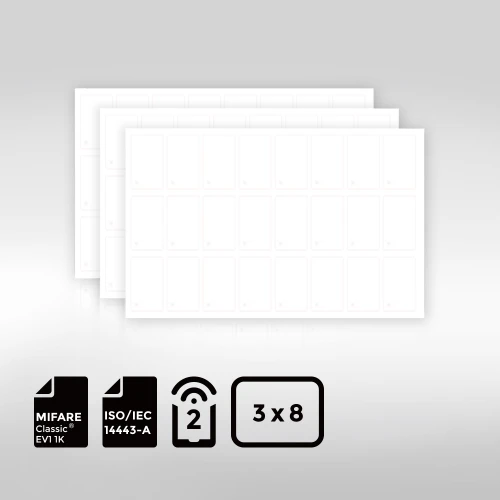
BioPoly™ Vinyl RFID Inlay Sheet MIFARE Classic® EV1 1K

MIFARE Classic® EV1 1K BioPoly™ Vinyl RFID Inlay Sheet combines advanced RFID technology with eco-friendly materials. The BioPoly™ Vinyl is a biodegradable PVC alternative designed to reduce environmental impact while maintaining durability and flexibility. This inlay features the MIFARE Classic® EV1 1K chip, known for its reliable 1KB memory, fast data transmission, and secure encryption. Ideal for access control, event management, and smart cards, it offers excellent read range and compatibility. By using sustainable BioPoly™ Vinyl, this product supports green initiatives without compromising RFID performance.



