


In today’s fast-paced hospitality industry, maintaining hotel security while providing a seamless guest experience is more critical than ever. Guests expect convenience, speed, and personalization, but hotel operators must also ensure that access to rooms, facilities, and sensitive areas remains secure. Traditional key cards and manual check-in processes can create bottlenecks and vulnerabilities, leaving hotels exposed to security breaches or guest dissatisfaction. This is where RFID technology steps in, offering a sophisticated solution that simultaneously enhances operational efficiency and strengthens hotel security. By leveraging RFID, hotels can transform the guest journey from check-in to check-out into a smooth, secure, and highly personalized experience.
1. Understanding RFID in Hotels
RFID technology uses electromagnetic fields to automatically identify and track tags attached to objects or embedded in cards. In a hotel setting, RFID cards replace traditional magnetic stripe key cards, providing a more secure and versatile way to control access. Unlike magnetic stripe cards, which can be easily cloned or demagnetized, RFID cards rely on encrypted signals that make unauthorized duplication nearly impossible. Hotels typically use either low-frequency (LF) or high-frequency (HF) RFID cards, depending on their security requirements and system compatibility. High-frequency cards, for instance, offer greater data storage, enabling integration with smart room features and loyalty programs, while low-frequency cards are often sufficient for basic access control.
2. Streamlining Check-In
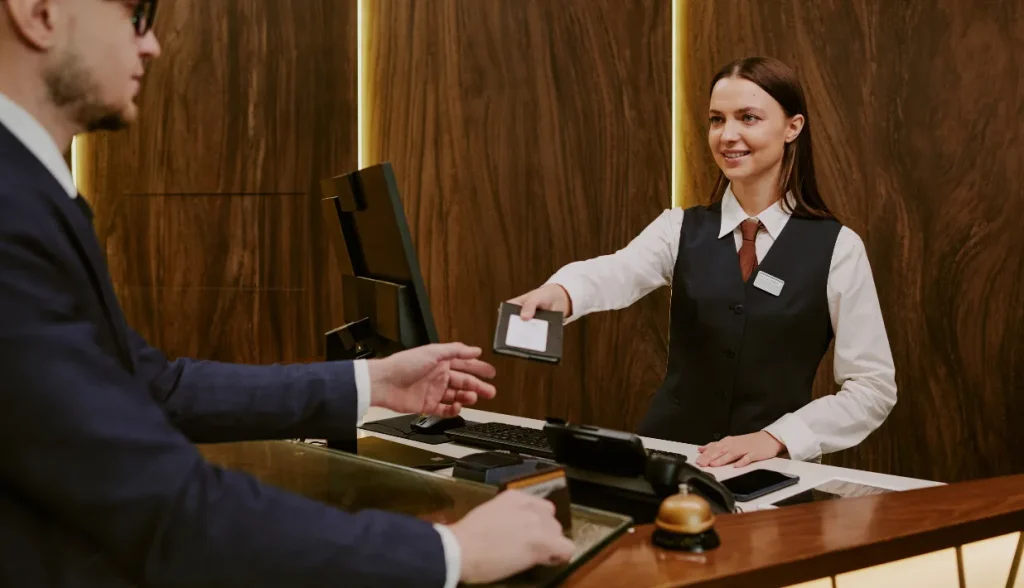
One of the first touchpoints where RFID technology enhances the guest experience is during check-in. Long queues at the front desk can frustrate guests, but RFID-enabled self-service kiosks allow travelers to check in quickly and independently. Guests can verify their identity, select room preferences, and receive an activated RFID key card without any delay. Hotels can also integrate RFID with mobile check-in apps, allowing guests to unlock their rooms directly via smartphones or smartwatches. This approach not only saves time but also reduces human contact—an important consideration in today’s health-conscious environment. By simplifying the check-in process, hotels improve guest satisfaction while maintaining robust hotel security measures.
The efficiency gains are measurable. By automating the key card issuance and room activation, hotels can significantly reduce the workload on front-desk staff, allowing them to focus on personalized guest interactions rather than administrative tasks. This streamlined process not only improves guest satisfaction but also ensures that the room is ready and accessible the moment the guest arrives, setting a positive tone for their entire stay.
3. Enhancing Room Access Security
RFID locks are integral components of a hotel’s broader security network. They constantly log every access attempt—successful or unsuccessful—by both guests and staff. This detailed audit trail is invaluable for security investigations. If a security incident occurs, the hotel can immediately pull up a precise record of who entered the room and when, providing an unprecedented level of accountability and transparency. This capability is a massive leap forward for hotel security protocols.
The system allows for granular control over access privileges. Guest cards are programmed to expire precisely at the check-out time, instantly revoking access and preventing unauthorized overstays. Staff cards can be programmed with time-sensitive and area-specific access rights. For example, a cleaning staff member’s card may only work on specific floors during designated hours, and a manager’s card may have universal access. This ability to precisely manage and track access is a powerful deterrent against internal theft or unauthorized entry.
4. Improving In-Room Guest Experience
The utility of the RFID key card extends far beyond merely opening a door; it acts as a central hub for the in-room guest experience, enabling smart room technology.

Once a guest inserts their RFID card into a power-saving slot or taps it near a control panel, the room instantly comes to life. This can trigger pre-set preferences for lighting, temperature, and even personalized welcome messages on the in-room television. This seamless integration of access control with room automation is not just a luxury feature; it is also an energy-saving measure, as the room automatically reverts to an energy-efficient state when the card is removed.
Furthermore, the RFID card can be linked to the guest’s profile and hotel loyalty program. This allows for personalized services, such as automatically crediting minibar purchases to the room account or enabling access to executive lounges or other exclusive amenities. In the most advanced systems, the card can even function as a digital wallet for on-property purchases, streamlining the entire resort experience. This convergence of access, personalization, and payment through a single, secure RFID token is the future of hospitality.
5. Streamlining Check-Out

Just as RFID transforms the check-in process, it also simplifies the final stage of the guest journey: check-out. The goal is to eliminate the final bottleneck at the front desk, allowing guests to depart quickly and efficiently.
RFID-based express check-out options are becoming standard. Guests can simply leave their room, and the system automatically finalizes their bill. Since all on-property purchases made with the RFID card are automatically linked to the room account, the billing process is instantaneous and accurate. The card’s access privileges are instantly revoked upon the system registering the check-out, maintaining the highest standards of hotel security. In many cases, the guest can review their final bill and authorize payment via a mobile app or the in-room television. This eliminates the need for a physical stop at the front desk, saving valuable time, especially for business travelers or those with tight schedules. The efficiency of this process is a key driver of improved guest satisfaction scores and positive reviews. By ensuring a smooth and rapid departure, the hotel leaves a lasting positive impression, encouraging repeat business.
6. Real-World Examples
The adoption of RFID technology is no longer a futuristic concept; it is a current reality in leading hotel chains worldwide.
Key metrics consistently demonstrate the value proposition of RFID. Hotels utilizing self-service kiosks and mobile check-in report a reduction in average check-in time from several minutes to under 60 seconds. Guest satisfaction scores related to the check-in/check-out process show a marked increase. Most critically, the detailed audit trails and enhanced encryption have led to a demonstrable reduction in security incidents, including unauthorized room access and internal theft. The investment in RFID technology is not merely an upgrade; it is a strategic move that pays dividends in both operational efficiency and the fundamental promise of safety and privacy for every guest. The continuous evolution of RFID technology, including the integration of biometric data and further mobile key capabilities, promises to keep advancing the state of hotel security for years to come.
7. Conclusion
From check-in to check-out, RFID technology transforms the hotel experience, delivering unmatched convenience and robust security. By streamlining the check-in process, enhancing room access controls, personalizing in-room services, and simplifying check-out, RFID creates a seamless journey for guests while addressing critical hotel security concerns. Hotels that adopt RFID technology not only improve operational efficiency but also demonstrate a commitment to guest safety and satisfaction. Ready to elevate your hotel’s security and guest experience? Contact us today for free samples, expert recommendations, and custom designs that match your hotel’s brand.
Recommended Product
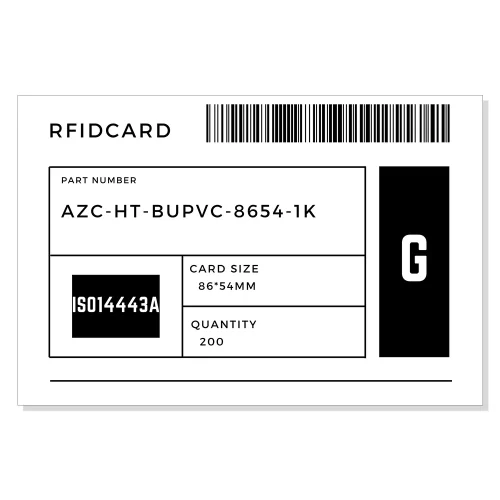
Hotel Key Card

Our ColorEdge™ card is designed to deliver a premium experience beyond traditional white PVC cards. Made with advanced ColorEdge™ material, it provides reliable room access while enhancing the visual appeal with a refined, stylish finish. Combining functionality, durability, and elegant design, this card helps hotels create a more memorable guest experience while reflecting a modern and sophisticated brand image.



