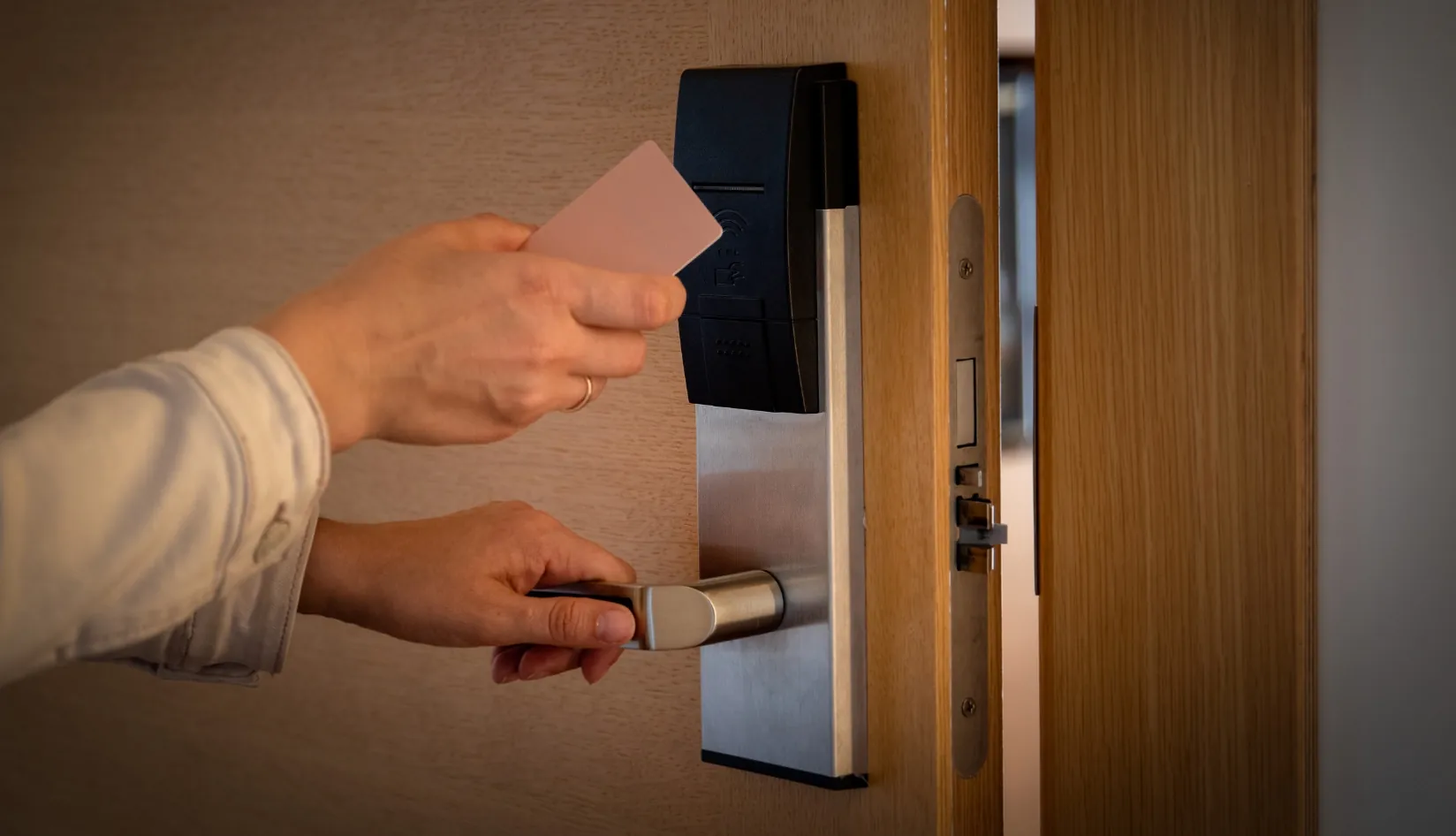
A hotel key card is an electronic access card that allows guests to unlock hotel rooms by communicating with a door lock system. Modern hotel key cards mainly include magnetic stripe cards, RFID key cards, and NFC mobile keys.
Most hotels use RFID key cards today because they provide contactless access, better security, and easier management compared with traditional magnetic stripe cards.
This article will break down how hotel key cards work and their security features, showing you the cool tech secrets behind that little room card.
How do hotel key cards work?
Hotel key cards work by storing guest access information and communicating with an electronic door lock system to verify whether a guest is authorized to enter a specific room. When a guest presents a key card, the door reader captures the stored information, checks the card credentials with the hotel access control system, and unlocks the door only when the information is valid.
Modern hotel key cards mainly use three technologies: magnetic stripe cards, RFID key cards, and NFC mobile keys. The main difference between them is how they store, transmit, and verify access information.
How Does a Hotel Key Card Unlock a Door?
The hotel key card authentication process typically involves four steps:
1. Guest Receives an Encoded Key Card
When a guest checks in, the hotel management system creates access permissions and writes the required information to the key card. This data usually includes details such as the assigned room number, check-in period, and expiration time.
For digital room keys, the same access information is securely delivered to the guest’s smartphone through a hotel app or mobile wallet.
2. Card Communicates with the Door Reader
When the guest presents the key card to the door lock, the reader detects and collects the stored information.
The communication method depends on the type of key card technology:
- Magnetic stripe cards require physical contact with a card reader.
- RFID hotel key cards communicate wirelessly through radio frequency signals.
- NFC mobile keys use a smartphone’s NFC function to exchange information with the lock.
3. System Verifies Access Permission
After receiving the card data, the electronic lock system verifies whether the information matches the guest’s authorized access permissions.
The system checks factors such as:
- Whether the card is assigned to the correct room
- Whether the stay period is still valid
- Whether the access credentials are authorized
4. Door Unlocks or Denies Access
If the credentials are valid, the electronic lock activates and opens the door. If the card is expired, invalid, or unauthorized, the system rejects access and the door remains locked.
This verification process allows hotels to provide secure and convenient room access without using traditional metal keys.

How Different Types of Hotel Key Cards Work
Although all hotel key cards serve the same purpose—controlling room access—their working methods vary depending on the technology used.
Magnetic Stripe Hotel Key Cards
Magnetic stripe hotel key cards store guest access information on a magnetic stripe located on the back of the card.
When inserted or swiped through a card reader, the magnetic stripe transfers the stored data to the access control system for verification.
How they work:
- Guest swipes the card through the reader.
- The reader detects the magnetic data stored on the stripe.
- The system checks whether the information matches the assigned room.
- The door unlocks if the credentials are valid.
Magnetic stripe cards are simple and low-cost, which is why they were widely used in hotels in the past. However, they require physical contact, are vulnerable to demagnetization, and generally provide lower security compared with modern contactless technologies.
RFID Hotel Key Cards
RFID hotel key cards use a built-in RFID chip and antenna to communicate wirelessly with electronic door locks.
Unlike magnetic stripe cards, RFID cards do not need to be inserted or swiped. Guests simply hold the card near the reader, and the system verifies the stored information through radio frequency communication.
Most hotel RFID key cards operate at HF 13.56 MHz frequency because this technology provides reliable contactless communication, fast data transmission, and support for secure authentication.
How RFID hotel key cards work:
- The door reader generates a radio frequency field.
- The RFID chip inside the card receives energy from the reader.
- The chip sends stored access information back to the reader.
- The system verifies the credentials and grants or denies access.
RFID technology has become the preferred choice for many modern hotels because it offers better durability, convenience, and security compared with traditional magnetic stripe cards.

NFC Mobile Keys
NFC mobile keys use smartphone-based NFC technology to replace physical hotel key cards.
Instead of carrying a plastic card, guests can receive a digital room key through a hotel mobile app or digital wallet, such as Apple Wallet or Google Wallet. They can then unlock their room by holding their smartphone near an NFC-enabled door lock.
How NFC hotel mobile keys work:
- The hotel sends a digital room key to the guest’s smartphone.
- The guest stores the key securely in a mobile app or wallet.
- The smartphone communicates with the door lock through NFC.
- The system verifies the digital credentials and unlocks the door.
Some smart hotel systems combine NFC with Bluetooth Low Energy (BLE), allowing additional features such as remote access, mobile check-in, and smartphone-based room management.
Different Types of Hotel Key Cards Compared
When choosing a hotel key card system, hotels usually consider factors such as security requirements, operating costs, guest experience, and compatibility with existing door lock systems.

Magnetic Stripe Hotel Key Cards
Magnetic stripe hotel key cards are one of the earliest types of electronic room keys. They store guest access information on a magnetic stripe located on the back of the card.
Advantages of Magnetic Stripe Cards
- Low cost: Magnetic stripe cards are inexpensive to produce, making them suitable for hotels that prioritize budget-friendly solutions.
- Easy replacement: Lost or damaged cards can be quickly replaced and re-encoded at the front desk.
- Simple operation: Most guests are familiar with swiping magnetic stripe cards.
Disadvantages of Magnetic Stripe Cards
- Lower security: Magnetic stripe data is easier to copy compared with encrypted RFID and NFC technologies.
- Risk of demagnetization: Exposure to magnets or magnetic devices can damage the stored information.
- Shorter lifespan: Frequent swiping creates physical wear on both the card and the reader.
Best For
Magnetic stripe cards are mainly used by budget hotels or properties with existing magnetic access control systems. However, many hotels are gradually upgrading to RFID solutions due to higher security and convenience requirements.
RFID Hotel Key Cards
RFID hotel key cards use radio frequency identification technology to provide contactless access. A built-in RFID chip and antenna communicate with the electronic door lock when the guest places the card near the reader.
Most hotels use HF RFID technology operating at 13.56 MHz because it provides reliable communication, faster data transmission, and support for secure authentication.
Advantages of RFID Hotel Key Cards
- Contactless operation: Guests can unlock doors by simply tapping the card near the reader.
- Higher durability: Without physical swiping, RFID cards experience less wear and tear.
- Improved security: Many RFID systems support encrypted communication and authentication technologies.
- Better guest experience: Faster and more convenient room access compared with traditional cards.
Disadvantages of RFID Hotel Key Cards
- Higher cost: RFID cards and compatible lock systems generally require a larger investment than magnetic stripe systems.
- System compatibility: Hotels may need to upgrade existing door locks and access management systems.
Best For
RFID hotel key cards are widely used in modern hotels, resorts, business hotels, and international hotel chains because they provide a balance between security, convenience, and operational efficiency.

NFC Mobile Keys
NFC mobile keys allow guests to use smartphones as digital hotel room keys instead of carrying a physical card.
Through a hotel app or digital wallet such as Apple Wallet or Google Wallet, guests can receive a secure digital key and unlock their room by holding their smartphone near an NFC-enabled door lock.
Advantages of NFC Mobile Keys
- Keyless experience: Guests can access rooms without carrying a physical key card.
- Enhanced convenience: Mobile keys support digital check-in and a smoother arrival experience.
- Remote management: Hotels can activate or deactivate access digitally.
- Integration with smart hotels: NFC mobile keys can work together with IoT systems and smart room technologies.
Disadvantages of NFC Mobile Keys
- Device requirements: Guests need compatible smartphones and NFC-enabled devices.
- Higher implementation costs: Hotels may need smart locks and digital access platforms.
- User adoption challenges: Some guests may still prefer traditional physical key cards.
Best For
NFC mobile keys are mainly adopted by smart hotels, luxury properties, and hotel brands focusing on contactless and digital guest experiences.
Hotel Key Card Types Comparison
| Type | Technology | Advantages | Disadvantages | Suitable For |
|---|---|---|---|---|
| Magnetic Stripe Card | Magnetic stripe technology | Low cost, simple operation | Lower security, easy to demagnetize | Budget hotels |
| RFID Hotel Key Card | HF RFID 13.56 MHz | Contactless access, durable, secure | Higher system cost | Modern hotels and resorts |
| NFC Mobile Key | Smartphone NFC technology | Keyless access, digital convenience, remote management | Requires compatible devices | Smart and luxury hotels |
Overall, RFID hotel key cards are currently the most widely adopted solution for modern hotel access control because they provide strong security, reliable performance, and a convenient guest experience. NFC mobile keys represent the next stage of hotel access technology, while magnetic stripe cards continue to decline as hotels move toward more secure contactless solutions.
Hotel Key Card Security: Are They Safe?
Modern hotel key cards are generally safe when supported by properly configured access control systems and secure authentication technologies. However, the security level depends on the type of key card being used.
Compared with traditional magnetic stripe cards, modern RFID hotel key cards and NFC mobile keys provide stronger protection through encrypted communication, authentication technology, and digital access management.
Security Comparison of Different Hotel Key Card Types
Magnetic Stripe Hotel Key Cards
Magnetic stripe cards provide basic room access control but offer lower security compared with newer technologies.
The card stores access information on a magnetic stripe, which is read when the guest swipes the card through a reader.
Security limitations include:
- Easy data copying: Magnetic stripe information can be copied using specialized reading devices.
- No advanced encryption: Traditional magnetic stripe technology does not provide the same level of protection as encrypted RFID or NFC systems.
- Physical wear: Frequent swiping can damage both the card and reader over time.
Because of these limitations, many hotels are gradually replacing magnetic stripe cards with contactless RFID solutions.
RFID Hotel Key Cards
RFID hotel key cards provide a higher level of security by using wireless communication between an embedded chip and the electronic door lock.
Modern RFID hotel access systems can support security features such as:
- Encrypted communication: Protects data exchange between the card and reader.
- Authentication mechanisms: Helps ensure that only authorized cards can access specific rooms.
- Dynamic security technologies: Some advanced systems use changing credentials to reduce the risk of unauthorized duplication.
Since RFID cards do not require physical swiping, they also provide better durability and a more reliable guest experience.
NFC Mobile Keys
NFC mobile keys use smartphones as digital room keys and provide additional security through mobile device protection and digital authentication.
Security advantages include:
- Encrypted communication between the smartphone and smart lock.
- Remote access management through hotel systems.
- Ability to deactivate digital keys instantly if a device is lost.
- Integration with smartphone security features such as biometric authentication.
For smart hotels, NFC mobile keys provide a more flexible and connected access experience.
Modern hotels often combine RFID key cards with mobile access solutions and integrated access control systems to improve security and operational efficiency. Learn more about choosing a complete hotel key card system for your property.

Can Hotel Key Cards Be Copied?
The possibility of copying a hotel key card depends largely on the technology used.
Traditional magnetic stripe cards are more vulnerable because the stored information can be read and duplicated more easily.
Modern RFID and NFC hotel key systems are more difficult to copy because they use encrypted communication and authentication methods. However, security also depends on the quality of the access control system, card technology, and hotel management practices.
How Hotels Improve Key Card Security
Hotels can improve access security by:
- Using encrypted RFID or NFC-based key card systems.
- Updating access control software regularly.
- Using authentication technologies that prevent unauthorized duplication.
- Limiting access permissions based on guest information and stay periods.
What Happens If You Lose a Hotel Key Card?
If a guest loses a hotel key card, the hotel can usually deactivate the lost card and issue a replacement.
The response depends on the type of key system:
Magnetic Stripe Cards
The hotel staff can create a new card and disable the previous one through the hotel management system.
RFID Hotel Key Cards
The lost RFID card can be removed from the access system, preventing it from opening the assigned room.
NFC Mobile Keys
Guests can often remove the digital key through the hotel app, or hotel staff can remotely disable access through the management system.
What Should You Do If You Lose Your Hotel Key Card?
- Contact the front desk immediately.
- Request deactivation of the lost card.
- Avoid writing your room number on the key card.
- If using a mobile key, remove the digital key from your smartphone wallet or hotel app.
Modern hotel key card systems are designed to quickly revoke lost credentials, helping prevent unauthorized room access.

Conclusion
Hotel key cards have evolved significantly from traditional magnetic stripe cards to modern RFID and NFC-based access solutions. While magnetic stripe cards were once widely used, their limitations in durability and security have led many hotels to adopt more advanced contactless technologies.
Today, RFID hotel key cards remain one of the most common solutions for modern hotel access because they provide reliable performance, better security features, and a convenient guest experience. NFC mobile keys are also becoming increasingly popular, offering hotels an additional option for guests who prefer digital and contactless access.
Although hotel access technology continues to evolve, the goal remains the same: providing secure, convenient, and efficient room access. By choosing the right combination of access technologies, hotels can improve both guest satisfaction and operational management.
Understanding how hotel key cards work and the differences between each technology can help hotels make better decisions when upgrading their access systems. For more information about hotel key card solutions, visit RFIDCard.com.

FAQs
Q1. How does a hotel keep the room secure if a hotel key card is lost?
When a guest loses a hotel key card, the hotel management system quickly deactivates it using remote cancellation to block unauthorized access. Plus, many modern systems update access permissions regularly with dynamic key technology, further enhancing security.
Q2. What are some reasons a room key card might not work?
There can be a bunch of reasons why a key card might not work, including:
- Demagnetization: Magnetic strip cards can get demagnetized easily if they come too close to a phone or other magnetic sources, which can make them unreadable.
- Expired key card: If the key card’s validity has expired, the system will automatically disable it.
- System error: Sometimes, a system glitch or encoding problem can cause a key card to stop working.
If you run into these issues, it’s best to reach out to the hotel front desk for help.
Q3. What are the benefits of using hotel key cards for hotel operations?
Hotel key cards don’t just make it easier for guests to access their rooms; they also offer several operational benefits:
Marketing opportunities: Hotels can print their branding info or promotions right on the key cards, which not only boosts the customer experience but also provides a marketing channel.
Cost-effective: Unlike traditional metal keys, key cards don’t require you to change the lock cylinder if they get lost, which lowers maintenance costs.
Security: Key card systems allow for restricted access, ensuring that only authorized personnel can enter certain areas.