
In the rapidly evolving landscape of global commerce, efficient warehouse and logistics management has become a key pillar of operational success. Traditional inventory management often relies on manual counting and record-keeping. These methods are inefficient, prone to human error, and unable to meet the speed of modern supply chains. By leveraging auto-ID solutions such as RFID cards, warehouses can automate asset tracking and streamline inventory processes. They can also achieve real-time visibility across all operations.
1.What is Auto-ID and RFID Cards?

Auto-ID stands for Automatic Identification, a technology that allows systems to automatically recognize and record data without manual input. Among the most widely used auto-ID tools are RFID cards, which come in various types including LF, HF, and UHF. These cards enable quick and reliable identification of assets, improve data capture accuracy, and reduce human error in logistics processes. RFID cards are particularly advantageous in warehouse environments because they can be read remotely and in bulk, unlike traditional barcodes.
2. Applications of RFID Cards in Asset Management

RFID cards offer transformative applications that fundamentally change how assets are managed within a warehouse:
2.1 Real-Time Asset Tracking
One of the most compelling benefits of RFID technology is its capacity for real-time asset tracking. By attaching RFID cards to equipment, tools, or individual inventory items, warehouses can achieve precise, up-to-the-minute location tracking. Fixed or handheld RFID readers strategically placed throughout the facility continuously monitor the presence and movement of tagged assets. This capability significantly reduces the risk of loss or misplacement, which can be a major drain on resources and productivity in large, complex warehouse environments. Furthermore, real-time tracking provides unparalleled transparency into asset movement and status, allowing managers to quickly locate specific items, monitor their usage, and optimize their deployment. This level of visibility is crucial for high-value assets or critical components that need to be readily available.
2.2 Automated Inventory Counting
Traditional inventory counting is a labor-intensive, time-consuming, and often error-prone process. RFID technology automates this critical function, leading to substantial improvements in efficiency and accuracy. RFID readers can scan assets in bulk, often reading hundreds of tags per second, without the need to individually scan each item. This dramatically reduces the time and labor costs associated with manual inventory counts, freeing up personnel for more value-added tasks. The collected data is instantly synchronized with warehouse management systems (WMS) or enterprise resource planning (ERP) systems, ensuring that inventory records are always accurate and up-to-date. This real-time accuracy minimizes discrepancies, reduces stockouts, and prevents overstocking, leading to optimized inventory levels and improved cash flow.
3. Applications of RFID Cards in Warehousing and Logistics
Beyond individual asset management, RFID cards drive significant improvements across broader warehousing and logistics operations, impacting the entire supply chain:
3.1 Inventory Optimization
Accurate, real-time inventory data derived from RFID systems is foundational for effective inventory optimization. By continuously monitoring stock levels with high precision, warehouses can effectively mitigate issues of shortages or overstocking. This capability supports advanced inventory strategies such as FIFO (First-In, First-Out) and LIFO (Last-In, First-Out). It ensures proper stock rotation and helps reduce spoilage or obsolescence. The real-time data also enables automated replenishment processes. Orders are triggered automatically when stock levels drop below a predefined threshold. This ensures a continuous flow of goods and prevents potential disruptions.
3.2 Supply Chain Visibility
RFID technology extends tracking capabilities across the entire supply chain. It offers end-to-end visibility from the point of manufacture to the final delivery. Goods can be tracked as they move from suppliers to transportation networks, and then into inbound and outbound warehouse processes. This improved visibility brings multiple benefits. It enables more accurate delivery estimates, faster responses to disruptions or delays, and better-optimized delivery schedules. Stakeholders across the supply chain can access real-time information, fostering better collaboration and more efficient operations.
3.3 Smart Warehousing
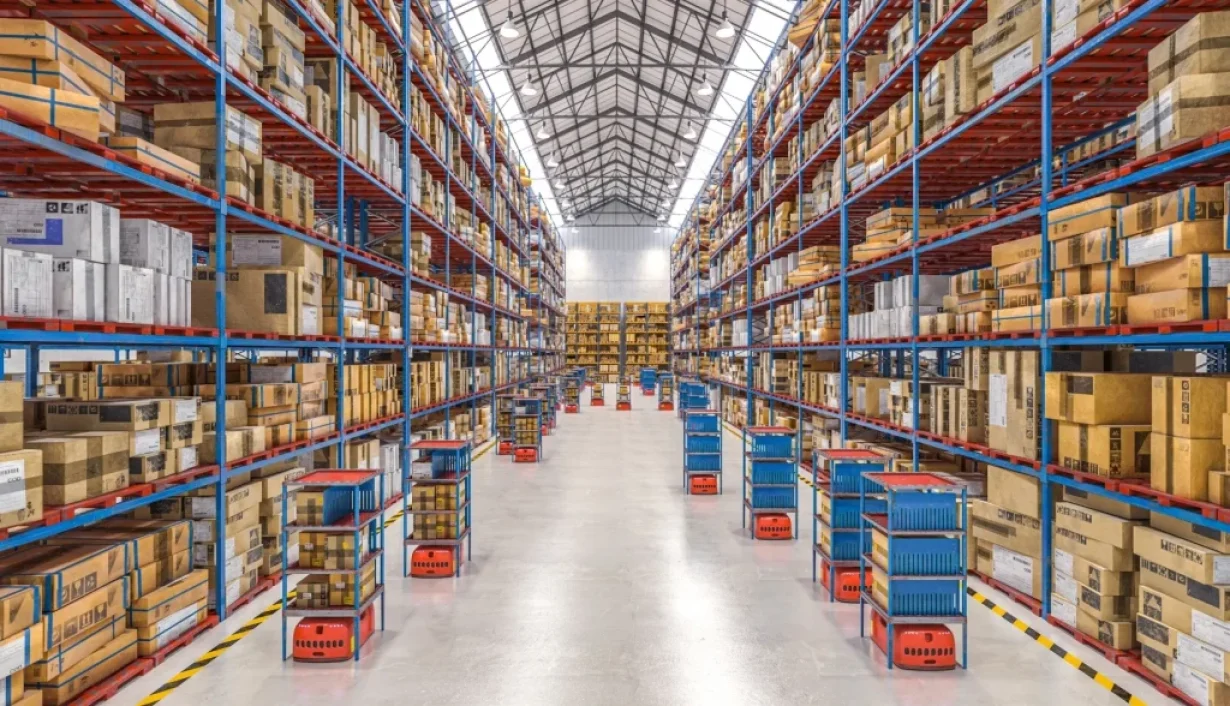
The integration of RFID with other advanced technologies is a cornerstone of smart warehousing initiatives. When combined with automated sorting systems, robotics, and existing WMS/ERP platforms, RFID paves the way for fully automated and intelligent warehouse management. This synergy creates a highly efficient ecosystem where goods move seamlessly from receiving to dispatch with minimal human intervention. For example, RFID-enabled items can be automatically identified upon arrival, directed to the correct storage location by automated guided vehicles (AGVs), and then picked and sorted by robotic systems for outbound shipments. This level of automation significantly boosts throughput, reduces operational costs, and enhances overall warehouse performance.
4. Benefits of Using RFID Cards
The adoption of RFID cards, as a core auto-ID technology, yields numerous tangible and intangible benefits for warehousing and logistics operations:
- Increased Management Efficiency and Accuracy: Automation of identification and data capture processes drastically reduces manual tasks and the potential for human errors, leading to more efficient and accurate operations.
- Reduced Labor Costs: Less reliance on manual processes translates to significant cost savings in labor, allowing staff to be reallocated to more strategic roles.
- Real-Time Data and Decision-Making: Immediate access to accurate, up-to-date data empowers managers to make quicker, more informed operational and strategic decisions.
- Enhanced Asset Security and Transparency: Improved tracking capabilities deter theft, reduce loss, and provide clear audit trails for all assets, enhancing overall security and accountability.
5. Future Trends and Development

The future of auto-ID and RFID in warehousing is characterized by deeper integration with emerging technologies, pushing the boundaries of what is possible in logistics. The convergence of RFID with the Internet of Things (IoT), Artificial Intelligence (AI), and cloud computing platforms is leading to the development of increasingly sophisticated smart warehousing solutions. IoT sensors can provide environmental data (temperature, humidity) alongside RFID’s item-level data, while AI algorithms can analyze this combined data to predict demand, optimize storage layouts, and identify potential bottlenecks. Cloud platforms facilitate seamless data sharing and accessibility across distributed supply chains.
This integration will drive advancements in unmanned warehouses, where autonomous robots and drones, guided by RFID and AI, handle all aspects of goods movement and storage. Automated sorting facilities will become even more precise and rapid. Intelligent logistics networks will emerge, capable of self-optimizing and adapting to changing conditions in real-time, from traffic patterns to sudden demand spikes.
6. Conclusion
The strategic implementation of auto-ID technologies is indispensable for modern warehouses striving for operational excellence. These technologies not only address the inherent challenges of traditional inventory management but also unlock new levels of efficiency, accuracy, and transparency across asset management and the entire supply chain. By embracing RFID, businesses can transform their warehousing operations into intelligent, autonomous, and highly responsive logistics hubs. As technology continues to advance, the role of RFID in creating future-proof warehousing operations will only grow, solidifying its position as a cornerstone of the next generation of supply chain management.
Recommended Product

RFID Card EPC Class 1 Gen 2 UHF IC Higgs® 3

The Higgs® 3 RFID cards are made with photo-quality PVC sheets in the size of CR80, suitable for use with most direct thermal or thermal transfer card printers. Higgs® 3 conforms to the EPCglobal Class 1 Gen 2 specifications and is a highly integrated single-chip UHF RFID Tag IC with 800-bit memory.