
In today’s contactless world, the blank card has become an essential foundation for countless smart applications. Unlike pre-printed or pre-encoded cards, a blank card provides complete flexibility for customization — whether it’s encoding specific chip data, printing a brand design, or adapting to various RFID systems. These cards are used across many industries, offering a balance of functionality, scalability, and branding potential. Among the most common sectors adopting blank RFID cards are hotels, university campuses, and transportation systems — each relying on this simple yet powerful medium to deliver secure, efficient, and seamless user experiences.
1. What Are Blank RFID Cards and How Do They Work?
A blank RFID card is a smart card equipped with a microchip and antenna embedded inside multiple material layers, such as PVC, PET, PETG, or even wood. The “blank” term refers to the card’s surface, which is unprinted and ready for further personalization. Manufacturers produce these cards with different RFID frequencies — low-frequency (LF), high-frequency (HF), and ultra-high-frequency (UHF) — depending on their intended use.
When placed near a reader, the antenna transmits data from the embedded chip without physical contact. This makes RFID cards ideal for access control, payment, and identification applications. Because blank cards can be encoded and printed later, they offer unmatched versatility for organizations that need to issue large quantities of cards while maintaining control over design and data.
2. RFID Blank Cards in the Hotel Industry: Streamlined Guest Access and Security
The hospitality sector has been one of the earliest and most enthusiastic adopters of RFID technology, primarily through the use of blank RFID key cards. The shift from magnetic stripe keys to contactless RFID has dramatically improved both the guest experience and operational security.

2.1 Streamlined Guest Access and Security
Hotels purchase blank RFID cards in bulk, which is then programmed at the front desk upon guest check-in. This process is seamless and rapid, allowing for a fast, contactless check-in experience that modern travelers expect. The security benefits are significant: unlike traditional keys, RFID cards can be instantly deactivated upon checkout or if reported lost, mitigating the risk of unauthorized access. Furthermore, the advanced encryption capabilities of modern RFID chips (such as MIFARE DESFire) make them extremely difficult to clone or tamper with, offering a level of security that older technologies simply cannot match. A large hotel, for instance, may process well over 10,000 RFID cards annually, highlighting the scale and necessity of an efficient, secure, and cost-effective card solution.
2.2 Enhancing Guest Experience and Branding
Beyond mere functionality, the blank card serves as a powerful, tangible extension of the hotel’s brand. The high surface quality of these cards allows for stunning, full-color printing of logos, property imagery, and promotional messages. Hotels can leverage this space to print QR codes linking to loyalty program sign-ups, spa menus, or local attraction guides, turning a simple room key into a marketing tool. Moreover, with growing consumer awareness of environmental issues, many hotels are now opting for eco-friendly blank card options made from materials like wood or recycled plastics, aligning their operations with sustainability goals and appealing to environmentally conscious guests. This commitment to both security and brand presentation is made possible by the initial versatility of the unprinted card.
3. Blank RFID Cards on Campuses: The Multi-Functional Student ID
University and college campuses are complex, self-contained ecosystems that require a single, unified solution for identification, access, and transactions. The blank RFID card has become the de facto standard for the modern student ID, consolidating multiple functions into one convenient credential.

3.1 Multi-Functional Student ID Cards
A single student ID, built on a blank RFID card, can manage access to dormitories, specialized labs, and libraries. It can also be integrated with campus payment systems for dining halls, vending machines, and bookstores, effectively replacing cash and multiple physical cards. For administration, the flexibility of the blank card is invaluable. Different departments—from IT to student services—can personalize the card’s visual design and program its chip with specific access rights and privileges. This means a single card format can serve the needs of a freshman, a faculty member, and a visiting scholar, each with distinct permissions encoded onto the same physical medium.
3.2 Benefits for Administration and Security
From an administrative perspective, using blank cards simplifies the entire issuance process. Universities can maintain a smaller inventory of generic cards and print/encode them on demand, which is crucial during high-volume periods like orientation week. This on-demand personalization significantly reduces lead times and logistics costs associated with ordering pre-printed, customized cards. Furthermore, if a card is lost or a student’s status changes, the card can be quickly reprogrammed or deactivated, enhancing campus security and reducing the cost of card replacement.
4. Blank RFID Cards in Transportation Systems: Ticketing and Fare Collection
Mass transit systems, which handle millions of transactions daily, demand robust, high-speed, and reliable ticketing solutions. Contactless payment, facilitated by RFID technology, has revolutionized urban mobility.

4.1 Ticketing and Fare Collection
In major cities worldwide, blank RFID cards are transformed into reloadable travel cards for buses, subways, and even parking facilities. The primary advantage here is speed and durability. Contactless transactions are significantly faster than cash or magnetic stripe processing, reducing bottlenecks at turnstiles and improving passenger flow. Since these cards are handled constantly, the materials used—often durable PET or PVC—ensure longevity and read reliability, even after years of use. Transportation operators can issue these cards quickly and in bulk, encoding them with initial value or specific pass types, making the rollout of new fare structures or promotional passes highly efficient.
4.2 Integration with Mobile and Digital Systems
Modern transportation networks often integrate RFID systems with mobile apps or cloud databases. This allows travelers to link physical blank cards with digital accounts for automatic top-ups or journey tracking. The coexistence of physical and digital media ensures accessibility for all passengers while maintaining security and convenience. Moreover, blank cards can be upgraded to support advanced chips such as MIFARE DESFire or NFC technology, enabling encrypted communication and compatibility with next-generation fare collection systems.
5. Why Choose Blank RFID Cards Over Pre-Printed Cards?
While pre-printed cards are convenient for small-scale or standardized uses, blank RFID cards provide far greater flexibility and long-term cost efficiency. Here are a few advantages:
- Customization on Demand – Businesses can encode data or print designs as needed, avoiding large pre-printed inventories.
- Reduced Waste – Only print what’s required, minimizing excess or obsolete stock.
- Speed and Scalability – Ideal for organizations issuing thousands of cards with variable data or temporary users.
- Better Brand Control – Maintain consistent design quality with in-house printing and encoding.
Blank cards empower businesses to respond quickly to new requirements, whether launching a new promotion, adding staff IDs, or managing access updates.
6. Choosing the Right Supplier for Blank RFID Cards
When selecting a supplier, several factors ensure product reliability and compatibility:
- Certification and Quality Control – ISO 9001, ISO 14001, and ISO 27001 certifications guarantee quality, environmental responsibility, and data protection.
- Material Options – Look for vendors offering PET or wooden blank cards, supporting both durability and sustainability.
- Chip Compatibility – Ensure support for common chips like MIFARE Classic, NTAG, or DESFire.
- Printing Readiness – Smooth, high-gloss surfaces that work with all major printing systems.
- Bulk and OEM Services – For large-scale projects, suppliers should provide customization, personalization, and packaging solutions.
Our own blank RFID cards are designed with these principles in mind — offering precision lamination, clean antenna integration, and excellent surface quality for printing and encoding. Whether you need simple PVC blanks or advanced eco-material options, each card is manufactured under strict quality standards to ensure performance and consistency.
7. Conclusion
From hotel key systems to student ID cards and transportation passes, the blank RFID card plays an indispensable role in enabling smart, contactless operations. Its flexibility allows organizations to tailor every aspect — from chip encoding to graphic design — ensuring both security and brand cohesion. As industries continue to evolve toward digital and sustainable solutions, blank cards will remain at the heart of RFID innovation. With the right materials, chip technology, and reliable supplier support, they offer the perfect balance of performance, personalization, and environmental responsibility.
Recommended Product
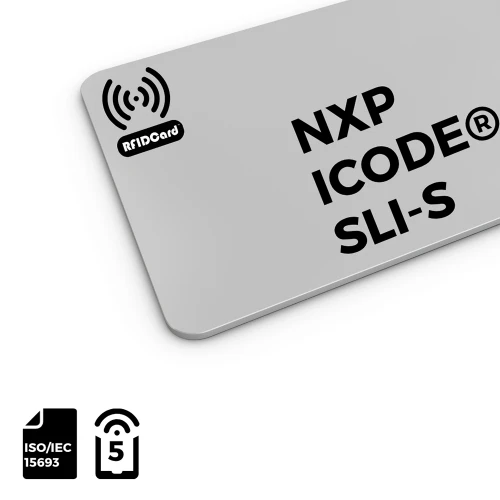
RFID Card CR80 NXP ICODE® SLI-S

Blank or customized printing RFID card with choice of dimensions available. The ICODE® SLI-S IC is ideal for RFID smart Card applications with the need for a larger memory and higher security level. ICODE® SLI-S is also defined as NFC Forum Type 5 Tag IC.