If you have ever stayed at a hotel, you must have come across hotel key cards. They play a major role in improving customer security and ultimately contribute to the overall customer experience and satisfaction.
Without a key card, you cannot enter the hotel room, which means your belongings are safe in the room till you have the card in your hands. This high sense of security attracts visitors and compels them to book a room at a certain hotel where they sense security.
Hotel key cards work by using various technologies such as RFID and magnetic stripe. The information encodes inside the key card can only be read by RFID readers or magnetic readers. How does that happen? This article will take you through the process of how hotel key cards work.

Types of hotel key cards
Hotel key cards are electronic cards used for room access in hotels, typically made from plastic. They store information such as the guest’s room details, expiration dates, and other relevant data, allowing guests to enter and exit their designated rooms during their stay. There are many different kinds of hotel key cards used and have been used in the past. Here is a list of some of the most common types of hotel key cards:
Magnetic Stripe Cards
Magnetic stripe cards are a common type of hotel key card, typically made from plastic and functioning based on magnetic data storage. The magnetic stripe on the back of the card consists of tiny ferromagnetic particles encoded to store guest room information, expiration dates, and other relevant data.
Magnetic cards need to be swiped on the card reader present at the room entrance. When a guest inserts or swipes the card through the door lock’s card reader, the reader uses a magnetic head to read the information from the stripe. This process involves converting the magnetic signals into electrical signals, which are then decoded to verify the information. While magnetic stripe cards are low-cost, their data is easy to replicate, resulting in lower security. Additionally, these cards are sensitive to scratches and strong magnetic fields, making them prone to damage.
RFID Cards
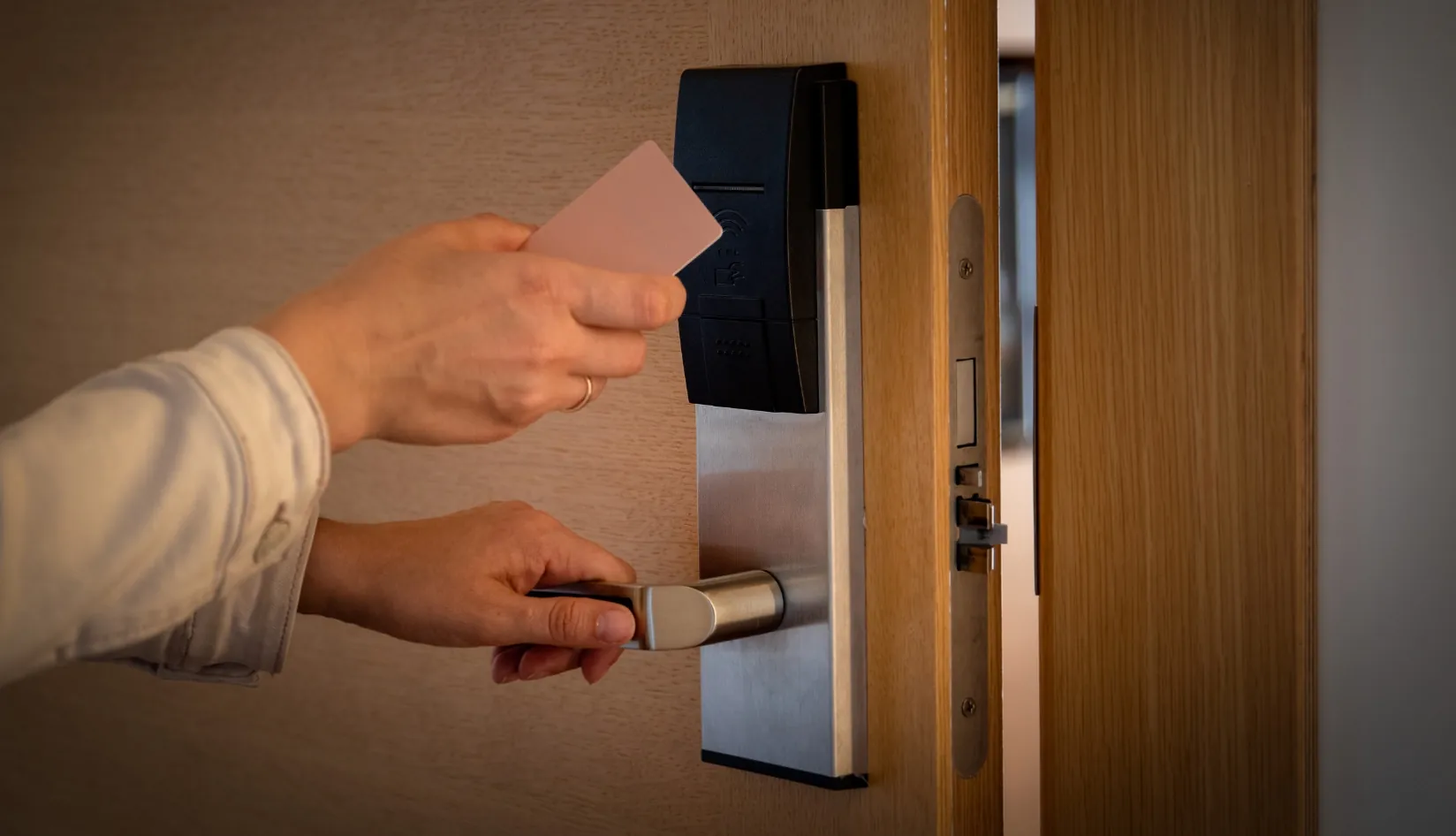
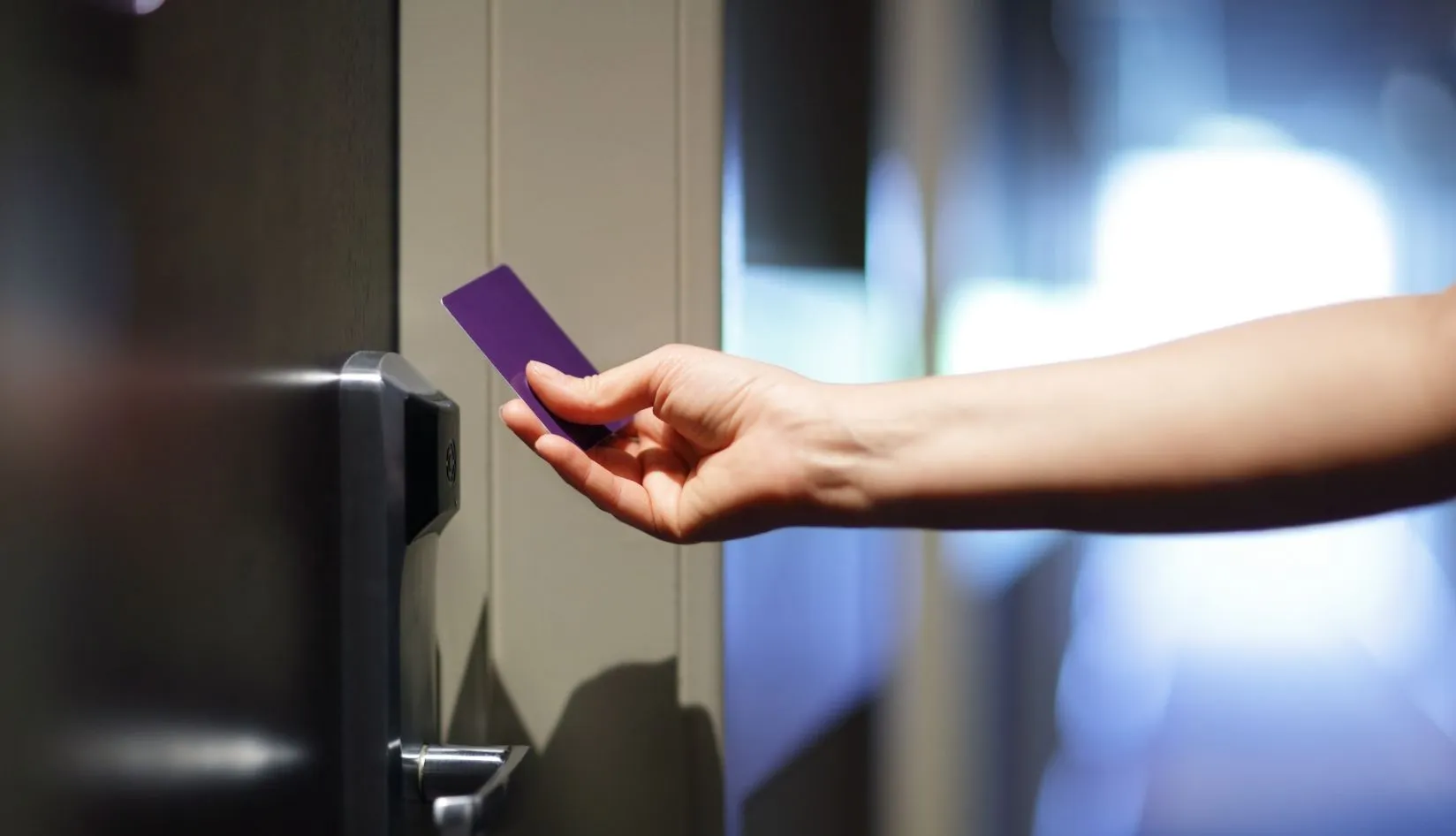
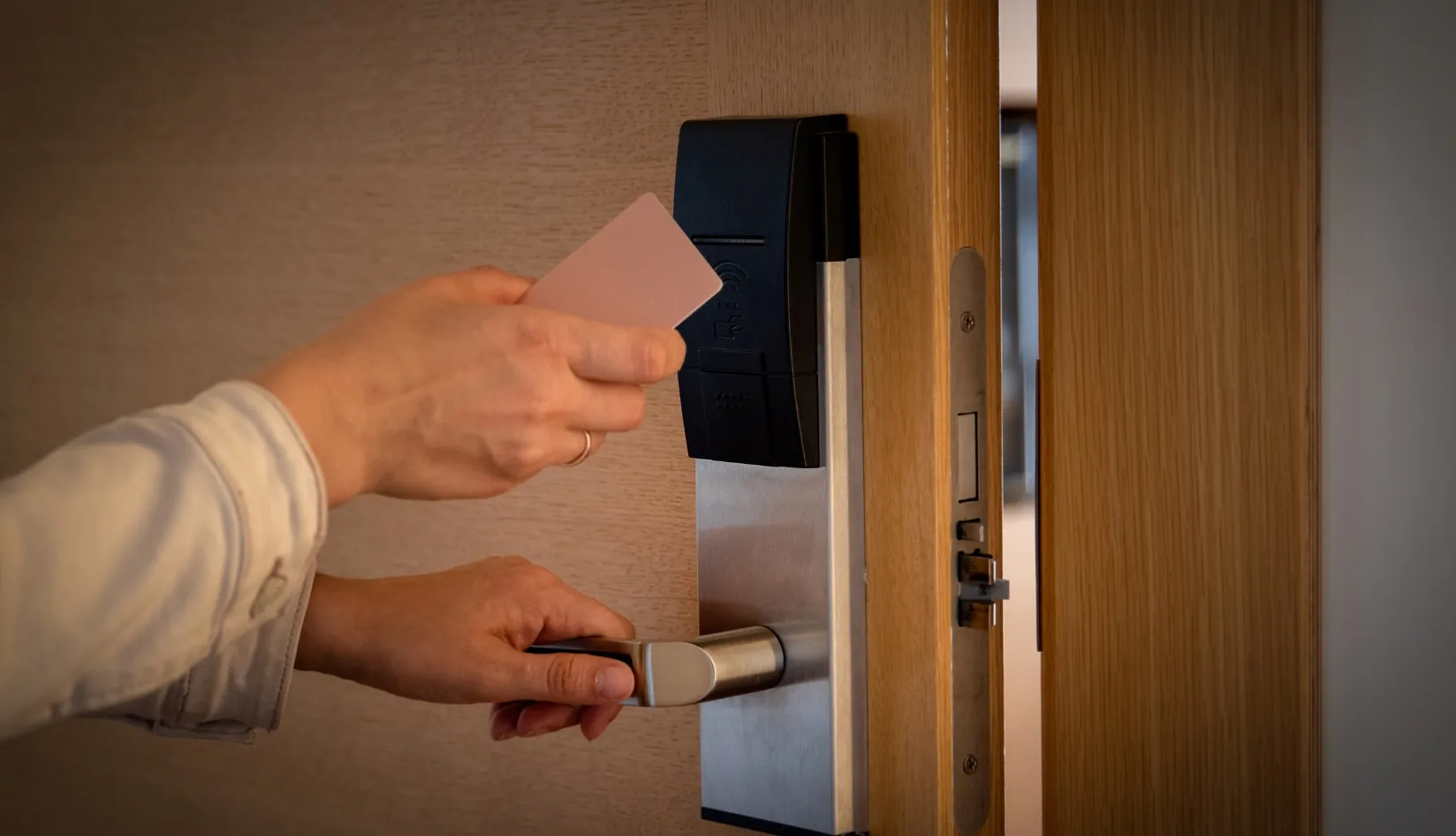
RFID (Radio Frequency Identification) cards are a more advanced type of hotel key card that utilizes radio waves for communication. Unlike magnetic stripe cards, RFID cards contain an embedded microchip and antenna. When the card is brought close to an RFID reader, the reader emits radio waves that activate the chip. The chip returns the stored information to the reader via the antenna, which decodes the information and verifies it against the hotel’s management system. This near-field communication technology allows for rapid and secure data transfer, typically within a few centimeters. That is to say, RFID cards need to be placed in near proximity of the reader so that I can be scanned.
How RFID Key Cards Work: Video Tutorial
Learn more about RFID in our comprehensive guide to RFID.
The advantages of RFID cards include higher security, resistance to duplication, and the ability to operate contactlessly, enhancing user convenience. Moreover, RFID technology provides real-time data tracking, assisting hotel managers in optimizing operational efficiency.
The benefits of RFID cards position them as a trend in the industry’s development. Many hotels have begun adopting RFID technology to offer a safer and more convenient check-in experience. For instance, major hotel chains like Marriott International and Hilton Hotels widely utilize RFID key cards, enabling guests to generate and use virtual keys via their smartphones. This not only enhances guest convenience but also improves hotel operational efficiency and security. It’s anticipated that as RFID technology becomes more widespread, even more hotels will follow suit to meet modern consumers’ demands for safety and convenience.

The difference between magnetic stripe cards and RFID cards
Magnetic stripe cards and RFID cards are two common key cards used in hotels. All of the cards mentioned above can be used to access hotel rooms, elevators and special areas such as poolside, gym, penthouse and cafeterias. They use different technologies but serve the same purpose. Each technology has its own pros and cons, and it offers a different level of security compared to others.
Working Principle
Magnetic Stripe Card: In a magnetic stripe card, the information is stored inside the black strip present on the card. A unique number is generated, called the user access number, which is stored in the card. A room number is allotted against this number; hence when you swipe your magnetic stripe card outside your room door, it senses the information and matches it with the database to unlock your door.
RFID Card: In the case of an RFID card, you don’t need to swipe the card. RFID is a contactless solution, which means that you need to bring the card in close proximity to the reader to decipher the information stored inside it. An RFID card is equipped with a chip instead of the magnetic stripe, which stores the user access number.
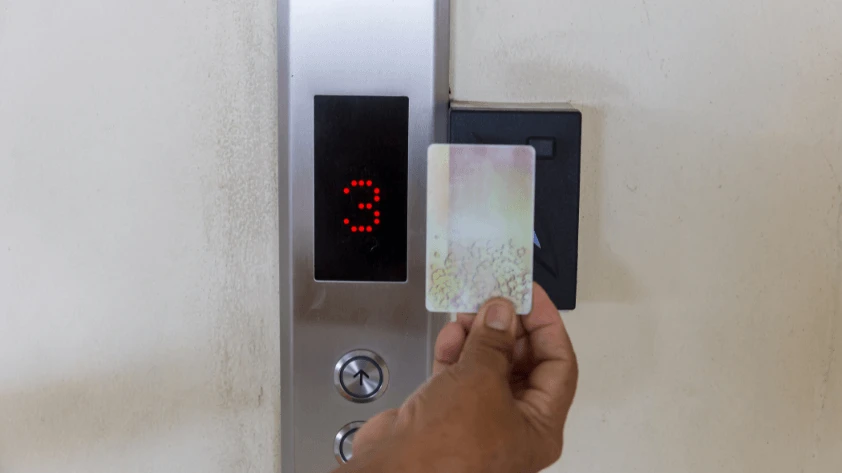
RFID card also stores more information and can provide a customized access to the guests. For instance, if you have booked the penthouse and don’t want other people to access the lift after a certain time, you can only access the lift, leading to the penthouse using an RFID card. According to the requirement, the card is clocked, which is a feature not included in other types of cards.
Security
Magnetic Stripe Card: The security of magnetic stripe cards is relatively low, mainly because their information can be easily copied. Hackers can use simple devices to read magnetic stripe information and create fake cards. Additionally, the data on the magnetic stripe lacks encryption protection, making it vulnerable to information theft from any device with read/write capabilities.
RFID Card: RFID cards typically offer higher security, as many RFID systems use encryption technology to protect data transmission. Each RFID card has a unique identifier, allowing the reader to verify the legitimacy of the information received, which reduces the risk of counterfeiting and abuse.
User Experience
Magnetic Stripe Card: Users must ensure the correct direction and position of the magnetic stripe card when using it. If the card is not swiped correctly, it may result in entry failure. Furthermore, the operation speed is slower, particularly during peak periods, potentially leading to long wait times.
RFID Card: The user experience with RFID cards is more convenient; users simply need to bring the card close to the reader, and the system automatically recognizes and unlocks it. This process is quick and efficient, suitable for high-traffic hotels, and can significantly reduce wait times for guests at the front desk and room entrances.
Functionality Expansion
Magnetic Stripe Card: Primarily used for access control, magnetic stripe cards have a simple information storage capability and cannot support complex functions. For instance, they generally only allow room access and lack additional service support.
RFID Card: RFID cards can integrate multiple functions, including cashless payment, access control, and real-time data monitoring. Hotels can use an RFID system to track guest behavior and analyze occupancy patterns, providing more personalized service options. For example, guests can use RFID cards to make payments at hotel restaurants or shops, enhancing convenience.
Cost
Magnetic Stripe Card: The production and implementation costs for magnetic stripe cards are low, making them suitable for small hotels with budget constraints. The technology for magnetic stripe cards is mature, and the required equipment and maintenance demands are relatively simple, making them suitable for environments that do not require advanced technology support.
RFID Card: Initial investment costs are higher because RFID systems require specialized readers and software. However, while RFID cards may have a higher initial cost, their long-term operating costs can be lower due to greater durability and fewer failures, reducing replacement and maintenance frequency.
Durability
Magnetic Stripe Card: The materials used for magnetic stripe cards are relatively fragile, making them susceptible to scratches, wear, and environmental factors (such as moisture and high temperatures), which can lead to card failure during use. If the magnetic stripe is damaged, the reader cannot recognize it, causing inconvenience for customers.
RFID Card: Typically made from more durable materials, such as plastic or polymers, RFID cards can withstand daily wear and tear. Additionally, RFID cards often come with water and dust resistance, making them suitable for various environments and reducing replacement frequency and associated costs.
Magnetic Stripe Card or RFID Card: Which is Suitable for Your Hotel?
To determine whether a magnetic stripe card or an RFID card is better suited for your hotel, you need to understand which types of hotels are appropriate for each card type.
Types of Hotels Suitable for Magnetic Stripe Cards
Small Hotels with Limited Budgets
These hotels typically operate on a low budget and may be family-run or small businesses just starting out. Budget constraints lead them to opt for affordable solutions.
Magnetic stripe cards are suitable for hotels with limited resources due to their low production costs and simple implementation that does not require complex hardware and software support.
Hotels with Low Occupancy Rates
These hotels experience a small flow of daily guests, which may include those in remote areas or during off-peak seasons. Occupancy rates typically range between 30%-50%.
While magnetic stripe cards have slower entry speeds, this has little impact on low-traffic hotels. Guests can accept slightly longer waiting times, which makes it suitable for basic access control management.
Hotels with Simpler Infrastructure
The facilities in these hotels are not complex, often featuring only a few rooms and basic services. They typically do not provide a high-tech customer experience.
Magnetic stripe card systems are easy to manage and do not require a dedicated technical team for maintenance, making them suitable for basic management needs.
Types of Hotels Suitable for RFID Cards
High-End Hotels and Resorts
These hotels typically offer luxurious accommodations and high-quality services, targeting high-income groups. They are commonly found in tourist hotspots and large cities.
RFID cards provide higher security and are difficult to copy, helping protect customer privacy and property. Additionally, RFID systems can enhance the customer experience through fast room access and personalized services.
High-Traffic Hotels
Hotels such as large conference centers, resorts, or event venues receive a significant number of guests daily. Peak check-in and check-out times can lead to queues.
The fast reading capabilities of RFID cards can significantly reduce guest wait times at the front desk and entrance, improving overall fluidity and enhancing customer experience.
Hotels Requiring Multi-Functional Services
These hotels typically offer a variety of additional services, such as cashless payments, room service, and access to gym or swimming pool facilities.
RFID cards can integrate multiple functions like access control, payment, and customer data tracking to enhance the customer experience while improving management efficiency.
Technology-Oriented Hotels
These hotels are willing to invest in modern facilities and focus on using high-tech means to enhance operational efficiency and customer satisfaction.
RFID systems can be integrated with other smart technologies, such as smart room controls and guest interaction applications, to provide a more comprehensive customer service and management experience.

How to Upgrade Hotel Key Cards from Magnetic Stripe Cards to RFID Cards
As technology continues to evolve, many hotels are considering upgrading their existing magnetic stripe cards to RFID cards. The process typically involves the following steps:
Assess Needs
Before upgrading the key card system, a comprehensive needs assessment should be conducted. Consider the security vulnerabilities of the existing magnetic stripe cards, such as their susceptibility to copying or tampering. Research the advantages of RFID cards in encryption and anti-tampering to enhance overall security. Additionally, survey customer needs for convenience, such as their desire to use mobile devices or smart wristbands to unlock doors. Finally, establish a detailed budget encompassing hardware, software, installation, and employee training costs.
Choose RFID Technology
Select suitable RFID technology based on the hotel’s specific requirements. Low-frequency (LF) RFID is suitable for short-range applications, typically used in access control systems; high-frequency (HF) RFID, such as NFC, is suitable for higher data transfer rates and can support complex applications; ultra-high-frequency (UHF) RFID is ideal for scenarios requiring long-range identification. Ensure that the chosen technology is compatible with the hotel’s existing management system, and confirm with suppliers. Generally, high-frequency (HF) RFID is commonly used for hotel key cards.
Update Hardware
During the hardware update phase, select an RFID-compatible locking system. These locks should not only work effectively with RFID cards but also be durable and secure. Additionally, choose high-quality RFID readers ensuring good recognition rates that can adapt to various environmental conditions. It is advisable to engage a professional technical team for installation to ensure stable electrical and network connections for the locks and readers, thereby preventing future maintenance issues.
Update Software
Upgrading the hotel management system is a crucial step to ensure the smooth use of RFID cards. Firstly, communicate with the software provider to determine if a system upgrade is necessary to support the new RFID functionalities. Next, conduct system integration testing to ensure that the RFID cards can be effectively recognized and recorded by the management system. Successfully completing this phase will lay a solid foundation for the subsequent use of the cards.
Generate RFID Cards
Select a reliable RFID card manufacturer to ensure that the cards purchased are of high quality and durability. Utilize an RFID card generator to encode each card, generating RFID cards with unique IDs to ensure compatibility with the locking system. Throughout the manufacturing process, regularly inspect the quality and functionality of the cards to avoid issues during subsequent use.
Train Employees
To ensure a smooth transition to the new RFID system, comprehensive training for employees is crucial. Create detailed training materials, including operation manuals and instructional videos, explaining the usage process and benefits of RFID cards. Conduct multiple training sessions to ensure that front desk staff, security, and cleaning personnel are familiar with the operation of the new system and can effectively address potential issues.
Testing and Implementation
Before full implementation, select a few rooms to conduct pilot testing of the RFID system. This phase should focus on collecting feedback from employees and guests, making necessary adjustments and optimizations based on the feedback. Once the system operates seamlessly in actual use, develop a detailed timeline to gradually replace the key card system in all rooms, ensuring that every guest can smoothly experience the new system.
Notify Guests
Before the new system officially launches, update the hotel’s website, brochures, and social media with relevant information to inform guests of the upcoming upgrade. Provide guests with simple and clear user guides detailing how to use the RFID cards for door access. During check-in, front desk staff should provide a brief explanation to ensure that guests can easily use the new cards, enhancing the overall customer experience.

How to Choose RFID Key Cards for Hotels
After upgrading from magnetic stripe cards to RFID cards, hotels also need to carefully select their RFID key cards. As products directly used by guests, RFID key cards largely represent the hotel’s image and significantly influence the guest experience. Therefore, choosing the right key card is crucial for hotels. When selecting RFID key cards, you should consider factors such as form, materials, and chip specifications.
Form
The most common form of hotel key card is the card format. However, there are also options such as key chains and wristbands.
Cards: RFID cards are typically the standard credit card size (85.6 x 54 mm), making them convenient for guests to carry and use. Cards can be customized and printed, including hotel logos, room numbers, and other information to enhance brand image. Standard cards are suitable for most hotels and for both temporary and long-term guests.
Wristbands: Designers create RFID wristbands using soft silicone or fabric for comfort, helping prevent guests from losing their cards. They also produce these wristbands in various colors and styles, making them fashionable accessories.
Key fobs: RFID key fobs are small RFID devices that are easy to attach to key rings and are suitable for guests who are accustomed to using keys. Key fobs are generally designed to be durable and waterproof, suitable for daily use. They are especially suitable for elderly guests or those with limited mobility, as they do not require frequent retrieval of cards.
Materials
Traditional hotel key cards typically use materials like PVC and PET, but with the growing focus on environmental protection, hotels are increasingly using eco-friendly materials such as wood, BioPVC, BioPoly™ Stone, and BioPoly™ Vinyl for their key cards.
PVC (Polyvinyl Chloride) : PVC is the most common RFID card material, offering good durability and printability, making it suitable for daily use. PVC cards are waterproof and wear-resistant, able to withstand wear and tear in hotel environments. Additionally, PVC materials are easy to customize and print on, including QR codes, barcodes, and patterns.
ABS (Acrylonitrile-Butadiene-Styrene) : ABS materials are stronger than PVC and have strong impact resistance, making them suitable for high-frequency use environments. Hotels can choose ABS cards to improve durability, especially during busy check-in and check-out periods.
PET (Polyethylene Terephthalate) : PET materials are more resistant to temperature and chemicals, suitable for humid or special environments (such as poolside bars). Cards made from this material are usually transparent or translucent, providing a modern feel.
Wood: Wood RFID cards are environmentally friendly, suitable for high-end or eco-friendly hotels, and can provide guests with a unique experience. Laser engraving often personalizes this type of card, giving it a natural and upscale appearance.
BioPVC: Bio-based polyvinyl chloride is an eco-friendly and biodegradable material suitable for hotels focusing on sustainable development. This material can naturally degrade under certain conditions after use, reducing environmental impact.
BioPoly™ Stone and BioPoly™ Vinyl: These materials come from renewable resources, showcasing the hotel’s commitment to environmental protection. They are unique in appearance while functionally equivalent to traditional cards, making them suitable for upscale hotels pursuing sustainable development.
Chip
The chip is the core component of the key card, so hotels need to consider several aspects when choosing an RFID chip, including frequency, communication protocol, memory, and encryption functions.
Frequency: Hotel key cards commonly use RFID chips that operate in the high frequency (HF) band at 13.56 MHz. This frequency allows for fast reading speeds, making it suitable for quick entry and complex applications, and it plays a key role in modern hotel access control systems and payment functions. High-frequency RFID chips also support large data storage capabilities, allowing for the recording of more user information and historical data.
Communication Protocol: RFID hotel key cards typically use communication protocols such as ISO/IEC 14443 or ISO/IEC 15693. These protocols define the standards for data exchange, allowing RFID readers to communicate efficiently with cards. Choosing communication protocols that meet international standards ensures compatibility and stability of the RFID system and adaptability to future technological developments.
Memory: Different key cards have varying memory requirements based on their functions. For example, employee key cards need to store staff information and permissions and typically require greater memory to allow one card to access multiple doors. Guest cards usually access just one door, requiring lower memory capacity.
Encryption Function: Encryption-capable RFID chips can protect sensitive data stored on the card and prevent thieves from stealing or tampering with information. For hotels with high security requirements, encryption functionality is crucial for enhancing guest trust and ensuring their privacy and property security.

Conclusion
In conclusion, magnetic stripe cards and RFID cards are the two predominant types of hotel key cards, each with its own unique features that make them suitable for different applications. For hotels, selecting the appropriate card type is essential for maximizing operational efficiency and ensuring guest satisfaction.
Looking ahead, as technology continues to evolve, we can anticipate the emergence of even more innovative solutions for hotel access control management. Embracing these advancements will not only enhance security measures but also improve the overall guest experience, setting new benchmarks for the hotel industry. By staying ahead of these trends, hotels can position themselves as leaders in hospitality, offering enhanced services that meet the evolving needs of their guests.
FAQs
1.What Is a Hotel Key Card?
A hotel key card controls the locking mechanism of a hotel room door, allowing guests to access their assigned rooms. Typically made of plastic, these cards may contain either a magnetic stripe or an RFID chip. Magnetic stripe cards feature a magnetic strip on their surface that stores essential information, such as the room number and guest details. In contrast, RFID cards utilize radio waves for communication, allowing for faster identification and authorization, thereby enhancing both security and convenience.
2. What Is the Difference Between Magnetic Stripe Cards and RFID Cards?
The primary distinction between magnetic stripe cards and RFID cards lies in their information storage and reading methods. Magnetic stripe cards require swiping against a door lock reader, which necessitates physical contact, making them more prone to wear and tear and susceptibility to duplication. Conversely, RFID cards communicate with the reader via radio waves and can be identified from a certain distance, offering increased security and ease of use. Additionally, RFID cards typically possess greater storage capacity, enabling them to retain more information, such as access rights and usage history.
3.Why Do Hotels Use RFID Key Cards?
Hotels opt for RFID key cards primarily due to their enhanced security features and improved guest experience. RFID technology effectively mitigates the risks of copying and counterfeiting by encrypting the communication between the card and the reader. Moreover, RFID cards allow for a contactless experience—guests only need to approach the door lock for identification when entering their rooms, enhancing convenience. This technology streamlines operational procedures and reduces guests’ waiting time during check-in and check-out.
4. What Information Is Stored Inside a Key Card?
Do key cards store all personal information including your credit card number? Isn’t that unsafe? Well, hotel key cards only store your room number and the duration of your stay. They do not know your name or your financial details. There is a possibility that key cards can get hacked, so smart cards are the most preferred option in case security is a bi concern. It is complicated for hackers to tap into a smart card because of the modern encryption techniques.
5. What are the most recent development in the field of hotel key cards?
The most recent development in the field of hotel key cards is the use of NFC enabled mobile phones. Visitors can unlock their room doors through their smartphones by enabling the NFC feature and bringing their phones in close proximity of the reader. They get their room passcode directly on their smartphones and they can easily unlock their door without the hassle of carrying an additional object with them. The fear of the key card getting lost is also eradicated in this case.