With RFID technology embed, a credit card is our portable and personal bank, allowing merchants to process payments at any time or location. Constant changes and innovations in credit card methods enable the users to access their payments in a more secure and protected way.
Contactless card based on the Automatic Identification and Data Capture (AIDC) technology is an example of one such revolution in this field that brings convenience and secured payments process. These RFID-based contactless cards require EMV Chip Card Payment Service (CCPS) for transmitting signals to nearby devices that are integrated with RFID or Near-Field Communication (NFC).
Types of Contactless RFID Cards
Cards including MasterCard’s PayPass, Visa Contactless, and ExpressPay designed by MasterCard, Visa and American Express companies respectively follow the same approach to gain the confidence of their customers in terms of shielded mechanism against fraudsters and less exposure towards vulnerabilities. These wide leading companies not only use contactless card form but also integrate RFID tags in keys, rings, smartphones and digital watches.
- Working of Contactless RFID Cards
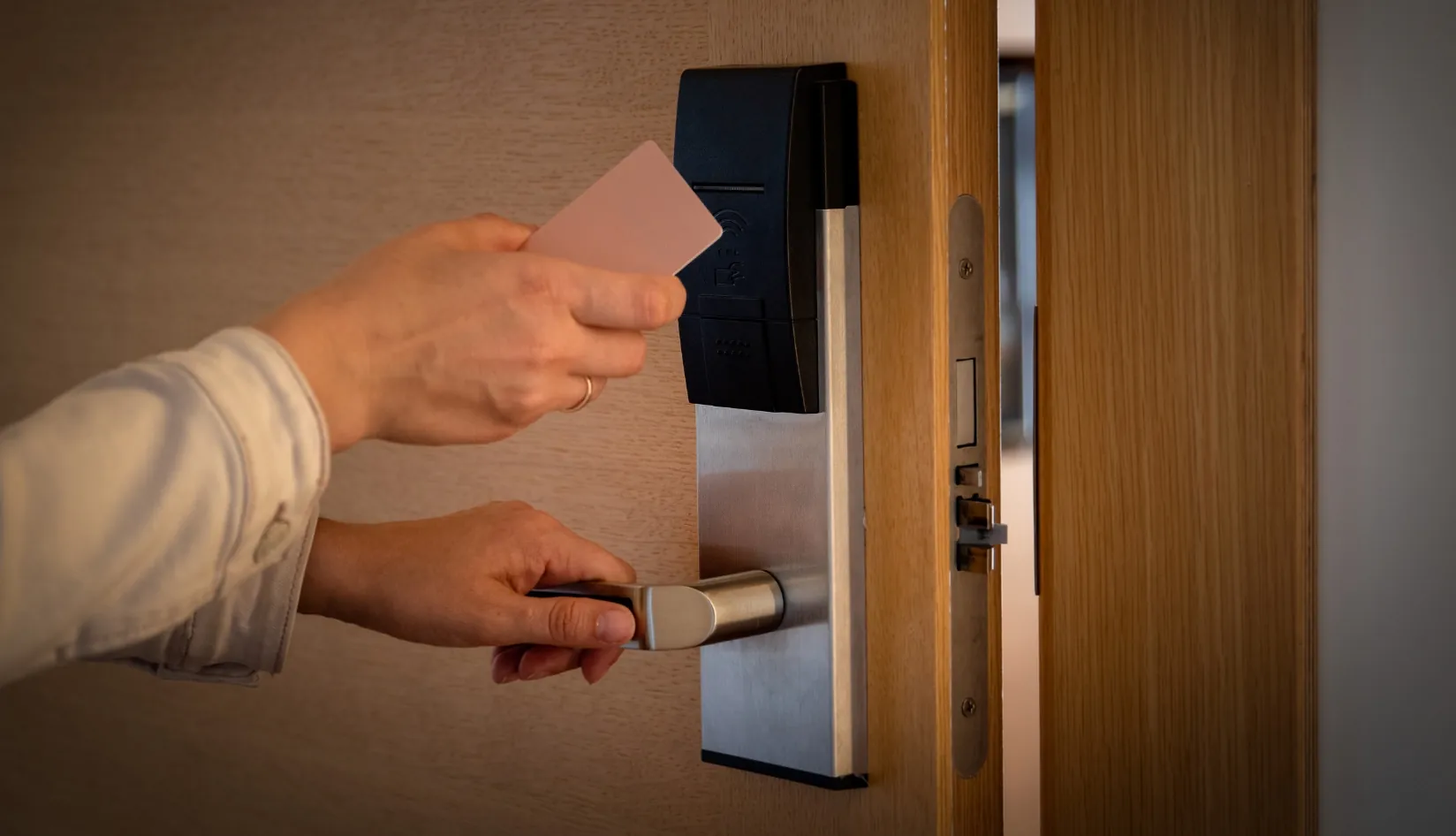
Merchants tap or place physical card in front of terminals to process the transaction without experiencing physical touch. The chip attached to the credit card is not power-driven, and it depends on the physical terminal to receive the power. The end-user terminal transfers the radio frequency signal (RF) from its terminal to the integrated chip to power the chip.
3. Advantages of Contactless RFID Cards
No Physical Touch
In contrast to chip and signature credit cards, they only require waving of credit cards instead of physical touch. The absence of any hardware or physical interaction makes the transmission of RF signals convenient and terminals read data in a few seconds.
Highly Secured and Protected
Security and privacy of credit cards are highly essential, and contactless cards play a crucial role to achieve this. NFC methods alter the original card number with the unique identification code consisting of numbers and characters through tokenization. Due to this replacement, it becomes difficult for thieves and hackers to detect the original number. Moreover, merchants get a unique token for making every single transaction; thus, if somehow hackers were able to receive that information, it won’t benefit them for next transaction.
The security and privacy of contactless RFID cards follow the chip-and-card payment procedure and are more advanced in speed as compared to chip-and-signature cards.
User-Friendly Experience
The assimilation of these contactless credit card with the mobile phones enables the users to view their payment history, browse coming and out-going transaction, deactivate cards remotely, do merchant-configuration of PIN protection, and virtual card provision. Paying shopping bills, processing balance at transit venues or booking tickets for your next flight can be performed instantaneously through these cards.
RFID-Blocking Wallets
Some customers think that with RFID contactless cards, it also becomes easy for a hacker to detect your personal information by standing next to them while transmitting the external electromagnetic field. Nevertheless, this issue can be resolved through RFID-blocking wallets.