Fraud in campuses spaces is rarely dramatic—it’s incremental, repetitive, and hidden in operational blind spots. These subtle forms of financial leakage, from ghost transactions in cafeterias to the abuse of meal plans, can accumulate into significant losses over time. Traditional payment methods often exacerbate these vulnerabilities, offering little in the way of robust control or traceability. However, the advent of RFID payment systems presents a powerful solution, transforming how organizations manage transactions and mitigate fraud within their semi-closed ecosystems.
1. Why Traditional Payment Systems Fail in Semi-Closed Ecosystems
In environments like university campuses where transactions often occur within a defined community, traditional payment systems exhibit inherent weaknesses that make them susceptible to various forms of fraud.

1.1 Cash: Zero Traceability
Cash transactions, while convenient for small purchases, offer no digital footprint. This lack of traceability makes it nearly impossible to audit spending patterns, identify discrepancies, or investigate suspicious activities. Instances of cash skimming in cafeterias or petty theft can go undetected for extended periods, leading to continuous, unquantified losses.
1.2 Bank Cards: No Institutional Control
While bank cards provide a digital record, they operate on an open-loop system, which means the institution can only exercise limited control over how and where users spend them. For example, employees might use a corporate card for unauthorized personal purchases outside company policy, or students might use a debit card to buy items that their specific meal plan does not cover. The institution can only react to these abuses after they occur, typically through time-consuming reconciliation processes and disciplinary actions.
2. RFID Payment as a Policy Enforcement Tool—Not Just a Payment Method

RFID payment systems transcend the role of mere transaction facilitators; they become integral policy enforcement tools within closed environments. By embedding identity and rules directly into the payment mechanism, these systems transform into:
2.1 Identity Binding
The fundamental strength of RFID payment lies in its robust identity binding. Each RFID card is not merely a token but a digital representation of the user, inextricably linked to:
- Verified user profile: Ensuring that only authorized individuals can initiate transactions.
- Department / dormitory: Allowing for location-specific privileges or restrictions.
- Assigned benefits or limits: Such as meal plan allowances, corporate discounts, or spending caps.
This binding ensures that every transaction is attributable, eliminating the anonymity that cash provides and the ambiguity that can arise with shared digital credentials.
2.2 Rule-Based Spending
With identity firmly established, RFID systems can enforce granular, rule-based spending policies automatically. This proactive approach prevents fraud at the point of sale, rather than detecting it retrospectively. Examples include:
- Meal plan validity: A student’s meal plan might only be valid during specific dining hours or for certain food items, as seen in structured university dining programs like those at Harvard University. If someone attempts to use the card outside these parameters, the system automatically denies the transaction.
- Corporate cafeteria discounts: The system restricts employee discounts to verified staff members and applies them only to eligible purchases within the corporate cafeteria. It rejects any attempt by a non-employee or by an employee trying to purchase unauthorized items.
3. Real Fraud Scenarios—Before vs. After RFID Closed-Loop Systems
To understand the real impact, let’s compare typical scenarios.

Scenario A: Visitor Misuse
- Before RFID: A temporary paper pass is issued to a visitor, granting access to campus facilities or allowing purchases at subsidized rates. These passes are easily transferable, duplicated, or used beyond their intended validity, leading to unauthorized access and financial leakage.
- After RFID: A time-limited RFID credential is issued. This credential is tied to the visitor’s identity and programmed to auto-expire at a specific time or after a certain number of uses. Any attempt to use it beyond its validity or by an unauthorized individual is automatically denied, effectively preventing misuse.
Scenario B: Cafeteria Subsidy Abuse
- Before RFID: Students receive meal subsidies through basic campus cards, but cards can be used outside approved hours, or applied to non-eligible items. Misuse is typically discovered only after manual audits, allowing subsidy leakage to accumulate unnoticed.
- After RFID: RFID payment links each student to a verified identity with time, location, and item-level restrictions. The system limits transactions to authorized dining terminals and flags abnormal usage in real time, reducing misuse through automated policy enforcement.
4. The Data Ownership Advantage: The Overlooked Anti-Fraud Weapon

One of the most powerful but underestimated benefits of RFID payment systems is data control. Unlike open-loop systems where transaction data is fragmented across multiple financial institutions, RFID systems centralize all transactional information. This centralization offers:
- Full transaction visibility: The system records every swipe, every purchase, and every denial and makes the data accessible in real time.
- Centralized reconciliation: Eliminating the need to consolidate data from disparate sources, drastically reducing manual errors and speeding up financial closing processes.
- Pattern recognition: Advanced analytics can be applied to the rich dataset to identify unusual spending patterns, anomalies, or potential fraud indicators that would be invisible in fragmented data.
- Department-level spending reports: Providing granular insights into expenditure, enabling better budget management and accountability.
This comprehensive data ownership transforms fraud reduction from a reactive auditing process into proactive prevention. Institutions can:
- Identify abnormal frequency: Flagging cards used an unusually high number of times within a short period, potentially indicating unauthorized sharing or system exploitation.
- Flag duplicate usage attempts: Detecting instances where the same credential is used simultaneously at different locations, a clear sign of fraudulent activity.
- Detect time-location anomalies: Identifying transactions that occur at unusual times or locations for a specific user profile, triggering alerts for further investigation.
5. Why RFID Changes Behavior

The transparency and accountability inherent in RFID payment systems fundamentally alter user behavior. When individuals are aware that:
- Transactions are tied to identity: There is no anonymity; every action is recorded and linked to them.
- Spending logs are auditable: Their financial activities can be reviewed at any time, creating a deterrent against illicit behavior.
- Permissions are role-based: Their access and spending privileges are precisely defined and enforced by the system, leaving no room for subjective interpretation or exploitation.
6. What Actually Makes RFID Payment Secure?

The security of RFID payment systems is built upon several layers of technological safeguards:
- Unique UID per card: Each RFID card contains a unique identifier (UID) that distinguishes it from all others, preventing simple cloning.
- Secure authentication protocols: Advanced protocols, such as those found in MIFARE DESFire cards, ensure that only authorized readers can communicate with the card and that the card itself is genuine. This prevents unauthorized reading or manipulation of data.
- Encrypted data blocks: The system encrypts sensitive information stored on the RFID chip, protecting it from eavesdropping or unauthorized access during transmission.
7. Conclusion
In campus environments, fraud it grows quietly in the gaps between identity, authorization, and oversight. RFID payment reduces fraud not simply because it encrypts transactions, but because it embeds institutional control directly into every interaction. By binding verified identity to spending permissions, enforcing rules in real time, and centralizing data ownership, closed-loop RFID systems transform payment from a passive processing tool into an active governance mechanism.
If you’re considering implementing RFID payment in your campus or corporate environment, RFIDCard can help you evaluate the right system architecture, security level, and card solution for your needs. Contact us to explore your options.
Recommended Product
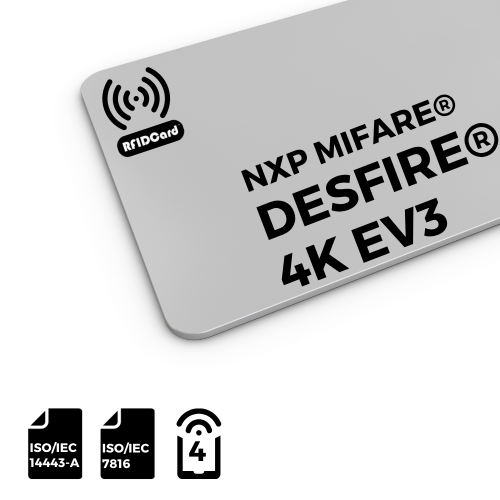
RFID Card NXP MIFARE® DESFire® EV3 4K

Blank or customized printing RFID cards with a choice of dimensions are available. The MIFARE® DESFire® EV3 4K is Common Criteria EAL5+ security certified for smart card IC products. The MIFARE® DESFire® EV3 4K ICs fully comply with NFC Forum Type 4 Tag.