

In today’s educational landscape, traditional attendance methods, such as roll calls and paper sign-ins, are increasingly revealing their inherent inefficiencies and limitations. These methods are not only time-consuming and prone to errors but also struggle to provide real-time data analytics. However, with the rapid advancements in the Internet of Things (IoT) and cloud computing technologies, an innovative solution—the RFID student card—is revolutionizing how schools manage attendance. By integrating Radio Frequency Identification technology with intelligent systems, the RFID student card not only automates attendance but also brings unprecedented management efficiency and data insights to educational institutions.
1. The Evolution of Attendance Management
The challenges posed by conventional attendance systems are manifold. Manual roll calls disrupt valuable class time, while paper-based records are susceptible to loss, damage, and fraudulent entries. The lack of real-time data makes it difficult for administrators to promptly identify absenteeism trends or intervene when students are frequently missing classes. These limitations underscore the urgent need for a more robust, accurate, and efficient attendance tracking solution. The emergence of the RFID student card, coupled with IoT and cloud integration, offers a compelling answer to these long-standing problems, promising a future where attendance management is seamless, data-driven, and highly secure.
2. How RFID Student Cards Work
Radio Frequency Identification (RFID) is a non-contact automatic identification technology that utilizes radio frequency signals to transmit information wirelessly, thereby achieving automatic identification. An RFID student card typically embeds a microchip and an antenna, which store the student’s identity information. When a student brings their RFID student card near an RFID reader, the reader emits radio frequency signals, activating the chip within the card. Upon receiving energy, the chip transmits its stored data (e.g., student ID) back to the reader. This entire process occurs without physical contact, making it fast and accurate.
RFID technology operates across a wide range of frequencies, commonly categorized into Low Frequency (LF), High Frequency (HF), and Ultra-High Frequency (UHF). Student cards often employ HF (e.g., 13.56 MHz) or UHF technology to achieve faster reading speeds and longer reading distances. This contactless reading method makes the RFID student card significantly more reliable and convenient than manual sign-ins, effectively preventing proxy attendance and other forms of cheating. The inherent reliability of RFID technology ensures that attendance records are precise and tamper-proof, forming the bedrock of an efficient attendance system.
3. Key Components of an Automated Attendance System

An automated attendance system built on RFID technology is more than just a combination of cards and readers; it is a comprehensive solution integrating various hardware and software components:
- RFID Hardware: This category includes the RFID student card worn by students, RFID readers installed in classrooms or at school entrances, and gateway devices responsible for preliminary data processing and transmission. These hardware components work in concert to ensure that student entry and exit information is accurately captured.
- IoT Connectivity: The captured attendance data needs to be transmitted to a central system in real-time. IoT technology plays a crucial role here, connecting edge devices (readers and gateways) to the cloud platform via Wi-Fi, cellular networks, or Ethernet, enabling instantaneous data uploads.
- Cloud Database: All collected attendance data is centrally stored in a secure cloud database. Cloud platforms not only provide robust data storage capabilities but also offer high availability and scalability, ensuring data security and supporting large-scale data management and backup.
- Frontend Applications: To facilitate easy viewing and management of attendance data by school administrators, teachers, and students, the system typically offers various frontend applications. These may include web-based management interfaces, API integrations with existing school management systems like Google Sheets or Google Classroom, and tools for data analysis and reporting.
- Optional Features: To further enhance user experience and management efficiency, the system can integrate mobile notification functionalities (e.g., automatic reminders for tardiness or absence) and provide teachers with real-time monitoring dashboards, allowing them to instantly track class attendance.
4. Integration with IoT & Cloud Platforms
IoT and cloud platforms are the cornerstones that enable the powerful functionalities of an RFID-based automated attendance system. IoT’s role in attendance systems primarily involves edge data collection and real-time uploads. RFID readers, acting as the “sensing layer” of the IoT, capture data as students pass by and transmit this “edge data” in real-time to the cloud via gateway devices. This real-time capability is critical for attendance management, as it allows schools to respond immediately to any anomalies, such as student absences. The cloud platform, in turn, provides robust support for large-scale data management and backup. It can store vast amounts of attendance records and perform complex data analytics, such as identifying attendance patterns and predicting student attendance trends. Through integration with educational platforms like Google Sheets or Google Classroom, the system can automatically generate attendance sheets, conduct statistical analyses, and trigger automated alerts based on predefined rules, such as sending absence reminders to students or notifications to parents. This deep integration significantly streamlines management processes and enhances data utilization.
5. Use Cases & Real-World Applications

The applications of the RFID student card extend far beyond simple classroom attendance, demonstrating immense potential across various facets of educational institutions:
- University Classroom Attendance: In large university lectures, traditional roll calls are time-consuming and inefficient. An RFID system can enable automatic check-ins as students enter the classroom, significantly saving class time and providing accurate attendance records.
- K-12 Access Control and Attendance Management: The RFID student card can serve as a credential for students entering and exiting school premises, simultaneously recording their arrival and departure times, thereby enhancing campus security management. Combined with attendance data, schools can maintain real-time awareness of students on campus.
- Training Centers, Libraries, and Laboratories Attendance: In these specific venues, the RFID student card can precisely record student usage times and frequencies, aiding in resource management and efficiency analysis.
- School Bus Boarding and Drop-off Tracking: By installing RFID readers on school buses, student boarding and drop-off can be tracked in real-time, ensuring student safety and providing parents with immediate transportation information. This feature is particularly crucial for younger students.
6. Benefits of RFID-Based Smart Attendance
Adopting the RFID student card as an attendance solution offers numerous significant advantages for educational institutions:
- Enhanced Efficiency: Automated attendance systems drastically reduce the time teachers spend on roll calls, allowing them to dedicate more energy to teaching activities. Administrators can also access and process attendance data more quickly.
- Accuracy and Fairness: RFID technology eliminates the possibility of human error and proxy attendance, ensuring the accuracy and fairness of attendance data. This is crucial for evaluating student attendance rates and academic performance.
- Data-Driven Management: The rich data collected by the system can be used to generate various reports and visualizations, helping school management gain deeper insights into student attendance patterns, identify potential issues, and make data-driven decisions. For instance, they can analyze absenteeism rates for specific courses or track attendance trends over different periods.
- Home-School Connection: Through automated notification systems, parents can receive timely information about their child’s absences or tardiness, strengthening communication and cooperation between home and school, and collectively focusing on student development.
- Cost Savings: The reduction in reliance on paper attendance sheets and manual data entry leads to lower administrative costs and resource consumption. In the long run, automated systems can yield significant operational cost savings.
7. Conclusion
In summary, the RFID student card is playing an increasingly vital role in modern educational institutions. It is more than just an attendance tool; it is an intelligent hub connecting IoT and cloud platforms, bringing unprecedented management efficiency, data accuracy, and security to schools. By automating attendance processes, educational institutions can better optimize resource allocation, enhance teaching quality, and provide students with a safer, more efficient learning environment. As technology continues to advance, the RFID student card will continue to evolve, contributing further to the development of future smart campuses and truly realizing intelligent and refined educational management.
Recommended Product
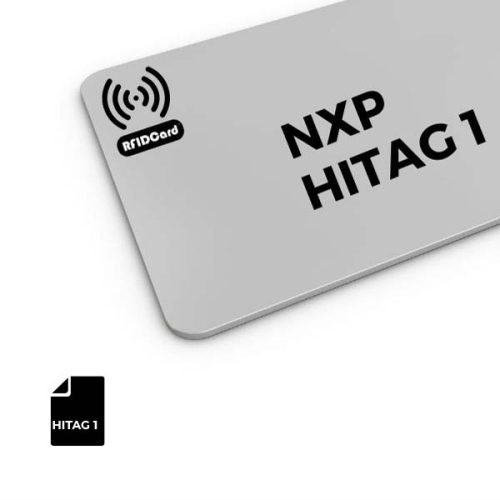
RFID Card CR80 HITAG® 1

The HITAG® 1 RFID card is a high-performance RFID card made from high-quality PVC material, designed for applications like access control, asset tracking, ticket management, and personalized gift cards. It’s durable and suitable for various environments. The card supports 125 kHz RFID communication, offers fast reading and writing capabilities, is compatible with a range of reading devices, ensuring smooth operation in different scenarios, and boasts strong anti-interference capability.In different scenarios, and boasts strong anti-interference capability.