A smart campus refers to an educational environment that uses digital technologies, data, and interconnected systems to improve campus operations, safety, and learning experiences. Rather than managing each function in isolation, smart campuses integrate various services into a unified ecosystem.
1. What Is a Smart Campus?
A smart campus refers to an educational environment that uses digital technologies, data, and interconnected systems to improve campus operations, safety, and learning experiences. Smart campuses integrate various services into a unified ecosystem.
Key characteristics of a smart campus include:
- Digital identification for students and staff
- Automated processes that reduce manual work
- Real-time data collection and analysis
- Enhanced safety and access control
2. The Role of RFID Student Cards in Smart Campus Systems
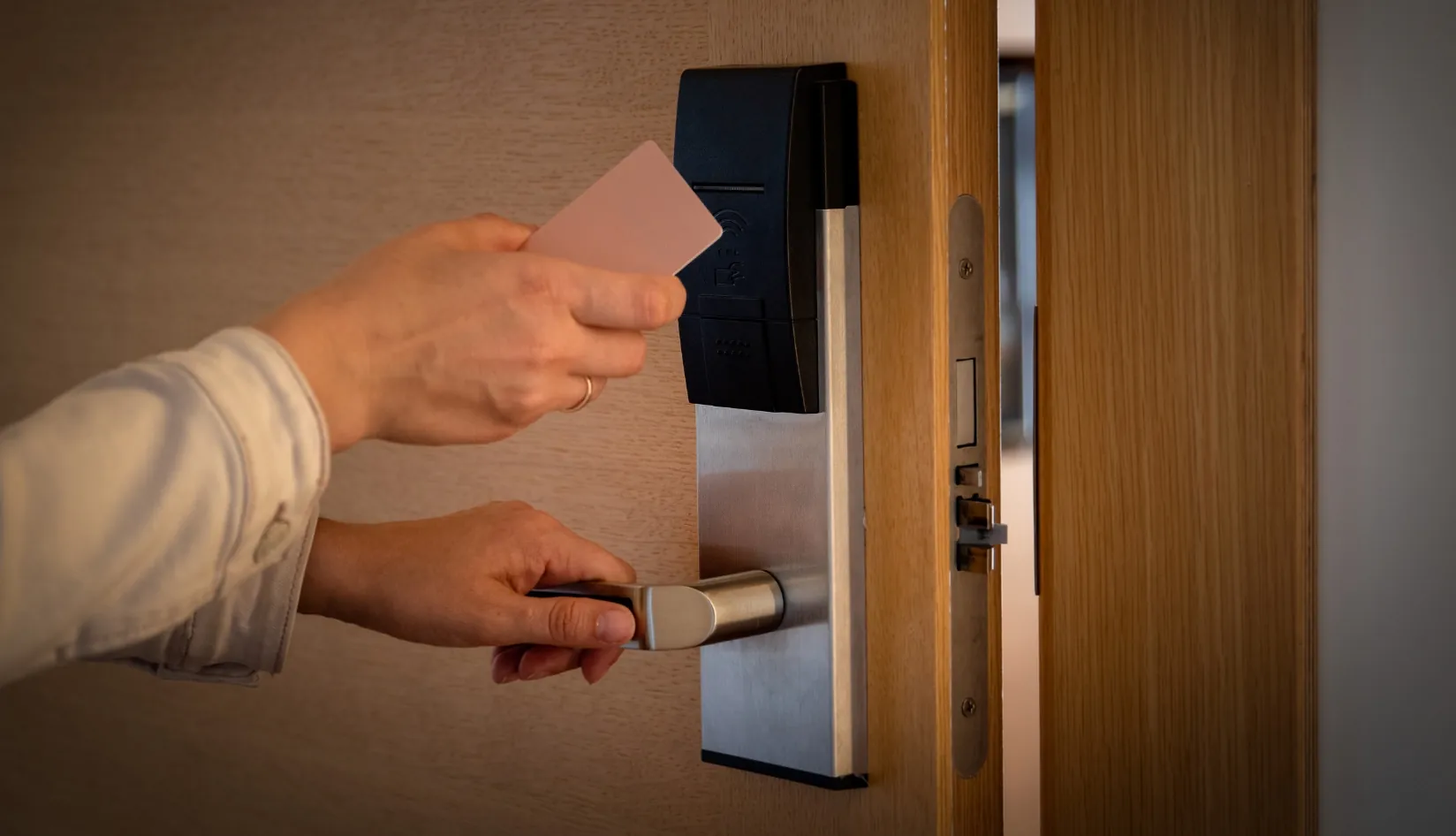
An RFID card is a contactless card embedded with an RFID chip and antenna, allowing it to communicate with compatible readers via radio frequency. When a student taps or brings the card close to a reader, the system instantly verifies their identity and grants access or records activity.

In a smart campus environment, RFID student cards act as a universal credential. They connect students to multiple systems, including access control, attendance management, payment platforms, and library services. Unlike manual ID checks or paper-based systems, RFID technology enables fast, accurate, and automated interactions.
RFID student cards are especially suitable for high-frequency daily use. They do not require batteries, have a long lifespan, and perform consistently even in environments where mobile phones or network connectivity may be unreliable. This makes them an ideal backbone for campus-wide digital systems.
3. Key Smart Campus Applications Enabled by RFID Student Cards
The versatility of the RFID student card allows it to serve as a single, unified credential across a multitude of campus services, dramatically simplifying the student experience and centralizing management for the administration.

3.1 Automated Attendance Management
Attendance tracking is one of the most common and impactful applications of RFID student cards. In classrooms, exam halls, or training sessions, students simply tap their cards at entry points or desk readers.
- Classroom and Exam Attendance: Readers installed at entry points automatically record the time and location of the tap, instantly logging the student’s presence.
- Accurate and Real-Time Data Collection: The data collected is precise, providing administrators with valuable insights into student engagement patterns, facility utilization rates, and compliance with mandatory attendance policies. This data can be used to correlate attendance with academic performance, leading to targeted intervention strategies.
3.2 Access Control and Campus Security
Security is a top priority for any educational institution. RFID student cards enable precise and flexible access control across campus facilities.
- Entry Control for Buildings, Labs, and Dormitories: Only authorized individuals can enter restricted areas. This is vital for securing sensitive locations like research labs, server rooms, and residential halls.
- Zone-Based Access Permissions: Access rights can be dynamically assigned based on a student’s enrollment, major, or status. For example, only engineering students enrolled in a specific course can access the advanced robotics lab during designated hours.
3.3 Cashless Payments on Campus
The convenience of the RFID student card extends directly to financial transactions, facilitating a fully cashless environment across the campus.
- Cafeterias, Vending Machines, Bookstores: Students can link their card to a pre-funded digital wallet or a campus-managed account. A simple tap at the point-of-sale terminal completes the transaction instantly.
- Faster Transactions and Reduced Cash Handling: This dramatically speeds up service lines, and eliminates the security risks and administrative costs associated with handling physical cash.
4. Benefits of Using RFID Student Cards for Smart Campuses
The adoption of RFID technology delivers tangible, multi-faceted benefits that justify the initial investment for educational institutions.
| Benefit Category | Key Advantages | Operational Impact |
| Operational Efficiency | Automated processes, real-time data, reduced manual labor, and faster transaction times. | Lower administrative costs, optimized resource scheduling, and higher staff productivity. |
| Enhanced Safety and Security | Granular access control, real-time location tracking (within the system), and instant identification. | Improved emergency response, secure restricted areas, and better overall student protection. |
| Unified Campus ID | A single credential for all services: attendance, access, payment, and library. | Simplified student life, reduced need for multiple cards, and centralized data management. |
| Scalable and Future-Proof | The underlying RFID infrastructure can easily accommodate new applications and technologies as the campus evolves. | Protects technology investment and allows for phased rollouts of smart campus features. |
| Cost-Effective | Lower long-term maintenance costs compared to biometric systems, and greater functionality than simple magnetic stripe cards. | Excellent return on investment through efficiency gains and reduced losses. |
5. Implementation Considerations for Schools
While the benefits are clear, successful deployment of RFID technology requires careful planning and consideration of several key factors.

5.1 Choosing the Right RFID Frequency and Standard
RFID technology operates across various frequencies, each with different characteristics:
- Low Frequency (LF – 125 kHz): Shorter read range, slower data transfer, but less susceptible to interference. Often used for simple access control.
- High Frequency (HF – 13.56 MHz): Medium read range, faster data transfer, and is the standard for Near Field Communication (NFC). This is the most common choice for multi-application RFID student card systems (payments, library, access) due to its global standardization (ISO/IEC 14443).
Schools must select the frequency that best aligns with their primary use cases, with HF being the preferred standard for unified smart campus credentials.
5.2 Card Durability and Material Options
The card must withstand daily use, exposure to elements, and general wear and tear over several years. PVC is the standard material, but composite materials offer enhanced durability and resistance to bending or cracking. Investing in high-quality printing and lamination ensures the card’s visual integrity and longevity.
5.3 System Compatibility and Integration
The new RFID system must seamlessly integrate with existing core campus systems, including the Student Information System (SIS), Learning Management System (LMS), and financial accounting software. A successful implementation relies on open APIs and robust middleware to ensure data flows smoothly and securely between the physical tap and the digital record.
6. Conclusion
Smart campuses rely on seamless integration, reliable identification, and efficient data flow. The RFID student card plays a crucial role in enabling these capabilities, acting as the bridge between students and the digital systems that power modern education. From attendance and access control to payments and transportation, RFID student cards provide a proven, scalable, and cost-effective solution for schools and universities worldwide. Looking to implement or upgrade an RFID student card solution for your school or campus project? Contact us to request a sample or discuss a customized RFID student card solution tailored to your needs.
Recommended Product
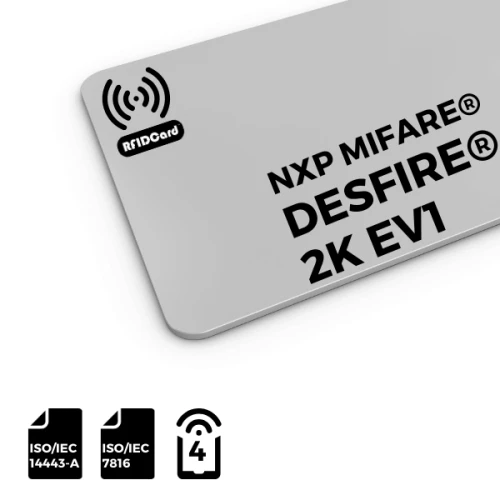
RFID Card CR80 MIFARE® DESFire® EV1 2K

The MIFARE® DESFire® EV1 2K RFID card is a secure, high-capacity contactless smart card ideal for various applications like access control, transportation, and payment systems. It features 2KB of integrated memory, advanced encryption standards for security, and is compatible with existing MIFARE® systems.