Operating a hotel today is more expensive than ever. Rising labor costs, increasing energy prices, higher guest expectations, and the need for improved security all put pressure on hotel owners and operators to find smarter ways to control expenses. In response, many hotels are turning to digital access technologies, with the smart hotel key card emerging as a powerful tool not only for guest convenience but also for cost reduction. Far beyond simply opening a guest room door, a smart hotel key card can streamline operations, improve energy efficiency, and reduce long-term operational costs across the entire property.
1. What Is a Smart Hotel Key Card?
A smart hotel key card is a contactless access credential typically based on RFID or NFC technology. Unlike traditional magnetic stripe cards, smart hotel key cards store encrypted data and communicate securely with compatible door locks, elevators, and hotel management systems. At its core, a smart key card’s primary function is secure room access. However, its “smart” designation comes from its ability to perform multiple functions beyond simply unlocking a door. It acts as a digital identity within the hotel ecosystem, enabling personalized access to various services and areas.

The technology underpinning smart key cards is primarily based on two standards:
- RFID: This technology uses electromagnetic fields to automatically identify and track tags attached to objects. In hotels, the card is the tag, and the door lock is the reader. RFID cards are highly reliable and do not require physical contact with the reader.
- NFC: A subset of RFID, NFC allows for short-range, high-frequency wireless communication. It is the technology that enables guests to use their mobile phones as a digital key, often referred to as Mobile Key, which operates on the same principles as the physical smart card.
- Secure Chips: These embedded microprocessors or memory chips store data securely and can perform cryptographic functions, making them far more resistant to cloning and unauthorized access than magnetic stripes.
2. Reducing Front Desk Labor Costs
Labor is one of the most significant operating expenses for any hotel. Smart key card technology directly addresses this by streamlining the guest journey and automating processes that traditionally required staff intervention.
2.1 Faster Check-in and Check-out Processes
With contactless encoding, front desk staff can issue or reprogram a smart hotel key card in seconds. Many hotels also implement self-service kiosks or mobile-assisted check-in, where guests collect a pre-encoded smart hotel key card without requiring direct staff assistance. This reduces queues, speeds up arrivals, and allows front desk employees to focus on higher-value guest interactions.
2.2 Impact on Staffing Efficiency During Peak Seasons
During high-occupancy periods, the front desk often becomes a bottleneck. By diverting a significant portion of check-ins to automated kiosks, hotels can maintain service speed and quality without having to overstaff. This allows for a leaner, more efficient staffing model, leading to substantial savings in payroll and associated overheads, such as training and benefits. The ability to manage peak demand with existing staff is a direct reduction in variable labor costs.
3. Lower Maintenance and Replacement Costs
The initial cost of a smart key card is higher than a magnetic stripe card, but this is quickly offset by dramatic reductions in maintenance and replacement expenses over the system’s lifespan.

3.1 Long Lifespan
Magnetic stripe cards are inherently fragile. The magnetic strip is exposed to physical wear and tear, and the data is easily corrupted by external magnetic fields (e.g., cell phones, wallets). A smart card, however, protects its electronic components within a durable plastic shell. There is no physical contact required for reading, eliminating the primary source of wear. This extended lifespan means a single card can be reused for hundreds, if not thousands, of guests, drastically lowering the per-use cost.
3.2 Reusability and Easy Reprogram
Smart cards are designed for easy and rapid reprogramming. Once a guest checks out, the card can be instantly wiped and re-encoded for the next guest. This high degree of reusability minimizes the need for continuous bulk purchasing of new cards. Furthermore, the robust nature of the card means that the hotel can maintain a smaller, more reliable inventory of blank or used cards.
4. Energy Cost Savings Through Room Automation
One of the most direct and measurable ways a smart hotel key card reduces operating costs is through energy management.
The smart card reader in the room is not just a lock; it is a critical sensor for the EMS. When a guest inserts their card into the wall-mounted energy-saving switch, it signals to the system that the room is occupied. When the card is removed, the system initiates a pre-programmed energy-saving sequence. This automation prevents one of the most common sources of energy waste in hotels: guests leaving lights or air conditioning running while away from the room. Studies and real-world deployments show that energy savings from card-based power control can range from 20% to 40% per room, depending on location and climate.
For hotels with hundreds of rooms, these savings quickly add up, making the smart hotel key card a powerful tool for long-term utility cost reduction.
5. Enabling Multi-Function Use to Replace Separate Systems
The consolidation of multiple functions onto a single smart hotel key card simplifies operations and eliminates the need for separate, costly systems.

The smart card becomes the guest’s single point of access for the entire property. This is achieved through partitioning the card’s secure chip to hold different access credentials for various readers:
- Room Access: Primary function.
- Elevator Control: Restricting floor access to only the guest’s floor and common areas, enhancing security.
- Parking Garage: Granting temporary access for the duration of the stay.
- Amenities: Access to the fitness center, pool, or executive lounge.
Managing one type of credential (the smart card) is far simpler than managing four or five different types of access tokens. This simplification extends to system maintenance, as IT staff only need to manage a single, integrated access control platform rather than disparate, non-communicating systems.Besides, the multi-functionality of the smart card enhances the guest experience by reducing friction points, which in turn reduces the number of guest inquiries and complaints directed to staff. This indirect labor saving contributes significantly to long-term operational efficiency.
6. Cost Savings at Scale for Hotel Chains and Resorts
For hotel chains and large resorts, the financial impact of smart hotel key card systems is even more significant.
Standardizing on a single smart hotel key card platform across multiple properties allows for centralized procurement, consistent system architecture, and shared training resources. Bulk purchasing reduces per-card costs, while unified software platforms lower IT and support expenses. Additionally, guests enjoy a consistent experience across locations, which strengthens brand loyalty without increasing operational complexity. Over time, this scalability leads to a lower cost per room and a stronger return on investment.
7. ROI Analysis: Short-Term vs Long-Term Savings

The decision to invest in a smart key card system is a capital expenditure, but its justification is rooted in a clear and compelling ROI. The initial investment includes the cost of new smart locks, encoders, and the cards themselves. However, the operational cost reductions begin immediately upon deployment.
| Cost Category | Short-Term Impact (Year 1) | Long-Term Impact (Years 2-10) |
| Labor | Reduced staff time for key re-issuance and check-in/out. | Sustained efficiency, enabling a leaner staffing model. |
| Energy | Immediate 20-40% reduction in utility bills. | Compounding savings as energy costs typically rise over time. |
| Card Replacement | Drastic reduction in annual card procurement. | Near-zero replacement costs for the life of the durable cards. |
| Maintenance | Lower maintenance calls due to reliable, contactless locks. | Reduced system complexity and fewer IT support hours. |
8. Conclusion
The smart hotel key card is far more than a modern convenience—it is a strategic tool for cost control and operational efficiency. By reducing labor demands, lowering energy consumption, minimizing maintenance and security risks, and streamlining daily operations, smart hotel key cards help hotels operate more efficiently in an increasingly competitive market. For hotel owners and operators looking to future-proof their properties while controlling expenses, investing in a smart hotel key card system is not just a technological upgrade—it is a smart business decision. Ready to reduce hotel operating costs? Contact us today to discuss your hotel’s requirements, request samples, or explore customized smart hotel key card solutions designed for modern hospitality environments.
Recommended Product
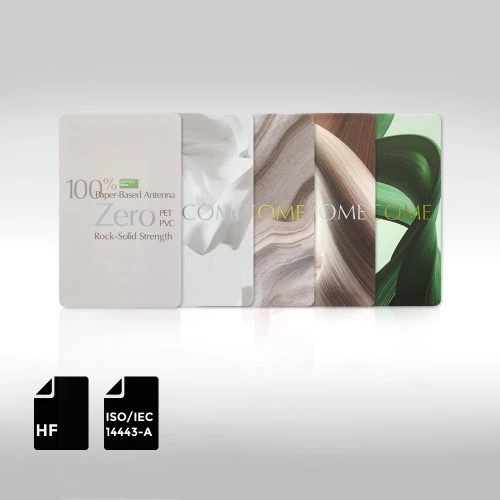
BioPoly™ Stone RFID Card Made with 100% Paper-Based Antenna NXP® MIFARE Ultralight® EV1

The RFID BioPoly™ Stone Card Made with 100% Paper-Based Antenna is designed for brands seeking high performance with a lower environmental footprint. Featuring a Zero PET, Zero PVC paper-based antenna combined with durable BioPoly™ Stone, it delivers rock-solid strength and reliable RFID performance. As the industry’s first developer of paper-antenna RFID cards, we continue to advance eco-friendly RFID solutions through sustainable innovation. Powered by NXP® MIFARE Ultralight® EV1 and compliant with ISO/IEC 14443-A, it is ideal for access control and identification applications.