In the rapidly evolving world of secure identification and access control, printable RFID cards have become indispensable tools for everything from corporate badges and student IDs to loyalty programs and transit passes. The convenience of integrating high-tech RFID functionality with high-quality, personalized visual data is a powerful combination. However, a subtle yet critical factor often determines the success of the final product: the flatness of the card surface. The physical quality of the card—specifically, its flatness—is paramount for achieving professional, durable, and aesthetically pleasing prints.
1. What Causes Uneven Surfaces in Printable RFID Cards
Achieving a perfectly flat card surface is often more challenging than it seems, largely because the very components that make an RFID card functional can also introduce unevenness. Inside every card lies an inlay—consisting of a chip and its surrounding antenna—and its design, thickness, and placement directly affect the surface quality. Even minuscule differences in chip height or antenna structure can lead to subtle bumps or ridges that later appear as printing defects. Beyond this, the lamination process itself is highly sensitive. If pressure or temperature is even slightly inconsistent during production, internal stresses may form, causing the card to shrink, expand, or warp unevenly.
But manufacturing isn’t the only factor. Even a perfectly produced RFID card can lose its flatness through improper handling or storage. Exposure to heat, humidity, or bending can cause materials to deform, creating waves or warps over time. To maintain optimal printability, cards should be stored flat, kept in their original packaging, and placed in a stable, climate-controlled environment until they are ready for use. These precautions ensure that the cards remain as flat and print-ready as the day they were made.
2. Why Ultra-Flat RFID Cards Matter for Printing Performance
The benefits of using ultra-flat printable RFID cards extend far beyond mere aesthetics; they are fundamental to the efficiency, quality, and longevity of the entire card printing operation.

2.1 Better Print Alignment and Color Accuracy
Card printers, especially high-resolution models, rely on the card passing through the print head at a perfectly consistent distance. Any variation in card flatness means the distance between the print head and the card surface changes. This leads to:
- Fuzzy or blurred images: The print head cannot accurately transfer the dye or resin if the card surface is not in the correct focal plane.
- Inconsistent color density: Areas of the card that are slightly raised or depressed will receive more or less heat/pressure, resulting in patchy or uneven color application.
2.2 Enhanced Card Appearance and Brand Image
A card is often the first physical touchpoint a user has with an organization. A card that is visibly warped, has distorted graphics, or shows “ghosting” from the internal components reflects poorly on the brand. Ultra-flat cards allow for crisp, vibrant, and professional-grade printing, reinforcing a positive brand image.
2.3 Higher Durability and Longer Lifespan
When a card is printed on an uneven surface, the printed layer (dye or film) is not applied with uniform adhesion. This can make the card more susceptible to premature wear, fading, and peeling. A perfectly flat surface ensures maximum bonding strength, leading to a more durable card with a longer lifespan.
3. Key Technologies to Achieve Ultra-Flat Printable RFID Cards
Achieving ultra-flatness is a sophisticated engineering challenge that requires specialized manufacturing techniques. RFIDCard employ several key technologies to overcome the inherent unevenness caused by embedded inlays.

3.1 Advanced Inlay Bonding Technology
Instead of simply laminating the inlay, advanced bonding techniques use specialized adhesives and precise pressure control to encapsulate the chip and antenna. This process minimizes the material displacement caused by the inlay, effectively “feathering” the edges of the components into the surrounding plastic layers to create a smoother transition.
3.2 Precision Lamination for Consistent Thickness
This involves using state-of-the-art lamination presses that maintain extremely tight tolerances for pressure and temperature across the entire card sheet. The goal is to achieve a thickness variation of less than 50 microns (0.05 mm) across the card body. This consistency is crucial for ensuring the card feeds smoothly and predictably through the printer.
3.3 Anti-Warping Structural Design
Modern ultra-flat cards are often engineered with a multi-layer structure designed to counteract the internal stresses caused by the inlay. By strategically selecting and layering materials with different thermal expansion coefficients, manufacturers can create a card that remains structurally stable and resists bowing or warping, even under temperature fluctuations.
3.4 High-Frequency Quality Control & Thickness Detection
The manufacturing process incorporates automated, high-speed optical and ultrasonic scanning systems. These systems perform 100% inspection of every card, measuring the thickness and flatness at hundreds of points. Cards that fall outside the extremely narrow tolerance range are automatically rejected, ensuring that only truly ultra-flat stock reaches the customer.
4. Best Practices for Printing on RFID Cards
Even with the highest quality ultra-flat card stock, optimal printing results depend on following best practices for printer operation and card handling.

4.1 Ideal Printer Temperature and Speed Settings
Consult your printer’s manual for recommended settings for PVC or composite cards. Generally, printing on RFID cards may require slight adjustments:
- Temperature: A slightly lower temperature setting can sometimes reduce the risk of the card warping during the printing process, especially with thinner card stock.
- Speed: Printing at a slower speed allows the print head more time to transfer the image accurately, which can compensate for any minor, unavoidable variations in card surface or feed mechanism.
4.2 Proper Card Storage Before Printing
As mentioned, storage is critical. Always:
- Keep card boxes sealed until immediately before use.
- Store cards flat, away from direct sunlight, heat sources, and high humidity.
- Avoid stacking heavy objects on card boxes, which can induce permanent warping.
4.3 Testing a Batch Before Mass Production
Before committing to a large print run, always perform a small test batch (10-20 cards). This allows you to fine-tune your printer settings (temperature, speed, ribbon type) and verify the print quality, color accuracy, and alignment before wasting expensive ribbon and card stock.
5. How to Choose the Right Ultra-Flat Printable RFID Card
Selecting the optimal card requires a holistic view of your application’s requirements, from the physical environment to the printing technology you employ.

5.1 Material Choice
- PVC: Most common and cost-effective, but less durable and more prone to warping under heat.
- Composite (e.g., PVC/PET): Offers better durability, heat resistance, and structural stability, making it a superior choice for ultra-flat construction and long-term use.
- Polycarbonate (PC): Used for highly secure, long-life documents (like driver’s licenses), offering the best flatness and durability, though at a higher cost.
5.2 Thickness Tolerance Standards
Demand cards with the tightest possible thickness tolerance. A standard card might have a tolerance of +/- 100 microns, whereas a premium ultra-flat card should aim for a tolerance of +/- 50 microns or less. This specification is a direct indicator of the card’s manufacturing precision.
5.3 For Heavy Printing Needs: UltraFlat™ Solution
For organizations with high-volume, high-quality printing demands, specialized solutions like the UltraFlat™ technology represent the pinnacle of card engineering. These cards are specifically designed to eliminate the common printing issues associated with embedded inlays, offering a near-perfect printing surface that maximizes print head life and ensures flawless, edge-to-edge results every time. When your application demands the absolute best in print quality and card durability, investing in this level of precision is essential.
6. Conclusion
Flatness in RFID cards is more than a manufacturing detail—it is a critical factor that directly impacts print quality, machine reliability, and overall card durability. Printable RFID cards with uneven surfaces can result in misaligned prints, damaged printers, and a poor representation of your brand. By understanding the causes of unevenness, adopting best practices for printing, and selecting UltraFlat™ ID Card , you can ensure sharp, vibrant, and professional results for every project. Don’t let a subtle warp or bump compromise your security and brand image. Contact our sales team to find the perfect ultra-flat RFID cards for your printing needs today.
Recommended Product
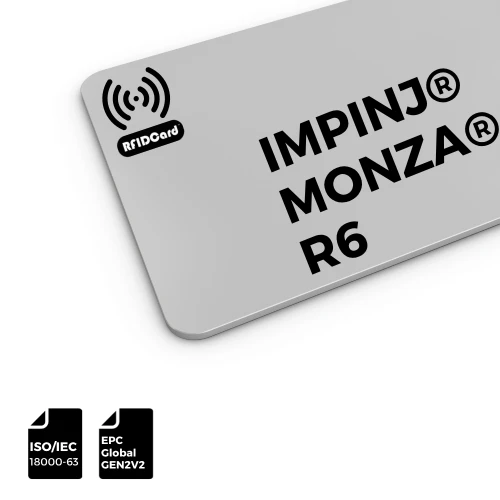
UHF RFID Card Impinj® Monza® R6

Monza® tag chips were the first products based on the EPCglobal UHF Gen 2 standard that introduced by Impinj®. The Monza® R6 UHF RFID card chip includes revolutionary technologies such as automatic performance adjustments and encoding diagnostics.