


The RFID card chip is the “brain” of an RFID card, storing and transmitting data via radio waves to an RFID reader. Incorrect chip selection can lead to compatibility, range, and security issues. This guide will help you understand the basics, identify your needs, and choose the right RFID card chip for your project, ensuring optimal performance and security.
Understand the Basics of an RFID Card Chip

RFID chips are broadly categorized into passive and active types.
Passive chips, predominantly used in RFID cards, draw energy from the reader’s electromagnetic field, making them cost-effective and long-lasting.
Active chips, with their own power source, offer longer read ranges but are larger and more expensive. Key parameters defining an RFID card chip’s capabilities include its frequency, memory, protocol, and security features.
Step 1 — Identify Your Application Scenario
The specific use case of your RFID system is the primary determinant for selecting the appropriate RFID card chip. Different applications demand varying levels of performance, security, and functionality. Clearly defining your project’s requirements from the outset will streamline the selection process and prevent costly errors down the line.
Typical applications:
| Application | Key Requirement | Chip Direction |
| Basic door access | Low cost, UID only | LF 125 kHz |
| Office attendance | Moderate security | HF 13.56 MHz |
| Hotel key card | Encrypted sectors | HF secure chips |
| Campus / employee ID | Multi-application | HF with memory |
| Payment / wallet | High encryption | Secure HF |
| Parking / vehicles | Long range | UHF |
Your scenario narrows 80% of the decision before you even look at chip brands.
Step 2 — Choose the Right Frequency
Frequency determines physics: range, speed, and behavior near materials.
| Frequency | Typical Chips | Read Range | Common Uses |
| LF (125 kHz) | EM4100, TK4100 | Short (up to 10 cm) | Basic access control, animal identification |
| HF (13.56 MHz) | MIFARE, NTAG | Medium (up to 1 meter) | Secure access, payment, public transport, e-ID, NFC applications |
| UHF (860–960 MHz) | UHF Gen2 | Long (several meters) | Supply chain management, parking, vehicle access, race timing |
Step 3 — Check Reader Compatibility
This is where many projects break.An RFID card chip must speak the same protocol as the reader.
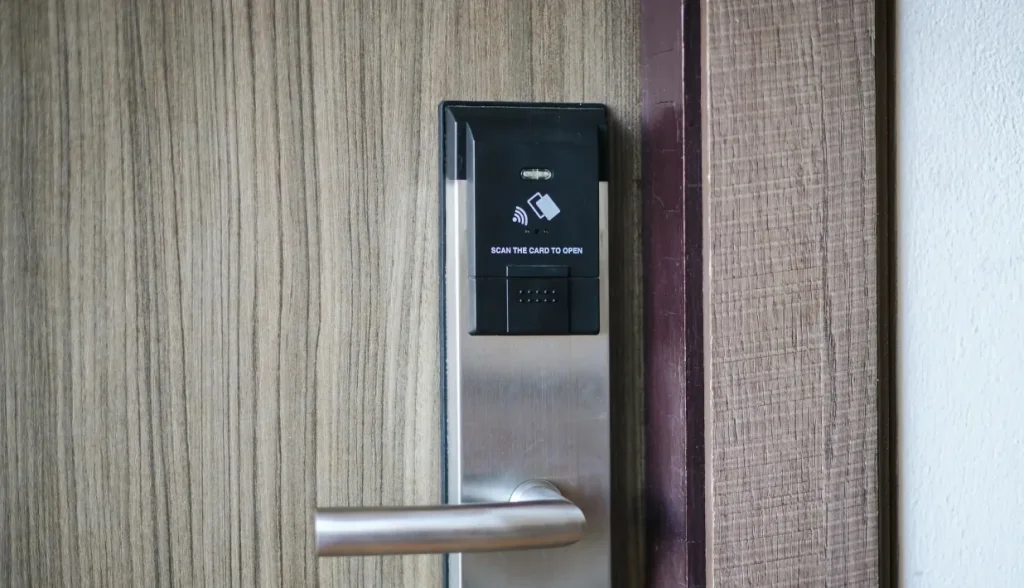
Common standards:
- ISO14443A (most HF access cards)
- ISO15693 (longer HF range)
- EPC Gen2 / ISO18000-6C (UHF)
Before choosing a chip, obtain the reader’s datasheet and confirm:
- Supported frequency
- Supported protocol
- Supported chip families
Step 4 — Decide the Required Memory and Data Structure
The amount and organization of data you need to store on your RFID card chip will dictate its memory requirements. Chips vary significantly in their storage capacity and how that memory is structured.

The memory capabilities of an RFID card chip can range from UID (Unique Identifier) only to extensive user memory. Chips with only a UID are suitable for basic identification tasks where the card’s identity is linked to a backend database. More advanced chips offer user-programmable memory, organized into memory sectors and blocks, allowing for direct storage of additional data on the card.
Larger memory is crucial for applications like hotel key cards, payment cards, and multi-application cards that combine various functionalities. Each of these requires dedicated memory space on the RFID card chip. Careful assessment of data requirements is vital to avoid unnecessary costs or functional limitations.
Carefully assess the data requirements of your project. Over-specifying memory can lead to unnecessary costs, while under-specifying can limit functionality or require system redesigns later.
Step 5 — Consider Security and Encryption Level
Security is a critical consideration for any RFID application, especially when dealing with sensitive data or access to restricted areas. The level of security offered by an RFID card chip varies widely, from basic identification to advanced cryptographic protection. Choosing the right security level is crucial to prevent cloning, eavesdropping, and unauthorized data manipulation.
| Security Level | Typical Chips | Use Case |
| Low | EM4100, TK4100 | Basic doors |
| Medium | MIFARE Classic | Attendance, offices |
| High | MIFARE DESFire, NTAG with protection | Hotels, payment, campuses |
Anti-cloning considerations: Beyond encryption, look for chips that incorporate hardware-based security features, such as unique serial numbers burned into the silicon, secure key storage, and robust authentication protocols, to prevent unauthorized duplication and ensure the authenticity of each RFID card chip.
Step 6 — Budget vs Performance Trade-Off
While cost is always a factor, prioritizing the cheapest RFID card chip can often lead to significant long-term problems and increased overall project expenses. The initial savings on a low-cost chip can quickly be overshadowed by issues related to poor performance, compromised security, or premature failure.

The cost difference versus security and lifespan is a critical consideration. A slightly more expensive RFID card chip often offers superior encryption, better durability, and a longer operational lifespan. Investing in a higher-quality chip upfront can prevent costly security breaches, system downtime, and the need for frequent card replacements. Therefore, it is essential to choose value, not just price, by evaluating the total cost of ownership, including the chip, its expected lifespan, security risks, and future scalability. A chip providing better value may not be the cheapest, but it ensures a better return on investment through system reliability and security.
Common Mistakes to Avoid When Choosing RFID Card Chips

Navigating the complexities of RFID chip selection can be challenging. Avoiding these common pitfalls will help ensure a smoother project implementation:
- Choosing chip before confirming reader protocol
- Selecting LF when HF is required for security
- Ignoring encryption needs
- Not planning for future expansion
- Assuming all 13.56 MHz cards are the same
Conclusion
Selecting the appropriate RFID card chip is a foundational decision that profoundly impacts the efficacy and security of your RFID project. For intricate or large-scale implementations, consulting with experienced RFID experts is highly recommended to navigate complexities and optimize your system for long-term success.
RFIDCard is a professional RFID card manufacturer. Contact us for a tailored RFID solution for your project.
Recommended Product
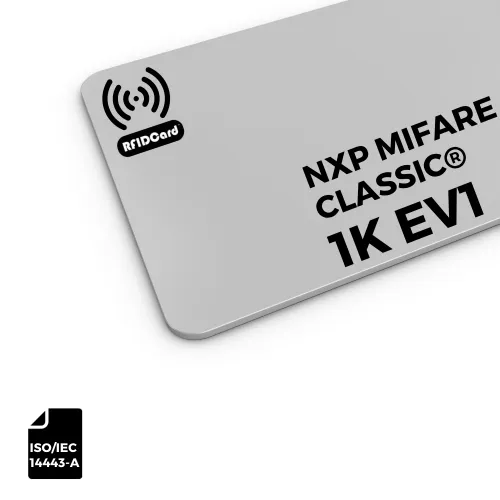
NXP MIFARE Classic® EV1 1K (S50) RFID Card ISO14443-A CR80

The NXP MIFARE Classic® EV1 1K (MIFARE® S50) blank RFID Cards are fully comply with ISO/IEC 14443-A. The RFID cards are made with Photo-quality standard PVC/PET in the size of CR80, which are suitable for use with most thermal transfer card printers.
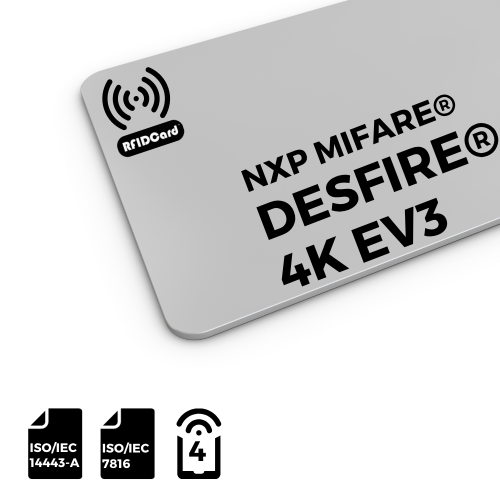
RFID Card NXP MIFARE® DESFire® EV3 4K
Blank or customized printing RFID cards with a choice of dimensions are available. The MIFARE® DESFire® EV3 4K is Common Criteria EAL5+ security certified for smart card IC products. The MIFARE® DESFire® EV3 4K ICs fully comply with NFC Forum Type 4 Tag.



