ID badge cards are widely used for employee identification, access control, visitor management, and event applications. Choosing the right badge size is an important part of creating a practical identification system, as the card dimensions affect printer compatibility, badge holder fit, carrying comfort, and overall user experience.
The most common ID badge size is the ISO/IEC 7810 ID-1 format, also known as CR80, which measures 85.60 × 53.98 mm (3.375 × 2.125 inches). However, different applications may require different formats, materials, or thicknesses. This guide explains standard ID badge sizes, custom options, and key factors to consider when selecting the right badge for your needs.
What is an ID Badge?
An ID badge is a card-based identification tool used for personal identity verification and access control, commonly worn on the chest or hung around the neck. It is widely used in offices, schools, hospitals, and event venues. Typically made of plastic (such as PVC or PET), it is most commonly sized like a credit card (e.g., CR80), and sometimes features a hard shell, clip, or lanyard for added protection and convenience.
Modern ID badges come in various forms, including:
Standard plastic cards: The most common, ideal for printing photos, names, barcodes, or company logos.
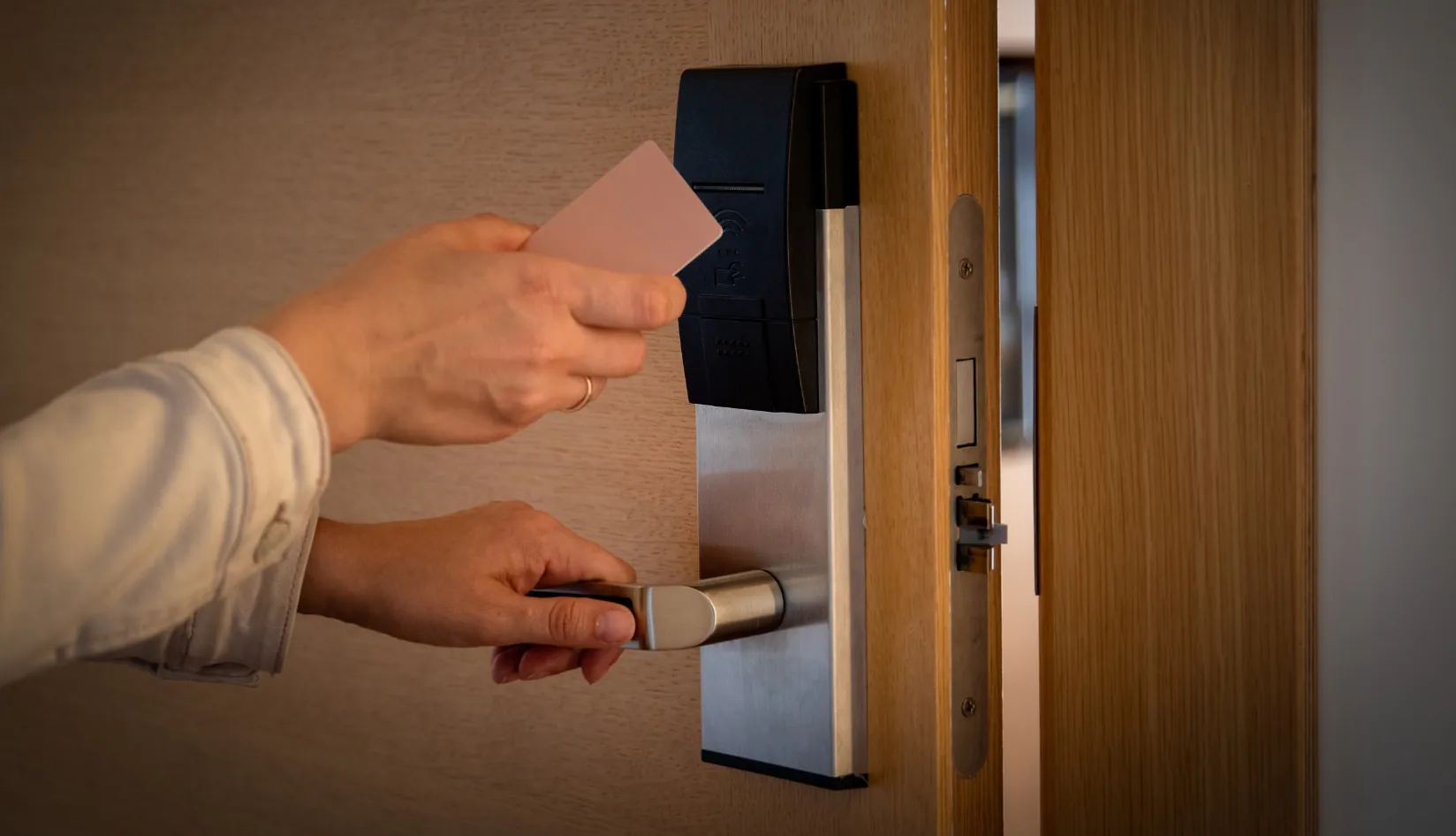
Smart chip or RFID cards: Used for access control systems, allowing contactless entry.
Temporary paper badges: Often issued to visitors or for short-term use during events.
Custom cardholders and wearable devices: Enhance durability and comfort for prolonged wear.
Typical Uses of ID Badges
Employee Identification: Serving as an ID for employees, displaying details like name, position, and department, while promoting the organization’s image.
Access Control: Integrated with access control systems to enable employees or authorized personnel to enter restricted areas like offices and labs.
Visitor Management: Issued to visitors or temporary individuals to regulate and monitor access.
Event Badges: Used at conferences, exhibitions, or events as entry passes, often incorporating QR codes or NFC technology for quick access.
Campus and Healthcare: Managing access for students, faculty, staff, patients, or healthcare workers.
Due to their strong information storage capability, ease of use, and convenience for identification, ID badges have become essential for identity verification and security management in various environments.
Common Standard ID Badge Sizes Explained
When choosing an ID badge, it’s important to understand the various size options available. Below are the most common ID card sizes, widely used in a variety of scenarios such as employee identification, access control, and event passes.
CR80 (85.60mm×53.98mm) — The Most Common Standard Size
The CR80 is the most widely used ID card size, measuring 85.60mm×53.98mm (3.370 inches x 2.125 inches), which is the same size as a credit card. This size offers broad compatibility with most printers, badge holders, and access control readers. It’s perfect for a variety of applications, making the CR80 ID card the standard choice for many businesses and organizations.
Typical Use Cases:
- Employee Identification: Commonly used in companies, schools, hospitals, etc., for identifying employees or students.
- Access Control: Integrated with access control systems to regulate entry to secure areas.
- Membership Cards: Ideal for gyms, clubs, and other membership programs.
CR79 (83mm x 51mm) — Ideal for Cards Inserted into Holders
The CR79 card measures 83mm x 51mm (3.27 inches x 2.01 inches), slightly smaller than the CR80. This size is often used for cards that will be inserted into a badge holder. It is thinner than the CR80, allowing for more flexible card designs while still providing plenty of space for logos or other details.
Typical Use Cases:
- Event Passes: Perfect for conferences, trade shows, or temporary event use to identify visitors or staff.
- Corporate Cards: Some companies use the CR79 size to create cards that are inserted into specific holders for added durability.
CR100 (98.5mm x 67mm) — Used for Exhibitions and Large Visible ID
The CR100 is a larger card, measuring 98.5mm x 67mm (3.94 inches x 2.76 inches), and is used when more display area is needed. This size is typically used at exhibitions, conferences, or events, allowing for clearer visibility of information. The larger dimensions make it easier to display key details such as names, titles, barcodes, or QR codes.
Typical Use Cases:
- Exhibition Passes: Used at large conferences or events, making attendee identification easier and more visible.
- Employee Large Badges: Often used in larger-scale events to enhance visibility and improve access control.
How to Choose the Right ID Badge Size?
Choosing the right ID badge size is not only about functionality and appearance but also directly affects the user experience. Different application scenarios and needs will determine the most suitable size and specifications. Below are the key factors and tips for selecting the right ID badge size.
Determine Size Based on Usage Environment, Frequency, and Identification Needs
When choosing the size of an ID badge, the first thing to consider is its usage environment, frequency of use, and identification requirements. For example:
Access Control and Security Identification: If the ID card is used for access control or security purposes, it’s recommended to choose the standard 85.60mm×53.98mm size. This size is compatible with most access control readers and allows for quick identification. If a larger display area or integration of barcodes/QR codes is required, consider CR100 (98.5mm x 67mm).
Temporary Events and Visitor Management: For short-term event badges, especially for large exhibitions or conferences, the CR79 (83mm x 51mm) size is ideal. This smaller size is easy to carry and wear, fits well in a card holder, and meets basic identification needs.
High-Frequency Use: For ID cards that need to be frequently carried and have higher durability, choose a PVC material in the standard CR80 size. Ensure the card is scratch-resistant and durable to extend its lifespan.
How Card Holders, Lanyards, Clips, and Other Accessories Impact Size Selection
In addition to the size itself, the accessories for the ID card also play a significant role in the size selection process. For example:
Card Holders: If you plan to place the ID card into a card holder, the size and thickness of the card holder will affect the size of the card you choose. CR80 cards can easily fit into most standard card holders, while CR79 and CR100 sizes may require specially designed holders.
Lanyards and Clips: Some ID cards need to be worn with lanyards or clips. The size of the ID card is a key factor in selecting the right lanyard or clip. For example, larger CR100 cards may require larger lanyards or clips, while the standard CR80 cards are compatible with most common lanyards and card clips.
Standard vs. Custom Size Decision Flowchart
When choosing the size for your ID badge, standard sizes and custom sizes are two main options.
Standard Size Recommendation: Best for corporate employees, schools, hospitals, etc., usually using CR80 (credit card size). Standard sizes are ideal for most identification needs and are widely compatible, cost-effective.
Custom Size Recommendation: Best for special designs or display needs, such as exhibitions, conferences, or large events. Custom sizes can provide more space for display or add special design elements based on branding requirements.
Pros and Cons of Common ID Badge Sizes
| Size | Pros | Cons | Ideal Usage |
| CR80 | Most common, widely compatible, standard size | Relatively small display area | Employee ID cards, membership cards, access cards |
| CR79 | Suitable for card holders, compact and easy to carry | Smaller display area | Event badges, temporary ID cards, short-term use |
| CR100 | Larger display area, ideal for showcasing information | May not be suitable for long-term wear | Exhibitions, event badges, large conferences |
By considering these factors, you can select the most appropriate size to meet your needs, ensuring the ID card performs effectively and offers the best user experience.
Conclusion
When choosing the right ID badge size, both standard and custom options have their advantages. Standard sizes like CR80 and CR79 are typically the go-to choice for most businesses and organizations due to their wide compatibility and versatility. On the other hand, custom sizes offer greater flexibility, especially for scenarios that require specific designs or display needs, such as trade shows, events, or brand promotion.
It’s crucial to select the size and design that best meet your specific needs. Whether opting for a standard size or a custom solution, make sure your ID badge not only fulfills functional requirements but also provides the best visual and user experience. If you’re unsure about your choice or need a tailored solution, feel free to contact us for expert guidance to help you make a more informed decision.
FAQs
Can ID badge sizes be standardized across multiple locations or branches?
Yes, ID badge sizes can be standardized across multiple locations or branches. By choosing a standard size like CR80 or CR79, companies can ensure uniformity across all offices, reducing confusion for employees and visitors. Standardizing badge sizes makes it easier for the organization to manage the badges, simplify printing, and maintain consistency across locations.
How does the material of an ID badge affect its durability?
The material of an ID badge plays a crucial role in its durability. PVC is the most common and durable material, offering resistance to wear, tear, and environmental factors. For added durability, PET material is another good choice, especially for outdoor use or extreme conditions. Paper badges are more affordable but less durable, making them ideal for short-term use, such as for events or visitor passes.
What are the environmental impacts of using plastic ID badges?
Using plastic ID badges, especially those made of PVC, can have environmental impacts due to their non-biodegradable nature. However, some companies are moving towards more eco-friendly alternatives like recycled PET or biodegradable materials. By opting for sustainable badge materials and adopting recycling practices, businesses can reduce their carbon footprint while still maintaining effective identification systems.