In today’s fast-paced digital world, convenience and speed have become the driving forces behind every innovation in payment technology. The “tap-and-go” revolution—made possible by radio frequency identification technology—has transformed the way consumers interact with businesses. Each time a user taps their card, a series of invisible yet complex data exchanges takes place in just a fraction of a second. But have you ever wondered what exactly happens inside the RFID card when you simply hold it near a reader? The technology that powers this seamless experience is both elegant and intricate, combining microchips, antennas, and encrypted communication to make every transaction secure and effortless.
1. What Is an RFID Card and How Does It Work?

RFID stands for Radio Frequency Identification, a technology that enables wireless data exchange between a card and a reader using electromagnetic fields. Unlike traditional magnetic stripe cards that require physical contact, RFID cards allow users to make payments or verify access simply by bringing the card within range of a compatible reader.
At its core, an RFID card consists of three main components: a microchip, an antenna, and a substrate (the layer that holds the chip and antenna together). When you tap your card on a terminal, the reader emits a radio frequency signal. This signal energizes the antenna coil embedded within the card, which in turn powers the microchip. The chip then transmits encrypted data—such as a payment token or identification number—back to the reader.
2. Inside the RFID Card: The Hidden Technology
To truly appreciate this technology, let’s take a closer look at what’s happening inside the RFID card. Beneath the sleek plastic surface lies a precisely engineered network of components that make contactless communication possible.
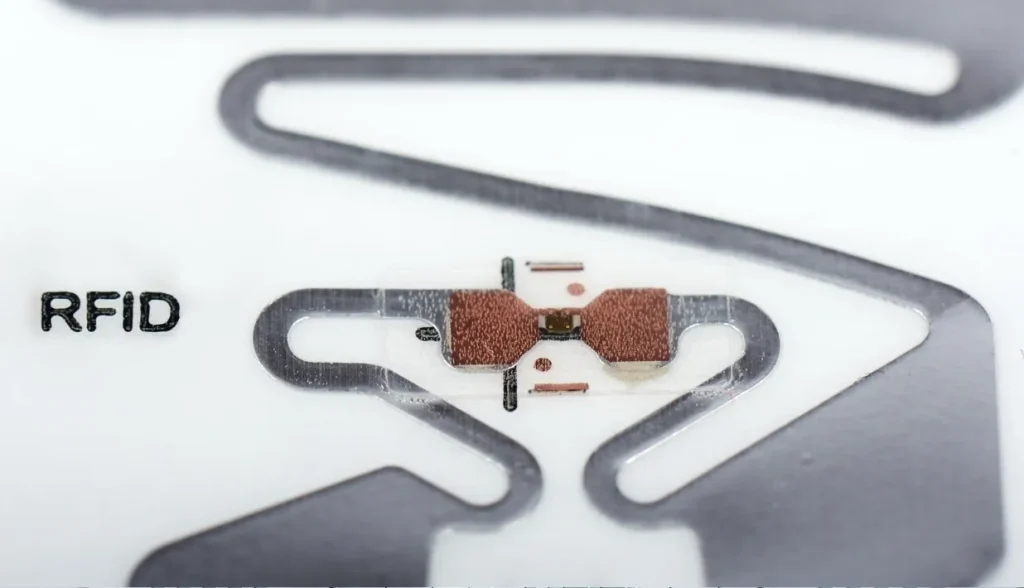
The Microchip : The heart of every RFID card is its microchip. This tiny silicon component stores critical information such as encrypted account details or unique identification codes. It also contains the card’s operating logic—the set of instructions that determine how it communicates with a reader. Some chips even feature advanced encryption engines, supporting standards like AES or EMV to secure sensitive data during transmission.
The Antenna Coil: Surrounding the microchip is an ultra-thin copper or aluminum coil, which serves as the card’s antenna. When a reader emits a radio signal, the antenna captures that energy and converts it into an electrical current to power the chip. It also acts as a transmitter, sending data back to the reader through modulated radio waves.
The Substrate Layer: The substrate acts as the backbone of the RFID card. It is typically made of durable materials like PVC, PET, or polycarbonate, ensuring flexibility and resilience. It holds the chip and antenna securely in place, protecting them from bending, moisture, and wear.
3. The Science Behind Tap-and-Go Transactions
When you tap your card on a terminal, an impressive chain of events unfolds almost instantaneously. Here’s a simplified breakdown of what happens within that split second:
The Reader Sends a Signal: The terminal generates a low-power radio frequency field.
The Card’s Antenna Responds: The antenna coil in the card captures this energy, which powers the microchip.
The Chip Activates: Once powered, the chip transmits encrypted data, such as a unique transaction token or account reference number.
Data Verification: The reader and backend system authenticate the card’s data using encryption protocols.
Transaction Completion: Upon verification, the payment or access request is approved—typically in less than 500 milliseconds.
Security lies at the heart of this process. Modern RFID payment cards adhere to strict standards such as EMV (Europay, MasterCard, Visa), which prevent unauthorized data duplication or “skimming”. In addition, advanced encryption methods like AES ensure that even if data were intercepted, it would be useless without the proper cryptographic keys. This invisible exchange between card and terminal makes the technology inside RFID cards not only convenient but also highly secure.
4. Real-World Applications of RFID Tap-and-Go Cards
The convenience of tap-and-go transactions powered by RFID technology extends far beyond retail payments. Today, RFID cards have become a universal key for accessing, paying, and verifying identity across multiple industries.
4.1 Banking
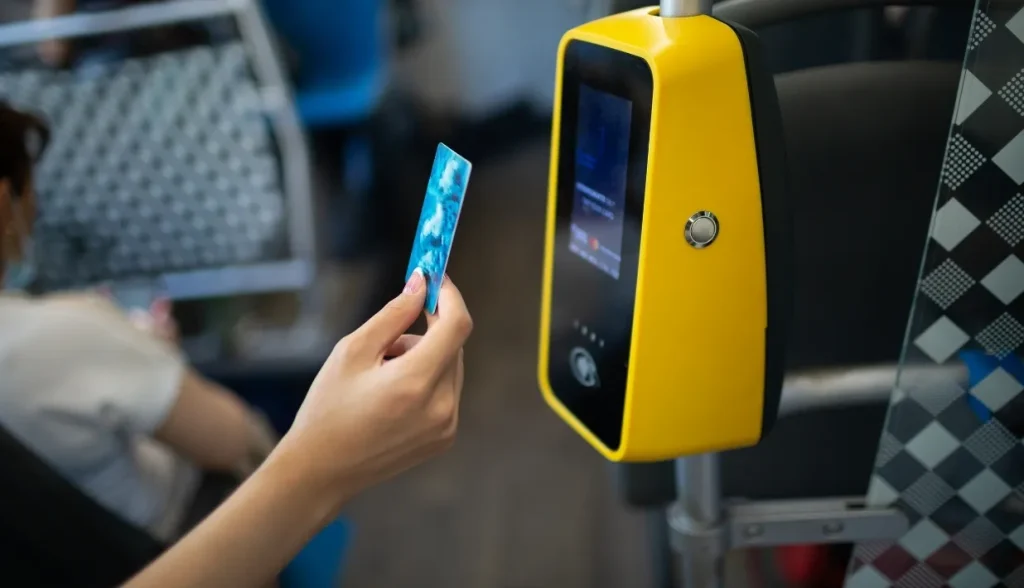
Most modern debit and credit cards now come with RFID or NFC chips, allowing users to pay for goods and services without swiping or inserting. The data inside the RFID card is instantly transmitted in encrypted form, authorizing the transaction securely within seconds. Banks have adopted advanced encryption protocols like EMV and tokenization, ensuring that sensitive financial data—such as card numbers or personal identifiers—is never exposed during transmission. Inside RFID card, the plastic contains encrypted financial data that communicates with point-of-sale terminals for instant payment authorization. This minimizes physical contact, speeds up checkout.
4.2 Transportation Systems
One of the most visible and successful implementations of RFID technology can be found in public transportation. Millions of commuters rely on contactless fare cards every day. Each tap at a station gate or bus terminal triggers an RFID transaction that deducts the correct fare from a stored balance or linked account—instantly and without human assistance. Beyond convenience, RFID-based transit cards contribute to smoother traffic flow and more sustainable city planning. They reduce congestion at ticket counters, cut down on paper tickets, and allow transit authorities to gather anonymized travel data for improving service efficiency.
4.3 EV Charging Networks
The electric vehicle ecosystem has also greatly benefited from RFID technology. EV charge cards, often equipped with RFID capabilities, allow EV drivers to initiate charging sessions with a simple tap at compatible charging stations. This bypasses the need for multiple apps, QR code scanning, or unreliable mobile signals, providing a consistent and convenient user experience, especially in areas with poor connectivity. The reliability of the RFID technology ensures that drivers can access power when they need it most.
5. Conclusion
As the world continues to embrace digital transformation, contactless systems will play an even greater role in shaping how people pay, travel, and interact. The technology inside RFID cards—microchips, antennas, encryption, and energy transfer—represents the foundation of a truly connected society. The next time you tap your card at a checkout or ticket gate, remember that a sophisticated process is taking place within milliseconds. The RFID card inside your hand is more than just plastic—it’s a miniature marvel of science, engineering, and trust that makes modern life flow effortlessly.
Recommended Product
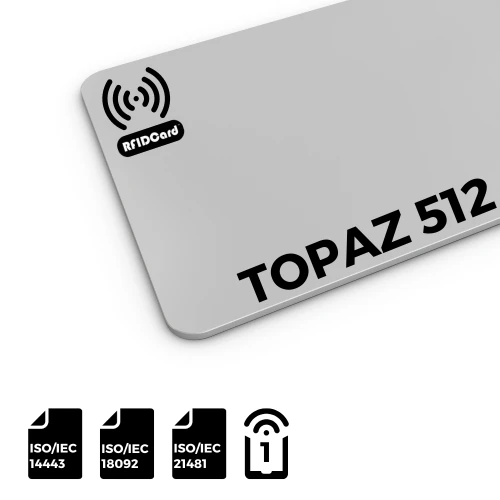
NFC Card Topaz512 | NFC Tag Type 1

The Topaz512 IC fully comply to NFC Forum Type 1 Tag and ISO/IEC 14443A specifications., the Topaz512 NFC card is uniquely identified by a 7 bytes UID with 454 bytes of user memory.