When businesses look for reliable contactless smart card solutions, the global standard that consistently appears at the center of all discussions is ISO/IEC 14443. This international specification defines how 13.56 MHz contactless cards communicate, ensuring interoperability, security, and stable performance across a wide range of applications. Within this standard, two protocol families—Type A and Type B—play crucial roles in shaping the modern landscape of RFID cards, smart payments, transport ticketing, identity verification, and secure access control. Understanding the differences between ISO/IEC 14443 Type A and Type B is essential for system integrators, card manufacturers, solution providers, and enterprises evaluating the most suitable RFID technology for their operations. This article aims to demystify the technical nuances of ISO/IEC 14443 Type A and Type B, providing a detailed comparison and a practical framework to help you select the optimal technology for your specific needs.
1. Understanding ISO/IEC 14443
1.1 What ISO/IEC 14443 Defines
The International Organization for Standardization (ISO) and the International Electrotechnical Commission (IEC) collaboratively developed the ISO/IEC 14443 standard to ensure interoperability and reliability for proximity cards. The standard is comprehensive, defining the physical characteristics of the card, the power and signal interface, and the communication protocols. Specifically, it mandates operation at the globally harmonized High Frequency (HF) of 13.56 MHz. This frequency allows for inductive coupling between the card (PICC) and the reader (PCD), enabling a contactless operating distance typically up to 10 centimeters. Crucially, the standard also defines the anti-collision mechanism, which allows a reader to communicate with a single card even when multiple cards are present in the reader’s field. This anti-collision protocol is a cornerstone of the standard’s utility in high-throughput environments like transit gates.
1.2 The Two Protocol Families: Type A & Type B
Within the framework of ISO/IEC 14443, two distinct and non-interoperable communication protocols exist: Type A and Type B. Both types are widely used and globally supported, but they differ fundamentally in their modulation and coding schemes. This difference influences their communication characteristics, interoperability, and historical application preferences. However, the security level of a contactless system mainly depends on the specific chip architecture, encryption features, and system implementation. While a single reader can be designed to support both protocols, a card is typically manufactured to support only one. The choice between Type A and Type B is therefore a foundational decision in the design of any contactless system.
2. ISO/IEC 14443 Type A Overview

2.1 Key Technical Features
Type A uses amplitude shift keying (ASK) modulation with a 100% modulation index and a specific coding scheme known as Modified Miller coding. The anti-collision mechanism used in Type A is relatively simple and efficient, making it well-suited for environments where cards need to be read quickly, such as transit gates or access control doors.
Key characteristics include:
- ASK modulation
- Modified Miller coding
- Efficient anti-collision
- Fast response times
2.2 Common Chip Types Supporting Type A
The Type A protocol is the foundation for some of the most widely deployed contactless chips in the world. The most notable family is the MIFARE series from NXP Semiconductors, which includes:
- MIFARE Classic: The original, highly popular chip used extensively in transit and access control systems globally.
- MIFARE Ultralight: A low-cost, disposable option often used for event ticketing.
- MIFARE DESFire: A highly secure, advanced chip family that supports sophisticated encryption and file structures, often used in multi-application environments.
Additionally, many NTAG products, such as NTAG213, NTAG215, and NTAG216, are based on the NFC Forum Type 2 Tag specification and operate under the Type A protocol. More advanced products, such as NTAG424 DNA, support NFC Forum Type 4 Tag specifications while also using the Type A protocol. This broad ecosystem of compatible chips has cemented Type A’s position as a dominant choice for consumer-facing and high-volume applications.
2.3 Applications
The characteristics of Type A—namely its low cost, high-speed anti-collision, and established ecosystem—make it ideal for applications where convenience and rapid transaction times are paramount. Key application areas include:
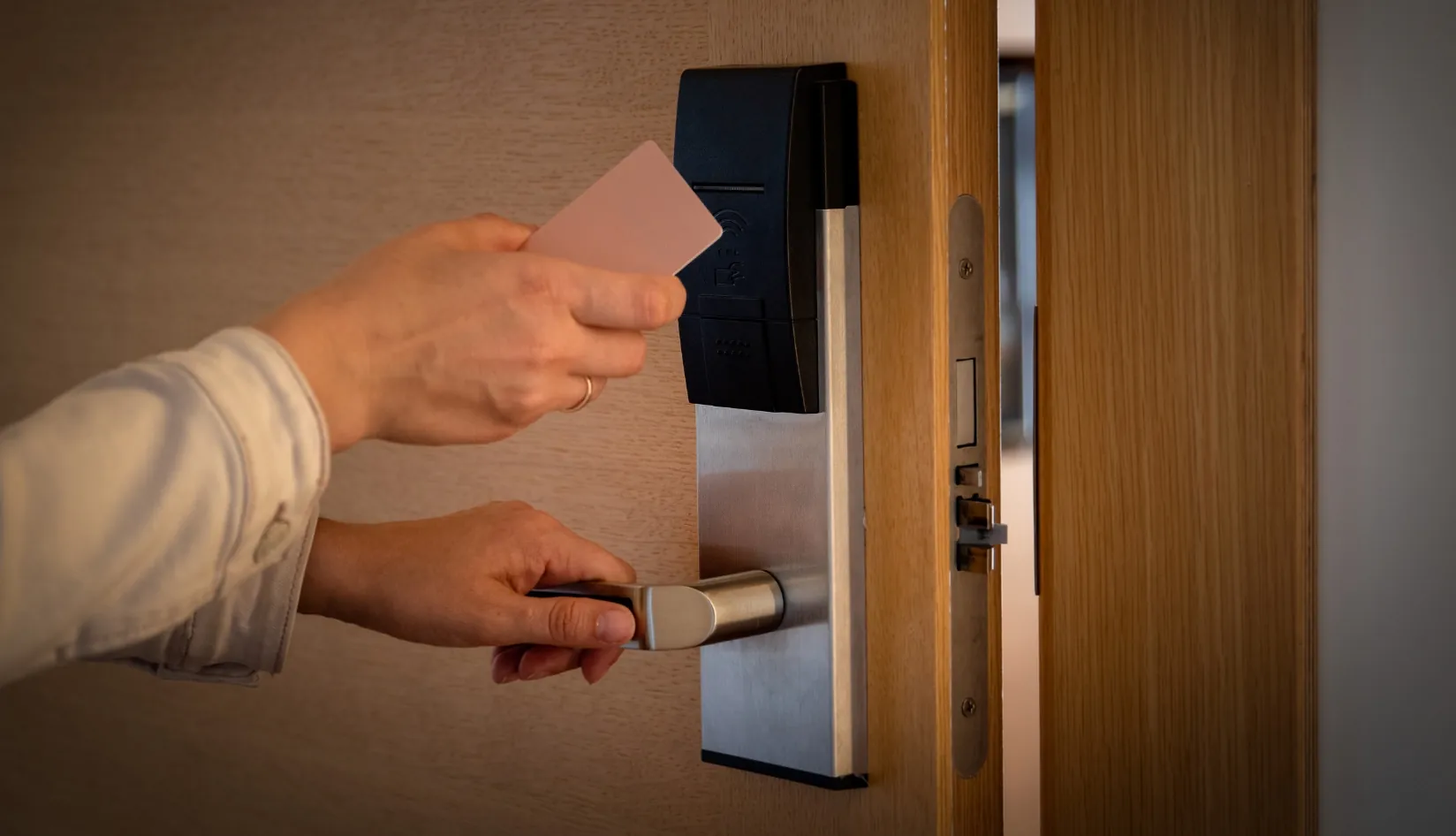
- Access Control: Corporate badges, hotel key cards, and residential entry systems.
- Transportation & Ticketing: Mass transit systems (subways, buses) where speed at the turnstile is critical.
- Smart Payments: Contactless debit and credit cards and mobile payment systems.
- Corporate ID Cards: Multi-functional cards used for physical access, logical access, and cashless vending.
3. ISO/IEC 14443 Type B Overview
3.1 Key Technical Features
Type B uses different modulation and coding schemes compared to Type A. It employs ASK modulation with a lower modulation index and uses NRZ (Non-Return-to-Zero) coding. Type B’s anti-collision method is also more robust for certain identity applications and tends to operate with extremely stable communication timing.
Key characteristics include:
- ASK modulation with a lower index
- NRZ coding
- Strong signal robustness
- Highly stable communication frame timing
3.2 Common Chip Types Supporting Type B
While Type A dominates many commercial and consumer applications, Type B has been widely adopted in certain government, identity, and transportation programs where specific standards and interoperability requirements influence technology selection. Common chip types and platforms supporting Type B include:
- ST25TB04K: A widely used chip in various secure applications.
- CIPURSE: An open security standard for transport and mobile payment applications, which can be implemented on Type B hardware.
- CEPAS (Contactless e-Purse Application): A standard used in Singapore for public transport and retail payments, often implemented using Type B.
3.3 Applications
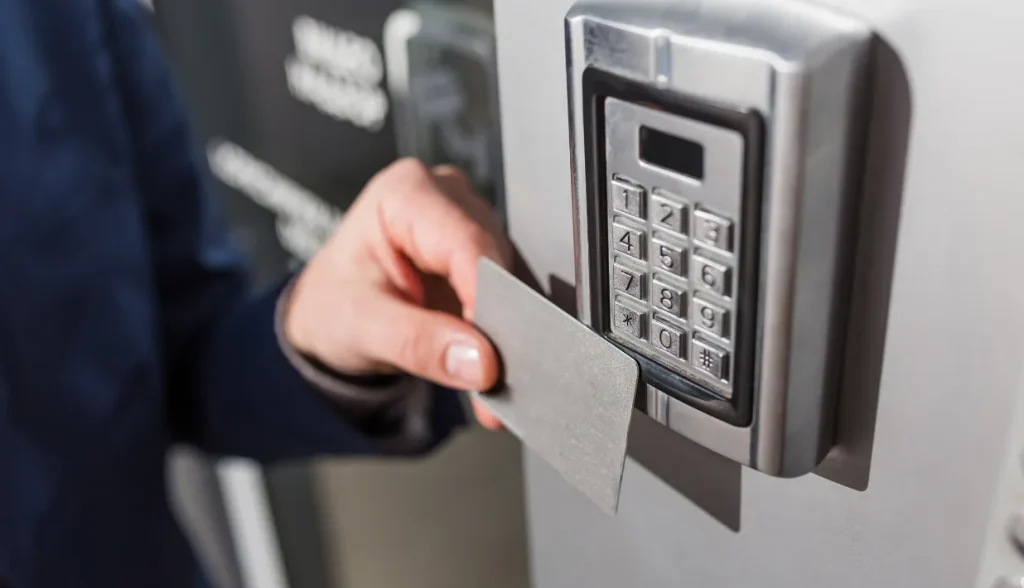
Type B has been adopted in various government and identity-related applications due to ecosystem requirements, established standards, and compatibility considerations. The security of these systems depends on the specific chip, cryptographic mechanisms, and application design rather than the Type B protocol alone. Key application areas include:
- National ID Cards: Many countries, particularly in Europe and Asia, have adopted Type B for their electronic national identity cards under the requirements of their individual identity-card programs.
- e-Passports: The International Civil Aviation Organization (ICAO) standard for machine-readable travel documents (MRTDs) often uses contactless technologies based on ISO/IEC 14443, with implementations depending on national specifications and security requirements. These systems rely on secure chips, cryptographic protocols, and standardized data structures to support interoperability.
- High-Security Authentication: Any system where data integrity and non-repudiation are paramount, such as secure government access or military applications.
4. Type A vs. Type B: A Detailed Comparison
The differences between Type A and Type B are rooted in their physical layer specifications, which cascade into practical differences in performance, security, and suitability. Understanding these technical distinctions is key to making an informed choice.
4.1 Communication Protocol & Response Speed
Although both fall under the ISO/IEC 14443 standard, Type A and Type B use different modulation and coding schemes. These differences impact sensitivity, interference resistance, and overall behavior in various environments.
- Type A is optimized for speed and general usage.
- Type B prioritizes stability and precision in timing, which is critical for government and identity systems.
Both protocols are capable of the same maximum data rates. However, in real-world use, the speed is often determined by the efficiency of the anti-collision protocol and the complexity of the security handshake. Type A uses a bit-oriented anti-collision mechanism that has contributed to its widespread use in high-volume applications such as transit and access control. Type B uses a different anti-collision approach designed around its own communication structure. In practice, transaction speed depends not only on the protocol type but also on the chip design, reader implementation, and application requirements.
4.2 Security Features
While the ISO/IEC 14443 standard itself defines the communication layer, the security of the overall system is largely determined by the cryptographic features implemented on the chip. Historically, some Type B implementations were adopted in government and identity-related projects due to standardization and interoperability requirements. However, modern Type A chips, such as MIFARE DESFire, offer state-of-the-art security, including support for advanced encryption standards like Triple DES (3DES) and Advanced Encryption Standard (AES). The choice of security is now less about the protocol (A or B) and more about the specific chip and the cryptographic implementation.
4.3 Use-Case Suitability
The practical suitability of each type can be summarized by their core strengths:
- Type A: Excels in convenience-focused scenarios and everyday consumer use. Its low cost and high-speed anti-collision make it the champion of mass-market applications like public transport and basic access control.
- Type B: Commonly found in applications where government, identity, and interoperability requirements influence technology selection. Security depends on the specific chip and system architecture.
The differences between Type A and Type B are mainly related to their communication protocols, including modulation, coding, and anti-collision methods. These protocol differences may influence system design and application suitability, while overall security depends primarily on the chip architecture, cryptographic features, and system implementation.
| Feature | ISO/IEC 14443-A | ISO/IEC 14443-B |
|---|---|---|
| PCD to PICC Modulation | 100% ASK | 10% ASK |
| PICC to PCD Coding | Manchester coding | NRZ-L coding |
| Anti-Collision Method | Bit-oriented anti-collision | Slot-based anti-collision |
| Communication Characteristics | Widely adopted, with a broad ecosystem of compatible cards and readers | Designed for reliable communication and used in various identification applications |
| Common Chip Examples | MIFARE® Classic, MIFARE® Plus, MIFARE® DESFire®, NTAG® (depending on model) | ST25TB series and other ISO/IEC 14443-B compatible chips |
| Common Applications | Access control, public transportation, event tickets, NFC-related applications | Government identification, e-passports, specialized transport and identification systems |
5. How to Choose Between Type A and Type B

Selecting the right protocol requires a careful evaluation of your project’s specific requirements against the inherent strengths of each type. Here are the key decision factors to consider:
Key Decision Factors
- Security Requirements: If your application involves sensitive personal data, government credentials, or high-value financial transactions, Type B’s historical adoption in certain government and identity programs may be a factor when compatibility with existing standards or infrastructure is required. However, if you are using modern, secure chips (like MIFARE DESFire), Type A can offer comparable cryptographic security. Focus on the chip’s security features rather than the protocol type alone.
- Performance Expectations: For applications where speed is the absolute priority—such as a subway turnstile that must process hundreds of transactions per minute—Type A’s highly efficient bit-oriented anti-collision mechanism often provides a slight edge in initial card identification and throughput.
- Infrastructure Compatibility: Existing infrastructure should be evaluated at both the protocol and system levels. While many MIFARE products use ISO/IEC 14443-A, compatibility depends on the specific chip, reader support, security keys, and application configuration. A Type A card is not automatically interchangeable with an existing MIFARE system. Always verify compatibility before migration or deployment.
6. Conclusion
ISO/IEC 14443 remains one of the most important global standards for contactless smart cards, powering some of the world’s most widely deployed RFID systems. While both Type A and Type B offer reliable performance and compatibility, their differences matter when designing or upgrading an RFID system.
Type A stands out for its speed, cost-effectiveness, and versatility. Type B has been used in various government, identity, and transportation applications where specific standards and interoperability requirements are important. However, the overall security and reliability of a contactless system depend on the selected chip, encryption technology, and system design.
We provide high-quality ISO/IEC 14443 Type A and Type B RFID cards, supporting various chip options including MIFARE Classic, DESFire, and ST25TB04K. Whether you need custom card printing, encoding services, high-security applications, our team can help you choose the best solution for your project.
Recommended Product
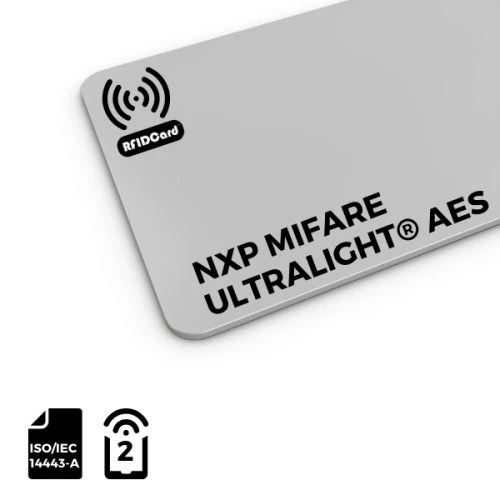
MIFARE Ultralight® AES PVC RFID Card

MIFARE Ultralight® AES PVC card is a contactless smart card based on MIFARE Ultralight AES chip, which supports AES encryption authentication, provides excellent performance and security, and is the highest security card in the MIFARE Ultralight® series. The card is made of PVC material and is widely used in access control, public transportation, ETC, events management, etc.

RFID Card ST25TB512 ISO14443-B CR80
The ST25TB512 CR80 RFID Card is a high-performance contactless smart card featuring 512-bit user EEPROM, ISO 14443 Type B compliance, and secure data protection with a unique 64-bit UID and password authentication. With fast 106 kbps data transfer, anti-collision capability, and durable CR80 format, it is ideal for access control, ticketing, and secure identification applications.