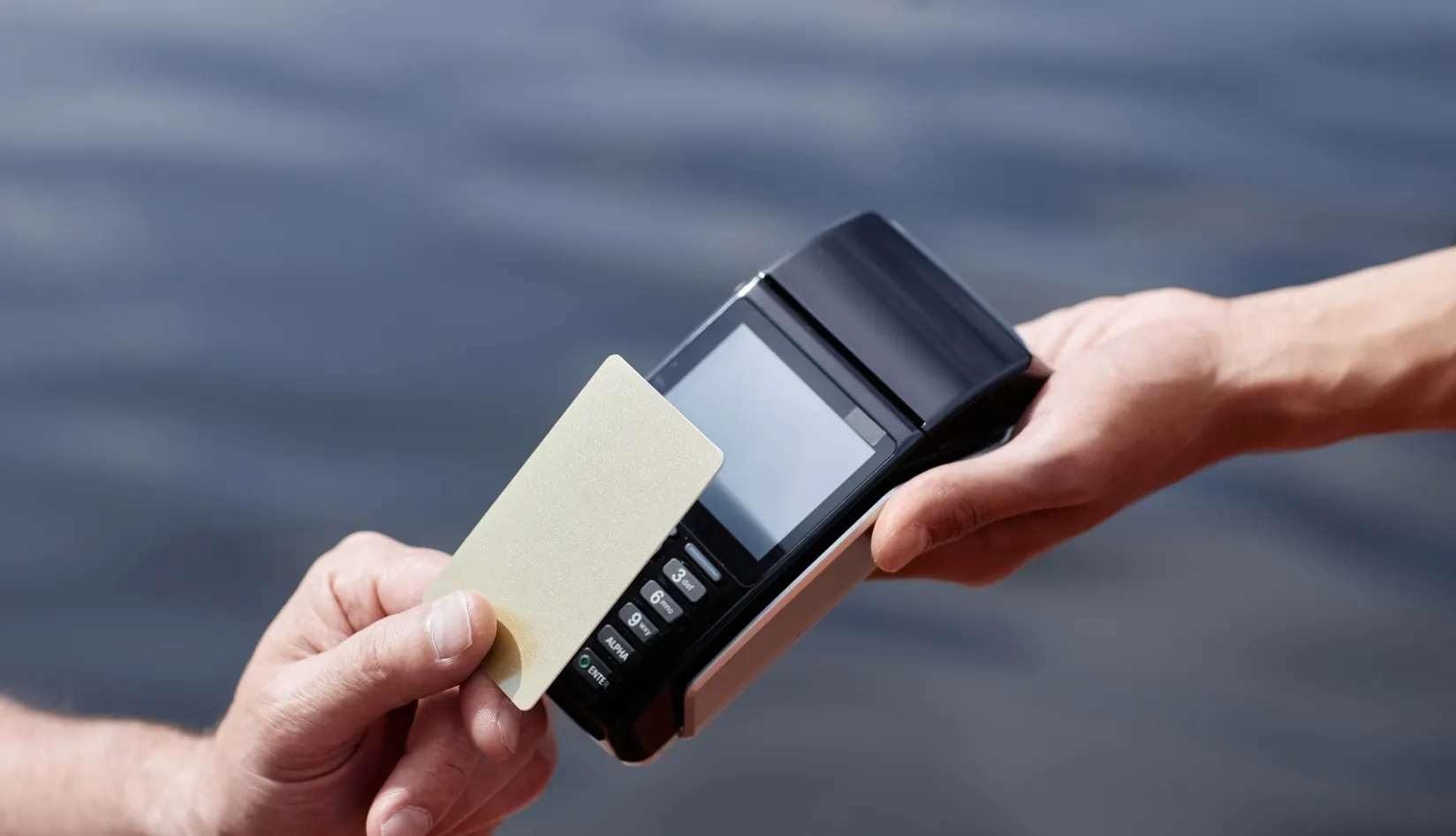
Contactless payments have become a daily habit for consumers around the world, whether tapping a bank card, smartphone, or wearable at a point-of-sale terminal. At the heart of this experience lies a critical but often misunderstood factor: payment distance. Many people assume that contactless payments work “wirelessly” over a wide range, but in reality, NFC payments are designed to function only within a very short distance. Understanding NFC payment distance—both in theory and in real-world usage—is essential for businesses, system integrators, and card buyers who want reliable, secure, and user-friendly payment solutions.
1. What Is NFC Payment Distance?
NFC payment distance refers to the maximum physical gap between an NFC-enabled payment device (such as a card, phone, or wearable) and a reader where a payment transaction can still be successfully completed. Unlike long-range RFID technologies, NFC technology operates in the high-frequency (HF) band at 13.56 MHz and relies on a principle called inductive coupling.
Instead of transmitting signals over long distances like Bluetooth or Wi-Fi, NFC creates a small electromagnetic field between the reader and the card. When the card enters this field, it draws power from the reader and communicates by modulating the field. From a theoretical standpoint, this mechanism naturally limits NFC payment distance to just a few centimeters. The typical theoretical range for standard NFC is generally cited as up to 10 centimeters (approximately 4 inches). However, for payment applications, the practical and specified range is often much shorter, typically limited to 4 centimeters or less.
2. NFC Standards That Define Payment Distance
NFC payment distance is not left to chance—it is governed by international standards and payment specifications.
The most important standard is ISO/IEC 14443, which defines proximity cards and readers. This standard explicitly targets a nominal operating distance of up to 10 centimeters. In practice, payment networks further restrict this range.

The true enforcer of the short range in the financial world is the EMV Contactless Specification, managed by EMVCo (Europay, Mastercard, and Visa). EMVCo’s specifications build upon ISO/IEC 14443 and define the precise requirements for payment terminals and cards to ensure secure and reliable transactions worldwide. The EMV specifications intentionally restrict the effective NFC payment distance to a very short range—often requiring the card or device to be within 1 to 4 centimeters of the terminal’s antenna.
3. NFC Payment Distance in Real-World Scenarios
The theoretical maximum range of up to 10 cm rarely translates into the real-world experience. In practice, the typical tap distance in retail payment terminals is much shorter, often requiring the card or device to be within 2 to 3 centimeters for a successful transaction. This discrepancy is due to a combination of factors, including the need for a high signal-to-noise ratio for reliable data transfer and the aforementioned intentional restrictions imposed by EMVCo.

3.1 Differences Between Cards, Mobile Phones, and Wearables
The form factor of the payment device significantly influences the effective NFC payment distance:
- Payment Cards: These are passive devices, relying entirely on the reader’s induced power. Their small, fixed antenna size means they require the closest proximity to the terminal.
- Mobile Phones: While phones use NFC, they are active devices that can generate their own magnetic field (though they typically operate in passive mode for payment). However, the phone’s internal components (battery, metal chassis) can interfere with the NFC antenna. Manufacturers must carefully design the antenna placement, often resulting in a “sweet spot” that must be aligned with the terminal. The power supplied by the phone’s battery can sometimes compensate for slight misalignment, but the effective range remains short.
- Wearables (Watches, Rings): These devices have the smallest antennas, making them the most sensitive to alignment and distance. They often require the most precise positioning relative to the terminal to ensure a successful transaction.
3.2 Why Real-World NFC Payment Distance Is Often Shorter Than Lab Results
Several environmental and user-related factors contribute to the shorter real-world range:
- Alignment and Orientation: The inductive coupling is most efficient when the reader and device antennas are perfectly parallel and centered. Any angular misalignment or offset drastically reduces the magnetic flux linkage, shortening the effective range.
- Environmental Interference: Nearby metal objects, such as the metal counter of a checkout stand or other electronic devices, can absorb or distort the magnetic field, weakening the signal and reducing the maximum NFC payment distance.
4. Security Implications of Short NFC Payment Distance
The short range of NFC is not a limitation; it is a fundamental security feature. The limited NFC payment distance provides a crucial layer of defense against various forms of electronic fraud.

4.1 How Limited Distance Reduces Eavesdropping Risk
The rapid decay of the magnetic field strength over distance makes it extremely difficult for an unauthorized third party to eavesdrop on the communication between the card and the terminal. A malicious reader attempting to intercept the data must be positioned within the same few centimeters as the legitimate terminal. This requirement for extreme proximity makes “skimming” or “eavesdropping” in a crowded environment practically impossible without the victim noticing the presence of the rogue device.
4.2 Protection Against Accidental or Unauthorized Reads
The short range also protects against accidental transactions. If the range were longer, a user walking past a terminal could inadvertently trigger a payment. By requiring a deliberate, close-range tap, the system ensures that the user is actively consenting to the transaction. Furthermore, this short range acts as a physical barrier against unauthorized reading of card data. Unlike some long-range RFID tags that can be read from several feet away, an NFC payment card is effectively “invisible” to a reader that is more than a few centimeters away.
5. Conclusion
NFC payment distance is not a limitation of technology—it is a deliberate design choice that balances usability, speed, and security. While theory explains how NFC works, real-world performance depends on standards, hardware design, environment, and manufacturing quality. By understanding NFC payment distance from both a theoretical and practical perspective, businesses can make better decisions when selecting NFC cards and deploying contactless payment systems. Short, consistent range enables the fast, secure, and seamless payment experiences that users expect today—and will continue to expect in the future.
Recommended Product


The NXP MIFARE® DESFire® EV3 2K RFID Card offers secure, compact contactless smart technology for applications like access control and public transport. With 2KB of memory and AES encryption, it ensures data integrity and protection against unauthorized access. The EV3 version enhances security with features like mutual authentication. It’s ISO/IEC 14443 A compliant for broad compatibility, making it an ideal choice for systems needing compact, secure, and efficient smart card solutions.
Price range: $242.00 through $6,750.00
Select options This product has multiple variants. The options may be chosen on the product page