In the world of modern events, the efficiency of check-in processes can make or break an attendee’s experience. Event organizers are increasingly turning to RFID attendee tracking as a powerful tool to streamline access, gather valuable data, and improve overall event management. However, QR code check-ins remain a popular choice due to their low cost and simplicity. With the rise of conferences, trade shows, music festivals, and corporate events, understanding the differences between these two technologies is crucial for planners who want to enhance both operational efficiency and attendee satisfaction.
1. What Is RFID Attendee Tracking?

RFID uses electromagnetic fields to automatically identify and track tags attached to objects or people. In the context of events, RFID attendee tracking involves issuing passive RFID cards or wristbands to attendees. These tags do not have their own power source; instead, they are powered by the electromagnetic field emitted by RFID readers at entry points. When an attendee passes near a reader, the tag is scanned instantly, transmitting data to the event management system.
1.1 How Passive RFID Cards Work
The system operates on three core components:
- The Passive Tag: A small microchip and antenna embedded in the attendee’s badge or wristband. It has no internal power source, making it lightweight, durable, and long-lasting.
- The Reader: A device, often integrated into a gate, pedestal, or handheld scanner, that emits radio waves. When the passive tag enters the reader’s electromagnetic field, the tag draws power from the field and transmits its unique ID back to the reader.
- The Backend System: A centralized software platform that receives the ID from the reader, instantly cross-references it with the attendee database, and records the time and location of the interaction.
Because the tag is passive, it requires no battery and can be read almost instantaneously, often in milliseconds, without any physical contact or line of sight.
1.2 Typical Event Scenarios Using RFID
The versatility of RFID extends far beyond simple entry:
- Hands-Free Entry: Attendees can walk through turnstiles or entrances without presenting a ticket manually.
- Session Access Control: Restrict access to VIP areas or specific sessions.
- Exhibitor Booth Scanning: Track which booths attendees visit for analytics and lead generation.
1.3 Key Advantages of RFID Attendee Tracking
The primary benefits of an RFID system are centered on speed, reliability, and data richness:
- High Throughput: The near-instantaneous read speed allows for massive numbers of people to pass through checkpoints quickly, eliminating long queues and bottlenecks.
- No Need for Manual Scanning: The system is automatic and hands-free, reducing the reliance on staff for the check-in process and minimizing human error.
- Suitable for High-Density Crowds: RFID technology is robust in crowded environments where line-of-sight is impossible, making it ideal for festivals and large expos.
- Rich Behavioral Data: The system generates a continuous stream of data on attendee movement, providing organizers with precise analytics on traffic flow, session popularity, and dwell times.
2. What Are QR Code Check-ins?
QR (Quick Response) codes are two-dimensional barcodes that can store a large amount of information, typically a URL or a unique identifier. In event management, they represent a simple, digital evolution of the paper ticket.
2.1 How QR Codes Work in Event Management
The process is straightforward:
- Generation: A unique QR code is generated for each attendee and embedded in their confirmation email or mobile app.
- Presentation: The attendee presents the printed ticket or the digital code on their smartphone screen to a staff member or a self-service kiosk.
- Scanning: A standard barcode scanner, a smartphone camera, or a dedicated scanning app reads the code.
- Validation: The scanning device sends the unique ID to the backend system for validation, and the attendee is checked in.
2.2 Typical Scenarios for QR Codes
QR codes are widely adopted due to their simplicity and low barrier to entry:
- Small to Medium Events: They are perfectly adequate for workshops, seminars, or local gatherings with a few hundred attendees where speed is not the primary concern.
- Single-Point Manual Check-in: They are best suited for events with a single, staffed entry point where a brief pause for scanning is acceptable.
2.3 Strengths and Limitations of QR Codes
QR codes offer distinct advantages but come with significant drawbacks, especially at scale:
- Strengths: They are low-cost and easy to deploy, requiring minimal specialized hardware (often just a smartphone or tablet). They are familiar to users and can be easily integrated into existing ticketing platforms.
- Limitations: The process is inherently slower than RFID, as it requires the attendee to stop, locate the code, and present it correctly. They are prone to scanning issues caused by screen glare, cracked phone screens, or damaged printouts, leading to delays and frustration.
3. RFID Attendee Tracking vs QR Code Check-ins: Head-to-Head Comparison
The decision between these two technologies hinges on a few critical factors related to the event’s scale, budget, and desired experience.
| Feature | RFID Attendee Tracking | QR Code Check-ins |
| Accuracy & Reliability | Extremely high. Works without line-of-sight, through clothing, and in poor lighting. | Moderate. Fails with screen glare, cracked screens, or damaged prints. Requires manual alignment. |
| User Experience | Frictionless, hands-free, walk-through. | Requires stopping, locating the code, and presenting it to a scanner. |
| Scalability | Excellent. Ideal for 3,000+ attendees. High throughput prevents queues. | Poor for large crowds. Scanning time per person creates bottlenecks and long lines. |
| Data Granularity | High. Tracks movement, session attendance, and dwell time across multiple zones automatically. | Low. Primarily records only the initial check-in time and location. |
| Ancillary Functions | Cashless payments, interactive experiences, social media integration. | Limited to basic check-in and access validation. |
4. When RFID Is the Better Choice

The superior performance of RFID attendee tracking makes it the clear choice for specific event profiles where crowd flow, security, and data are paramount.
- Large-Scale Conferences, Trade Shows, and Expo Halls: These events often involve thousands of attendees moving between a main hall and numerous breakout sessions. RFID allows for precise, automated tracking of session attendance, providing sponsors and organizers with invaluable data on attendee interests and engagement.
- Music Festivals, Sports Events, and Marathons: These are high-density, high-throughput environments where speed and hands-free operation are non-negotiable. The integration of cashless payments via RFID wristbands also dramatically increases vendor revenue and improves the on-site experience.
- Events Requiring Precise Analytics and Flow Control: Organizers who need to understand exactly where attendees are congregating, how long they are staying, and how traffic is flowing can only achieve this level of granularity with the continuous, automated data capture provided by RFID.
5. When QR Code Check-ins Are More Suitable
Despite the advantages of RFID, QR codes remain a perfectly suitable and cost-effective solution for smaller, simpler events.
- Small Workshops or Seminars: For events with fewer than 500 attendees, the speed of check-in is less critical, and the low-cost, easy-to-deploy nature of QR codes is a major benefit.
- Budget-Limited Events: Startups, non-profits, or community events with tight budgets can leverage QR codes to digitize their check-in without the capital expenditure required for RFID hardware.
- Single-Entry, Single-Day Activities: If the event only requires a single validation point and no complex internal tracking or cashless features, QR codes offer a simple, effective solution.
6. Conclusion
The choice between RFID attendee tracking and QR code check-ins is not a matter of one technology being universally “better,” but rather which technology is the best fit for the event’s specific needs, scale, and strategic goals. Event organizers must evaluate four key factors: event size, budget, crowd flow requirements, and data needs. By aligning the chosen technology with the event’s scale and complexity, organizers can ensure a successful, efficient, and memorable experience for every attendee. If you’re planning a conference, festival, or trade show, now is the perfect time to explore the benefits of passive RFID cards for attendee tracking. Contact us today to learn how our RFID solutions can transform your next event.
Recommended Product
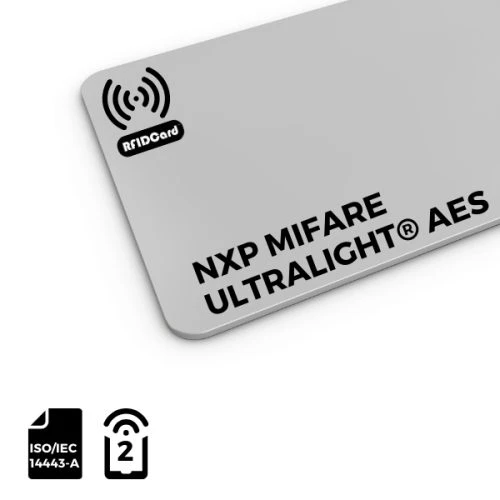
MIFARE Ultralight® AES PVC RFID Card

MIFARE Ultralight® AES PVC card is a contactless smart card based on MIFARE Ultralight AES chip, which supports AES encryption authentication, provides excellent performance and security, and is the highest security card in the MIFARE Ultralight® series. The card is made of PVC material and is widely used in access control, public transportation, ETC, events management, etc.
IMPORTANT NOTICE: All MIFARE Ultralight® AES cards supplied on this site is factory default (non-encrypted) version.