In recent years, the global shift toward contactless payments has accelerated rapidly, driven by consumer demand for speed, convenience, and safety. From mobile wallets to QR codes, businesses are exploring alternatives to physical cash. Among these solutions, RFID cashless payment systems have emerged as a powerful and reliable option—especially in closed-loop environments such as events, campuses, resorts, and entertainment venues. Compared with traditional payment methods, RFID cashless solutions offer clear advantages in efficiency, security, and user experience.
1. What Is an RFID Cashless Payment System?
An RFID cashless payment system utilizes Radio Frequency Identification (RFID) technology to facilitate secure, rapid, and contactless transactions. Unlike traditional payment methods that rely on magnetic stripes, chip-and-PIN, or optical scanning, RFID uses radio waves to wirelessly transfer data between a tag and a reader.
The system is built upon three interconnected components that work in seamless harmony:
- RFID Cashless Cards or Wristbands: These can be plastic RFID cards, wristbands, badges, or key fobs embedded with an RFID chip and antenna. The card stores a unique identifier linked to the user’s account or balance.
- RFID Readers: Installed at points of sale (POS), entry gates, or vending machines, RFID readers detect the card when it is tapped or brought into close proximity.
- Backend Payment and Management System: The backend software manages balances, processes transactions, tracks spending, and generates real-time reports.
2. Key Differences Between RFID Cashless and Traditional Payments
The distinction between RFID cashless systems and traditional methods is not merely technological; it represents a fundamental shift in operational philosophy, impacting speed, security, efficiency, and data intelligence.

2.1 Speed and Transaction Efficiency
The most immediate and noticeable difference is transaction speed. Traditional methods, particularly cash, are inherently slow. Cash transactions require counting bills, making change, and handling physical currency, which can lead to long queues. Credit card payments, while faster than cash, still involve chip insertion, PIN entry, or signature verification, which can take several seconds. QR code payments, while contactless, require the user to open an app, scan a code, and confirm the payment, adding multiple steps.
In contrast, RFID cashless transactions are pure “tap-and-go.” Data from industry studies indicates that RFID transactions can be completed up to 53% faster than credit card payments and 63% faster than cash transactions. Some systems report an 80% reduction in overall transaction time.
2.2 Security and Risk Management
Security is a major concern for any payment system.
RFID cashless systems offer a superior security profile:
- Encrypted Chips: The data stored on the RFID chip is typically a unique, encrypted identifier, not the user’s personal or financial information.
- Reduced Cash Handling: By eliminating physical cash from the environment, businesses drastically reduce the risk of internal theft, robbery, and the costs associated with cash-in-transit services.
- Loss Management: If an RFID card or wristband is lost, it can be instantly deactivated in the backend system, protecting the remaining balance. This level of control is impossible with lost cash.
2.3 Operational Efficiency
The shift to RFID technology streamlines back-of-house operations dramatically.
- Simplified Reconciliation and Reporting: Every transaction is recorded digitally and in real-time in the central management system. This eliminates the need for manual till counting, end-of-day reconciliation, and the associated labor costs and errors. Reports on sales, inventory, and tax are generated instantly and accurately.
- Inventory Control: Because every sale is logged instantly, the system provides real-time data on inventory depletion, allowing managers to monitor stock levels and identify popular items immediately, leading to more efficient restocking and less waste.
2.4 Data Collection and Analytics
Perhaps the most powerful advantage of the RFID system is the depth of data it provides, which is entirely absent in cash transactions.
- Real-Time Transaction Data: Every purchase is tied to a unique, anonymous customer ID. This allows the business to track not just what was sold, but who bought it, where they bought it, and when.
- Customer Behavior Insights: Businesses can gain valuable insights into customer flow, popular vendor locations, average spending per person, and peak purchasing times. This data is invaluable for optimizing pricing, staffing, vendor placement, and marketing efforts.
3. Benefits of RFID Cashless for Businesses

The operational and data advantages translate directly into significant financial and strategic benefits for businesses that adopt RFID cashless systems.
- Faster Service and Higher Transaction Volumes: The rapid transaction speed directly increases the number of customers a vendor can serve per hour. This higher throughput is a key driver of revenue growth, especially in time-constrained environments.
- Increased Average Spending Per Customer: Studies consistently show that customers spend more when they use cashless systems. The psychological barrier to spending is lower when tapping a card or wristband than when handing over physical cash. Furthermore, the ease of topping up funds encourages continuous spending.
- Better Inventory and Sales Tracking: Real-time data allows for dynamic pricing adjustments and ensures that popular items are always in stock, maximizing sales opportunities and minimizing lost revenue due to stockouts.
- Lower Operational and Cash Management Costs: Eliminating cash reduces the costs associated with counting, securing, transporting, and depositing physical currency. It also reduces labor costs for manual reconciliation and minimizes losses from human error.
4. Benefits of RFID Cashless for Customers

While businesses reap the operational rewards, the customer experience is equally transformed by the convenience and security of the system.
- Faster, Smoother Payment Experience: Customers appreciate the near-instantaneous transaction time, which means less time waiting in line and more time enjoying the service or event.
- No Need to Carry Cash or Wallet: The RFID wristband or card becomes the sole payment token, freeing the customer from the burden and risk of carrying a wallet, credit cards, or loose change.
- Easy Top-Up and Balance Management: Customers can easily check their balance and top up their accounts using dedicated kiosks, mobile apps, or online portals, providing full control over their spending.
5. Choosing the Right RFID Cashless Card
Selecting the appropriate hardware is crucial for the success of an RFID implementation. The choice often comes down to the operating frequency and physical durability.
- High Frequency (HF) /NFC: This is the most common choice for cashless payments. HF (13.56 MHz) and NFC are essentially the same technology. They offer a short read range of only a few centimeters and provide high security. This makes them ideal for secure, close-proximity transactions, such as tapping a POS terminal.
- Card Materials and Durability: For high-wear environments like festivals, durable materials such as silicone or PVC are preferred for wristbands and cards. The material must be waterproof, tear-resistant, and comfortable for multi-day use.
- Custom Branding and Personalization: The payment token is also a powerful marketing tool. Custom branding, colors, and personalization enhance the user experience and serve as a memorable souvenir.
- Security and Lifespan Considerations: Ensure the chips use modern encryption standards and have a long operational lifespan to justify the initial investment.
6. Conclusion
When comparing RFID cashless systems with traditional payment methods, the advantages are clear. RFID cashless payments offer faster transactions, improved security, greater operational efficiency, and valuable data insights. For customers, they provide unmatched convenience and a smoother overall experience. For businesses, they unlock higher revenue, lower costs, and better control. As cash continues to decline and expectations for contactless solutions rise, RFID cashless systems are no longer just an option—they are a strategic investment for the future. Ready to upgrade from traditional payments? Contact us today to discuss customization options, request samples, or inquire about bulk pricing for your next implementation.
Recommended Product
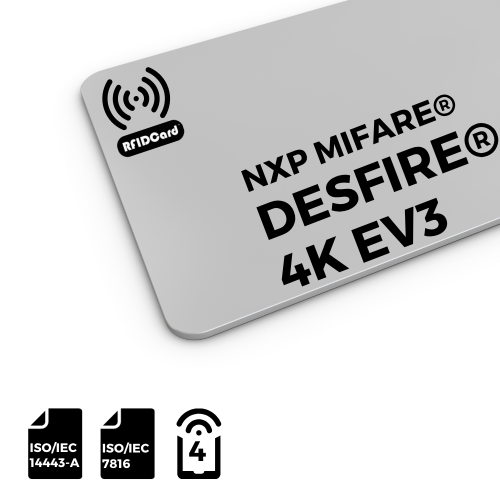
RFID Card NXP MIFARE® DESFire® EV3 4K

Blank or customized printing RFID cards with a choice of dimensions are available. The MIFARE® DESFire® EV3 4K is Common Criteria EAL5+ security certified for smart card IC products. The MIFARE® DESFire® EV3 4K ICs fully comply with NFC Forum Type 4 Tag.