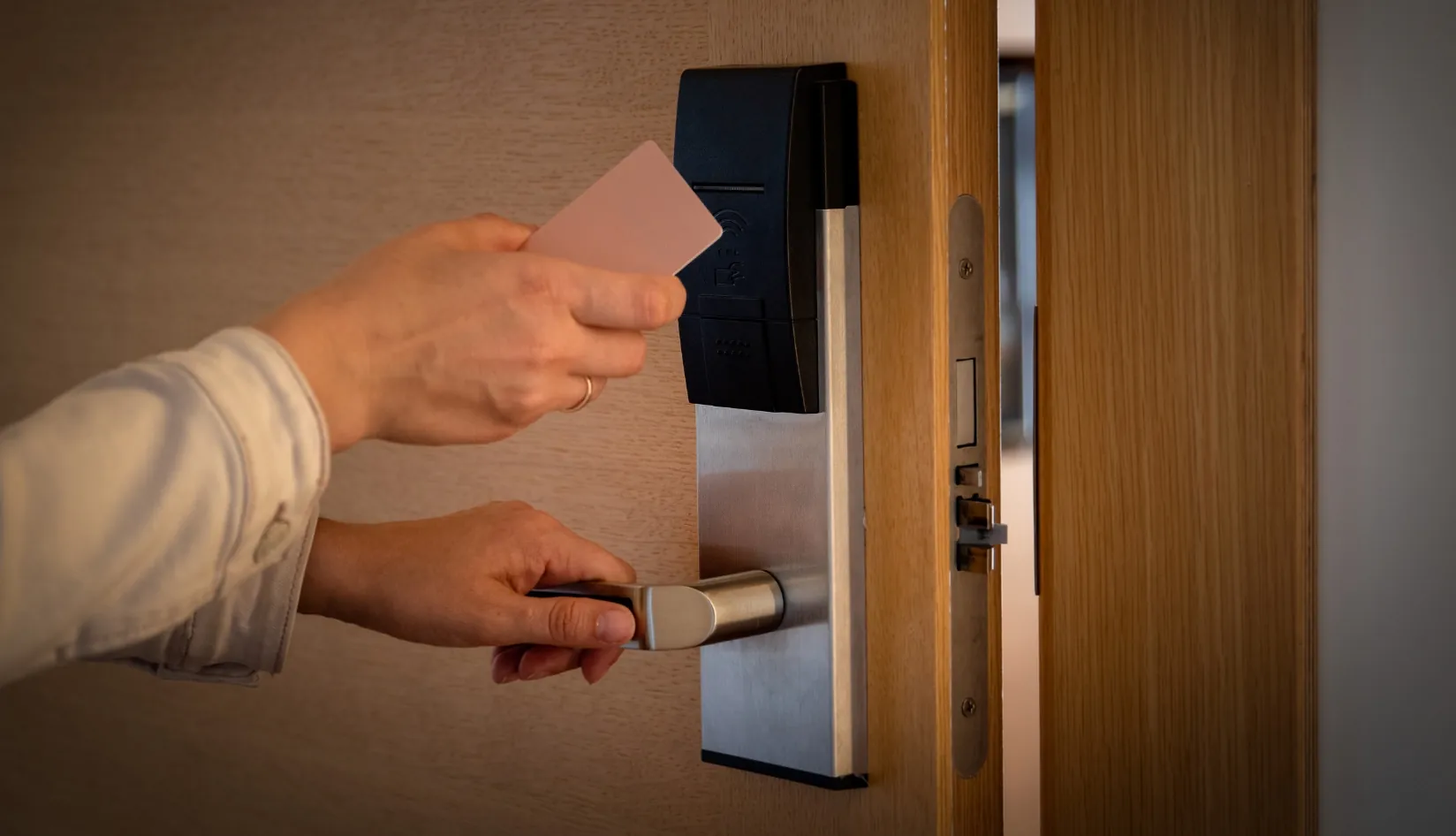
With contactless payments becoming the norm, more and more credit cards now come equipped with RFID chips. That means you can simply tap your card instead of swiping or inserting it — quick, easy, and no PIN required.
But with that convenience comes a growing concern: Is your payment information really safe? Could someone actually steal your credit card data just by walking past you in a crowd?
In this article, we’ll break down how RFID credit card readers work, what the real risks are (vs. what’s just hype), and what you can do to protect yourself — so you can tap to pay with peace of mind.
How RFID Credit Card Readers Work
What Is RFID Technology?
Basic Concept of RFID
RFID (Radio Frequency Identification) is a wireless identification technology that uses radio waves to automatically identify and transmit data without physical contact. It’s widely used in logistics, inventory management, access control, pet microchips, electronic passports, and more.
An RFID system typically consists of three parts:
- Tag: A small chip embedded in an object that stores data and has an antenna.
- Reader: A device that emits radio signals to activate the tag and receive its data.
- Backend System: Processes and verifies the data collected by the reader.
Differences and Connections Between RFID, Barcodes, and NFC
| Technology | How It Works | Contact Needed | Data Capacity | Encryption Support | Common Uses |
| Barcode | Optical scanning (visible light) | Yes | Low | No | Pricing, inventory tracking |
| NFC | High-frequency RFID variant | No | Medium | Yes | Mobile payments, access control, transit cards |
| RFID | Radio frequency signals | No | High | Yes (HF/UHF) | Contactless payments, logistics, asset tracking |
NFC is actually a specific subset of RFID technology that operates at 13.56 MHz and supports two-way communication. It’s commonly used in smartphones and POS terminals. RFID is broader, with various frequencies and communication protocols.
The Role of RFID Chips in Credit Cards
How Contactless Payments Work
Most modern credit cards (like those with Visa payWave or Mastercard PayPass) contain a high-frequency RFID/NFC chip compliant with the ISO/IEC 14443 standard. When the card is within about 4 centimeters of a reader, it gets activated and the payment process goes like this:
- The reader emits a radio signal to power up the chip.
- The chip sends back encrypted transaction data.
- The terminal verifies the info and completes the payment.
This all happens in about 1–2 seconds, no need to swipe or insert the card, and usually no PIN required for small transactions. This makes payments faster and more convenient.
Types of Information Stored on the Chip
While this varies by issuer, typical data stored includes:
- Primary Account Number (PAN): The card number, usually 16 digits
- Expiration Date: Card validity period
- Dynamic Transaction Keys or CVV: One-time codes for transaction verification
- Issuer Bank Identifier
- Payment Network Identifier (Visa, Mastercard, etc.)
The chip does not store your PIN, billing address, or full personal details—those require additional verification steps.
Modern cards use the EMV encryption standard, so even if someone intercepts the data, it’s very difficult to decrypt or fake a transaction.
The Scanning Process of RFID Readers
Operating Frequency and Read Range
Credit card RFID/NFC chips operate at 13.56 MHz, a standard frequency widely used in secure payments and access control.
Key characteristics:
- Typical read range is less than 4 centimeters (usually 1–2 cm).
- The reader needs to be properly aligned and close for 0.5–1 second.
- Metal, liquids, and thick materials can block the radio signal.
If your card is deep inside your wallet or separated by metal layers, it’s nearly impossible to read the signal.
Differences Between Legitimate and Illegitimate Readers
| Aspect | Legitimate Readers | Illegitimate Readers (e.g., Portable Skimmers) |
| Certification | PCI DSS / EMVCo certified | No certification, often unregulated |
| Purpose | Used in merchant POS systems, transit gates | Used to illegally capture card data |
| Security Features | Encryption, whitelisting, signed data | No encryption, attempts to decrypt or steal info |
| Functional Limits | Transaction limits and frequency controls | Designed to scan continuously or surreptitiously |
Legitimate readers are embedded in secure payment systems with anti-tampering protections. Illegal devices are usually small, portable, and can be hidden in bags or clothing to covertly scan cards nearby.
However, even if a card’s data is read, it’s still extremely difficult to make unauthorized transactions without dynamic keys and authorization.
Security Risks and Common Misconceptions About RFID Credit Cards
Potential Risks
“Unauthorized Tap” Theft Cases Explained
One of the biggest public concerns is “unauthorized tap” fraud—where criminals use illegal RFID readers to wirelessly scan credit cards without the cardholder’s knowledge or consent, then make fraudulent purchases. These incidents are said to happen in crowded places like subways, buses, concerts, or shopping malls, where the scammer covertly brings a portable or disguised reader close to unsuspecting victims.
While such stories do pop up in the media, they are usually isolated cases with little concrete evidence proving RFID skimming was actually the method. In reality, most credit card fraud happens through data breaches, phishing scams, or stolen physical cards.
The Possibility of Passive Scanning
In theory, it’s possible to scan RFID credit cards without the owner noticing, but there are significant practical limitations:
- The reader must be extremely close (usually within 4 cm) for a successful scan.
- The card’s data is encrypted dynamically, so even if it’s scanned, it’s difficult to reuse the information fraudulently.
- Radio signals can be blocked by clothing, wallets, phones, or other physical barriers.
- The scanning device needs to remain steady near the card for at least half a second to a second, making quick “shoulder tap” attempts unlikely to succeed.
So, while passive scanning is a theoretical risk, the actual chances of it happening successfully are quite low.
Realistic Risk Analysis
Are the Risks Overhyped?
The risk of RFID credit card theft is often exaggerated online due to:
- Media coverage lacking technical details, which causes unnecessary alarm.
- A flood of “RFID protection” products marketed to fearful consumers.
- General public unfamiliarity with contactless payment technology.
In truth, banks and payment networks have implemented multiple layers of security to minimize these risks.
Banks’ and Financial Institutions’ Protective Measures
Key safeguards include:
- Dynamic transaction codes (dynamic CVV): Each transaction generates a unique code, preventing reuse of stolen data.
- Transaction limits: Contactless payments usually have low limits (e.g., $50-$100), above which PIN or signature is required.
- Real-time fraud monitoring: Suspicious transactions trigger automatic alerts or blocks.
- Multi-factor authentication: Online payments often require SMS codes or app confirmations.
- Chip security protocols: EMV chip technology prevents cloning and tampering.
Thanks to these measures, the actual chance of RFID-related fraud remains quite low.
Common Misconceptions Clarified
| Misconception | The Truth |
| Misconception 1: Anyone Nearby Can Steal My Card Info | RFID readers have a very short range (about 1–4 cm) and need stable proximity, so accidental scans by strangers are very unlikely. |
| Misconception 2: Metal Wallets Provide Complete Protection | Metal wallets can block RFID signals and reduce risk but don’t guarantee 100% protection, especially if the wallet or card placement isn’t ideal. |
| Misconception 3: If My Card Is Scanned, I’m Automatically Hacked | Even if scanned, without the transaction authorization code and dynamic CVV, no fraudulent transactions can be completed. The card’s encryption makes theft very difficult. |
| Misconception 4: RFID Cards Are Less Secure Than Magnetic Stripe Cards | RFID cards use EMV chip technology, which is far more secure than traditional magnetic stripe cards that are easy to clone. |
How to Protect Your RFID Credit Card Data
Physical Protection Measures
Use RFID-Blocking Wallets or Card Sleeves
RFID-blocking wallets and card sleeves are made with special materials like metal fibers or aluminum foil that effectively block radio signals, preventing unauthorized scanning of your credit card chip. These protective accessories are lightweight and convenient for daily use, especially helpful in crowded public places where the risk of unauthorized scans is higher. However, to get the best protection, make sure the blocking product is of good quality and that you place your cards correctly inside.
Avoid Exposing Your Credit Card in Crowded Places
In busy public areas like subway stations, bus stops, or shopping malls, try to keep your credit cards out of plain sight. Store them in inner pockets or deep inside your wallet to reduce the chance of someone getting close enough with an illegal reader. Using mobile payments or digital wallets like Apple Pay or Google Pay can further lower the risk of your physical card being skimmed.
Digital Security Awareness
Enable Transaction Alerts
Most banks and credit card issuers offer text message or app notifications for every transaction. By enabling these alerts, you get instant updates on all your card activity—big or small—so you can quickly spot any suspicious charges and contact your bank to freeze your account if necessary, minimizing potential losses.
Regularly Review Your Statements
Make it a habit to check your credit card statements and transaction history regularly to catch any unknown or unusual charges. If you spot anything suspicious, reach out to your bank’s customer service immediately to verify and dispute the charges. Also, keep your devices like phones and computers secure to prevent your account information from being stolen.
Choosing Secure Devices
Buy RFID Readers with Encryption and Certification (For Merchants)
If you’re a merchant, it’s crucial to choose RFID readers that meet international security standards such as PCI DSS and EMVCo certification. These devices have built-in encryption modules that protect transaction data during transmission, preventing tampering or theft. Avoid using low-cost or uncertified equipment, as these can introduce serious security vulnerabilities.
Avoid Using Unverified Third-Party Readers
Whether you’re an individual or a business, steer clear of using RFID readers or scanning devices from unknown or uncertified sources. These devices may contain malware or backdoors designed to steal card data or transaction information, increasing your risk. Always buy from reputable vendors and ensure the device comes with proper warranties and support.
Conclusion
RFID technology brings speed and convenience to everyday payments, but it’s not without its security concerns. By understanding how RFID credit cards work, recognizing the potential risks, and taking simple yet effective protective measures, you can enjoy the benefits of contactless payments without sacrificing peace of mind. Stay informed, stay alert, and use your cards wisely.
FAQs
Can someone steal my credit card information using RFID without touching it?
Technically, it is possible for a criminal with a specialized RFID scanner to attempt to read your card wirelessly. However, the actual risk is very low due to the card’s short transmission range (typically under 4 cm), built-in encryption, and bank security protocols like dynamic CVV codes. Still, using an RFID-blocking wallet can offer extra peace of mind in crowded places.
Do RFID-blocking wallets really work?
Yes, RFID-blocking wallets are effective at shielding your cards from unauthorized scans by blocking radio frequency signals. While RFID-related theft is rare and often overstated, these wallets provide an extra layer of protection—especially in crowded public places—making them a smart precaution for those concerned about digital pickpocketing.
Are RFID credit cards more secure than magnetic stripe cards?
Yes. RFID credit cards use EMV chip technology, which is significantly more secure than magnetic stripes. The chip generates unique, encrypted transaction codes that can’t be reused, making it extremely difficult to clone or duplicate the card for fraudulent use.