In today’s hospitality industry, the RFID hotel card has become a critical component of modern access control systems. From boutique hotels to global chains, RFID-based key cards are replacing traditional magnetic stripe cards due to their superior security, durability, and guest convenience. However, not all RFID hotel cards are created equal. At the core of every hotel key card is an RFID chip. Choosing the right chip directly affects security, system compatibility, operational efficiency, and long-term cost. This article offers a clear and practical comparison of the most commonly used MIFARE RFID chips. It is designed to help hotel operators, system integrators, and procurement teams make informed decisions.
1. MIFARE Overview: Industry Leader in Contactless Smart Card Technology
MIFARE is a widely recognized brand of contactless RFID and NFC chips developed by NXP Semiconductors. Operating at 13.56 MHz and compliant with ISO/IEC 14443, MIFARE chips are extensively used in access control, transportation, identity, and hospitality applications worldwide.
In the hospitality industry, MIFARE has become the de facto standard for key cards due to its ability to offer both security and convenience in a single, durable form factor. Unlike older, less secure technologies, MIFARE® chips utilize a secure communication protocol and can store complex, structured data. This capability is crucial for implementing multi-application functionality. A single card can be programmed to grant room access. It can also provide personalized loyalty program benefits and track amenity usage. In addition, it can facilitate a small credit balance for on-site purchases. Together, these features enhance the guest’s “wallet-less” experience.
2. Comparing MIFARE Classic, MIFARE DESFire, and MIFARE Ultralight for Hotel Key Cards
The decision between the main MIFARE chip types is a strategic trade-off that weighs initial cost against long-term security and functionality. A detailed, objective comparison of these three chips is paramount for any hotel manager.

2.1 MIFARE Classic
The MIFARE Classic chip is the veteran of the MIFARE family, introduced in 1994, and remains one of the most widely deployed contactless chips globally.
- Features: It is typically available in 1K or 4K memory sizes, organized into 16 or 40 sectors, respectively, with each sector protected by two separate cryptographic keys. It uses a proprietary encryption algorithm known as CRYPTO1.
- Ideal Use Cases: It is primarily suited for hotels where budget is the absolute primary constraint or where the card is only used for basic, non-critical access.
2.2 MIFARE DESFire
MIFARE DESFire represents the cutting edge of MIFARE technology, offering a significant leap forward in security, functionality, and future-proofing. It is often considered the premium choice for modern, high-security access control.
- Features: DESFire chips (including versions like EV1, EV2, and the latest EV3) are designed to function more like a miniature operating system on the card. They offer advanced security features, including the use of certified, open-standard encryption algorithms such as 3DES, AES (Advanced Encryption Standard), and DES. This architecture allows for multiple, securely separated applications on a single card, each with its own set of keys and access rights. Memory sizes range from 2K to 8K.
- Benefits for Hotels: Hotels requiring the highest level of data protection, particularly those concerned with international regulations like GDPR or CCPA, should opt for DESFire. Its robust, certified encryption makes cloning virtually impossible and ensures secure communication between the card and the reader.
- Ideal Use: Premium and luxury hotel chains, large resorts with extensive multi-application needs, and any secure access environment where data integrity and guest privacy are paramount.
2.3 MIFARE Ultralight
The MIFARE Ultralight chip is engineered for simplicity, speed, and high-volume, low-cost applications where minimal security is required.
- Features: It is the most basic and least expensive chip, offering minimal memory (typically 64 bytes to 164 bytes) and limited security features. Authentication often relies solely on the card’s simple 7-byte Unique Identifier (UID) or a basic password protection mechanism.
- Best Suited For: Budget hotels, hostels, or properties that use the key card for temporary, single-application access only.
- When and Why to Choose: Choose Ultralight when the key card is intended to be disposable, the cost per card must be extremely low, and the security requirements are minimal. It provides a functional RFID hotel card at the lowest possible price point, but it offers the least protection against cloning and is not suitable for multi-application use or storing sensitive data.
3. Key Differences Between MIFARE Chips for Hotel Key Cards
A deeper analysis of security, performance, and value reveals the critical distinctions that should guide a hotel’s purchasing decision.

3.1 Security Level
Security is often the top concern when selecting an RFID hotel card. While MIFARE Classic offers basic protection, DESFire provides strong, standardized encryption that aligns with modern cybersecurity expectations. For hotels operating in the EU, stronger encryption also helps support data protection and compliance strategies.
3.2 Read/Write Speed and Distance: Performance for Guest Flow
While all MIFARE chips operate at the same frequency, their internal architecture affects real-world performance, which directly impacts the guest experience.
| Chip Type | Security Level | Memory Size (Typical) | Encryption Standard | Multi-Application Support |
| MIFARE® Ultralight | Low (UID-based) | 64 – 164 Bytes | None/Basic | No |
| MIFARE® Classic | Moderate (Compromised) | 1K / 4K | CRYPTO1 (Proprietary) | Limited |
| MIFARE® DESFire | High (Certified) | 2K – 8K | AES / 3DES | Yes (Securely Separated) |
4. How to Choose the Right MIFARE Chip for Your Hotel’s Needs
The decision process must be a strategic alignment of the hotel’s brand, operational complexity, and security requirements.

4.1 Identifying Your Hotel’s Requirements
The scale and market position of your property are the primary determinants:
- Small Boutique vs. Large Hotel Chains: A small boutique hotel with minimal ancillary services and a focus on simplicity might find MIFARE Classic or Ultralight sufficient. Conversely, a large international hotel chain with thousands of rooms, integrated loyalty programs, and a need for centralized, secure access management must standardize on MIFARE DESFire for its superior security and multi-application support.
- Budget-Conscious vs. Luxury Hotels: Budget hotels prioritize minimizing operational costs, making Ultralight or Classic appealing for their low unit price. Luxury hotels, however, must prioritize the guest experience and security reputation above all else. For them, the marginal cost increase for DESFire is a necessary expense to maintain brand integrity and offer a premium, secure, and frictionless service.
4.2 Future-Proofing and Mobile Access Integration
A forward-thinking hotel must consider the inevitable shift towards mobile access. The key card is increasingly being replaced by the guest’s smartphone using Near Field Communication (NFC) or Bluetooth Low Energy (BLE).
- DESFire’s Advantage: DESFire’s advanced security features and robust application management are perfectly suited for integration with mobile key solutions. The secure element in a smartphone can emulate a DESFire chip, maintaining the same high level of encryption and security as the physical card.
- Classic/Ultralight’s Limitation: While these chips can be emulated, their inherent security weaknesses are simply transferred to the mobile environment, offering no real security upgrade.
5. Conclusion
Selecting the right RFID chip is a strategic decision that impacts security, guest experience, and operational efficiency. While MIFARE Classic and Ultralight still have niche use cases, MIFARE DESFire is increasingly the preferred choice for modern RFID hotel card deployments. By understanding the differences between chip types and aligning them with your hotel’s needs, you can deploy RFID hotel cards that are secure, compatible, and ready for the future of smart hospitality. Ready to upgrade your access control system and find the perfect MIFARE chip solution for your property? Contact our team today to find the perfect key card solution that ensures security, efficiency, and an unparalleled guest experience.
Recommended Product
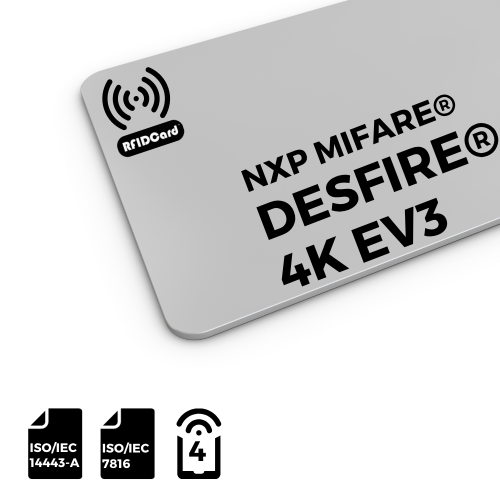
RFID Card NXP MIFARE® DESFire® EV3 4K

Blank or customized printing RFID cards with a choice of dimensions are available. The MIFARE® DESFire® EV3 4K is Common Criteria EAL5+ security certified for smart card IC products. The MIFARE® DESFire® EV3 4K ICs fully comply with NFC Forum Type 4 Tag.
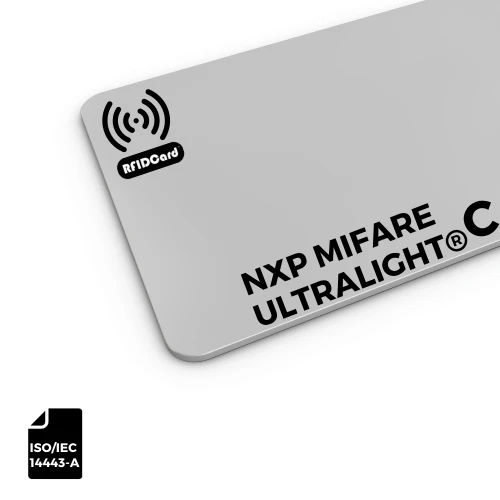
RFID Card NXP MIFARE Ultralight® C ISO14443-A CR80
The NXP MIFARE Ultralight® C blank RFID cards fully comply with ISO/IEC 14443-A. The RFID cards are made with photo-quality standard PVC/PET in the size of CR80, which are suitable for use with most direct thermal or thermal transfer card printers.
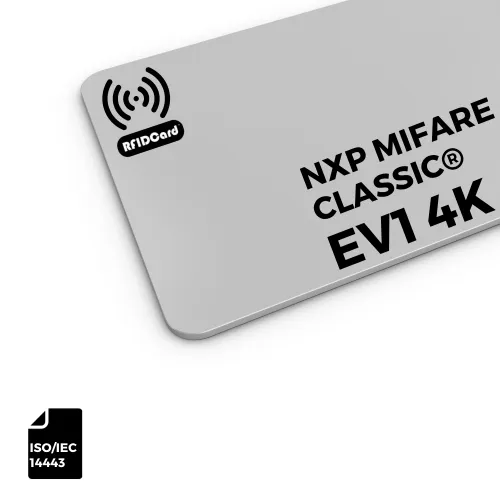
RFID Card NXP MIFARE Classic® EV1 4K (S70) CR80
The MIFARE Classic® EV1 4K RFID card is made with Photo-quality standard PVC sheets into the size of CR80, that are suitable for use with most direct thermal or thermal transfer card printers. MF1S70 series to be used in a contactless smart card according to ISO/IEC 14443 Type A.