Transit cards are a vital component of modern public transportation systems, making daily commutes more efficient and convenient. Over the years, technological advancements have revolutionized how these cards operate, with RFID (Radio Frequency Identification) and NFC (Near Field Communication) emerging as two of the most prevalent technologies in use. Although both serve similar functions, they possess distinct differences that influence their functionality, security, and overall user experience. In this article, we will explore the key differences between RFID and NFC transit cards, comparing their capabilities, advantages, and use cases to help you determine which option may be the better fit for your transportation systems.
1. What is RFID? A Quick Overview
RFID (Radio Frequency Identification) is a technology that utilizes electromagnetic fields to automatically identify and track tags attached to objects. It works by sending radio waves between a reader and an RFID tag, which stores data such as identification numbers or other specific information. The reader emits a signal that powers the RFID tag, enabling it to transmit data back to the reader without the need for physical contact.
Common Uses of RFID in Transit Systems
RFID has long been a fundamental component in the transportation industry. It is widely used in bus and subway systems globally, where passengers utilize RFID-enabled cards or tokens to pay for their fares. RFID transit cards typically contain a unique identifier, allowing readers positioned at entry points to swiftly scan and verify a passenger’s payment status. Furthermore, this technology is employed in parking meters, ticketing systems, and even toll booths.

Key Advantages of RFID Technology
Long Reading Distance: One of RFID technology’s standout features is its capability to be read from a distance. Depending on the type of RFID system in use, the reader can interact with the tag from several inches to even several feet away. This attribute is particularly beneficial in high-traffic transit environments, where fast and efficient fare collection is essential.
Non-Contact Operation: RFID tags can be read without requiring physical contact, making them user-friendly and efficient. This contactless feature allows for quicker transaction times and minimizes the risk of wear and tear since passengers do not need to swipe or insert their cards.
Scalability: RFID systems are highly scalable and adaptable, catering to both small-scale operations, such as local bus routes, and extensive metropolitan transit systems. RFID technology can handle significant volumes of data, making it an excellent option for high-capacity transportation networks.
RFID’s combination of fast, reliable data transfer and flexibility across various transportation infrastructures makes it a dependable choice for modern transit card systems. However, despite these advantages, it’s important to also consider the evolving technology of NFC (Near Field Communication), which may offer additional benefits in certain transit applications. In the next section, we’ll explore what makes NFC a strong competitor.
2. What is NFC? A Quick Overview
NFC (Near Field Communication) is a subset of RFID technology specifically designed for short-range communication. It enables data exchange between devices over very short distances, typically within a range of 4 inches or less. NFC operates by using electromagnetic fields to establish a communication link between an NFC-enabled device, such as a smartphone or NFC card, and a reader. This technology is increasingly popular in applications like mobile payments, access control, and contactless ticketing.
How NFC Works
NFC functions on the same basic principles as RFID, but with a key difference: it requires devices to be in very close proximity, usually just a few centimeters apart. When an NFC-enabled device comes within range of a reader, the two devices exchange data. This short-range requirement enhances security, making it more difficult for unauthorized access or data breaches, as the devices must be within a specified range to communicate.
Common Uses of NFC in Transit Systems
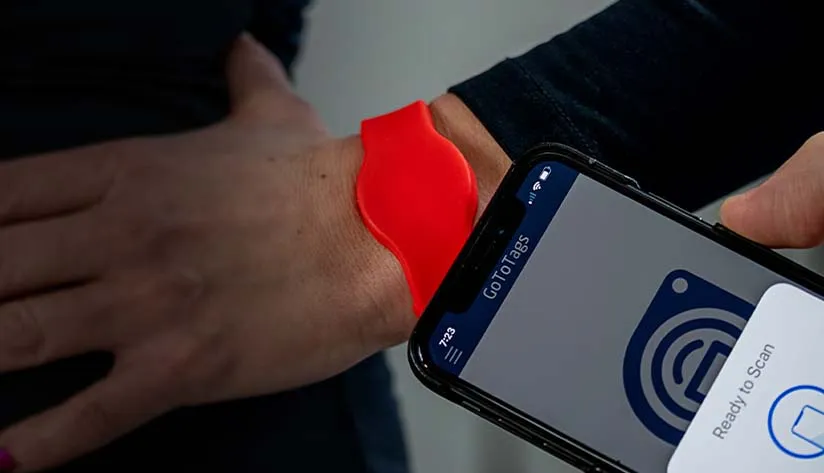
NFC is gaining traction as a popular solution in modern transit systems. In cities around the globe, transit authorities are integrating NFC-enabled smartphones and wearables to facilitate payments and ticketing. Users simply tap their NFC-enabled device, such as a smartphone or smartwatch, against a transit reader, and the payment is processed automatically.
Additionally, NFC is utilized in contactless access cards, allowing passengers to board buses, trains, or metro systems seamlessly. These cards store essential information, such as fare credits and access rights, providing a secure and convenient way to travel without the need for physical tickets or cash.
Key Advantages of NFC Technology
Security and Privacy: One of the most significant advantages of NFC technology is its advanced encryption capabilities. NFC transactions are typically encrypted, offering a level of security that is superior to traditional card-based systems. This makes NFC an excellent choice for protecting personal data and financial information during transit payments.
Low Energy Consumption: NFC is designed to operate with low power usage, making it ideal for mobile devices and wearables like smartwatches. This energy efficiency ensures that NFC-powered transit cards and devices have longer battery lives, providing convenience for users and reducing maintenance costs for transit authorities.
Convenience and Flexibility: NFC technology offers a highly flexible and user-friendly experience. By utilizing NFC-enabled smartphones, tablets, or wearables, passengers no longer need to carry physical transit cards. This enhances user convenience, as they can use their personal devices for everyday tasks as well as transit payments.
While NFC technology has distinct advantages in terms of security and convenience, it also has its limitations, particularly regarding range and scalability. We will address these factors in the next section to help determine which technology is better suited for your transit card system.
3. Key Differences Between RFID and NFC for Transit Cards
While both RFID and NFC play crucial roles in modern transit systems, they exhibit distinct characteristics that render them more suitable for specific applications. Let’s dive into the key differences between these two technologies as they relate to transit cards.
3.1. Operating Range: RFID vs. NFC
One of the most significant differences between RFID and NFC is their operating range.
RFID: RFID generally has a longer read range compared to NFC. Depending on the type of RFID system (low-frequency, high-frequency, or ultra-high-frequency), RFID tags can be read from distances ranging from a few centimeters to several meters. This makes RFID suitable for extensive transit systems, where passengers may need to swipe their cards from a greater distance, especially in high-traffic environments.
NFC: In contrast, NFC operates within a much shorter range—usually just a few centimeters. This limited range can be both an advantage and a disadvantage. While it enhances security by requiring devices to be in close proximity, it also restricts NFC’s effectiveness in certain applications, such as those requiring long-range scanning or high throughput. NFC is particularly well-suited for mobile phone-based transit payment systems, allowing users to tap their phones directly against a reader.
3.2. Data Transfer Speed and Security
Both RFID and NFC facilitate fast, contactless communication, but differences exist in data transfer speed and security.
RFID: RFID typically offers higher data transfer speeds, which are crucial for systems that need to process a large number of transactions quickly. This makes RFID a superior option for high-capacity transit systems where passengers need to pass through gates or board vehicles efficiently.
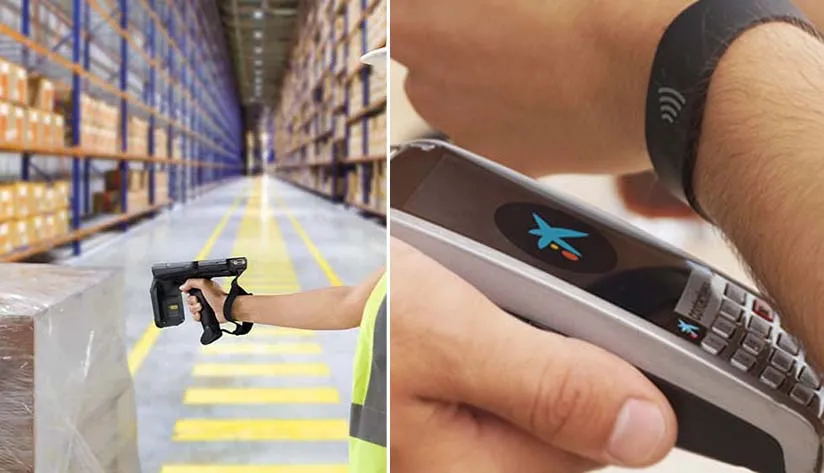
NFC: Although NFC’s data transfer speed is slightly slower than RFID’s, it excels in terms of security. NFC supports advanced encryption protocols, ensuring that all data exchanged between devices is securely protected. This makes NFC a more suitable choice for mobile transit payments, where safeguarding user data and financial information is paramount.
3.3. Power Consumption and Device Requirements
Power consumption and device requirements also differ between RFID and NFC.
RFID: Passive RFID tags require no internal battery power. Instead, the RFID reader powers the tag via radio waves, allowing it to respond and transmit data. This makes RFID energy-efficient for both tags and readers, as they don’t rely on a self-contained power source.
NFC: While NFC also operates with low power consumption, it typically relies on the battery of the mobile device or card containing the NFC chip. NFC devices (like smartphones or wearables) need power to communicate, although the energy usage is minimal and optimized for short-range interactions. Nevertheless, this reliance on power can make NFC less cost-effective in scenarios where a large number of passive tags must be deployed over an expansive area.
3.4. Compatibility and Adoption
The compatibility of RFID and NFC with existing infrastructure is another essential consideration when selecting technology for a transit system.
RFID: RFID is widely utilized across various industries—not limited to transit. Its adoption in applications such as inventory management, access control, and supply chain logistics makes RFID a mature and well-supported choice for large-scale transit systems.
NFC: While NFC is rapidly gaining traction, it is more often associated with mobile payment solutions and consumer electronics. Many public transit systems are beginning to implement NFC-based options due to the widespread accessibility of NFC-enabled smartphones and wearables. However, NFC is still in the integration phase in various infrastructures around the world, especially in cities that have yet to fully embrace mobile payment technologies.
3.5. Cost Considerations
When it comes to cost, RFID and NFC present different financial considerations.
RFID: RFID technology tends to have a higher upfront cost, particularly for advanced systems with long-range capabilities and specialized infrastructure.
NFC: Conversely, NFC benefits from the ubiquity of NFC-enabled smartphones, reducing the need for additional infrastructure investments. This can make NFC a more cost-effective solution for cities or transit systems looking to implement a mobile-friendly and easily deployable option.
In the next section, we will delve deeper into the specific benefits of each technology, aiding you in deciding which is best suited for your transit card system.
4. Benefits of RFID Transit Cards
RFID technology offers several key benefits for transit card systems, making it a strong choice for large-scale transportation networks.
Fast Data Reading: Avoiding Long Queues
Unlike traditional magnetic strip cards that require passengers to stop and tap or insert their cards, RFID enables fast, contactless reading. Passengers can move seamlessly through gates without waiting for scans, enhancing the flow, especially in busy environments like metro stations and bus terminals.
High Capacity: Efficient in High-Traffic Areas
RFID can handle large data throughput, making it ideal for crowded transit hubs. Its ability to read multiple tags simultaneously ensures quick processing of numerous passengers without delays. This is particularly beneficial during peak hours, preventing bottlenecks and fostering smooth movement.
Long-Range Reading: Efficiency in High-Speed Environments
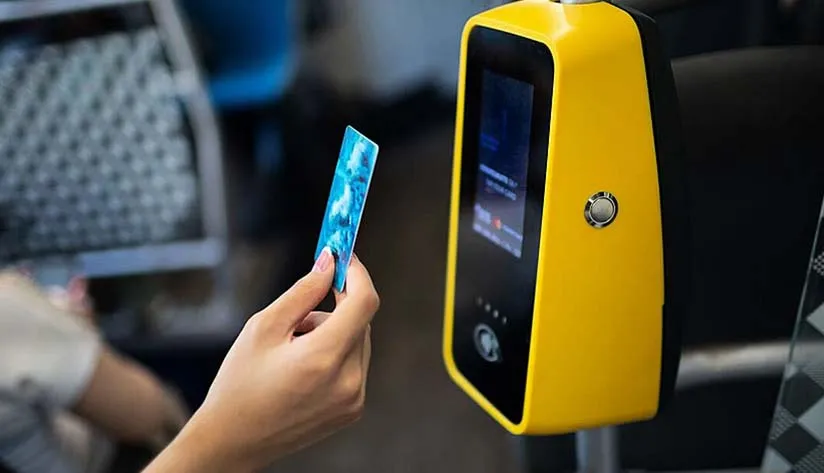
RFID’s long-range reading capability (especially with UHF systems) allows tags to be read several meters away. This is advantageous in high-speed scenarios, such as toll booths, where vehicles can pass through without slowing down, facilitating seamless payments. In contrast, NFC requires closer proximity, making it less efficient for these applications.
Integration and Scalability: Adapting to Future Needs
RFID systems are highly adaptable and can easily integrate with various smart technologies and payment systems. This flexibility allows for seamless upgrades, making RFID a future-proof solution for transit authorities. As cities grow, RFID can accommodate evolving urban mobility demands.
Case Studies: Successful Implementations
Major cities have effectively used RFID to enhance their transit systems:
London’s Oyster Card: This RFID-based system allows passengers to tap in and out, facilitating millions of transactions daily and forming a crucial part of London’s transport infrastructure.
New York’s MetroCard: Utilizing RFID, this system enables quick access to subways and buses, efficiently managing millions of riders and reducing wait times at turnstiles.
These examples highlight RFID’s long-range, high-capacity, and secure features, making it an optimal choice for public transportation systems.
5. Benefits of NFC Transit Cards
NFC (Near Field Communication) offers numerous benefits that make it an attractive choice for modern transit card systems. While RFID is widely used, NFC provides unique advantages in security, user convenience, energy efficiency, and interactive capabilities. Here’s a closer look at these benefits.
5.1. Security and Privacy Protection
Robust Encryption: NFC uses strong encryption protocols to ensure secure data transmission between the card and reader, protecting sensitive personal and financial information during transactions.
Short Range: With a typical working distance of less than 10 cm, NFC’s close proximity requirement minimizes risks of unauthorized access or data interception, unlike longer-range technologies.
Privacy by Design: NFC transmits sensitive information only when necessary, enhancing passenger privacy by limiting data exposure.
5.2. Convenience and Flexibility
Tap-and-Go Experience: NFC allows users to simply tap their card or smartphone on the reader, eliminating the need for physical contact and speeding up the boarding process.
Smartphone Integration: Commuters can use mobile payment apps (like Apple Pay or Google Wallet) for fare payment, allowing them to leave their transit cards at home.
Wearable Compatibility: NFC also works with wearables like smartwatches and fitness trackers, enabling quick access to transit services without needing to carry a card or phone.

5.3. Low Power Consumption and Sustainability
Energy Efficiency: NFC operates with minimal power, allowing devices like cards, smartphones, and wearables to function for extended periods without frequent charging.
Sustainability: The low energy demands contribute to reduced waste, making NFC an environmentally friendly option for public transportation systems.
5.4. Bidirectional Data Communication
Real-time Updates: NFC enables two-way data exchange, allowing passengers to receive real-time balance queries, transport schedules, and traffic alerts directly on their cards or devices.
Data Syncing: NFC cards can interface with smartphones and transport management systems, enabling balance updates and fare validation while enhancing user engagement.
Integration Across Services: NFC can facilitate connections outside of transit, linking to loyalty programs or retail purchases, creating a seamless experience across multiple platforms.
5.5. Case Studies: NFC in Action
Hong Kong’s Octopus Card: The Octopus card is widely used for both public transit and retail payments, showcasing NFC’s ability to deliver a highly integrated experience.
Tokyo’s Pasmo and Suica Cards: These cards allow easy fare payments on trains and buses while also enabling transactions at vending machines and stores, highlighting NFC’s versatility.
These examples illustrate how NFC technology can enhance transit system experiences through secure, convenient, and interactive features.
6. Which Technology is Right for Your Transit Card System?
As we’ve seen, both RFID and NFC offer distinct advantages and benefits in different scenarios. RFID excels in environments requiring long-range communication, high transaction capacity, and a robust infrastructure. It’s ideal for large-scale transit systems, such as metro networks and extensive bus fleets, where high throughput is crucial.
In contrast, NFC is particularly beneficial for mobile-first systems, where security, flexibility, and user convenience are top priorities. With the rise of mobile payments and the widespread use of NFC-enabled smartphones, NFC is becoming the preferred choice for commuter-centric transit networks that prioritize modern, mobile-friendly solutions.
Ultimately, the right technology for your system depends on its size, goals, and future vision. Need help making the right choice? Contact us today to explore the perfect RFID or NFC solution for your transit network.
FAQs
1. Can RFID and NFC be used together in the same transit card system?
Yes, RFID and NFC can be integrated within the same transit system. Many modern systems combine both technologies to enhance flexibility. For instance, RFID handles high-volume, long-range transactions, while NFC provides added services like mobile integration and real-time updates. This hybrid approach improves user experience and boosts system efficiency.
2. Which technology offers the best security for public transit payments?
Both RFID and NFC have strong security features, but NFC often has a slight advantage in encryption and secure data transmission. NFC cards typically use more advanced encryption methods, such as AES (Advanced Encryption Standard), to safeguard user data. Additionally, NFC’s short-range communication reduces the risk of unauthorized access.
3. Is NFC compatible with existing RFID infrastructure in transit systems?
NFC is generally backward compatible with RFID infrastructure, although this compatibility depends on the specific system design. Since NFC operates on a similar communication frequency as RFID, it can often be integrated into existing RFID-based transit systems with minimal adjustments. However, some upgrades may be necessary to ensure seamless integration and data synchronization.