
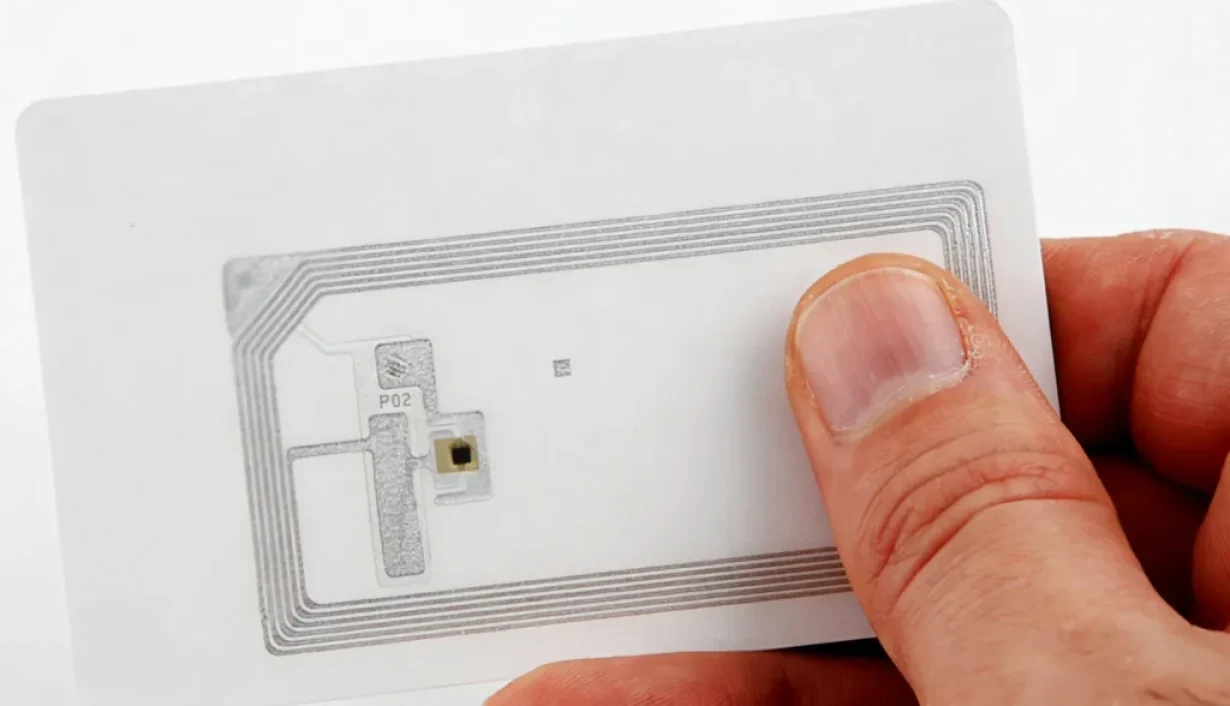

The global push for sustainability has reached every corner of modern industry, and the world of RFID is no exception. Traditionally, RFID tags and cards rely on metal or plastic substrates embedding etched copper or aluminum antennas, which are robust and functional, yet materially intensive and environmentally problematic. The rise of paper-based antenna technology challenges this paradigm by offering a sustainable alternative that significantly reduces environmental impact without compromising performance.
1. What is a Paper-Based Antenna?
A paper-based antenna is manufactured by applying conductive inks directly onto a paper substrate. This can be achieved through advanced printing techniques such as screen printing, flexography, or inkjet printing.
key advantages:
- Material Efficiency: It only uses the precise amount of conductive material needed for the antenna pattern, drastically reducing material waste compared to etching, where a significant portion of the metal is dissolved and discarded.
- Substrate Versatility: It allows for the use of readily available, sustainable, and fully recyclable paper and cardboard as the substrate, replacing PET film entirely.
- Cost Reduction: The printing process is generally faster, requires less energy, and has lower capital expenditure than traditional etching, leading to reported cost reductions of up to 50% in some manufacturing processes.
2. Why the RFID Industry is Pivoting to Paper
The transition toward paper-based solutions is driven by three primary catalysts: environmental mandates, economic efficiency, and the rise of the “Smart Circular Economy.”
2.1 Decarbonizing the Supply Chain
Traditional RFID cards combine plastic layers with metallic inlays, causing most to end up in landfills. By switching to a paper-based antenna, manufacturers can produce cards or tags that are 100% plastic-free. This drastically reduces the carbon footprint of high-volume items like event tickets, transit passes, and hotel key cards.
2.2 Design Flexibility
For cards, the paper substrates provide an exceptionally versatile platform for printing and customization. They readily accept digital printing processes, allowing full-color graphics, branding, and variable data printing.

2.3 Recyclability and the Circular Economy
Because the substrate is cellulose-based, these cards and tags can often be processed in standard paper recycling streams. The small amount of conductive ink is typically filtered out during the de-inking process, allowing the paper fibers to be reclaimed.
3. The 100% Plastic-Free RFID Paper Card
At the forefront of this revolution is our 100% Plastic-Free RFID Paper Card. This product is a high-performance solution designed for the rigors of the modern world.
| Feature | Specification | Impact |
| Substrate | Coated Paper | Biodegradable |
| Chipset | NXP MIFARE Ultralight® EV1 | Industry-standard security and reliability |
| Antenna | High-Conductivity Paper-based Antenna | 100% Plastic-Free and excellent read range |
| Application | Public Transport, Events, Loyalty | Seamless integration into existing readers |
4. Real-World Applications
The versatility of the paper-based antenna card allows it to penetrate markets where plastic was once the only option.
4.1 Green Hotels
Major hotel chains are moving away from PVC key cards. A paper-based RFID card provides a premium, tactile feel that signals the brand’s commitment to the environment the moment the guest checks in.
4.2 Smart Ticketing and Mass Transit
In cities like London and New York, millions of single-trip tickets are discarded daily. If these tickets utilize a paper-based antenna, the environmental impact of urban mobility is significantly mitigated.
5. Overcoming Technical Challenges
Transitioning to sustainable RFID solutions requires a meticulous approach to engineering, ensuring that material shifts do not compromise the structural integrity or functional compatibility of the technology.
5.1 Durability and Handling
Paper naturally absorbs moisture and can be more susceptible to wear than plastics. While a paper card might not be designed to sit in a wallet for ten years like a credit card, for its intended use cases—transit, events, and hospitality—it is more than robust enough.

5.2 Manufacturing Precision
Attaining consistent antenna performance requires precise printing or etching processes, especially when conductive inks are used. State-of-the-art production lines calibrate these techniques to ensure signal quality equal to traditional metal antennas.
5.3 Integration With Existing Systems
Our paper antenna cards comply with ISO/IEC 14443-A and function seamlessly with existing readers and infrastructure, without requiring system upgrades.
6. The Future of RFID
The successful implementation of the paper-based antenna in card format is just the beginning. The technology is rapidly expanding into other areas of the RFID ecosystem, particularly in smart packaging and logistics.
6.1 Smart Packaging and the Circular Economy
The ability to print antennas directly onto cardboard boxes or paper labels means that RFID can be seamlessly integrated into packaging without adding a non-recyclable component. This is vital for the circular economy, as it allows brands to track products from manufacturing to consumer and back to recycling, all while ensuring the packaging itself remains fully recyclable. Imagine a future where every cardboard box is a “smart box,” providing real-time data without contributing to plastic waste.
6.2 Environmental Sensing
With the advent of printed electronics, paper-based antennas could pair with sensors for humidity, temperature, or shock detection — offering low-cost, disposable monitoring solutions.
7. Conclusion
The shift to paper-based RFID is not merely a trend, it is a necessary evolution. For businesses, the benefits are clear: reduced costs, enhanced brand reputation, and compliance with increasingly strict plastic-reduction laws. Don’t let your sustainability goals wait. Contact our team today for a sample pack to see how the paper-based antenna card can transform your customer experience.
FAQs
1. Are paper-based RFID cards durable enough for real-world use?
Yes. Paper-based RFID cards are designed for short-lifecycle or disposable applications. While they are not meant to last for many years like PVC cards, coated paper constructions provide sufficient resistance to handling, bending, and everyday use during their operational lifespan.
2. Are paper-based antenna cards water-resistant?
While they are not meant for prolonged submersion, our paper-based RFID cards use specialized coatings and high-density paper fibers that resist sweat, humidity, and accidental spills. They are perfectly suited for daily use in transit or at multi-day festivals.
Recommended Product

100% Plastic-Free RFID Paper Card NXP® MIFARE Ultralight® EV1

The 100% plastic-free RFID Paper Card uses an innovative paper-based antenna to replace traditional plastic and PET structures, significantly reducing environmental impact. As the industry’s first developer of paper-based antenna RFID cards, we are committed to advancing truly 100% eco-friendly RFID solutions. Powered by the NXP® MIFARE Ultralight® EV1 chip and compliant with ISO/IEC 14443-A, it ensures reliable contactless performance for access control and identification applications.



