In recent years, cashless payment has become the global standard across industries. Most people associate cashless payment with mobile wallets, QR codes, and real-time online transactions. However, a less-discussed yet increasingly important trend is emerging: the resurgence of offline cashless payment.
1. Why Offline Cashless Payment Is Making a Comeback
The renewed focus on offline cashless payment is not merely a nostalgic return to older technologies but a strategic response to modern challenges. Several factors contribute to its growing relevance:
1.1 Network Limitations in High-Density Environments
In large-scale venues such as music festivals, sports stadiums, and exhibitions, network congestion is a common issue. Thousands of users trying to access the same network simultaneously can lead to slow or failed transactions.
Offline cashless payment eliminates this dependency. Transactions can be completed instantly without waiting for network approval, ensuring a seamless user experience even during peak hours.

1.2 Demand for Speed and Convenience
Speed is everything in high-traffic environments. Whether it’s buying food at a concert or making a quick purchase in a theme park, customers expect transactions to be fast and effortless.
RFID-based cashless payment enables true “tap-and-go” interactions. A simple tap of a card completes the transaction in milliseconds—no scanning, no typing, no delays.
1.3 Increased Focus on Operational Reliability
For businesses, operational continuity is paramount. A payment system that is susceptible to internet outages, power failures, or server issues poses a substantial risk. Imagine a major event where payment terminals go offline due to a local network glitch; the potential for lost revenue and reputational damage is immense. Offline cashless payment systems offer a higher degree of operational reliability because they can function autonomously. Transactions are processed and stored locally, allowing businesses to continue operations seamlessly, even during periods of connectivity loss. This resilience is a critical factor for organizations that cannot afford downtime.
2. How RFID Cards Power Offline Cashless Payment
RFID technology is at the heart of many effective offline cashless payment systems. Its inherent characteristics make it uniquely suited for environments demanding speed, reliability, and security without constant internet access.

2.1 How RFID Payment Works (Offline Mode)
RFID-based offline cashless payment systems typically operate using a stored-value model:
- Users load funds onto an RFID card
- The card securely stores balance or transaction data
- When making a payment, the card is tapped on an RFID reader
- The reader deducts the amount instantly
- Transaction data is stored locally and synced later if needed
This process takes place in a fraction of a second, without requiring any internet connection.
2.2 Key Features of RFID Cards
RFID cards possess several features that make them ideal for offline cashless payment:
- Contactless and Durable: RFID cards enable “tap-and-go” transactions, which are fast and hygienic. Their robust physical design makes them durable and suitable for repeated use in various environments.
- Fast Read/Write Capability: The technology allows for rapid data exchange between the card and the reader, facilitating quick transaction processing. This speed is critical for high-volume environments.
- Secure Chip-Based Data Storage: Modern RFID cards incorporate secure microchips that can encrypt and store sensitive data, including preloaded balances or unique tokens. This provides a high level of security against fraud and unauthorized access.
2.3 System Architecture Overview
The typical system architecture for an offline RFID cashless payment solution involves three main components:
- RFID Cards: These are the physical tokens held by users, containing their payment credentials or preloaded value.
- RFID Readers + Local Terminals: These devices are installed at points of sale. They read data from the RFID cards, process transactions locally, and store transaction logs.
- Optional Backend Sync: A central server or cloud-based system that periodically receives transaction data from the local terminals when connectivity is established.
3. Key Use Cases Driving Adoption
The unique advantages of offline cashless payment, particularly with RFID technology, make it highly attractive for specific sectors:
3.1 Events and Festivals
Large-scale events are one of the biggest adopters of RFID-based offline cashless payment. Attendees can use RFID cards or wristbands to pay for food, drinks, and merchandise quickly, reducing queues and improving overall satisfaction.
3.2 Theme Parks and Attractions
In theme parks, RFID cards often serve multiple functions—acting as entry tickets, room keys, and payment tools. Offline functionality ensures smooth operations even in areas with limited connectivity.

3.3 Campuses and Corporate Facilities
Universities and corporate campuses use RFID cards for cafeteria payments, vending machines, and internal services. Offline capabilities ensure consistent performance across large facilities.
3.4 Transportation and Remote Locations
In public transportation systems, especially in areas with limited or intermittent connectivity, offline RFID payment cards enable rapid boarding and fare collection. Similarly, remote locations such as national parks, rural markets, or temporary pop-up stores, where internet infrastructure is scarce, can benefit immensely from a reliable cashless payment system that doesn’t depend on constant online access.
4. Benefits of RFID-Based Offline Cashless Payment

The adoption of RFID-based offline cashless payment brings a multitude of benefits:
- Ultra-fast transactions: The direct communication between card and reader eliminates network latency, making transactions almost instantaneous.
- Works without internet connectivity: This is the most significant advantage, ensuring business continuity and customer satisfaction in challenging network environments.
- Improved customer experience: Faster transactions, reduced queues, and enhanced convenience lead to happier customers.
- Lower dependency on third-party payment gateways: While backend synchronization is often necessary, the immediate transaction processing reduces real-time reliance on external payment processors, potentially lowering transaction fees and increasing control.
5. Offline vs Online Cashless Payment: A Practical Comparison
To further illustrate the distinct advantages, a comparison between offline RFID payment and traditional online payment methods is useful:
| Feature | Offline RFID Payment | Online Payment |
| Connectivity | Not required | Required |
| Speed | Very fast (milliseconds) | Depends on network speed and server response |
| Reliability | High (local processing) | Network-dependent, susceptible to outages |
| Use Cases | Closed-loop systems, events, remote areas | Open-loop systems, e-commerce, general retail |
| Data Processing | Local, then synced | Real-time, cloud-based |
| Security | Chip-based encryption | End-to-end encryption, tokenization |
6. Challenges and Considerations

Despite its compelling advantages, implementing an offline cashless payment system with RFID cards comes with its own set of challenges and considerations:
- Initial setup investment in hardware and system integration
- Card issuance and management
- Top-up and refund processes
- Security measures, including encryption and authentication
However, with the right technology partner, these challenges can be effectively managed. RFIDCard is an experienced RFID card manufacturer with over 10 years of industry expertise. We are committed to being your trusted and reliable partner.
7. Conclusion
The resurgence of offline cashless payment is not a step backward—it’s a strategic evolution. In a world where speed, reliability, and user experience are paramount, offline solutions provide a powerful advantage. RFID cards are at the heart of this transformation, enabling fast, secure, and seamless transactions across a wide range of industries.
Recommended Product
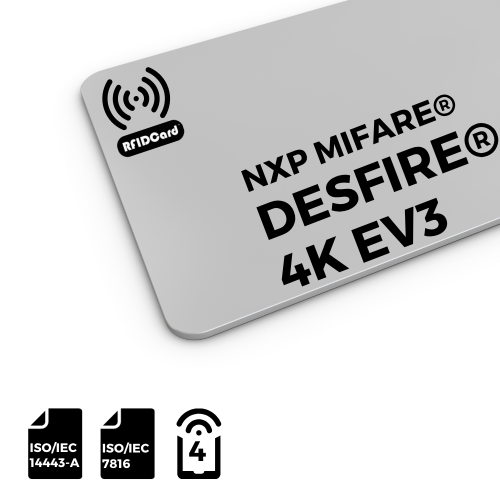
RFID Card NXP MIFARE® DESFire® EV3 4K

Blank or customized printing RFID cards with a choice of dimensions are available. The MIFARE® DESFire® EV3 4K is Common Criteria EAL5+ security certified for smart card IC products. The MIFARE® DESFire® EV3 4K ICs fully comply with NFC Forum Type 4 Tag.