When choosing a hotel, safety is always one of the primary concerns for guests. Within a hotel environment, the door lock system serves as the first line of defense, and the hotel key card plays a crucial role in ensuring security. With the growing adoption of RFID technology, more and more hotels are implementing RFID key cards to enhance operational efficiency and improve the guest experience. However, when procuring RFID hotel cards, how to select the right products to maximize security performance has become a key consideration for hotel management. This article explores what hotels should learn from RFID key card security incidents—and how to turn those lessons into stronger, smarter access control strategies.
1. A Brief History of RFID Key Card Vulnerabilities
To understand the current security landscape, one must first look at the evolution of how RFID key cards have been utilized in the hospitality sector. The earliest implementations often relied on low-frequency (125kHz) ID cards. These cards typically functioned by transmitting a static identifier to a reader without any form of encryption or mutual authentication. Because the communication was “in the clear,” It can be easily cloned.
2. Common Causes Behind RFID Key Card Security Incidents
The persistence of security breaches involving RFID key cards in the hotel industry is usually a combination of technical, operational, and financial factors. Understanding these root causes is essential for any hotel looking to fortify its defenses.

2.1 Use of Outdated Card Technology
Many hotels are still using legacy 125kHz systems or the compromised MIFARE Classic standard. These chips often rely on static UID-based authentication, where the lock simply checks if the card’s unique ID matches a permitted value in its database. Since these UIDs can be easily spoofed or “replayed” by an attacker’s device, the security of the entire floor or building is effectively compromised.
2.2 Weak Backend Integration
Security is not just about the card and the lock; it is about the ecosystem that connects them. Many older hotel systems operate in an “offline” or “semi-offline” mode, where the locks do not communicate with a central server in real-time. This lack of real-time monitoring means that if a master key is lost or cloned, it cannot be instantly revoked across the entire property. Furthermore, limited logging and audit trails make it difficult for security teams to identify suspicious patterns, such as a single card being used to access multiple rooms in a short timeframe or a door being opened during unusual hours. Without a robust backend that integrates with the Property Management System (PMS), hotels are essentially flying blind.
2.3 Procurement Decisions Based Solely on Price
In a highly competitive industry with thin margins, procurement departments are often under pressure to minimize costs. This frequently leads to the selection of low-cost, low-security RFID chips from unverified suppliers. While a few cents saved per card may seem insignificant, the long-term liability risks are enormous.
3. The Real Impact on Hotels
Security weaknesses do not exist in isolation. The consequences extend far beyond the lock itself.
3.1 Guest Safety and Trust
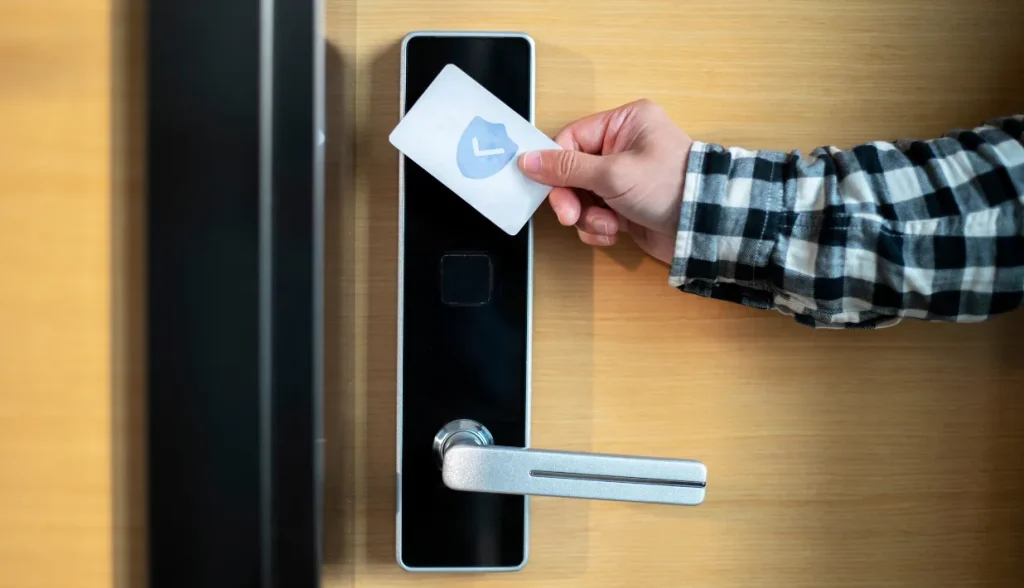
The primary concern for any hotel guest is their safety, and much of that safety relies on the integrity of the RFID key cards they are issued upon check-in. When a guest checks into a room, they are essentially entrusting the hotel with their privacy and personal well-being. Perceived safety is central to guest satisfaction and overall experience. If a guest feels that their room can be easily accessed by unauthorized individuals, their stay is immediately compromised.
Today’s travelers are informed and digitally connected. Online reviews, social media posts, and travel forums can amplify concerns rapidly. For hotels, trust is a core asset.
3.2 Brand Reputation Damage
In today’s hyper-connected world, a security breach can quickly become a PR nightmare. Viral media exposure, such as the recent Unsaflok vulnerability that affected millions of locks worldwide, can cause significant damage to a brand’s reputation.
The loss of consumer confidence can take years to rebuild, and in some cases, it can even lead to a permanent decline in market share. For large hotel chains, the impact is even more pronounced, as a single incident at one property can cast a shadow over the entire brand, leading to a loss of trust from corporate clients and individual travelers alike.
4. Key Lessons Hotels Should Learn
RFID security incidents have made one thing clear: technology alone does not guarantee protection. Hotels must combine secure hardware, intelligent system design, and disciplined management practices.

Lesson 1: Encryption Is Essential, Not Optional
Modern RFID key cards should support strong cryptographic authentication mechanisms such as AES-based mutual authentication. Encryption ensures that communication between the card and the lock cannot be easily intercepted or replicated. One of the most secure options available today is the MIFARE DESFire family of chips. Hotels should avoid solutions that rely solely on visible or fixed UID numbers for authentication.
Lesson 2: Upgrade from Legacy Systems
Hotels should prioritize the transition to secure high-frequency (13.56 MHz) systems that offer better security and more advanced features. When planning an upgrade, it is essential to evaluate the compatibility of the new cards with modern hotel lock platforms. Many modern locks are designed to be “future-proof,” allowing for firmware updates and the addition of new security features as they become available.
Lesson 3: Integrate Access Control with Monitoring Systems
Security is most effective when it is part of a holistic approach that includes monitoring and real-time alerts. By integrating access control with monitoring systems, hotels can gain valuable insights into how their property is being accessed. Real-time access logs can help security teams identify suspicious activity, such as a card being used to access multiple rooms in a short timeframe or a door being opened during unusual hours. Integration with the Property Management System (PMS) allows for the instant deactivation of lost or stolen cards and the creation of detailed audit trails that can be used for forensic investigations in the event of a security breach.
Lesson 4: Work with Security-Focused RFID Suppliers
The choice of an RFID supplier is just as important as the choice of the technology itself. Hotels should work with suppliers that prioritize security and have a proven track record in the industry. A reliable supplier should offer security-certified chips and provide detailed information about the chip’s origin and traceability. They should also offer long-term firmware support and be able to provide guidance on the best security practices for the hotel’s specific needs.
RFIDCard is a trusted supplier that offers a wide range of secure RFID solutions for the hospitality industry, ensuring that hotels have access to the latest and most secure technology available.
5. Action Checklist for Hotel Managers

To translate lessons into action, hotel managers can follow this roadmap:
- Audit Your Current System: Identify chip type, frequency, and encryption capabilities.
- Evaluate Encryption Standards: Confirm whether cards support AES-based mutual authentication.
- Review Key Management Policies: Ensure keys are unique and periodically rotated.
- Assess Supplier Security Practices: Verify chip authenticity and production quality.
- Plan Upgrade Path if Necessary: Develop a phased modernization strategy to avoid disruption.
Security improvement does not require immediate full-system replacement. Strategic, phased upgrades can significantly reduce risk while managing budget constraints.
6. Conclusion
Security remains a critical and indispensable aspect of hotel management. It not only directly affects guests’ experience and trust, but also has a lasting impact on a hotel’s brand reputation and market competitiveness. We hope this article provides valuable insights to hotel managers, helping you evaluate your specific needs and implement more suitable and reliable security solutions to continuously enhance overall hotel safety.
If you are looking for secure and high-quality RFID hotel key cards, choose RFIDCard. We look forward to becoming your trusted and reliable partner.
Recommended Product

100% Plastic-Free RFID Paper Card NXP® MIFARE Ultralight® EV1

The 100% plastic-free RFID Paper Card uses an innovative paper-based antenna to replace traditional plastic and PET structures, significantly reducing environmental impact. As the industry’s first developer of paper-based antenna RFID cards, we are committed to advancing truly 100% eco-friendly RFID solutions. Powered by the NXP® MIFARE Ultralight® EV1 chip and compliant with ISO/IEC 14443-A, it ensures reliable contactless performance for access control and identification applications.