
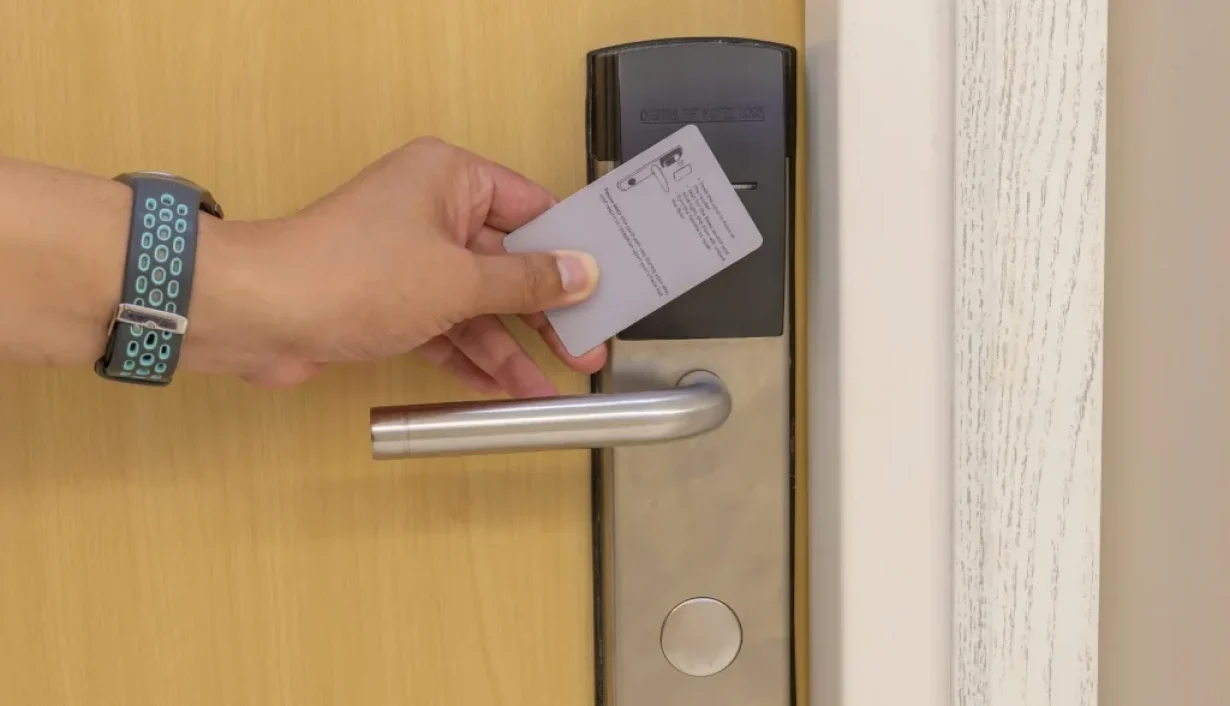

In modern hospitality industry, the RFID hotel key cards remain a critical touchpoint for guest security and operational efficiency. As we navigate through 2026, the expectations for these essential tools have shifted from mere access credentials to sophisticated devices that must meet increasing security demands, rigorous sustainability requirements, and seamless system integration. Sourcing these cards in today’s market requires a strategic approach that goes beyond comparing unit prices, as the chosen technology now directly impacts a hotel’s reputation, guest trust, and long-term operational resilience.
1. Chip Type and Security Level
The chip embedded inside an RFID card determines its security capability, compatibility, and long-term viability. Overlooking chip selection is one of the most common and costly sourcing mistakes.
1.1 Understanding Different RFID Chip Technologies
The foundation of any secure access system lies in the underlying radio frequency identification technology. In 2026, the industry has largely consolidated around High Frequency (HF) systems operating at 13.56 MHz, adhering to the ISO 14443 standards. While Low Frequency (LF) 125 KHz systems still exist in legacy properties, they are increasingly obsolete due to their lack of encryption and vulnerability to simple cloning devices.
HF technology allows for bidirectional communication and complex cryptographic handshakes, which are essential for protecting guest data and preventing unauthorized room entry.
1.2 Comparing Popular Chip Options
When selecting the internal hardware for RFID hotel key cards, three primary families of chips dominate the market, each offering different balances of cost and security.
| Chip Type | Encryption Standard | Security Level | Best Use Case |
| MIFARE Classic | Crypto-1 (Proprietary) | Low (Vulnerable) | Legacy systems with minimal security risk |
| MIFARE Ultralight C | 3DES (Triple DES) | Medium | Budget-conscious hotels requiring basic protection |
| MIFARE DESFire (EV3) | AES-128 / AES-256 | High (Bank-grade) | Luxury resorts, multi-application environments |
1.3 Why Encryption Matters in 2026
The importance of high-level encryption cannot be overstated in an era where data protection regulations like GDPR and CCPA have become global benchmarks. Beyond legal compliance, guest privacy expectations have reached an all-time high. By investing in encrypted RFID hotel key cards, hoteliers significantly decrease the risk of “relay attacks” and unauthorized access, thereby safeguarding both the physical security of the guests and the digital integrity of the hotel’s ecosystem.
2. Compatibility with Hotel Locking Systems
Even the most secure chip is useless if it cannot integrate seamlessly with your existing infrastructure.

2.1 Lock System Compatibility
Major global locking providers such as ASSA ABLOY; SALTO Systems and dormakaba have proprietary encoding structures and system requirements.
Before sourcing RFID hotel key cards, confirm:
- Supported chip types
- Sector configuration
- UID vs. encrypted sector usage
- Whether the card requires custom key diversification
RFIDCard provides high-quality hotel key cards compatible with modern locking systems.
2.2 Encoding Requirements: UID vs. Sector-Based
Understanding how data is written to the card is vital for operational security. UID (Unique Identifier) encoding is the simplest method, where the lock merely reads the chip’s hardcoded serial number. However, sector-based encoding is far superior as it allows the hotel to write encrypted data—such as room numbers and expiration timestamps—into specific protected memory blocks on the chip.
Furthermore, you must decide between pre-encoded cards, which arrive ready for use, and on-site encoding, which offers greater flexibility but requires reliable hardware at the reception desk.
2.3 The Criticality of Testing Before Bulk Orders
Before committing to a bulk purchase of thousands of units, rigorous sample testing is mandatory. Every manufacturer’s production line has slight variances in antenna tuning and chip placement. Requesting a sample batch of at least 50 RFID hotel key cards allows your technical team to test them across different locks, elevators, and common area readers. RFIDCard provides sample kits for testing purposes.
3. Card Material and Durability
Choosing the right RFID card not only enhances the guest experience but also strengthens your brand image.

3.1 Standard PVC vs. Composite PVC
While standard PVC has been the default material for decades due to its low cost, its environmental impact and limited lifespan remain significant drawbacks. In contrast, composite PVC materials such as BioPoly™ Vinyl can achieve 100% biodegradation within three years while offering the same durability as traditional PVC. These eco-friendly alternatives significantly reduce environmental impact without compromising performance.
3.2 Emerging Eco-Friendly Materials
The hospitality industry is undergoing a massive shift toward sustainable alternatives. Modern sourcing now includes several innovative materials that maintain the functionality of traditional RFID hotel key cards while minimizing plastic waste.
- 100% Plastic-Free RFID Paper Cards: Use an innovative paper-based antenna to replace traditional plastic and PET structures, significantly reducing environmental impact.
- BioPoly™ Stone: This innovative material is made primarily from calcium carbonate (stone powder) bound with a small amount of high-density resin. It is waterproof, durable, and significantly more environmentally friendly than traditional plastics.
- Wooden RFID Cards: Available in bamboo, sapele, or cherry wood, these cards provide a premium, tactile experience that aligns perfectly with luxury eco-resorts.
4. Printing Quality and Brand Customization
A key card is often the first branded item a guest receives. Poor print quality reflects poorly on the property.

4.1 Choosing the Right Printing Technology
Your key card is a mobile billboard for your brand. Choosing the right printing method is essential for achieving a professional look. Offset printing remains the best choice for large-scale orders, providing the highest color accuracy and sharpest detail.
For smaller, boutique properties or personalized cards, digital printing offers faster turnaround times and the ability to include variable data.
For cards requiring metallic finishes or specific brand colors that fall outside the standard CMYK spectrum, silk screen printing is the preferred technique.
4.2 Finishing Options for a Premium Feel
Today, the “unboxing” experience of a hotel room starts at the lobby. High-end finishes can transform a simple card into a memorable brand asset. Consider incorporating gold or silver foil stamping for a touch of elegance, or Spot UV coating to create raised, glossy textures on specific design elements like your hotel logo. Matte finishes are also increasingly popular as they resist fingerprints and provide a sophisticated, modern aesthetic that resonates with the contemporary traveler.
5. Sustainability Expectations in 2026
Sustainability is no longer a marketing slogan; it is increasingly embedded in procurement policy.

5.1 The Growing Demand for Green Hospitality
In 2026, a hotel’s commitment to sustainability is scrutinized at every level, including the procurement of consumables. Transitioning to sustainable hotel key cards is a highly visible way to demonstrate this commitment. Guests are increasingly aware of “greenwashing” and expect tangible evidence of a hotel’s efforts to reduce its plastic footprint.
5.2 Recyclable and Biodegradable Solutions
Sourcing teams must prioritize cards that are either easily recyclable within existing municipal streams or fully biodegradable in industrial composting facilities. The move toward “circular hospitality” means that even the electronic components, such as the copper or aluminum antennas inside the cards, should be designed for easy separation and recovery. For this purpose, the 100% Plastic-Free Key Card is an ideal solution, as it helps eliminate microplastic pollution at the source.
6. Conclusion
In conclusion, sourcing RFID hotel key cards requires a multidisciplinary evaluation across security, compatibility, material durability, supply chain integrity, and sustainability. Price remains a factor—but it should not dominate decision-making. If you’re evaluating RFID hotel key cards for your property, contact our team for expert guidance and secure, fully compatible solutions tailored to your locking system.
Recommended Product

100% Plastic-Free RFID Paper Card NXP® MIFARE Ultralight® EV1

The 100% plastic-free RFID Paper Card uses an innovative paper-based antenna to replace traditional plastic and PET structures, significantly reducing environmental impact. As the industry’s first developer of paper-based antenna RFID cards, we are committed to advancing truly 100% eco-friendly RFID solutions. Powered by the NXP® MIFARE Ultralight® EV1 chip and compliant with ISO/IEC 14443-A, it ensures reliable contactless performance for access control and identification applications.

Wooden Generic Hotel Key Card
The NXP MIFARE Ultralight® C and NXP MIFARE Ultralight® AES RFID Hotel cards fully comply with ISO14443-A. The Key cards are made with Wooden in the size of CR80.
IMPORTANT NOTICE: All MIFARE Ultralight® AES cards supplied on this site is factory default (non-encrypted) version.

BioPoly™ Stone Generic Hotel Key Card
The NXP MIFARE Classic® EV1 1K (MIFARE® S50) and NXP MIFARE Ultralight® C RFID Hotel Cards are fully comply with ISO/IEC 14443-A. The Key cards are made with BioPoly™ Stone in the size of CR80.



